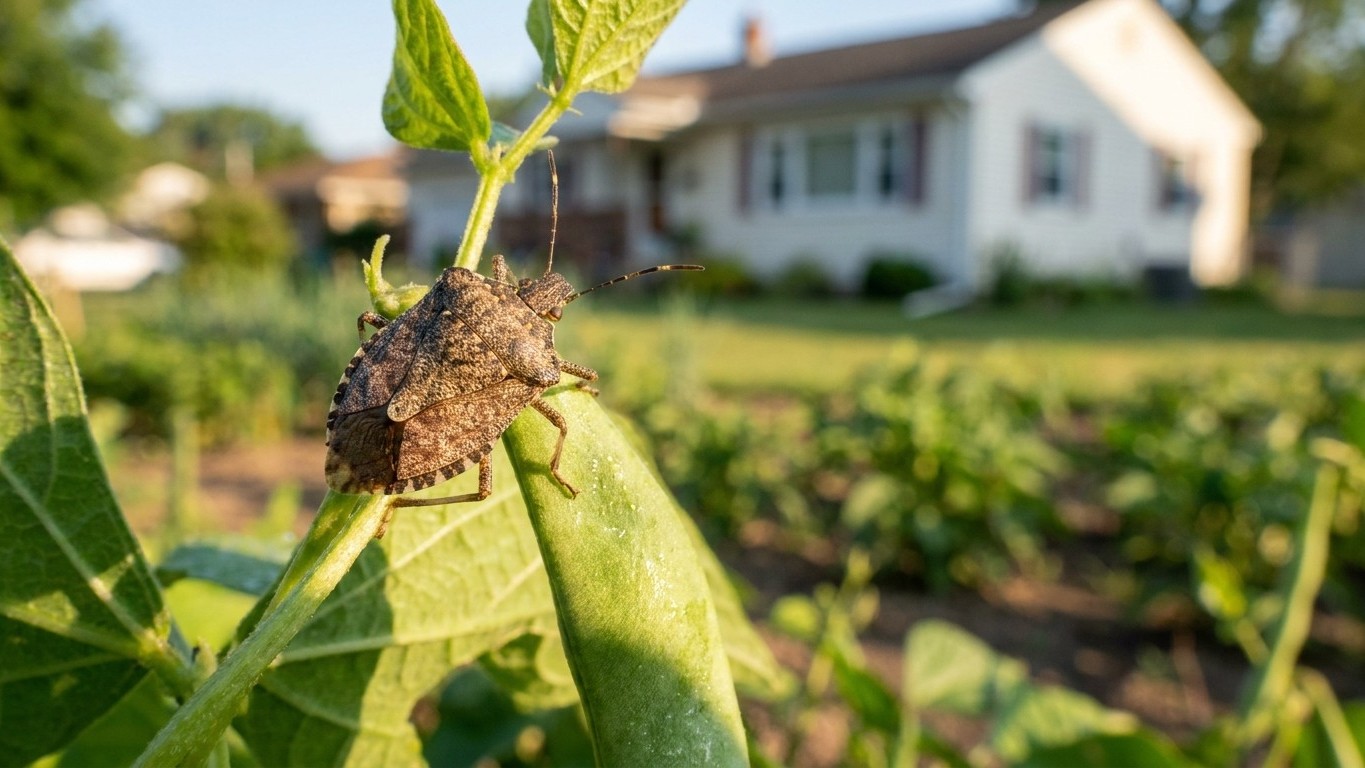

Brown marmorated stink bugs settle into Indiana on a predictable calendar: they wake up from hiding places in April or May, spend the warm months feeding on crops and garden plants, then swarm toward homes and buildings from late September through October looking for a place to spend the winter. Sealing gaps in your home’s exterior before that fall push, combined with targeted outdoor treatments timed to their spring emergence, is what actually keeps populations down. Squishing them or spraying random surfaces after they’re already inside does almost nothing.
When Brown Marmorated Stink Bugs Show Up in Indiana

Halyomorpha halys is not native to North America. It arrived from Asia and was first documented in the mid-Atlantic region near Allentown, Pennsylvania, in the 1990s before spreading west. Indiana populations became established in the early 2010s, and the insect is now considered widespread across the state, from the Ohio River counties in the south up through the Indianapolis metro and into the Fort Wayne area.
Unlike the mid-Atlantic states where two generations can develop in a single year, Indiana’s shorter growing season typically supports just one generation. Adults that survived winter emerge once daytime temperatures hold steadily in the 60s, usually mid-April to early May. They feed and mate through summer, and eggs laid on the undersides of leaves hatch into nymphs that molt through five stages before reaching adulthood by late summer.
The second wave of activity, the one homeowners actually notice, starts as fall temperatures drop below the 60s. That’s when adults abandon plants and fields and start searching for overwintering shelter. In Indiana, that migration toward buildings tends to peak between late September and the third week of October, tapering off once hard frost sets in.
What Happens Once They’re Inside for Winter
Stink bugs don’t reproduce indoors and don’t feed on anything in your house. They’re simply hibernating, tucked into wall voids, attic insulation, and gaps around window frames until temperatures rise again. A warm spell in January or a furnace running nonstop can trick a few into becoming active early, which is why some homeowners spot a stink bug wandering across a windowsill in the dead of winter.
Why They Target Indiana Homes and Farms
Brown marmorated stink bugs feed on more than 300 plant species, which makes Indiana’s mix of row crops, orchards, and backyard gardens an easy target. Soybeans and corn, Indiana’s two dominant field crops, are documented hosts, and feeding damage on soybean pods can reduce seed quality enough to affect grain grade at harvest. Specialty fruit growers in counties like Brown, Marion, and along the southern Indiana fruit belt near Vincennes deal with a different problem: stink bug feeding leaves dimpled, discolored patches on apples and peaches that make the fruit unmarketable even though it’s still edible.
Homes get targeted for a separate reason. Once a few stink bugs find a sunlit, south- or west-facing wall in early fall, they release aggregation pheromones that draw in more individuals. That’s why infestations often look concentrated, dozens of bugs clustered on one side of a house while the rest of the structure stays clear. Older homes with wood or brick siding, gaps around soffits, and unsealed utility penetrations are especially prone to this clustering behavior.
The U.S. Environmental Protection Agency notes that the insect’s tendency to aggregate in large numbers on structures, combined with its resistance to many household insecticides, is what makes it a persistent nuisance pest rather than a one-time visitor. Once a building becomes a known overwintering site, populations tend to return to the same structure year after year unless entry points are addressed.
What Actually Stops Brown Marmorated Stink Bugs
Control works best when it’s split into two separate jobs: keeping them out of the structure, and reducing numbers outdoors before they migrate. Neither one alone solves the problem long-term.
Sealing Entry Points Before Late September
Exclusion is the single most effective long-term fix, and the timing matters. Caulking gaps around window and door frames, repairing damaged screens, sealing utility line penetrations, and fixing gaps around chimney flashing needs to happen before the fall migration starts, not after bugs are already clustering on the siding. Waiting until October to seal a home means working around an active swarm instead of preventing one.
- Weatherstrip attic vents and gable vents with fine mesh screening.
- Check where utility pipes, cable lines, and dryer vents pass through exterior walls.
- Replace worn door sweeps, especially on garage and basement entry doors.
- Inspect soffits and fascia boards for gaps where siding has warped or pulled away.
Outdoor Traps and Pheromone Lures
Pheromone-baited traps placed along the perimeter of a property in late summer can intercept a portion of the population before it reaches the house. These traps mimic the same aggregation signal the bugs use to find each other, drawing them into a container instead of a wall void. They work best as a supplement to sealing, not a replacement, since traps alone rarely catch enough bugs to prevent an indoor infestation on their own.
Timed Insecticide Applications
Professional pest control operators typically apply residual insecticide treatments to exterior walls and foundation perimeters in early to mid-September, right before the fall aggregation begins. This creates a barrier that kills bugs as they land and search for entry points, rather than treating them after they’ve already found a way inside. Homeowners attempting this on their own need to check product labels carefully, since many general-purpose exterior insecticides have limited effectiveness against this species and require reapplication as residues break down.
Indoor Removal Without the Odor Problem
The defensive odor that gives this insect its name comes from glands that release chemicals when the bug is crushed or threatened. Vacuuming bugs directly into a bag or canister (then disposing of the bag promptly) avoids triggering that response, unlike swatting or stepping on them. A wet-dry shop vac with a bit of soapy water in the reservoir works well for larger clusters found in attics or window wells, since the soap breaks down the bug’s waxy coating and speeds up drowning.
Biological Control on the Horizon
Researchers have been studying a tiny parasitic wasp native to Asia, Trissolcus japonicus, sometimes called the samurai wasp, as a potential natural check on stink bug populations. The wasp lays its own eggs inside stink bug egg masses, killing the developing nymphs before they hatch. Adventive populations of this wasp, meaning ones that arrived and established without deliberate release, have been detected in multiple states in recent years as part of ongoing multistate monitoring efforts coordinated through university and USDA research programs. It’s not a tool homeowners can buy or deploy, but its spread could gradually reduce the pressure that drives large fall aggregations in the years ahead.
For now, the practical approach in Indiana stays the same each year: watch for the shift in weather that triggers migration, get sealing done before the bugs start moving, and treat traps and insecticides as support tools rather than the main fix. Homeowners who tackle exclusion work in August, before the first cool nights hit, consistently report fewer bugs finding their way indoors come November.
Related guides
- Brown marmorated stink bug in Kentucky: When It Shows Up and What Stops It
- Brown marmorated stink bug in Illinois: When It Shows Up and What Stops It
- Brown marmorated stink bug in Maryland: When It Shows Up and What Stops It
- Brown marmorated stink bug in Missouri: When It Shows Up and What Stops It
- Brown marmorated stink bug in Pennsylvania: When It Shows Up and What Stops It