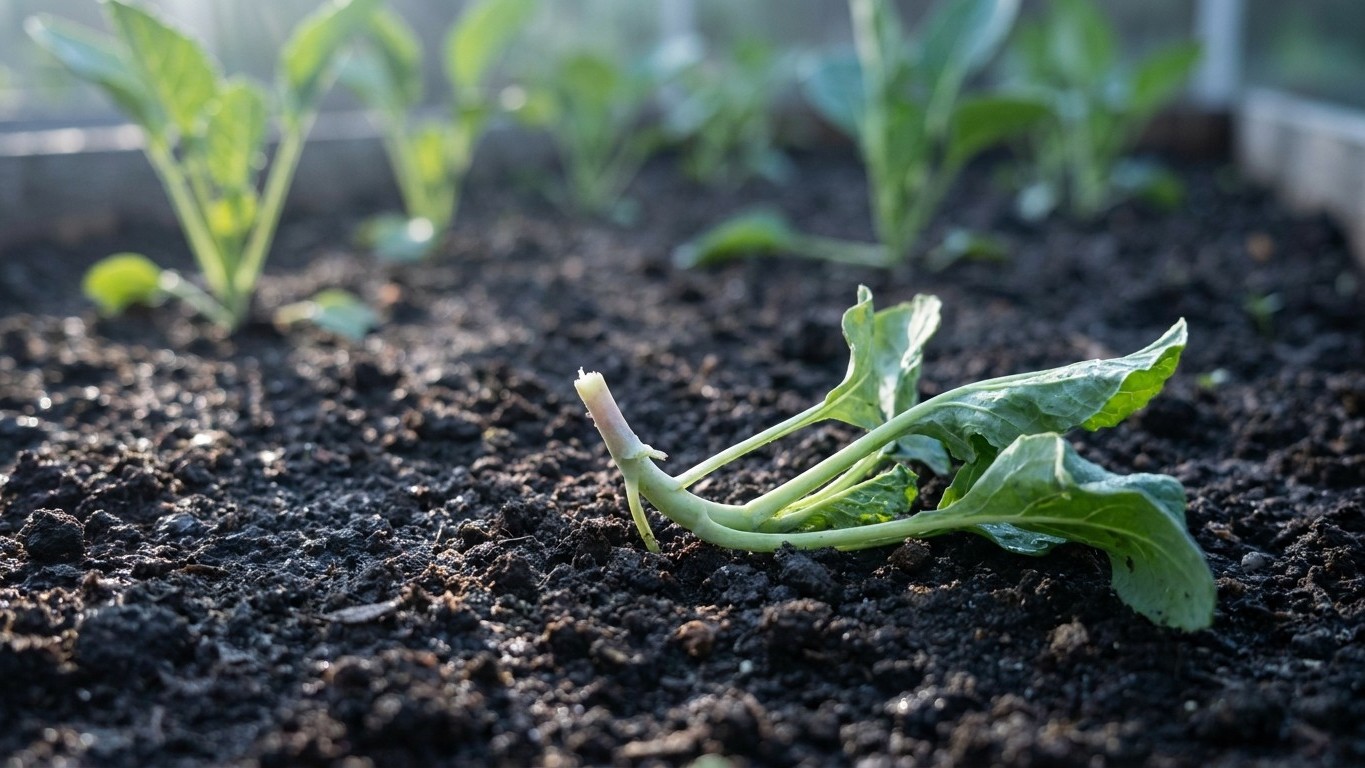

Cutworms start clipping Connecticut seedlings as early as late April in the state’s warmer coastal towns, and by mid-May they’re active statewide. The larvae work at night, severing stems at the soil line, and by the time most gardeners notice the damage, the culprit has already burrowed back underground. Row covers removed too early, collars installed too late, and fall tillage skipped altogether are the three most common reasons Connecticut gardens keep losing seedlings year after year.
When Cutworms Actually Show Up in Connecticut

Connecticut spans USDA hardiness zones 5b through 7a, and that six-degree spread matters more than most gardeners realize. Coastal Fairfield and New Haven Counties warm up first, with soil temperatures crossing the 50-degree threshold that wakes overwintering pupae sometimes by mid-April. Inland and northern counties, Litchfield in particular, often lag two to three weeks behind. That gap shifts the whole cutworm calendar depending on where in the state you’re gardening.
Black cutworm, the species responsible for most transplant losses in Connecticut vegetable gardens, doesn’t just wake up locally. A large share of the population actually rides warm fronts north from the mid-Atlantic and southern states as migrating adult moths, arriving in Connecticut in April and laying eggs within days. Extension entomologists track this migration using pheromone traps, and the standard forecasting tool is a degree-day model: once 300 degree-days accumulate after the first significant moth catch, larvae reach the size where they start cutting stems rather than just chewing leaf edges. In practice, that translates to peak cutting damage landing somewhere between the second week of May and early June across most of the state.
Variegated cutworm, the other species commonly found in Connecticut yards and gardens, behaves differently. It overwinters locally as partially grown larvae rather than migrating in, which means it can resume feeding on the first mild days of early spring, sometimes before gardeners have even started hardening off seedlings. Both species typically produce two generations per year in Connecticut’s climate, so a second wave of damage often shows up in late July through August, usually hitting fall brassicas, second plantings of beans, and late-season lettuce.
Why Damage Clusters in Specific Spots
Cutworms favor grassy or weedy areas the previous fall, because females lay eggs preferentially in turf and dense low vegetation. That’s why the worst damage in Connecticut gardens tends to show up along edges bordering lawns, in beds converted from sod within the last year or two, and in no-till plots where old plant debris was left standing over winter. A vegetable bed that was pasture or lawn in 2025 carries a noticeably higher cutworm risk in 2026 than one that’s been cultivated for several seasons.
What Actually Stops Cutworms in a Connecticut Garden
Physical barriers remain the most reliable defense, and they cost almost nothing. A cardboard or plastic collar pushed two inches into the soil and standing two to three inches above ground, wrapped around each transplant stem, blocks the larvae from reaching the vulnerable base. Toilet paper tubes, cut sections of paper cups, or strips of aluminum foil all work the same way. The collar doesn’t need to be elaborate; it just needs to create a physical wall the larva can’t climb over or burrow under at the stem.
Timing planting to avoid peak larval activity helps almost as much. Since the heaviest cutting damage in most of Connecticut lands between mid-May and early June, gardeners who delay transplanting tender seedlings by even a week or two, especially in inland and northern counties where the season already runs later, sidestep a large share of the risk. This isn’t practical for everything, but for crops like tomatoes and peppers that have some flexibility in planting date, it’s a low-effort adjustment.
Fall soil disturbance changes the population for the following year. Cutworm pupae overwinter just a few inches below the surface, and turning the soil in October or November exposes them to freezing temperatures and to birds, which pick off exposed pupae almost immediately. Connecticut’s average first hard frost falls between early and mid-October depending on region, according to National Weather Service climate records for the area, so tilling shortly after that point catches pupae before they’ve settled deep enough to escape the cold.
Beneficial nematodes, specifically Steinernema carpocapsae, applied to moist soil in early spring, infect and kill cutworm larvae before they reach cutting size. They need consistently damp soil to survive and move through the root zone, so irrigation right after application matters more than the product itself. Bacillus thuringiensis var. kurstaki (Bt), sprayed on foliage in the evening when larvae start climbing to feed, offers another targeted option that spares most beneficial insects.
Diatomaceous earth sprinkled in a ring around stems works mechanically, damaging the larvae’s cuticle as they cross it, but it loses effectiveness once wet and needs reapplying after rain or irrigation. It’s a reasonable backup layer rather than a standalone solution in Connecticut’s typically humid growing season.
Natural Predators Already Working in Your Favor
Ground beetles, several rove beetle species, and birds like robins and starlings all prey on cutworm larvae and pupae, and Connecticut yards with reduced pesticide use and some undisturbed soil edges tend to host healthier populations of these predators. Avoiding broad-spectrum insecticide applications early in the season preserves this natural check, which matters because a single healthy ground beetle population can meaningfully reduce cutworm survival in a home garden without any additional intervention.
Spotting the Damage Before It Spreads
Seedlings that appear cleanly clipped near the soil line, sometimes with the top portion lying nearby, point directly to cutworm activity rather than disease or nutrient stress. Wilting that shows up overnight on transplants that looked fine the previous evening is another strong signal, since cutworms feed almost exclusively after dark and retreat into the top inch or two of soil during daylight.
Checking for larvae directly confirms the diagnosis. Digging carefully around the base of a damaged plant, an inch or two down and within a couple inches of the stem, usually turns up a curled, grayish-brown or greenish caterpillar, often one to two inches long depending on species and age. They curl into a tight C-shape when disturbed, which is one of the more reliable identifying traits distinguishing them from other soil-dwelling larvae like wireworms or grubs.
Regional Notes Worth Knowing
Litchfield County and the northwestern hills, sitting mostly in zone 5b, see cutworm pressure arrive later and generally with fewer generations completing before frost shuts things down in fall. Gardeners there get a slightly wider window to install collars and prep beds before the first wave hits.
The shoreline towns from Greenwich through New London, largely zone 7a, face the opposite situation: earlier arrival, a longer active season, and a better chance that both generations complete their cycle before winter, which can mean heavier late-summer damage on fall crops if spring populations weren’t kept in check. Gardeners in these areas benefit most from consistent monitoring rather than a single early-season treatment and moving on.
The Connecticut River Valley, with its sandier, faster-warming soils in towns like Windsor and Suffield, tends to see cutworm activity track closer to the coastal timeline even though it’s further inland, since soil temperature drives larval development more directly than air temperature or latitude alone.
One detail that surprises a lot of gardeners: a single female cutworm moth can lay several hundred eggs over her lifespan, but she scatters them rather than clustering them on one plant, which is exactly why damage in a Connecticut garden often looks random, a few plants down here, a gap there, rather than following an obvious pattern.