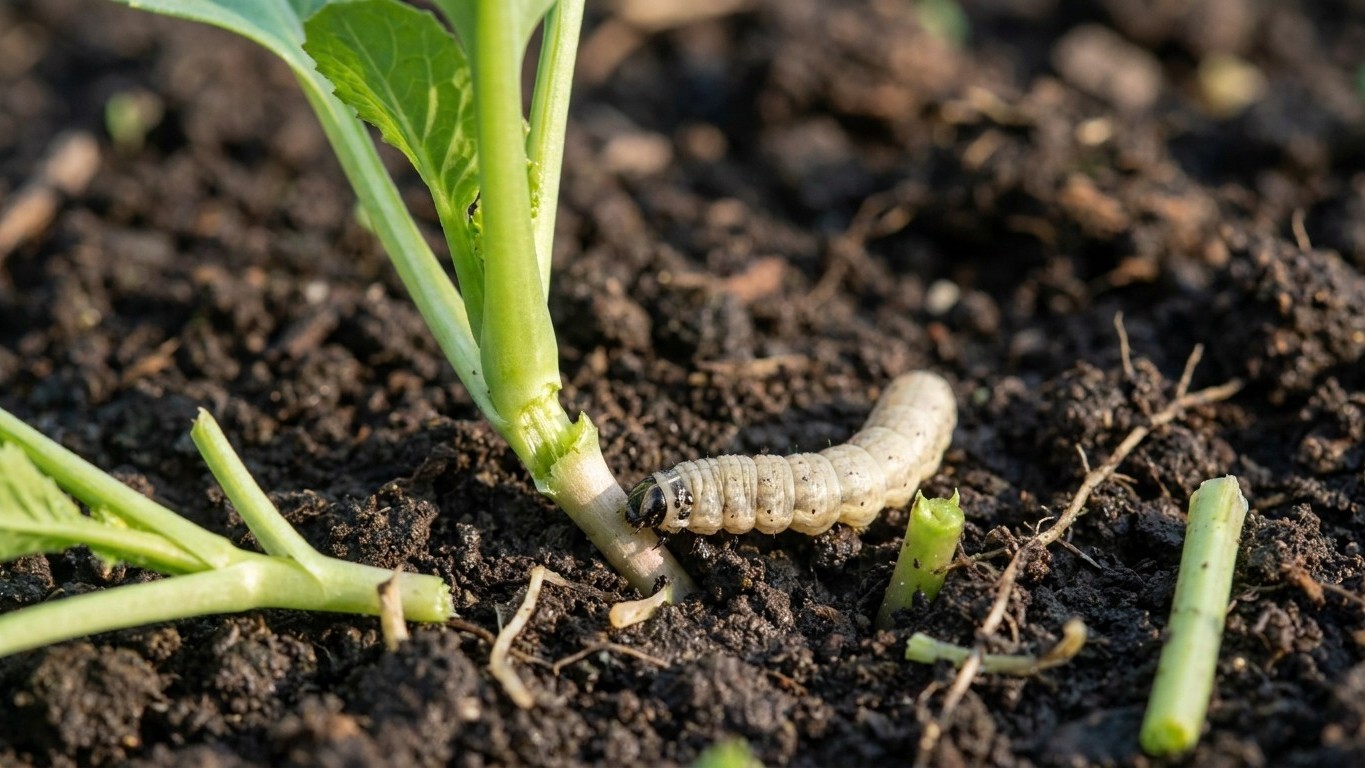

Cutworms show up in Idaho twice a year: a spring wave from overwintered larvae between late March and May, and a fall wave in September and October when newly hatched larvae feed before the ground freezes. Southern and eastern Idaho’s wheat, potato, and alfalfa fields see the heaviest pressure, though home gardens across the state get hit too, usually right when seedlings are at their most vulnerable.
The Cutworm Species Idaho Growers Actually Deal With

Not all cutworms behave the same way, and Idaho hosts several species with different habits. The army cutworm is probably the most notorious. Its adult form, the miller moth, migrates from Idaho and surrounding states up into the Rocky Mountains each summer, where grizzly bears in places like Yellowstone actually dig up moth-packed slopes to feed on them for fat reserves. That migration story gets a lot of attention, but the damage in Idaho happens earlier, when the larvae feed on winter wheat and alfalfa seedlings through fall and again as temperatures warm in spring.
The pale western cutworm is the one dryland wheat farmers in the Magic Valley and southern Idaho watch most closely. It stays underground during the day and clips wheat seedlings off just below the soil surface, which can wipe out a stand before anyone notices a problem above ground. The red-backed cutworm is more of a generalist, feeding on sugar beets, potatoes, beans, and a long list of garden vegetables. It tends to show up a bit later in spring than the pale western species, once soil temperatures climb into the 50s.
Idaho State Department of Agriculture pest reports and University of Idaho Extension monitoring have tracked these species for decades because their damage patterns are so predictable by region. Southern Idaho’s drier wheat country favors the pale western cutworm. Irrigated ground in the Treasure Valley and eastern Idaho, where potatoes and sugar beets dominate, sees more red-backed and army cutworm activity.
Where and When Damage Actually Appears
Spring damage is the one most people notice first, because it hits right as seedlings emerge. A field or garden bed that looked fine one week can show rows of clipped stems the next, with plants lying flat on the soil surface as if someone took scissors to them at ground level. That’s the signature cutworm cut, and it’s different from wind damage or hail, which tends to shred leaves rather than sever stems cleanly.
Fall damage is subtler and easier to miss. Eggs laid by moths in August hatch into small larvae that feed on weeds and volunteer plants through September and October, building up size before winter. This is the stage that sets up next spring’s problem, because larvae that fed well in fall emerge from winter dormancy larger, hungrier, and ready to do real damage as soon as soil temperatures allow movement, typically once nighttime lows stay above the mid-40s.
Fields coming out of alfalfa, pasture, or anything left fallow with heavy weed growth carry the highest risk. Cutworm moths prefer laying eggs in grassy or weedy ground, so a field that was clean and cultivated the year before usually has less pressure than one transitioning out of sod or weeds. Home gardeners see the same pattern on a smaller scale: beds bordered by tall grass or left unmowed through late summer tend to get hit harder the following spring.
Confirming It’s Cutworms Before You Treat
Misidentifying the culprit wastes money and time, since cutworm control looks nothing like control for aphids, wireworms, or slugs. The clearest sign is that clean, stem-level cut on an otherwise healthy-looking plant. Dig around the base of a damaged plant, an inch or two down, and you’ll often find a curled, greasy-looking gray or brown larva, usually between half an inch and an inch and a half long depending on the species and how far along it is. Disturb it and it curls into a tight C-shape, a reflex that’s about as close to a fingerprint as this pest gets.
Nighttime scouting works better than daytime checks, since cutworms feed after dark and burrow into the top inch of soil during daylight hours to avoid heat, birds, and drying out. A flashlight check an hour or two after sunset, especially on cool spring nights, will often turn up larvae actively feeding at the base of plants. For larger fields, pheromone traps monitored weekly through spring give a earlier warning by tracking adult moth flights, which typically precede larval damage by two to three weeks.
Idaho’s climate actually helps here in one way: the state’s cold winters and dry summers limit the number of generations most cutworm species complete in a year, usually just one, sometimes two for red-backed cutworm in warmer irrigated valleys. That’s fewer waves to manage than growers in milder states deal with.
What Actually Stops Cutworms in Idaho Conditions
Timing matters more than product choice with this pest. Once larvae reach their final growth stage, most insecticides lose effectiveness because the larvae are burrowed deeper and feeding less. The window for chemical control is narrow, generally right after egg hatch when larvae are small and still feeding near the soil surface.
Field-Scale Approaches
Fall tillage is one of the more reliable tools for Idaho wheat and alfalfa ground. Turning soil in October or early November exposes overwintering larvae to cold temperatures and to birds, which will pick a freshly tilled field clean in a matter of days. Growers who till weedy or fallow ground before egg-laying moths arrive in late summer also cut down significantly on the number of eggs that get deposited in the first place, since bare ground is far less attractive to female moths than grassy cover.
Bait formulations, applied in a thin layer across the soil surface, remain a standard tool for pale western and army cutworm in dryland wheat because they target the larvae where they actually feed, at night, near the surface. Timing bait application to coincide with early larval stages, before larvae reach half their mature size, makes a measurable difference in effectiveness. Waiting until visible damage appears usually means the most vulnerable window has already closed.
Crop rotation away from alfalfa or pasture, even for a single season, reduces cutworm pressure on the following crop by removing the weedy, grassy conditions that attract egg-laying moths. This is one of the cheapest control measures available and it’s underused, mostly because the payoff shows up a full year later rather than immediately.
Home Garden and Small-Plot Control
Backyard growers don’t need field-scale equipment to keep cutworms out of tomato and pepper seedlings. A simple cardboard or paper collar, pushed an inch into the soil around each stem, physically blocks larvae from reaching the plant at the vulnerable ground-level point. It’s a five-minute task per plant and it works because cutworms rarely climb over barriers, they feed by moving along the soil surface.
Clearing weeds and grass from garden borders in late summer, before moths lay eggs, removes the habitat that draws them in the first place. Diatomaceous earth spread in a ring around seedlings can also deter larvae, though it needs reapplication after rain or heavy watering since it loses effectiveness once wet.
Ground beetles, birds, and parasitic wasps all prey on cutworm larvae and eggs, and gardens that avoid broad-spectrum insecticide use tend to keep more of these natural predators around. A garden with a healthy population of ground beetles, which look like small black or brown beetles that scurry when disturbed, usually needs far less intervention against cutworms than one that’s been sprayed repeatedly for unrelated pests.
One detail that surprises a lot of Idaho gardeners: the same miller moths that show up fluttering around porch lights in early summer, often mistaken for a random nuisance insect, are frequently the adult stage of the cutworms that damaged seedlings back in April. A heavy moth presence in June is a reasonable signal to start weed control and scouting well before the next spring’s planting.
Related guides
- Cutworms in Wyoming: When It Shows Up and What Stops It
- Cutworms in Michigan: When It Shows Up and What Stops It
- Cutworms in Northwest Territories: When It Shows Up and What Stops It
- Squash bug in Idaho
- Onion maggot in Idaho
- Pea leaf weevil in Idaho
- Cutworms in Ontario: When It Shows Up and What Stops It