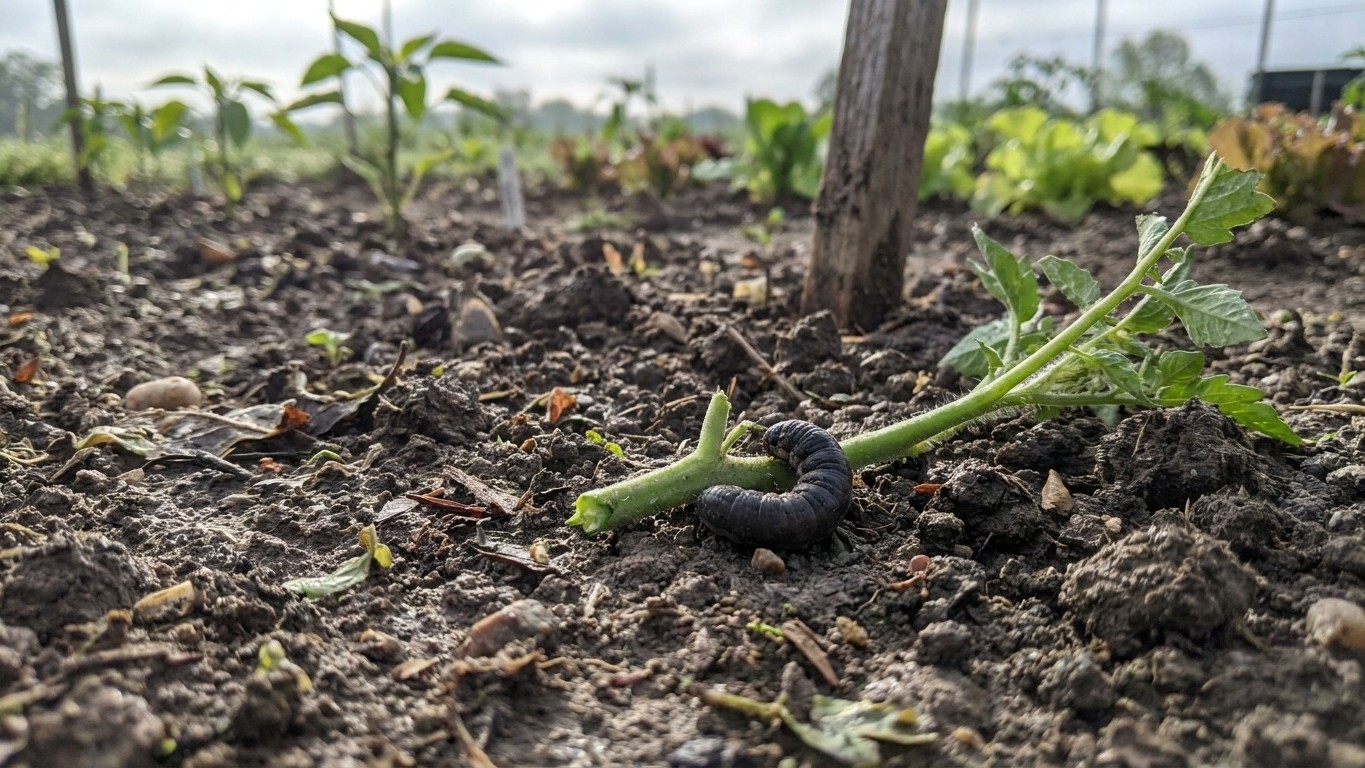

Cutworms show up in Ohio fields and gardens mainly in spring, from late April through June, when moth flights and overwintering larvae line up with tender seedlings just breaking ground. Cool, wet springs make the problem worse because they slow plant growth right when the larvae are hungriest. Stopping them comes down to three things: clean seedbeds free of the weedy growth that draws egg-laying moths, physical barriers around vulnerable transplants, and timely insecticide or biological treatment once scouting confirms an active population.
That’s the short version. Ohio growers and homeowners dealing with a suddenly toppled row of seedlings need more than a calendar date, though. The species involved, the weather that precedes an outbreak, and the specific signs of feeding all matter for figuring out whether you’re facing a minor nuisance or a population that will chew through an entire planting in a week.
Which Cutworm Species Turn Up in Ohio

Ohio hosts several cutworm species, and they don’t all behave the same way. The black cutworm (Agrotis ipsilon) is the one field agronomists watch most closely. It doesn’t reliably survive Ohio winters. Instead, adult moths ride storm fronts up from the Gulf Coast states each spring, arriving anywhere from March into May depending on wind patterns. Once they land, females lay eggs in low-growing vegetation, especially chickweed, henbit, and other winter annual weeds that carpet a field before spring tillage.
Variegated cutworm and dingy cutworm, by contrast, do overwinter here as partially grown larvae, tucked into soil and plant debris. That gives them a head start in spring, and it’s why some damage appears earlier than the black cutworm’s migration timeline would suggest. Dingy cutworm larvae in particular tend to feed on leaf tissue rather than clipping stems outright, which changes what the damage looks like in a home garden.
A third player, the black cutworm’s cousin the claybacked cutworm, shows up less often but has been documented in Ohio corn and soybean fields, usually causing localized rather than widespread damage. For most homeowners, the practical distinction that matters is simpler: fields and gardens with heavy spring weed growth followed by a wet, cool stretch are the highest-risk setups, regardless of which species ends up doing the cutting.
The Ohio Timeline: From Moth Flights to Cut Stems
Ohio State University’s agronomic crops team has tracked black cutworm moth flights for decades using pheromone traps, and the pattern is fairly consistent. Significant moth captures, meaning nights when traps catch eight or more moths, typically begin appearing sometime between mid-March and late April across the state’s corn belt counties. From that first significant catch, entomologists count growing degree days using a 50-degree Fahrenheit base temperature. Cutting damage on corn seedlings tends to start once accumulated degree days reach roughly 300, which usually lands in the four-to-six week window following the moth flight, often landing squarely on the same weeks corn is emerging.
That timing explanation matters for anyone growing sweet corn, tomatoes, peppers, or cabbage transplants in a backyard plot too. If a wet March and April left weeds thriving before you tilled, and moths were active during that stretch, your transplants going in during May are sitting right in the danger zone. Larvae hatch, feed for a few weeks on the weeds and grass that were already there, then move to whatever crop just got planted once the original food source disappears under a tiller or gets pulled as part of bed prep.
A second, smaller wave sometimes shows up in late summer as a partial second generation, but Ohio’s cooler fall temperatures usually keep this generation from doing much damage compared to the spring flush. Gardeners who had trouble in May and think they’re in the clear by July generally are, with occasional exceptions in unusually warm years.
Spotting the Damage Before It Spreads
Cutworm damage has a signature that’s hard to mistake once you’ve seen it: seedlings sheared off cleanly at or just below the soil line, often left lying on the ground with the top growth still green and intact. Unlike disease or nutrient problems, which tend to show up gradually across a row, cutworm damage often appears overnight, with several plants down in a cluster where a single larva worked its way along a row.
The larvae themselves are grayish-brown to nearly black, smooth-skinned, and curl into a tight C-shape when disturbed, a habit that gives them away if you dig in the soil near a damaged plant. Most species feed at night and burrow a half-inch to two inches into the soil during daylight hours, which is why gardeners rarely spot the culprit in the act. A flashlight check an hour or two after dark, right at the base of damaged plants, is often the fastest way to confirm what’s going on.
Corn and soybean fields show a different scale of the same problem. Ohio State’s scouting guidelines recommend checking fields when seedlings are in early growth stages, looking for cut plants and live larvae in a set number of row-feet per stop across the field. Economic thresholds for field corn generally trigger a rescue treatment when 3 to 5 percent of plants show fresh cutting and larvae are still present and actively feeding, though the exact numbers extension agronomists use shift slightly based on plant stage and crop value.
What Actually Stops Cutworms in Ohio Gardens and Fields
Prevention beats rescue treatment almost every time with cutworms, mostly because by the time damage is visible, some of the crop is already gone. The single most effective step for both home gardeners and row-crop growers is weed control ahead of planting. Since black cutworm moths lay eggs on existing green growth, a field or bed that’s been kept clean of winter annual weeds for two to three weeks before planting gives them nowhere to lay, which cuts populations dramatically before a single seed goes in the ground.
For garden transplants, a physical collar remains one of the cheapest, most reliable defenses available. A strip of cardboard, an aluminum foil wrap, or even a cut-off plastic cup pushed an inch into the soil around the stem blocks larvae from reaching the plant at the vulnerable ground-level point, since cutworms rarely climb over a barrier to reach foliage higher up. This method costs essentially nothing and works especially well for tomatoes, peppers, and brassicas going into the ground as transplants rather than direct-seeded crops.
Biological controls have a real track record here too. Beneficial nematodes, particularly Steinernema carpocapsae, applied to moist soil in the evening, seek out and infect cutworm larvae underground. Ground beetles, birds, and parasitic wasps and tachinid flies also take a natural toll on cutworm populations, which is one more reason broad-spectrum insecticide use in a home garden can backfire, wiping out the predators that would otherwise keep numbers down season over season.
When chemical treatment is warranted, whether in a field or a badly infested garden bed, products containing pyrethroids or the biological insecticide Bacillus thuringiensis (Bt) applied in the evening, when larvae surface to feed, tend to work better than daytime applications since the larvae are underground and inactive during sunlight hours. Bt-based products carry the advantage of being far less disruptive to bees and other beneficial insects than synthetic pyrethroids, an important distinction for anyone gardening near flowering plants or edible crops close to harvest.
Tillage timing offers one more lever worth understanding. A field tilled in early spring, several weeks before planting, disturbs and exposes overwintering larvae to birds and cold snaps, reducing the population before the crop is even in the ground. Tilling right before or right at planting, by contrast, can actually concentrate larvae onto the crop residue and freshly turned soil, sometimes making damage worse rather than better. Ohio’s variable spring weather, which can swing from a warm dry stretch to a cold wet one within days, makes the exact timing of that first tillage pass one of the more consequential decisions a grower makes each season, and it’s one reason experienced Ohio farmers watch both the soil calendar and the extension pest reports rather than working off a fixed date every year.