
Browntail moth caterpillars are active in Maine from mid-April through late June, then again briefly in August after moths lay new eggs. The rest of the year, the insect sits inside silk-wrapped winter webs attached to tree branches, waiting out the cold. Nothing kills it outright, but a mix of timing-based tactics, pruning, targeted spraying, and protective habits, keeps populations and human exposure manageable. Winter web removal between October and April remains the single most effective step any homeowner can take.
The Browntail Moth Life Cycle, Month by Month

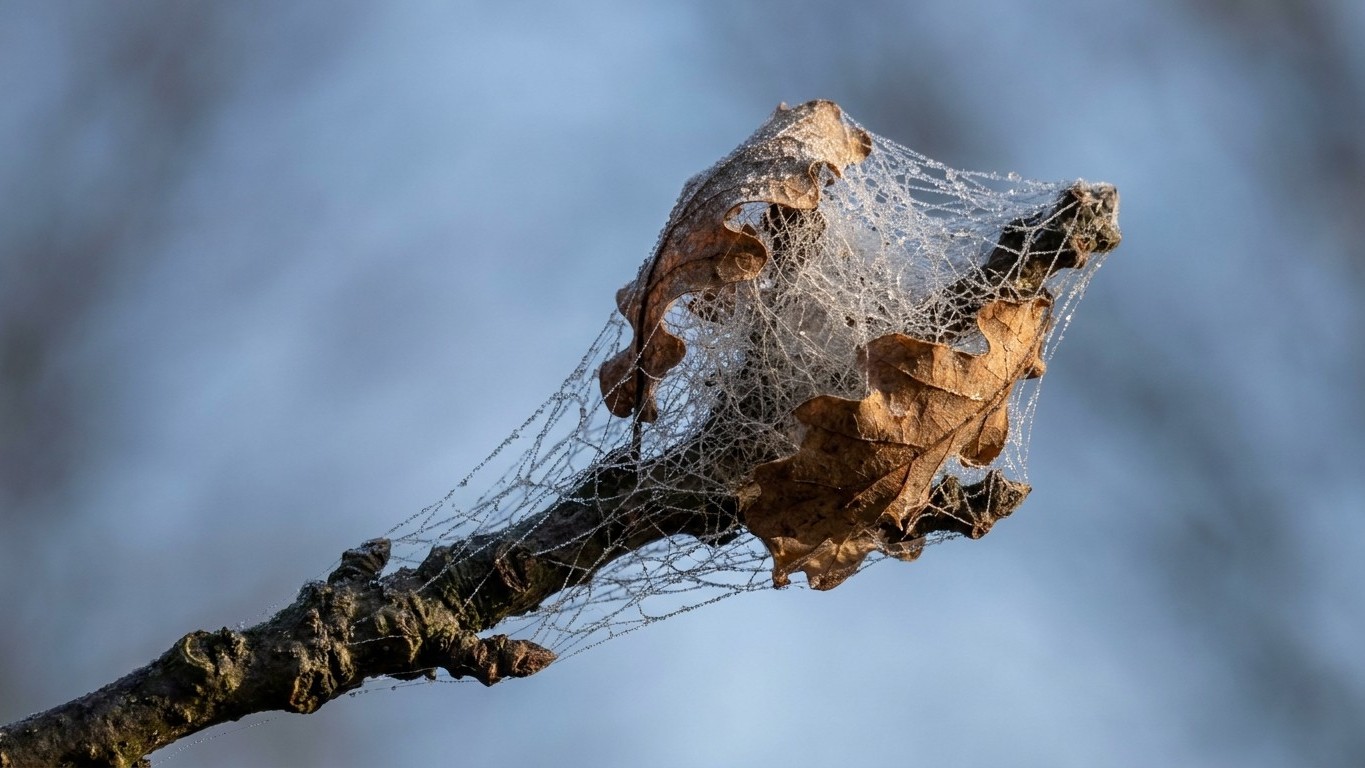
Maine’s browntail moth (Euproctis chrysorrhoea) runs on a predictable annual clock, and knowing where it sits in that cycle explains both the risk and the fix. Caterpillars overwinter as tiny larvae packed into tightly woven silk webs, usually wrapped around the tips of oak, apple, crabapple, or cherry branches. Those webs are often visible against a bare winter sky, roughly the size of a fist, wrapped in silvery-white silk with a leaf or two still attached.
When temperatures climb in April, the caterpillars emerge and start feeding on new leaf buds. By May they’re actively growing, molting several times and shedding barbed hairs with every skin change. June brings the peak of both feeding activity and hair shedding, right around the time caterpillars pupate into moths. Adult moths, white-bodied with a distinctive brown tail tuft, fly in July, mate, and lay egg masses on the undersides of leaves. Those eggs hatch in August, producing a new generation of young caterpillars that feed briefly before spinning their winter webs in September and October to start the cycle over.
That means Maine residents face two distinct exposure windows each year: the spring surge from May through July, when older caterpillars shed the most hairs, and a smaller uptick in early fall when new webs form and leaf litter gets disturbed by raking or mowing.
Where Browntail Moth Has Spread in Maine
Browntail moth isn’t new to Maine, but its range has expanded well beyond the historic hot spots. The insect was first documented in the state more than a century ago, then largely faded except for a few midcoast pockets. Starting around 2015, populations rebounded sharply and pushed the affected area from a few coastal towns to a swath covering much of central and southern Maine.
The heaviest infestations have concentrated in Kennebec, Sagadahoc, Lincoln, Knox, and Waldo counties, along with parts of Cumberland and Androscoggin. Towns like Brunswick, Topsham, Bath, and areas around the Kennebec River corridor have reported some of the densest winter web counts in recent surveys. The range keeps creeping inland and northward, and coastal wind patterns appear to help spread egg masses and young larvae between properties.
The Maine Forest Service conducts aerial and ground surveys each winter to map winter web density by town, giving residents a rough sense of local risk before caterpillars even wake up in spring. Checking that map before planning outdoor spring work, especially tree pruning near affected species, is a practical first move for anyone in a flagged area.
The Health Problem: Why This Moth Gets Special Attention
Most invasive insects in Maine damage plants. Browntail moth does that too, but the bigger concern is what it does to people. Caterpillars carry thousands of microscopic, barbed hairs that break off easily and become airborne, especially during molting in late spring and whenever old skins or shed hairs get kicked up by wind, mowing, or leaf blowing.
Contact with those hairs triggers a reaction similar to poison ivy: red, itchy welts that can last for days to weeks, sometimes worsening with repeat exposure. Unlike poison ivy, though, the hairs don’t require direct skin contact to cause a problem. They travel on air currents and can settle on laundry drying outside, patio furniture, or bare skin during yard work. People with asthma or other respiratory conditions can experience breathing difficulty if hairs are inhaled in enough quantity, particularly during peak shedding season in June.
The Maine Center for Disease Control and Prevention tracks rash-related reports each year and consistently sees spikes correlating with caterpillar activity in infested towns. Symptoms typically show up within hours of exposure, though some people react more slowly. Over-the-counter antihistamines and topical anti-itch treatments handle most cases, but persistent or spreading rashes, or any breathing trouble, warrant a call to a doctor.
Who Faces the Highest Risk
Landscapers, arborists, and anyone doing yard work in affected counties face the most repeated exposure, simply because their work puts them in direct contact with trees, mowed grass, and disturbed leaf litter day after day. Kids playing outdoors in spring and early summer are also at elevated risk since they’re less likely to notice hairs on clothing or skin before symptoms start.
What Actually Stops Browntail Moth
No single treatment eliminates browntail moth from a property in one pass. Control works best as a layered approach tied to the calendar, starting well before caterpillars ever wake up.
Winter Web Removal (October Through April)
Clipping and destroying winter webs before caterpillars emerge is the most cost-effective control available to homeowners. Because the webs sit at branch tips and stay visible after leaves drop, late fall through early spring is the easiest window to spot and remove them. Cut webs should be burned, soaked in soapy water, or bagged and disposed of, not just tossed on the ground, since caterpillars can survive and crawl back to a tree. For webs out of reach on tall branches, hiring a licensed arborist with pole pruners or bucket equipment is often worth the cost, especially on properties with mature oaks.
Targeted Spraying (Early to Mid-May)
Once caterpillars emerge and start feeding but are still small, insecticide treatments have their best window. Bacillus thuringiensis kurstaki (Btk), a bacterial product that targets caterpillars specifically and breaks down quickly in the environment, works well when applied in early May while larvae are young and actively feeding. Timing matters more than the product itself here. Btk applied too late, once caterpillars have grown larger and hardier, loses most of its effectiveness. Some licensed pesticide applicators also offer tebufenozide treatments, which interfere with the caterpillar’s molting process and can extend the effective window slightly longer than Btk.
These treatments generally require a licensed applicator for anything beyond small ornamental trees, both for safety and because proper timing and coverage make a real difference in results.
Reducing Exposure During Peak Season
Since hairs remain airborne risk long after direct caterpillar contact, a few habit changes cut exposure significantly during May through July:
- Avoid mowing or leaf blowing on windy days in infested areas, since that stirs up shed hairs and old skins
- Dry laundry indoors during peak shedding weeks rather than on an outdoor line
- Wear long sleeves, gloves, and a hat when doing yard work near affected trees, then shower and change clothes promptly afterward
- Wash outdoor clothing in hot water separately from other laundry to rinse away any lingering hairs
None of these steps eliminate the moth from a neighborhood. They reduce personal contact with the hairs that cause the actual health problem, which for most residents matters more than the insect’s presence itself.
Working With Trees Instead of Against Them
Browntail moth favors certain host trees over others, oak and fruit trees like apple, crabapple, and cherry sit at the top of the list, while trees like maple and birch see far less activity. Property owners replanting or landscaping in high-risk towns sometimes shift new plantings toward less-favored species, which won’t protect existing mature trees but can reduce future web density over time.
Repeated defoliation from heavy caterpillar feeding weakens trees over several seasons, particularly oaks already stressed by drought or poor soil. The Maine Forest Service has documented branch dieback and, in severe repeated infestations, tree mortality in some hard-hit stands, which is part of why winter web removal gets pushed so heavily each fall. Fewer overwintering webs mean less spring defoliation, which means healthier trees heading into the following winter.
Full details on current winter web survey maps and treatment timing guidance are available through the Maine Forest Service’s browntail moth program, updated each year as survey data comes in from affected counties.