
Spotted wing drosophila typically appears in Minnesota fields and backyard fruit patches by early to mid-July, with populations building through August and peaking in late summer before the first hard frost knocks them back. What actually stops this pest isn’t a single spray but a combination of fast, frequent harvesting, fruit-drop cleanup, targeted insecticide timing, and exclusion netting for smaller plantings. Growers who wait until they see damage are usually already a generation behind.
How Spotted Wing Drosophila Got Established in Minnesota

This fly, scientifically named Drosophila suzukii, is native to Asia and first showed up in the continental United States in California around 2008. It moved fast. Within a few years it had spread across much of the country, and Minnesota confirmed its presence in the state around 2012, according to monitoring work coordinated through University of Minnesota Extension entomologists tracking berry and fruit crops.
What made the spread so quick is the fly’s tolerance for a wide range of temperatures and its ability to hitch rides on infested fruit shipped between regions. Minnesota’s mix of commercial berry farms, hobby orchards, and wild raspberry patches along wooded edges gave it plenty of places to settle in once it arrived.
Why This Fruit Fly Behaves Differently Than the Ones on Your Kitchen Counter
Most people picture fruit flies as the tiny insects that show up around a bowl of overripe bananas. Spotted wing drosophila skips that step entirely. Females carry a serrated, saw-like egg-laying organ called an ovipositor that lets them slice into the skin of fruit that’s still firm and ripening on the plant, not just fruit that’s already soft or damaged.
That single adaptation is the reason this pest causes so much economic damage. Traditional fruit flies are cleanup crews, showing up after fruit starts breaking down. Spotted wing drosophila is a first responder, laying eggs directly into intact raspberries, blackberries, blueberries, cherries, and thin-skinned grapes while they’re still marketable. The larvae then feed inside the fruit, causing it to collapse and turn mushy within days, often after it’s already been picked and boxed.
Adult males are identifiable by a single dark spot near the tip of each wing, which is where the common name comes from. Females lack that spot, so identification in the field usually relies on the damage pattern and the serrated ovipositor visible under magnification, not wing markings alone.
The Fruits Most at Risk in Minnesota Gardens and Farms
Soft-skinned, thin-fleshed fruit is the primary target. In Minnesota, that means:
- Raspberries and blackberries, which are especially vulnerable because of their exposed drupelets
- Blueberries, particularly late-season varieties still on the bush in August
- Tart and sweet cherries
- Thin-skinned table grapes and some wine grape varieties
- Strawberries, mainly in extended or fall-bearing plantings
Apples, pears, and other thick-skinned tree fruit are rarely affected unless the skin is already broken by hail, birds, or another insect.
When Populations Peak Across the Minnesota Growing Season
Adults overwinter in leaf litter and brushy, wooded areas, then emerge as temperatures warm in spring. Early-season numbers stay low through June because the fly reproduces slowly in cooler weather. Once nighttime temperatures consistently sit above 50 degrees Fahrenheit, generations start overlapping and numbers climb quickly.
Under warm, humid conditions, an egg can develop into a reproducing adult in roughly eight to ten days. That turnover means a small population in early July can explode into a serious infestation by mid-August, which lines up with when most Minnesota raspberry and late blueberry harvests are in full swing. Cool, dry stretches slow reproduction, but a wet, humid summer, the kind Minnesota gets more often than growers would like, tends to push populations higher earlier.
Activity generally tapers off once nighttime temperatures start dropping into the 30s in September and October, and a hard frost effectively ends the season for exposed fruit. That doesn’t mean the pest is gone. Some adults find sheltered spots in wood piles, leaf litter, or unheated structures and survive to start the cycle again the following spring.
Monitoring: How Growers and Gardeners Know It’s Arrived
Waiting for visible fruit damage is the slowest way to detect this insect. Extension programs recommend simple trap monitoring starting in late June, well before harvest begins. A common homemade setup uses a plastic cup or container with small holes drilled around the upper sides, baited with a mixture of apple cider vinegar or a yeast-sugar-water solution, and a drop of unscented dish soap to break the surface tension so flies drown instead of escaping.
Traps should be hung in shaded, protected spots near fruiting plants and checked weekly. Catching even a few spotted wing drosophila adults, distinguished from other small flies by that wing spot on males, is the signal to start active management rather than wait for a damage threshold that, with this pest, often means it’s already too late.
Cultural Controls That Reduce Pressure Without Spraying
Timing and sanitation do more heavy lifting against this pest than most people expect. Fruit left on the plant even a day or two past peak ripeness becomes far more attractive to egg-laying females, so harvesting every one to two days during peak season, rather than the usual two-to-three-day window, cuts down on exposure significantly.
Dropped, overripe, or damaged fruit left on the ground or on the plant acts as a breeding reservoir. Removing and disposing of that fruit, rather than composting it on-site, breaks part of the reproductive cycle. Pruning to open up plant canopies improves airflow and sun penetration, which creates a less humid microclimate that the fly doesn’t favor as much.
Refrigerating harvested fruit promptly, ideally within an hour or two of picking, slows or halts larval development inside fruit that may already be infested but not yet showing symptoms. That step matters as much for backyard growers freezing berries for winter as it does for anyone selling at a farmers market.
Exclusion Netting for Home Gardens and Small Plots
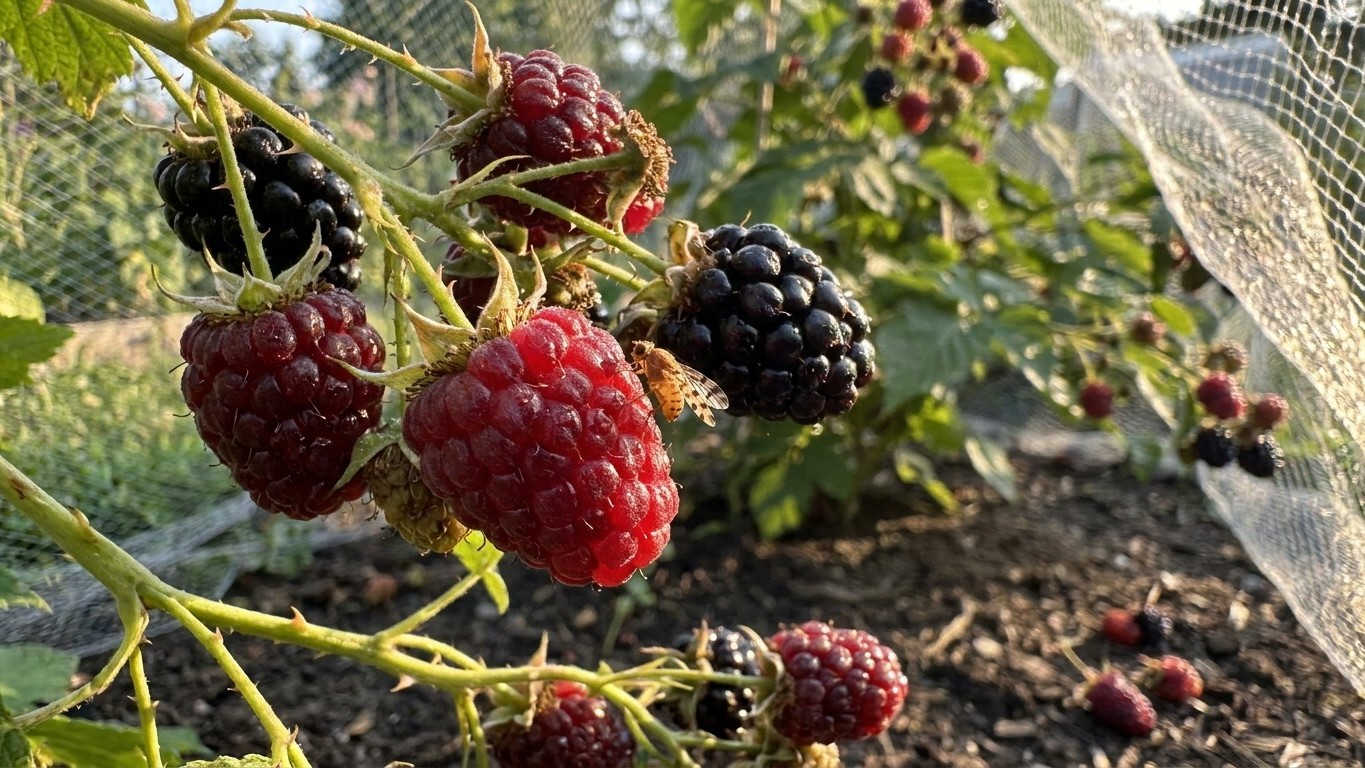
For gardeners with a manageable number of plants, fine-mesh exclusion netting draped over raspberry canes, blueberry bushes, or cherry trees before fruit starts to color can physically block adult flies from reaching the crop. Mesh needs to be fine enough, generally under a millimeter in opening size, to stop an insect this small, and it has to be secured at the ground to prevent flies from crawling in underneath. This method takes more labor upfront but eliminates the need for repeated insecticide applications on small plantings.
Insecticide Options and Timing for Larger Plantings
Commercial growers and larger home orchards often need chemical control layered on top of cultural practices, especially once trap catches confirm active populations. Products containing spinosad are commonly used in organic and conventional programs and tend to have shorter pre-harvest intervals, which matters given how frequently fruit needs to be picked during an active infestation. Pyrethroid-based insecticides and malathion are also labeled for spotted wing drosophila on various fruit crops, though pre-harvest intervals and label restrictions vary by crop and product.
Rotating between different insecticide classes rather than relying on one repeatedly helps slow the development of resistance, a real concern given how many generations this fly produces in a single season. Applications timed to coincide with fruit coloring, when eggs are most likely to be laid, tend to be more effective than treating on a fixed calendar schedule regardless of ripeness stage.
Anyone using pesticides on fruit intended for consumption should follow label instructions exactly, particularly the pre-harvest interval, which is the minimum number of days required between the last application and picking. These intervals exist because they’re the timeframe needed for residue to drop to a safe level, and they differ from one active ingredient to the next.
What a Bad Infestation Actually Looks Like in the Field
Fruit affected by larval feeding often looks fine from the outside for a day or two, then develops a sunken, water-soaked patch that spreads quickly. Cutting open a suspect raspberry or blueberry sometimes reveals tiny white larvae, though they can be hard to spot without magnification. By the time fruit is visibly mushy or leaking juice, larvae have typically been feeding for several days already.
Commercial growers in the upper Midwest have reported crop losses reaching well into double-digit percentages in years with warm, wet summers and inconsistent monitoring, based on regional extension surveys of berry operations. Home gardeners usually notice the damage as a sudden wave of berries turning to mush within a day of looking perfectly ripe, a pattern that’s become one of the more reliable field signs of this specific pest compared to general fruit spoilage.
Related guides
- Spotted wing drosophila in New Brunswick: When It Shows Up and What Stops It
- Spotted wing drosophila in Newfoundland and Labrador: When It Shows Up and What Stops It
- Spotted wing drosophila in Nova Scotia: When It Shows Up and What Stops It
- Spotted wing drosophila in Prince Edward Island: When It Shows Up and What Stops It