
Tomato hornworms show up in Nebraska gardens between late June and mid-August, with the heaviest feeding damage typically hitting in July when larvae reach their full 4-inch length. One generation per year is the norm across most of the state, though a partial second wave can appear in southeastern Nebraska during unusually warm seasons. Stopping them comes down to three things that actually work: handpicking, applying Bacillus thuringiensis (Bt), and tilling garden soil in fall to destroy overwintering pupae.
That’s the short version. The longer story involves knowing exactly what you’re looking at, why timing matters more than most gardeners realize, and which control methods are worth your time versus which ones are garden folklore.
What a Tomato Hornworm Looks Like in Nebraska Gardens

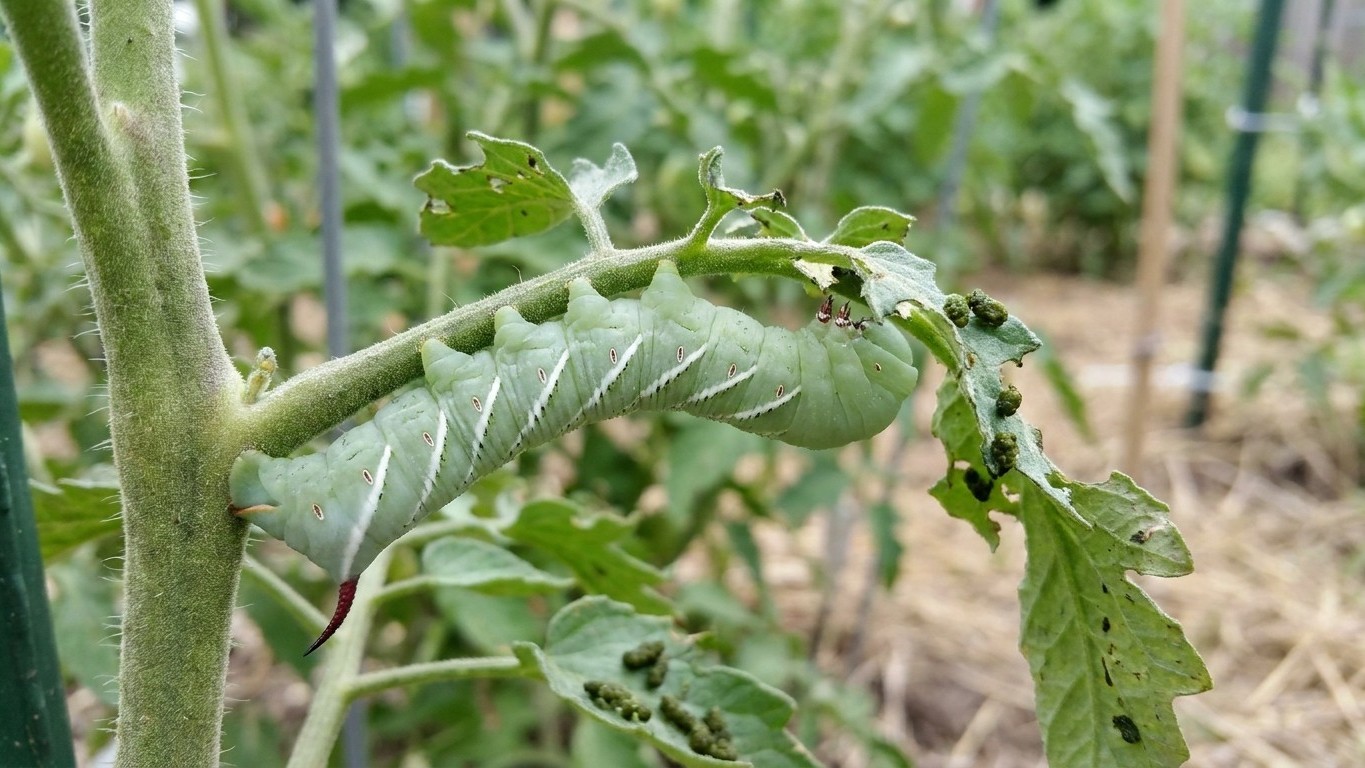
Two nearly identical caterpillars get lumped together under “hornworm” across the Midwest, and Nebraska hosts both. The true tomato hornworm (Manduca quinquemaculata) has eight V-shaped white markings running down each side and a black or dark blue horn at its rear end. Its cousin, the tobacco hornworm (Manduca sexta), carries seven diagonal white stripes and a red horn. Nebraska State University Extension entomologists note that both species feed on tomato plants here, though the tomato hornworm tends to be more common in the state’s row-crop-adjacent gardens.
Either way, the damage looks the same: stripped leaves, chewed stems, and dark green or black droppings (called frass) scattered on the soil or lower leaves. A single mature hornworm can strip an entire tomato branch bare in a day or two, which is why gardeners often notice the damage before they spot the caterpillar itself. The insect’s green coloring blends almost perfectly with tomato foliage, so a plant can look ravaged with no visible culprit for hours.
The Adult Moth Nobody Recognizes
Before it’s a hornworm, it’s a moth, and this is where most home gardeners get confused. The adult form, sometimes called a five-spotted hawk moth or hummingbird moth, has a heavy gray-brown body and a wingspan approaching 5 inches. It hovers at dusk near flowers, feeding on nectar in a way that genuinely resembles a hummingbird. People often assume it’s a beneficial pollinator visitor and leave it alone. It is, in fact, the parent of the pest currently working through the tomato patch.
The Nebraska Timeline: Overwintering, Emergence, and Egg-Laying
Hornworms spend winter as pupae buried 3 to 6 inches deep in garden soil, encased in a hard brown shell. In Nebraska, soil temperatures typically climb enough by late May or early June to trigger adult moth emergence, though a cool spring can push this into mid-June. Once moths emerge, they mate and begin laying single, round, pale green eggs on the undersides of tomato leaves within days.
Eggs hatch in roughly a week, and the resulting larvae go through five growth stages over three to four weeks, each stage marked by a molt. Early-stage caterpillars are small and easy to miss; by the fourth and fifth stages they’re thumb-sized and doing the bulk of the visible damage. After feeding is complete, mature larvae drop to the soil, burrow down, and pupate. In most of Nebraska that pupa simply overwinters and waits for the following spring. In southeastern counties with longer, warmer falls, a portion of that population can emerge as a second generation of moths in August, leading to a smaller second round of caterpillars showing up in September.
This timeline matters for one practical reason: scouting in mid-June, before visible damage appears, catches the problem at the egg or first-instar stage, when control is far easier than waiting until August when caterpillars are already 3 inches long and eating everything in sight.
What Actually Stops Tomato Hornworms
Control options split into three categories: physical removal, biological treatments, and cultural practices that reduce next year’s population. Nebraska’s growing conditions favor a combination approach rather than relying on any single method.
Handpicking Still Works
It sounds primitive, but removing hornworms by hand remains one of the most effective methods for backyard-scale gardens. Check plants in early morning or evening, when the caterpillars are actively feeding and easier to spot against fresh frass on the soil below. Dropping them into soapy water kills them without pesticides. For anyone squeamish about handling a 4-inch caterpillar, a pair of kitchen tongs solves that problem quickly.
Bacillus thuringiensis (Bt)
Bt is a naturally occurring soil bacterium sold under various brand names as a caterpillar-specific insecticide. It works by disrupting the digestive system of caterpillars that ingest treated leaves, and it’s harmless to bees, birds, and pets because it only affects insects in the caterpillar life stage. Application timing matters: Bt breaks down within a few days of exposure to sunlight, so spraying in early morning or evening extends its effectiveness, and reapplying after rain is often necessary. It works best on younger, smaller larvae, another reason early-season scouting pays off.
Leave the Wasp Cocoons Alone
One of the more overlooked natural controls in Nebraska gardens involves braconid wasps, tiny parasitic insects that lay eggs inside hornworm larvae. Infected hornworms develop small white, rice-grain-shaped cocoons covering their backs, and a caterpillar in this state is already doomed, feeding will stop almost entirely. Killing that hornworm destroys the developing wasps inside those cocoons, wasps that would otherwise emerge and parasitize the next generation of hornworms in the same garden. The University of Nebraska-Lincoln’s Nebraska Extension program specifically recommends leaving parasitized hornworms in place rather than removing them, since they function as a self-sustaining biological control once established in a garden.
Fall Tillage Breaks the Cycle
Since hornworm pupae overwinter in the top several inches of soil, tilling garden beds in fall after harvest exposes those pupae to freezing temperatures and hungry birds. This single practice can meaningfully reduce the following year’s hornworm population, particularly in gardens that have had repeat infestations. It’s not a guarantee, moths can still fly in from neighboring properties, but it removes a home-grown source of next year’s problem.
When Chemical Treatment Makes Sense
For gardens with heavy, recurring infestations where Bt and handpicking aren’t keeping pace, broader-spectrum insecticides containing spinosad or permethrin offer another option. Spinosad, derived from soil bacteria, carries a lower toxicity profile toward beneficial insects than synthetic pyrethroids and is often preferred by gardeners trying to protect pollinators visiting nearby flowering plants. Whatever product gets used, applying in the evening after bees have stopped foraging reduces unintended harm to pollinator populations that are active on the same plants during daylight hours.
Rotating tomato plantings to a different bed each year, when garden space allows it, also reduces the odds that overwintering pupae emerge directly beneath next year’s crop. It’s a small adjustment, but combined with fall tillage, it interrupts the pest’s location memory in a way that chemical treatment alone doesn’t address.
A Nebraska-Specific Wrinkle Worth Knowing
Because Nebraska sits at the northern edge of where a second hornworm generation can complete its cycle before frost, gardeners in the Omaha and Lincoln areas sometimes see a smaller resurgence of caterpillars in early September, just as tomato plants are producing their final ripening fruit of the season. This late wave rarely causes the widespread defoliation seen in July, since plant growth is slowing anyway heading into fall, but it can still damage the last harvest if left unchecked. Checking plants weekly through mid-September, rather than assuming the season’s hornworm threat ended in August, catches this second wave before it costs you the last of the crop.
Related guides
- Tomato hornworm in Missouri: When It Shows Up and What Stops It
- Tomato hornworm in Wyoming: When It Shows Up and What Stops It
- Tomato hornworm in Nevada: When It Shows Up and What Stops It
- Tomato hornworm in New Jersey: When It Shows Up and What Stops It
- Tomato hornworm in Arizona: When It Shows Up and What Stops It