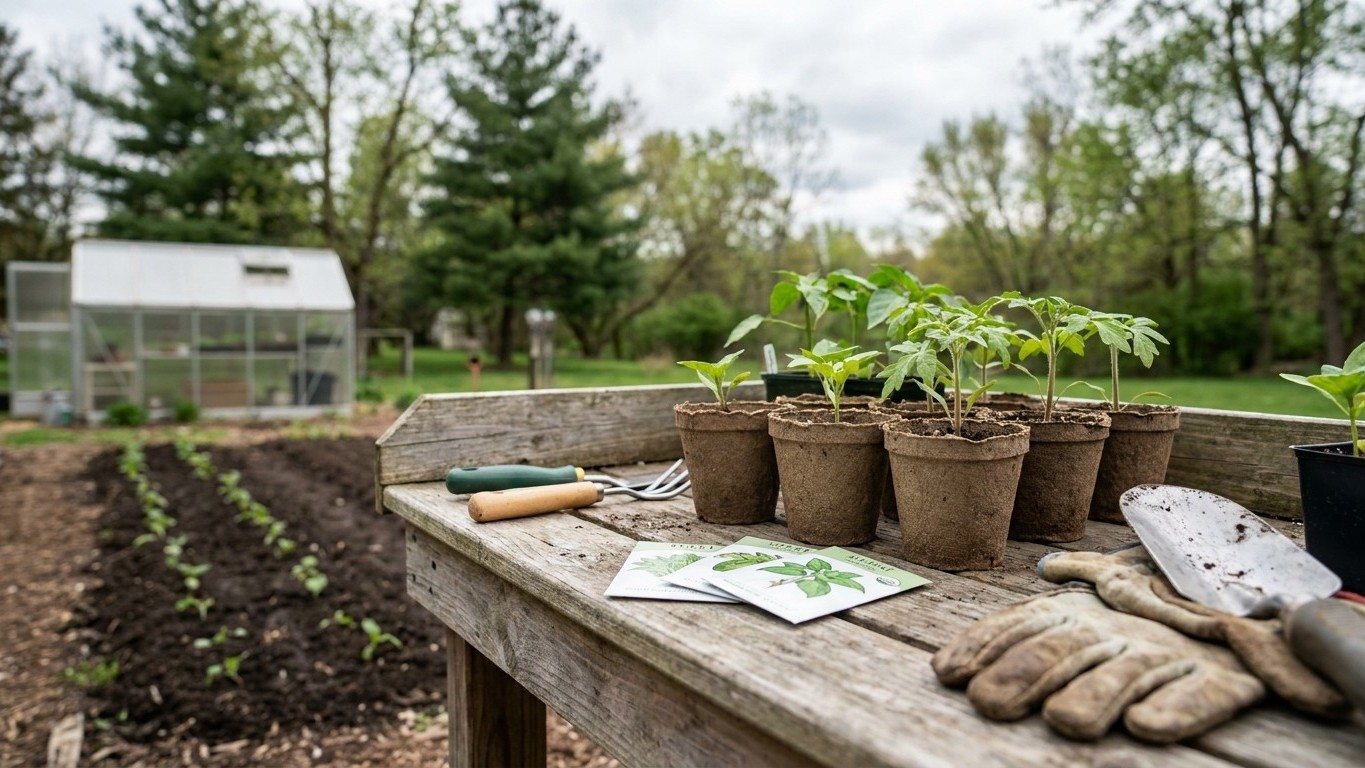

April in Ohio still falls ahead of the last spring frost, which Ohio State University Extension sets at May 5 to May 15 for the Columbus area, USDA zone 6a. That means the ground is open to cold-hardy crops like peas, spinach, onions and seed potatoes, while tomatoes, peppers and other warm-season transplants have to sit and wait for that frost window to close. Pull out a soil thermometer before you sow anything this month. The calendar says spring, but cold, wet soil will rot seed just as fast as a hard freeze would.
What goes in the ground in April

A warm April afternoon in Ohio tells you nothing about what the ground underneath it is doing. That’s the belief that trips people up here: sun on your shoulders, so surely the soil’s ready. Squeeze a handful instead. If it balls up and stays balled, it’s still too wet to work, and anything tilled now will dry into clumps by summer. Once it crumbles, peas, spinach, onion sets, and a handful of other cold-hardy crops can go in the ground.
What’s safe to plant
What actually goes into open ground this month is decided by soil temperature and drainage, not by how warm the afternoon feels. If a handful of soil balls up and stays balled when you squeeze it, it is still too wet to work, and tilling it now will leave clumps that dry into concrete by summer. Once it crumbles instead, the cold-hardy list opens up:
- Peas: shelling, snow and snap types, direct-sown as soon as the soil crumbles
- Spinach, lettuce and other salad greens, direct-sown or set out as small transplants
- Onion sets and onion transplants, plus shallot sets where the ground is workable
- Radishes, carrots and beets, direct-sown in shallow drills
- Kale, collards and Swiss chard, both direct-sown and as hardened-off transplants
- Seed potatoes, once the bed has dried enough to dig without smearing
- Asparagus crowns and rhubarb divisions, planted while still dormant
Garlic and shallots planted in fall are already pushing green shoots by now and need weeding and a side-dressing more than any new planting. Bare-root fruit trees, brambles and other dormant stock can still go in this month if they haven’t already been planted, and a cold frame or a length of row cover over the greens above buys an extra couple of weeks of growth on either end of a cold snap.
What still has to wait
Tomatoes, peppers, eggplant, squash, beans and sweet corn all wait. Every cultivar on the seed rack is timed from the local frost window, not from a page on the calendar, and that math is worked out in full in What to Plant in Ohio in May. If you got a jump on hardy greens or garlic under cover in March, this month is mostly about filling in the gaps with a second or third sowing of the same crops rather than starting anything tender.
What to start under cover
Counting backward from your transplant date
Seed for tomatoes, peppers and eggplant goes indoors now, counted backward from the transplant window rather than from a date on the wall. The cultivars in most Ohio gardens are set out mid May to late May, once the soil has warmed past the last frost that OSU Extension puts at May 5 to May 15 for Columbus. Seed catalogs generally call for six to eight weeks of growing time indoors before a tomato transplant is ready for the garden. Counted back from a mid-May setout, eight weeks lands in mid March. Counted back from a late-May setout, six weeks lands in mid April. That puts the realistic indoor-sowing window somewhere between mid March and mid April, depending on which end of the transplant range you are aiming for and how much light your setup can give the seedlings.
The catalog figures below are days to maturity counted from transplant, not from seed, and they shift by a week or two either way depending on the season:
| Cultivar | Days to maturity | Set out | First ripe |
|---|---|---|---|
| Sun Gold | 57 days | mid May to late May | late July |
| Sakura | 55 days | mid May to late May | late July |
| Celebrity Plus | 78 days | mid May to late May | mid August |
| Amish Paste | 85 days | mid May to late May | late August |
Two ways to get the timing wrong
Start too early and the seedlings outgrow their pots before the soil is warm enough to take them, so they go leggy, rootbound and stressed weeks before they ever see the garden. Start too late and they never reach a sturdy transplant size in time, which pushes first harvest back and eats into the margin before the fall frost OSU Extension places at October 5 to October 15. A slow-maturing paste tomato like Amish Paste, with only 44 days of margin before that fall frost window, has the least room in the schedule to absorb a late start.
What is ready to pick
Open ground in April is still mostly bare, and the fresh harvest is thin compared with summer. What comes out of the garden now is largely what survived the winter in place: kale, spinach and leeks left in the ground under mulch or row cover often resume growth as the soil warms and can be picked leaf by leaf. Mache and claytonia sown under a cold frame the previous fall are frequently the first true harvest, cut while the leaves are still small and tender.
Cold frames, sprouts and stored crops
A cold frame or low tunnel holding lettuce, spinach or scallions from a late-winter sowing usually has something worth cutting by now. Rhubarb stalks are ready to pull once they are long enough to grip firmly and the leaf has begun to unfurl. Established asparagus beds send up their first spears this month, and the general rule is to cut or snap them while they are still tight and straight, before the tip starts to feather out.
Indoors, sprouts and microgreens on a windowsill or under a grow light are the most reliable fresh crop of the month, ready within days rather than weeks. It is also the last call to go through the root cellar or pantry: check stored potatoes, winter squash and onions for soft spots, sprouting eyes or a sweetish smell, and pull anything that is turning before it spreads to the rest of the bin. Squash with a soft patch near the stem or onions gone soft at the neck should be used first, not stored on and hoped for.
The jobs that matter this month

This is the month the rest of the season gets built on, even when nothing new goes into the ground. Fruit trees, brambles and grapevines still dormant or just breaking bud need their last pruning cuts made before the buds fully open, since cutting into active growth costs the plant stored energy it needs for the season ahead. If pruning slipped past in late winter, April is the last realistic window before it does more harm than good.
Soil, compost and beds
A soil test taken now gives results back in time to actually amend the beds before they fill up with plants, rather than guessing at fertility all season. Compost piles that sat quiet over winter need turning to get air back into them, and any finished compost on top should go straight onto beds that will take an early crop. Raised bed frames, trellis posts and fencing are far easier to repair while the bed is still empty than after the peas and beans are climbing them.
Pea and sweet pea supports should go up before the vines need them, not after they have flopped over each other in a tangle. The same goes for tomato cages and stakes: setting them in an empty bed takes minutes, and jamming a cage over an established plant in June tends to snap stems.
Scouting and hardening off
Warming soil wakes up slugs, cutworms and overwintering beetles well before most crops are up to defend themselves, so a walk through the beds every few days catches early damage while it is still minor. Any transplants started indoors that are approaching their setout window need to begin hardening off, moved outside for a short and increasing stretch of time each day so the shift to full sun and wind does not stall them the week they go into the ground.
What not to do in April
The most expensive mistake this month is trusting the air temperature instead of the soil. A run of warm afternoons can make a tomato transplant look like a good idea weeks before the soil has actually caught up, and cold soil around the roots stalls growth so badly that a later, properly timed transplant often catches up and passes it. Wait for the mid-May to late-May setout window that matches the local frost dates OSU Extension publishes, not for a lucky stretch of warm weather.
Uncovering, feeding and digging too soon
Pulling row cover or mulch off too early after a mild week is the second classic error. The frost window OSU Extension sets at May 5 to May 15 for Columbus means a late frost is still fully possible well into the month, and tender growth that got used to the protection is more exposed once it is gone.
Do not front-load nitrogen on crops that are not yet growing fast enough to use it. Heavy early nitrogen on garlic, alliums or brassicas before the plant is actively bulking up pushes soft, leafy growth that is more attractive to pests and slower to hold up under a cold snap, and it is wasted anyway if the plant cannot take it up yet. Base feeding on what the soil test from the section above actually shows, not on a fixed date.
Finally, resist tilling or digging a bed the moment it looks dry on top. Soil that squeezes into a ribbon instead of crumbling is still wet a few inches down, and working it now compacts the structure for the whole season rather than loosening it.
Checking this against your own county
A single statewide month is a starting point, not an instruction. Ohio runs from the Lake Erie shoreline to the Ohio River, and elevation, lake effect and simple latitude move the frost window by weeks in either direction from the Columbus figures used here. A garden near the lake can see a later, more compressed spring than one in the southern hill country, and a high ridge in Appalachian Ohio behaves differently again from the valley floor below it.
Check your own numbers against Ohio State University Extension before locking in a planting date, and use the Ohio planting calendar to see how this month connects to the ones before and after it.
Common questions
Can I plant tomatoes in April if I cover them at night?
Row cover protects against a light frost but it does not warm the soil, and cold soil around the roots is what actually stalls a tomato transplant. Wait for the mid-May to late-May setout window worked out from the local frost dates, and use covers to extend the season at the edges instead of pulling the whole planting forward.
Is it too late to plant garlic in April?
For a full-size bulb harvest, yes. Garlic wants a fall planting and a long cold spell to size up properly. Cloves planted in spring will still grow, but they usually bulb small or not at all, so April clove planting is better treated as a green garlic crop, pulled young for its stalks and leaves rather than left to bulb.
What if the ground is still frozen or too wet to work in April?
That’s common in the wetter or higher parts of the state, and it just means the schedule above shifts later for you. Use the extra time to finish soil tests, pruning and bed repairs from the jobs section, and hold off on digging or tilling until a handful of soil crumbles instead of balling up.
Should I start pepper seeds at the same time as tomatoes?
Peppers germinate slower and grow more slowly than tomatoes early on, so many gardeners start them at the earlier end of the indoor-sowing window rather than the same week as tomatoes. If both go in on the same day, expect the peppers to still look smaller when the tomatoes are ready to pot up.