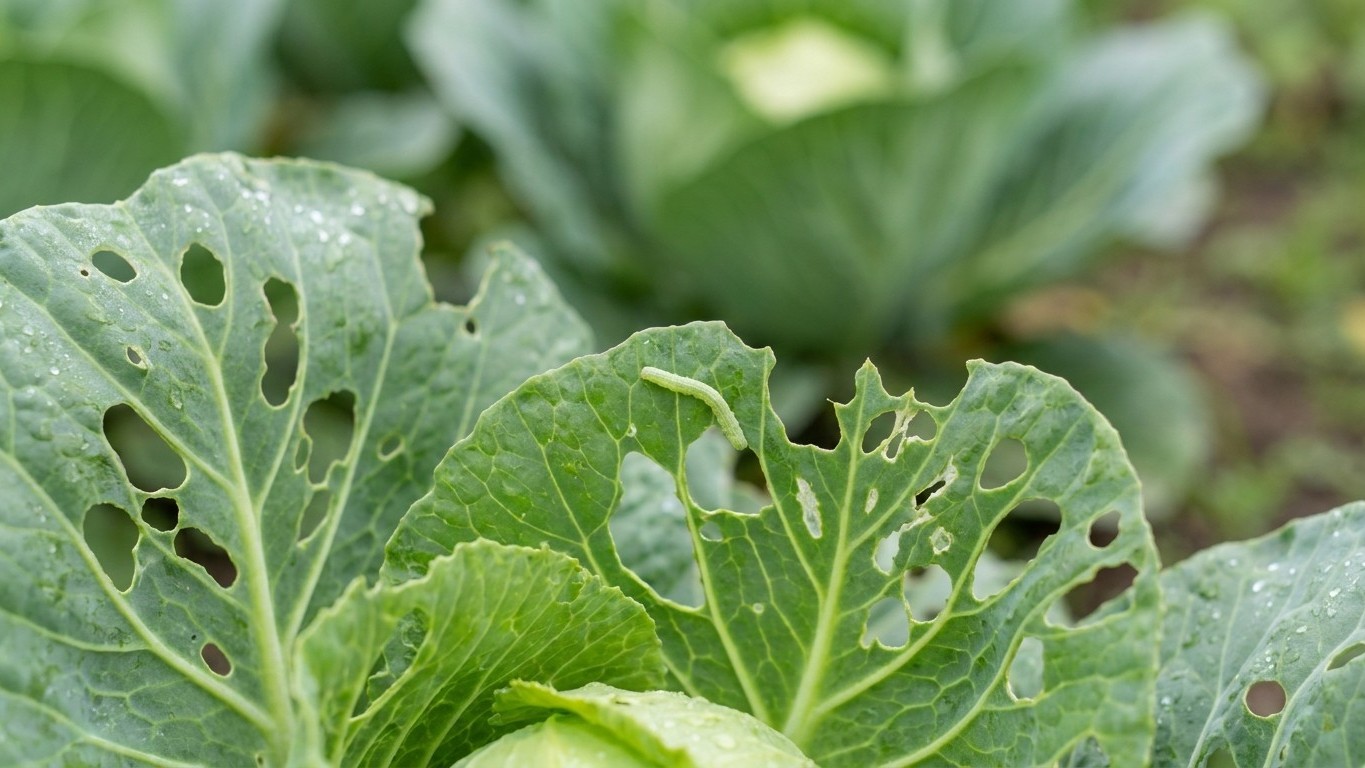

Cabbage looper doesn’t survive Wisconsin winters. It shows up nearly every growing season anyway, riding wind currents up from the Gulf Coast and southern states, and by the time gardeners spot the ragged holes in their cabbage leaves, the moths have often already laid several rounds of eggs. Knowing when this pest typically arrives and what actually knocks it back can save a cole crop patch from turning into lace by August.
Why Cabbage Looper Can’t Overwinter Here, But Keeps Coming Back

Wisconsin winters are lethal to cabbage looper (Trichoplusia ni) in every life stage. No pupae, no eggs, no adults survive a hard freeze buried in soil or plant debris. That’s different from pests like the Colorado potato beetle, which tucks into the ground and waits out the cold right here in the state.
Cabbage looper instead behaves like a seasonal visitor. Adult moths get swept north on storm fronts and prevailing wind patterns starting in late spring, originating from populations that persist year-round in warmer climates such as the Gulf states and parts of the Southwest. This is the same migratory pattern seen in some other agricultural moths, though cabbage looper tends to move in smaller, less predictable waves than something like the fall armyworm.
What that means for anyone growing cabbage, broccoli, or kale in a backyard plot: the pest pressure resets every year. Some seasons bring heavy moth flights and noticeable defoliation by midsummer. Other years the migration is light and damage stays minor. Weather patterns over the Gulf and Midwest in a given spring play a bigger role in how bad the year gets than anything a gardener does locally.
When Cabbage Looper Typically Shows Up in Wisconsin
First detections in Wisconsin usually cluster in June, with populations building through July and peaking in late summer. Because the moths arrive already mated and ready to lay eggs, the visible larval damage often lags the actual arrival by two to three weeks, which is why the pest can seem to appear out of nowhere on a plant that looked fine the week before.
Multiple overlapping generations are possible in a single Wisconsin season once the moths establish. A female can lay several hundred eggs over her lifespan, scattering them singly rather than in clusters, and warm summer stretches accelerate the egg-to-adult cycle. That’s why late-season plantings of fall cole crops, kale and collards put in during July, often take the heaviest hits: they’re maturing right as looper populations reach their seasonal high point.
Pest monitoring networks that track vegetable insects across the Midwest use pheromone traps to flag when moth flights intensify in a given region. Home gardeners without access to trap data can watch for a simpler signal: the first small, ragged feeding holes on outer cabbage or broccoli leaves in early-to-mid summer are usually the tip-off that looper larvae have hatched nearby.
Identifying the Larvae Before They Do Damage
The larva is the stage that does all the eating, and it has a distinctive way of moving that sets it apart from other cabbage pests. Cabbage looper caterpillars are pale green with faint white stripes running down the back, and they lack a full set of prolegs in the middle of the body. That missing set forces the caterpillar to arch its back into a loop as it crawls, the same inchworm motion that gives the pest its common name.
Adults are easier to overlook. The moth is mottled gray-brown with a small silvery mark shaped like a figure-8 or a check mark near the center of each forewing, and it flies mostly at dusk and after dark, so most gardeners never actually see one. Eggs are pale, ribbed, and laid singly on the underside of leaves, which makes them harder to spot during routine scouting than the clustered egg masses left by some other moth pests.
Confusing cabbage looper with imported cabbageworm is common, since both attack the same crops at the same time of year. The cabbageworm caterpillar is velvety green with a faint yellow stripe and crawls in a straight line rather than looping, and the adult is the familiar white butterfly seen fluttering over garden beds in daylight. Telling the two apart matters because control timing and thresholds differ slightly between them.
What Gets Damaged and How Bad It Gets
Cole crops take the brunt of it: cabbage, broccoli, cauliflower, kale, collards, and Brussels sprouts are all preferred hosts. Younger larvae chew small, irregular holes in outer leaves, but larger caterpillars can strip a leaf down to the veins and bore into developing cabbage heads or broccoli crowns, leaving behind wet, greenish frass that fouls the harvestable part of the plant.
Beyond cole crops, cabbage looper feeds on a surprisingly wide menu that includes lettuce, spinach, tomato, potato, and even some ornamentals and cotton in warmer growing regions. That broad host range is part of why the pest has persisted as an agricultural concern across most of the continental United States, not just in cabbage country.
The economic threshold for commercial growers usually kicks in well before a home gardener would notice trouble, since a few larvae per plant can still be tolerated on crops grown for personal use. Cosmetic damage on outer leaves rarely ruins a harvest. The real risk is late-season buildup on a maturing head crop, where a caterpillar tunneling into a cabbage head or broccoli crown can contaminate the part actually meant for the table.
What Actually Stops Cabbage Looper
Bacillus thuringiensis, sold under various Bt product names at garden centers, remains the most reliable single tool against cabbage looper for both organic and conventional growers. Bt works as a stomach poison that only affects caterpillars after they ingest treated leaf tissue, which means it spares bees, ladybugs, and most other beneficial insects in the garden. It’s most effective against young larvae still in their early growth stages, so timing the application to coincide with hatching, rather than waiting until caterpillars are large, makes a real difference in results.
Physical exclusion works well for gardeners who want to skip sprays entirely. Floating row covers placed over young transplants before moths start laying eggs keep adults from reaching the plants in the first place. This approach only works if the cover goes on early, since it does nothing once eggs or larvae are already present, and it needs to come off before pollination is required on crops that need it.
Natural predators and parasites help suppress populations without any intervention at all. Several species of parasitic wasps, including Trichogramma, attack cabbage looper eggs, and general garden predators like lacewings, minute pirate bugs, and some ground beetles feed on young larvae. Avoiding broad-spectrum insecticide sprays preserves these natural checks, which matters because heavy-handed spraying for one pest can wipe out the predators keeping several others in check at the same time.
Crop rotation offers limited benefit against this particular pest, unlike its usefulness against soil-dwelling insects that overwinter locally. Because cabbage looper migrates in fresh each year rather than persisting in Wisconsin soil, moving cole crops to a different bed won’t stop moths from finding them. What does help is reducing weedy hosts and volunteer plants nearby, since some related weeds in the mustard family can serve as early-season egg-laying sites before the main crop is even in the ground.
Scouting and Timing Applications
Checking the undersides of leaves weekly starting in early summer catches egg-laying before it turns into a defoliation problem. A hand lens helps spot the pale, ribbed eggs, though most gardeners find it easier to simply look for the first small feeding holes and flip nearby leaves to check for caterpillars already at work.
Applying Bt or another targeted product in the evening improves effectiveness, since the product needs to be on the leaf surface when nocturnal larvae feed, and UV exposure during daylight hours breaks down Bt fairly quickly. A second application seven to ten days later usually catches any larvae that hatched after the first treatment, since eggs laid at slightly different times won’t all hatch on the same day.
Growers who track pest arrival year over year sometimes notice that a mild, wet spring in the southern states one year correlates with a heavier cabbage looper flight reaching Wisconsin that same summer, since the moths ride the same weather systems that bring warm, humid air north. It’s not a perfect predictor, but a rough one worth keeping in mind when deciding how early to put row covers on next season’s cole crop bed.