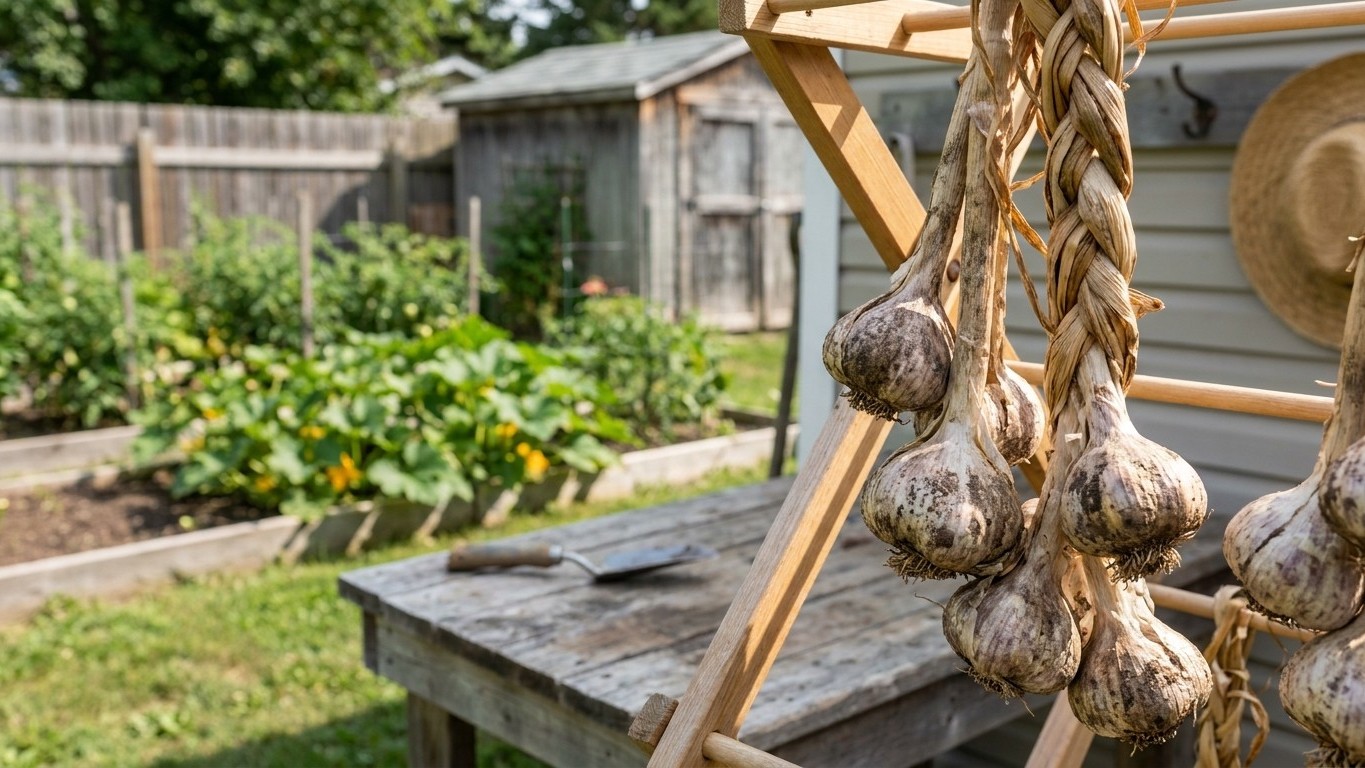

Garlic in Wyoming comes out of the ground by leaf color and bulb feel, not by a date on the calendar. Most gardeners here lift bulbs when the lower third to half of the leaves have browned and the rest are still green, usually well before the first hint of fall cold. Curing then takes two to four weeks in a shaded, airy spot, and storage runs through a winter that can turn an unheated shed into a freezer overnight.
When garlic is ready to lift in Wyoming
Garlic planted the previous autumn spends the following summer bulking underground, and the plant itself tells you when it’s done. The standard signal, used across climates, is leaf dieback from the bottom up: once roughly half the leaves have gone brown and papery while the top four or five stay green, the bulb has usually stopped sizing up and started forming the protective wrappers it needs for storage. Pull one test bulb, brush off the soil, and look for distinct, plump cloves with skins that haven’t split.
Wyoming’s growing season shapes how much margin you have to get this right. At elevations around 6,000 feet, the frost-free window runs roughly 130 days, according to NOAA climate data, and at higher elevations frost can show up in any month of the year. That’s a tight box for a crop that needs a full season of undisturbed bulb growth, which is exactly why watching the plant matters more here than in a place with a long, forgiving fall.
The first fall frost in this region falls, on average, somewhere between September 24 and October 5, based on NOAA NCEI’s 1991-2020 Climate Normals for station USW00024018. That’s a midpoint, not a guarantee. In roughly half of all years, the first freeze arrives later than that window, and in the other half it arrives earlier. Treat it as a planning marker for closing out the garden season, not as a signal tied directly to garlic harvest, since bulbs typically come up in mid-summer, well ahead of that fall freeze risk.
Elevation changes the timeline more than the county line does
Two gardens forty miles apart can mature garlic weeks apart if one sits in a river valley and the other climbs toward 7,000 feet. Rather than counting days from planting, track soil warmth in spring and leaf condition in summer. If you garden at higher elevation, build in slack: expect maturity to run later, and don’t be surprised if a cold snap slows things down even in what should be the heart of summer.
Curing it, and where to hang it here
Curing is the step that turns a freshly dug bulb into something that will actually keep. Fresh garlic is roughly two-thirds water by weight, and curing dries down the outer wrapper layers and the neck until they seal the cloves off from air and moisture. Skip this step, or rush it, and bulbs that looked perfect at harvest will soften or mold within weeks of going into storage.
The process itself is simple: bunch a handful of plants together with the roots and tops still attached, or lay them in a single layer on a screen or mesh rack, and leave them somewhere out of direct sun with steady airflow for two to four weeks. Don’t wash the bulbs first. Soil brushes off easily once dry, and washing before curing invites rot.
Wyoming’s dry, high-elevation air is generally an advantage for curing, since low ambient humidity pulls moisture out of the wrappers faster than it would in a muggy climate. The catch is sun and wind. Direct sunlight on curing bulbs can scald the outer layers, and a spot with too much direct wind exposure can dry the necks unevenly, leaving cloves inside still soft. A garage with the door cracked, a covered porch, a barn aisle, or a shed with a screened window all work, as long as the bulbs stay shaded and air keeps moving around them rather than blasting directly on one side.
Signs curing is finished
Squeeze the neck just above the bulb. When it’s fully cured, it feels dry and tight rather than fleshy. The outer wrapper should rustle like paper, and the roots will have shriveled to thin, brittle threads. At that point, trim the tops to an inch or two and brush off loose soil, or leave the tops on for braiding if the variety and stem type allow it.
Storing it through a Wyoming winter
Once cured, garlic needs a storage spot that stays cool, dark, dry, and out of temperature swings, and this is where Wyoming’s winters demand extra thought. A cellar corner, an interior closet on an outside wall, or an insulated pantry tends to hold conditions steadier than an attached garage or a detached shed, both of which can swing from cool to well below freezing depending on the week.
Garlic that actually freezes in storage doesn’t necessarily look ruined right away, but frozen and thawed cloves turn soft and lose their keeping quality fast, sometimes rotting from the inside before any outward sign shows. If your only storage option is an unheated outbuilding, insulate the container itself, mesh bags nested inside a straw-lined box work better than a bare cardboard box on a concrete floor, and check bulbs periodically through the coldest stretch of winter.
Air circulation matters as much as temperature. Braids, mesh bags, or bulbs spread in shallow boxes all let air move around individual heads, which slows the spread of any mold that starts on one bulb. Stacking garlic tightly in a sealed plastic bag or bin traps moisture that individual bulbs shed even after curing, and that trapped humidity is often what starts rot in storage rather than anything wrong with the bulb going in.
Watching for sprouting
A storage spot that’s too warm will eventually push cloves to sprout, using up the stored energy in the clove and leaving a soft, less flavorful center. If bulbs start sending up green shoots in January, that’s usually a sign the storage location is running warmer than ideal, and moving the remaining stock to a cooler spot, or simply using it up sooner, is the practical fix.
What goes wrong here
University of Wyoming Extension documents a range of pests found in the state’s gardens, and several of them are the kind of general soil and foliage feeders that can turn up in an allium bed even though they aren’t garlic specialists. The documented list includes:
- Aphids, which the extension notes appearing on wild hosts around mid-May
- Blister beetles
- Cabbage worms
- Colorado potato beetle
- Cutworms
- Flea beetles
- Garden slug
- Grasshoppers
- Mexican bean beetle
- Potato psyllid
- Root maggots
- Sugarbeet root aphid on table beets
- Tomato hornworm
Of these, root maggots, cutworms, and garden slugs are the ones most likely to bother a garlic bed directly, since they work at or below the soil surface where garlic roots and lower stems sit. Grasshoppers and aphids tend to show up more broadly across the garden and can still stress young garlic foliage in a bad year. If you’re seeing damage and want confirmation on identification or treatment timing for your county, University of Wyoming Extension is the source that tracks these populations locally.
More often, though, what goes wrong with garlic in this state has nothing to do with insects. Bulbs lifted too early, before the lower leaves have browned, come up small and cure poorly because the wrappers haven’t matured enough to seal properly. Bulbs left too long in the ground can split their wrappers or separate into loose cloves, which shortens storage life dramatically. And curing bulbs in direct sun or in a sealed, humid space causes more losses than any pest on the extension’s list, simply because the drying step gets skipped or rushed under a short, busy fall.
Common questions
How do I know garlic is ready to harvest in Wyoming, not just by the calendar?
Watch the leaves, not the date. When roughly the bottom half have browned and the top four or five stay green, pull a test bulb and check that the cloves are plump and distinct under an intact skin.
How long does garlic need to cure in Wyoming’s dry climate?
Two to four weeks in a shaded, ventilated spot is the general range. The dry high-elevation air here tends to speed drying, but bulbs still need to feel tight-necked and papery-skinned before you call curing done.
Can I store garlic in an unheated garage over a Wyoming winter?
It’s risky. Temperatures in unheated outbuildings here can drop well below freezing, and garlic that freezes and thaws in storage loses quality fast. An insulated interior space, or an insulated container inside the outbuilding, holds up better.
Does elevation change when garlic matures in Wyoming?
Yes. Higher elevations have a shorter frost-free season, roughly 130 days around 6,000 feet, and frost is possible in any month at higher elevations, so gardens at higher elevation often see garlic mature later and need extra caution against early cold.