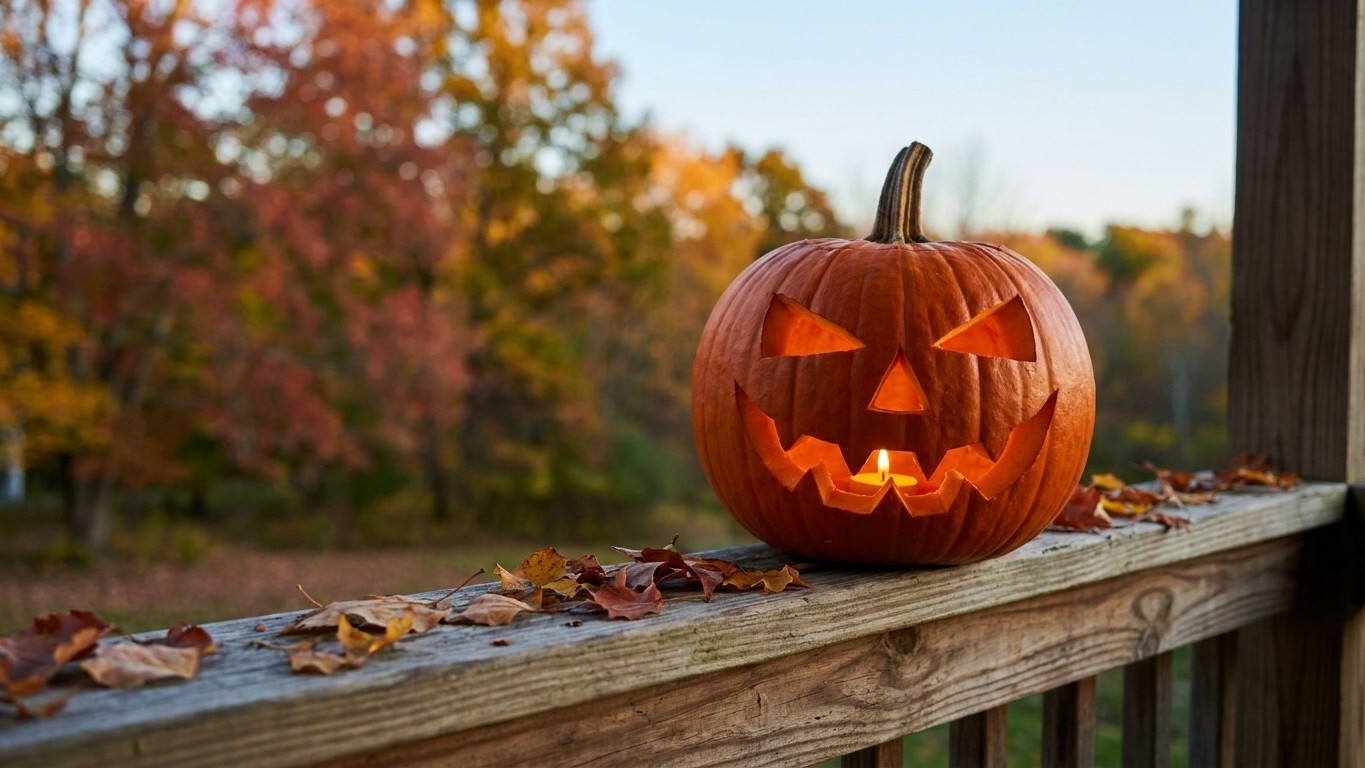

Connecticut’s mean first fall frost lands somewhere between October 28 and November 10, which puts it right on top of Halloween itself. That means a pumpkin left out on a porch through the month isn’t guaranteed a frost-free run to the finish line, but it isn’t guaranteed an early freeze either. Here’s how to read that window and time your carving around it.
The short answer

The National Weather Service’s Bridgeport station, the reference point for southwestern Connecticut’s coast, shows a mean first fall frost occurring somewhere in that October 28 to November 10 stretch. That’s an average drawn from three decades of data, not a promise for any single year, and the word “around” matters here more than usual. Some years the freeze shows up a few days before Halloween. Other years it holds off until the second week of November. Either is normal.
What that spread means in practice: a carved pumpkin sitting outside on the coast has a fair chance of making it to Halloween without ever seeing a hard freeze. But the odds tighten the closer you get to November 10, and they tighten faster the farther you get from Long Island Sound. So the safest working window for carving is the last week before Halloween, roughly three to seven days ahead of it, rather than the two or three weeks some people carve at the start of October.
The reasoning is straightforward. A carved pumpkin has an open, exposed interior the moment you cut into it. Freezing temperatures turn that interior mushy and collapse the whole thing within a day or two of the thaw. Warmth, on the other hand, speeds up mold and rot even without frost involved. Carving closer to Halloween shrinks the number of days either process has to work on an already-cut pumpkin, which is really the only lever you control.
None of this is a claim that frost arrives on a fixed date. It’s a range, and Connecticut sits close enough to the middle of that range that both outcomes, an early freeze and a mild run to Halloween, are plausible in any given year. Treat the window as a planning tool, not a guarantee, and lean toward carving later rather than earlier if you want the finished jack-o’-lantern looking its best on the actual night.
Frost or heat: which one gets it here
A whole, uncarved pumpkin keeps best somewhere between 45 and 50 degrees Fahrenheit, according to University of Illinois Extension. That’s a narrow, specific band, and the question for any state is which direction the local climate tends to push a pumpkin sitting outside in late October: colder than that band, or warmer than it.
The cold end
Connecticut’s cold-season signature is clear from the numbers. The coldest month’s average daily minimum runs 24.4 degrees Fahrenheit at the Bridgeport reference station, and that’s the coastal, mildest part of the state. Inland towns and the northwest corner run colder than that figure, sometimes considerably so, because they lack the moderating effect of the Sound. Combine that winter profile with a first fall frost that can arrive as early as October 28, and it’s clear which risk dominates here: freezing, not heat. A pumpkin left outside through late October in Connecticut is far more likely to get nipped by frost than to spoil from warm nights.
The warm end
Warmth is a real concern in the Deep South and along the Gulf Coast, where late October afternoons routinely climb past that 50-degree storage ceiling and stay there. Connecticut doesn’t share that problem. Daytime highs in late October typically sit in a moderate range, and nights cool off well below 50 as the month goes on. If anything, the risk of the pumpkin sitting too warm applies mainly indoors, on a heated porch or near a sunny window, not to the outdoor climate itself.
So the answer for this state is unambiguous: watch the cold side of the thermometer, not the warm side. A porch, garage, or shaded step that stays above freezing but doesn’t climb much past 50 is close to ideal, and that’s a much easier target to hit here than in a warmer climate zone.
Where to keep it until you carve
Getting the pumpkin’s storage location right matters more than any trick performed after carving, since University of Illinois Extension research covers whole-pumpkin storage in detail but publishes nothing about extending a carved pumpkin’s life once it’s cut. That’s the honest limit of what’s known, and it puts the emphasis squarely on where the pumpkin sits before you ever pick up a knife.
- An unheated garage or enclosed porch. These spaces in Connecticut homes typically track close to that 45-50 degree band through late October, especially compared to a heated living room or a sun-exposed stoop.
- A cool basement corner, away from the furnace. Basements run steady and dark, which suits a pumpkin well, but keep it clear of any heating equipment or ductwork that pushes the local temperature up.
- Shade, not direct sun. Even on a cold day, direct sunlight can heat the pumpkin’s skin enough to speed up softening. A north-facing step or a covered entryway beats an open, sun-facing porch rail.
- Away from ripening fruit. Apples, potatoes, and tomatoes release a gas as they ripen that accelerates a pumpkin’s aging. A porch table shared with a bowl of apples is, according to University of Illinois Extension, one of the worst spots for it.
- Off bare concrete or damp ground. Set it on a board, straw, or a folded towel. Sustained contact with cold, wet concrete traps moisture against the rind and invites soft spots.
None of this changes once you carve. Carving opens the interior to air, and neither University of Illinois Extension nor any other land-grant extension office publishes a timeline for how long a carved pumpkin lasts, or a treatment that reliably extends it. What actually works is Choosing a Pumpkin with 1 to 2 inches of stem intact, since that stem functions as a seal and a broken one exposes the pumpkin to rot far earlier than expected, keeping it whole for as long as possible, and carving it close to the day you plan to display it.
Checking this against your own county
Bridgeport’s frost data is coastal, and coastal Connecticut is the mildest slice of the state by a wide margin. Inland counties, and especially the northwest corner around Litchfield, see meaningfully earlier frosts and colder autumn nights than the numbers above suggest. If you’re carving in Torrington, Norfolk, or anywhere well away from the shoreline, treat the October 28 date as optimistic rather than typical for your yard.
The most reliable way to check your specific location is UConn Extension, Connecticut’s land-grant university extension service, available at extension.uconn.edu. Local extension offices track frost patterns and growing-season data at a finer level than any statewide average can offer, and they’re the right first call before you commit to a carving date based on a coastal reference station alone.
Common questions
Does a light frost ruin an uncarved pumpkin?
A brief, light frost on the rind of a whole pumpkin usually isn’t fatal the way it is for a carved one. The intact shell offers some protection. A hard freeze that penetrates the flesh is a different story and will soften the pumpkin quickly.
Should I carve earlier if I live inland or in the northwest hills?
Given that inland Connecticut runs colder and frosts earlier than the Bridgeport reference point, it makes sense to lean toward the earlier end of the carving window, closer to a week before Halloween rather than three or four days, and to keep a closer eye on overnight forecasts.
Is it better to store the pumpkin outside or bring it inside at night?
An unheated garage or enclosed porch that stays above freezing is usually the better call than a heated indoor room, since indoor heat can push the pumpkin above that 45-50 degree band and speed up softening.
How long will a whole pumpkin actually keep?
University of Illinois Extension puts whole-pumpkin storage at three to six months under the right conditions, cool, dark, and around 45-50 degrees. That figure applies only to an intact pumpkin; once it’s carved, there’s no published timeline, so the safest approach is to carve it close to when you’ll display it.