
Yukon’s summer rain totals about 4.2 inches from June through August, with the driest month, June, delivering just 1.28 inches. Days over 90F essentially don’t happen here, the climate record shows 0.0 a year. That combination means the risk isn’t scorched plants, it’s a garden that looks fine on the surface while roots sit thirsty two inches down.
What changes here

Two numbers from the climate record set the terms for every Yukon garden bed: 1.28 inches of rain in June, the driest month of summer, and 0.0 days a year that reach 90F. Together they describe a garden that almost never bakes but also almost never gets soaked from above. A bed that wants roughly an inch of water a week is only getting a fraction of that from the sky in an average June week.
The arithmetic is straightforward. Spread 1.28 inches across June’s 30 days and it works out to a bit under 0.3 inch a week from rainfall alone. That leaves about 0.7 inch a week for the gardener to carry, water in, or run through a soaker hose, assuming the standard inch-a-week guideline holds for whatever’s growing. July brings 1.5 inches and August 1.41, both still short of that inch-a-week mark across a full month, so the shortfall doesn’t close much as summer goes on.
The 0.0 days above 90F changes what that shortfall means in practice. Elsewhere in the country, a rain deficit paired with heat above 90F can turn into trouble inside days, since evaporation runs high and soil dries from the top down fast. Yukon’s cooler air slows that clock considerably. Water still leaves the soil through evaporation and plant transpiration, just at a gentler pace, so a missed week of watering here is a setback rather than the kind of emergency it becomes in a hotter territory.
Soil texture decides how far that 0.7 inch actually reaches. On sandy ground, water drains through within hours, so the same weekly amount needs splitting into smaller, more frequent doses to keep moisture at root depth. On heavy clay, that inch can sit in the top few inches of soil for days, which sounds generous until the roots below stay dry because the water never worked downward. Neither type gets a free pass from the low June rainfall, they just fail in different directions if the gardener doesn’t adjust the routine for it.
How to water when it matters
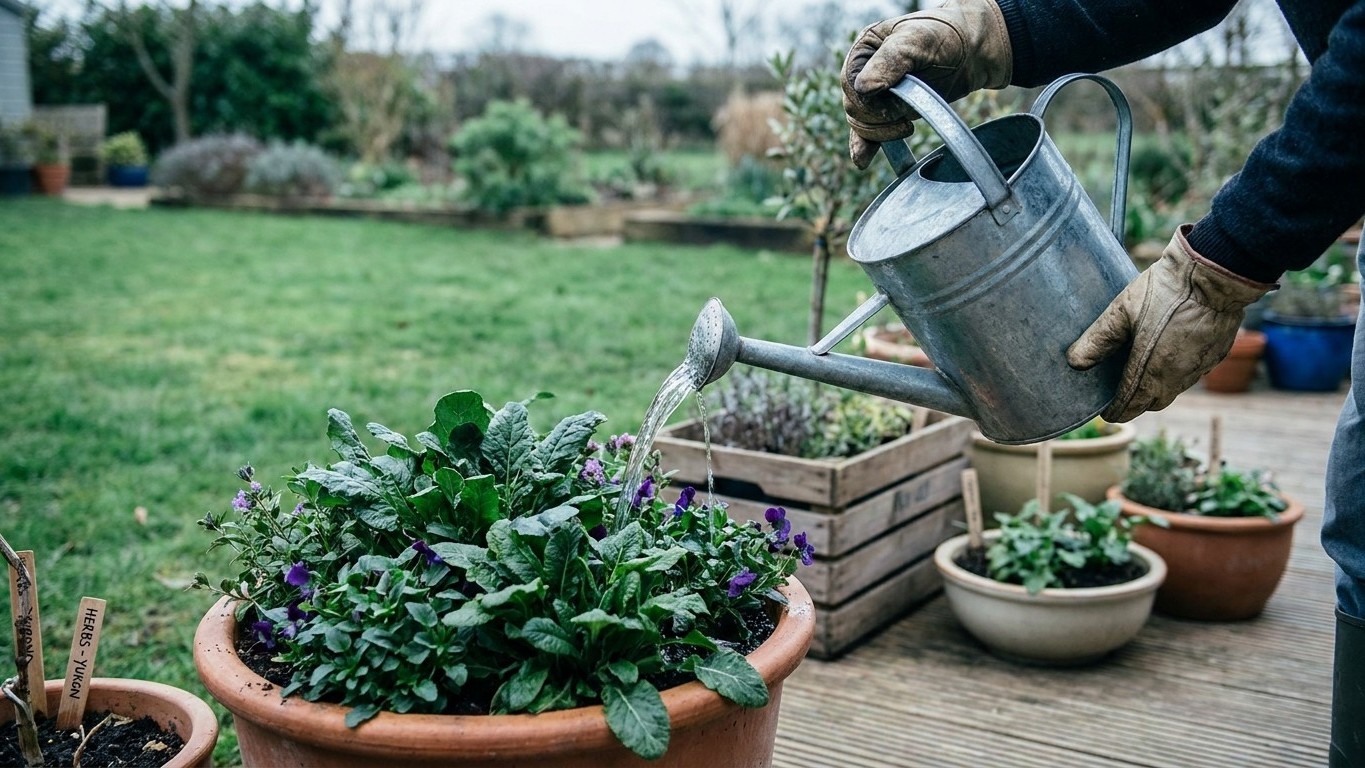
The method that works on this ground is deep and infrequent, delivered at the base of the plant, in the morning. Each part earns its place. Deep watering pushes moisture down where roots that reach for it grow strong; a shallow daily splash trains roots to stay near the surface, right where the drying air pulls moisture out fastest. Watering at the base rather than overhead means the water goes where it’s used instead of evaporating off leaves or drifting on wind. Morning watering gives the day’s mild warmth time to dry any wet foliage before evening, cutting the window fungal disease needs to take hold overnight.
Checking the soil matters more than checking the sky, especially in a place where June brings just 1.28 inches spread thin across the month. A finger pushed two inches into the soil, or a trowel lifted at the edge of the bed, tells the truth a glance at wet-looking topsoil won’t. If that depth feels dry and crumbly, it’s time to water regardless of what fell overnight.
Soil texture sets the rhythm from there. Sandy ground holds little moisture and calls for shorter, more frequent soakings, because water passes through before roots can use much of it. Heavy clay holds a week’s worth of water but drowns roots if it’s watered again before that reserve has actually dried out, which in Yukon’s cooler, slower-evaporating air can take longer than a gardener used to a hotter climate might expect.
One number to start from: roughly 0.7 inch of supplemental water a week, on top of whatever June’s rain delivers, adjusted once the finger test says otherwise on a particular plot.
- Check soil moisture two inches down with a finger or trowel before watering, rather than relying on how the surface looks.
- Water at the base of the plant, not over the leaves, using a soaker hose, drip line, or the spout of a watering can held low.
- Water in the early morning, giving foliage the full day to dry before temperatures drop in the evening.
- Apply enough to soak the top six to eight inches of soil, roughly 0.7 inch a week on average ground, split into two sessions if the soil is sandy.
- Let the soil dry partway between waterings on clay ground, checking again with a finger before the next round rather than watering on a fixed schedule.
Treat that 0.7 inch as a starting point, not a rule. A rain gauge on the actual plot, checked against the finger test at root depth, settles what a given bed needs faster than any regional average can.
What goes wrong
The mistakes that show up most in Yukon gardens aren’t about too much heat, since the record shows 0.0 days a year above 90F. They’re about a low summer rainfall that’s easy to misjudge because the air stays mild.
Watering a little every day
A quick daily splash wets the top inch of soil and stops there. Roots follow the water, so they stay shallow, right in the layer that dries out fastest once a few sunny days go by. When rain does come, those shallow roots can’t reach the moisture that soaked down past them.
Watering the leaves in the evening
Wet foliage that doesn’t dry before nightfall gives fungal spores hours of cool, damp conditions to establish themselves, exactly the kind of environment Yukon’s summer nights provide once the sun drops. Morning watering avoids the problem by giving leaves the whole day to dry out.
Trusting a light rain shower
This is the costliest habit here. June’s 1.28 inches doesn’t fall in one soaking rain, it arrives in scattered showers, and a shower that looks like relief on the surface often wets only the top half-inch of soil. A gardener who skips watering because it rained, without checking two inches down, can leave a bed dry at root level for days. The finger test, not the sound of rain on a roof, is what confirms the soil actually got what it needed.
Skipping the mulch
Bare soil loses moisture to evaporation even without extreme heat pulling it out. A two to three inch layer of mulch slows that loss, which matters more, not less, in a territory where the sky isn’t going to make up the difference with a heavy summer rain.
Local help
For soil guidance and season-specific advice suited to a short, cool growing region, Agriculture and Agri-Food Canada is a solid starting point. Watering restrictions aren’t uniform across the territory, they’re set by individual municipalities and water systems and can change year to year. Check with the local water provider or municipal office before setting an outdoor watering schedule, rather than assuming a rule from elsewhere applies.
Common questions
How much should I water my garden in Yukon during summer?
Aim for roughly an inch of water a week at root depth, combining whatever rain falls with what’s carried by hand. In June, the driest summer month with 1.28 inches of rain, that leaves about 0.7 inch a week for the gardener to supply, checked against the finger test rather than the calendar.
Does Yukon’s cool summer mean I can water less often?
Less often, not less carefully. With 0.0 days a year reaching 90F, evaporation runs slower than in hotter regions, so soil stays moist longer between waterings. But low summer rainfall still leaves a real gap that needs filling, just on a longer schedule than a hot climate would require.
What’s the best time of day to water in Yukon?
Morning. It gives foliage time to dry before evening, cutting the risk of fungal disease that thrives in cool, damp overnight conditions, and it lets water soak down to root depth before the day’s mild warmth pulls moisture back up through evaporation.
Are there watering restrictions in Yukon?
Restrictions vary by municipality and water system, and they can change season to season. Check with the local water provider or municipal office for current rules rather than assuming a territory-wide standard applies.