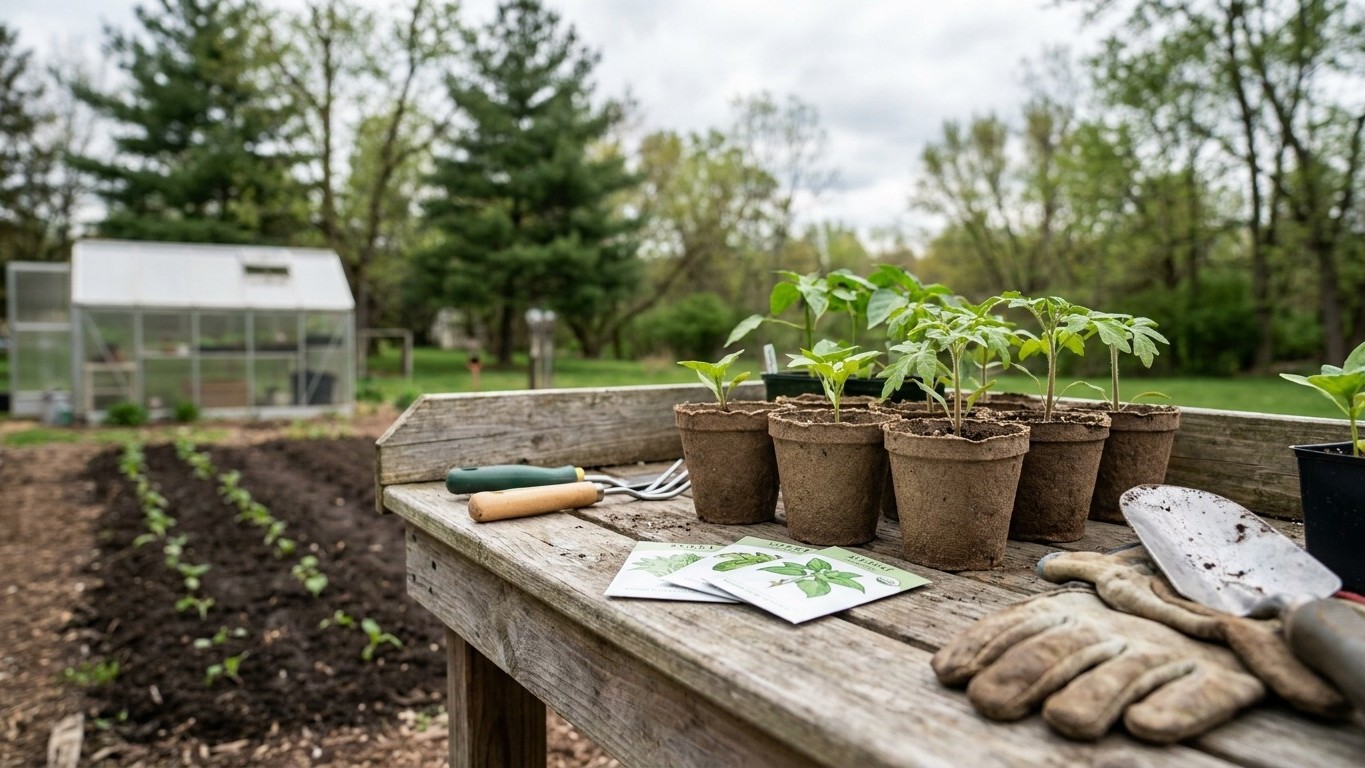

Mid-March through late April is when New Jersey gardens wake up for real. The reference frost window for the state runs March 29 to April 6, so by April the ground has usually thawed enough to work, but a hard freeze is still a live possibility for the first week or two. Cold-hardy vegetables, alliums and hardened-off transplants can go in now; anything that hates cold soil should wait until closer to May.
What goes in the ground in April

The calendar says April, but the soil doesn’t read calendars. What matters is whether the ground has warmed and dried enough to work, and whether the frost window has passed for your particular yard. The NOAA reference station used for New Jersey puts the last spring freeze between March 29 and April 6, which means early April still carries real frost risk almost everywhere in the state, and inland or elevated spots often run a week or two behind that.
That timing rewards patience with tender crops and rewards action with the cold-tolerant ones. Peas, spinach, lettuce, radishes, carrots and beets can go directly into the ground as soon as soil is workable, since they germinate even when soil is still cool and their seedlings shrug off a light frost. Onion sets and seed potatoes are traditional mid-April plantings across the state. Garlic planted the previous fall is already up and growing; if you missed that window, shallots can still go in early in the month in workable soil.
Hardened-off transplants of broccoli, cabbage and kale can move outdoors once the worst of the frost risk has passed, usually in the second half of the month. Warm-season crops are a different story entirely.
| Category | Examples | April status |
|---|---|---|
| Cold-hardy direct sow | Peas, spinach, lettuce, radish, carrots, beets | Safe now |
| Alliums | Onion sets, seed potatoes, shallots | Safe mid-April |
| Hardened brassica transplants | Broccoli, cabbage, kale | Safe after frost window passes |
| Warm-season | Tomatoes, peppers, beans, squash | Wait, still a gamble |
Tomatoes, peppers, beans, corn and squash still belong indoors or in a cold frame this month. Direct-sowing them now into soil that hasn’t cleared 60 degrees Fahrenheit means slow, sulky germination at best and rotted seed at worst.
What to start under cover
Seed starting under cover this month is really about counting backward from the frost window rather than picking a date off a calendar. If your local last frost falls anywhere near the March 29 to April 6 reference range, warm-season transplants like tomatoes and peppers should already be six to eight weeks old by the time outdoor planting happens in mid-to-late May, which means those seeds needed starting back in February or very early March. If you haven’t started them yet, do it now rather than skip the season entirely.
Squash-family crops, cucumbers and melons work on a shorter runway. They resent being transplanted when rootbound, so starting them three to four weeks before you plan to set them outside is the safer math. Counting forward from a mid-May transplant date puts the sowing window for these squarely in April.
The two ways this goes wrong are mirror images of each other. Start too early and you end up babysitting leggy, rootbound tomato seedlings on a windowsill for weeks longer than they should live in a small pot, stressing them before they even reach the garden. Start too late, particularly with anything in the squash family, and you run out of growing season before fruit sets, especially in the cooler parts of the state closer to the New York border.
A cold frame or unheated hoop house buys real flexibility here. Cool-season seedlings like lettuce and brassicas can go into a cold frame weeks before open-ground planting is safe, hardening off gradually instead of shocking all at once when they finally move outside.
What is ready to pick
April harvests in New Jersey lean heavily on what survived the winter rather than anything freshly planted. Asparagus beds that are a few years established start sending up spears toward the end of the month, and the rule for picking is simple: snap or cut spears once they reach about six to eight inches, before the tips loosen and start to feather out.
Overwintered kale and leeks that made it through the cold months under mulch or row cover are often the best-tasting greens of the year right now, since cold exposure sweetens them. Spinach and mache that were sown the previous fall and tucked under a cold frame or low tunnel are usually ready for cutting well before anything sown fresh this spring catches up. Rhubarb stalks are pickable once they’ve reached a decent length, typically firm and at least ten to twelve inches, though the leaves themselves stay toxic and get discarded.
Indoors, this is a good stretch for quick wins: sprouts and microgreens on a windowsill go from seed to harvest in a week or two, filling the gap while outdoor crops catch up. It’s also worth a walk through the root cellar or pantry. Stored potatoes, onions and winter squash should get a hand check now for soft spots, sprouting eyes or a sweetish smell, since anything starting to turn will spread rot to its neighbors if left in the bin.
The jobs that matter this month
April is the month where soil work either pays off for the whole season or gets skipped and costs you later. Testing soil pH and working in compost or amendments now, while beds are still mostly empty, is far easier than trying to dig around established plants in June. Pulling back winter mulch from beds that are about to be planted lets the soil warm faster, since a thick mulch layer that kept roots insulated over winter also blocks the spring sun from doing its job.
Structure before growth takes over
Pea trellises, tomato cages and stakes for anything that will eventually sprawl belong in the ground now, before the plants are tall enough to make installing them a wrestling match. It’s a five-minute job in April and a frustrating one in June.
Dormant pruning of fruit trees, grapevines and cane fruit still has a narrow window early in the month before buds break in earnest; once leaves start unfurling, pruning cuts heal more slowly and cost the plant more energy. This is also the last reasonable stretch to divide overgrown perennials before they push significant new growth, and to finish ordering seed for anything you’re direct-sowing later in spring, since popular varieties of tomatoes and peppers sell out earlier every season.
Pest scouting matters more this month than most gardeners expect. Aphids and slugs both wake up as temperatures climb, and catching the first colonies on tender new growth is far easier than dealing with an established infestation in May. A quick check of the undersides of leaves on any transplants already outside takes two minutes and saves a lot of grief.
Watering rhythm should shift gradually as the month goes on. Early April rain usually covers most needs, but by late April, newly transplanted brassicas and alliums need consistent moisture to establish roots before summer heat arrives.
What not to do in April
The most common April mistake in New Jersey gardens is trusting the air temperature over the calendar and the soil. A run of 70-degree afternoons in early April feels like summer, but the reference frost window for the state doesn’t close until March 29 to April 6, and a clear, calm night after a warm day is exactly when a late frost tends to strike. Tomatoes, peppers and other warm-season transplants set out during that warm spell can be dead by morning.
Uncovering cold frames and row covers too early after a mild stretch is the same mistake in a different form. The protection is there for the nights, not the days; pulling it off entirely because the afternoon felt warm leaves tender seedlings exposed exactly when a cold front rolls back through, which happens often enough in April to plan around.
Feeding nitrogen at the wrong moment causes trouble too. A heavy nitrogen application on brassica transplants or new lawn seedings pushes soft, fast, watery growth that is more vulnerable to a cold snap than growth that develops more slowly. Wait until plants are established and the frost risk has genuinely passed before pushing growth with fertilizer.
Working wet soil is the last classic error. Clay-heavy New Jersey soils compact badly when tilled or dug while saturated, and that compaction can set back drainage and root growth for the whole season. If a handful of soil forms a slick ball instead of crumbling, it’s still too wet to work.
Checking this against your own county
A statewide frost window is a starting point, not a guarantee for your particular yard. New Jersey spans USDA hardiness zones 6a to 7b, and that range alone tells you how differently a garden in the northern highlands behaves compared to one near the Delaware Bay or the coast. Elevation, distance from the shore and even which side of a hill a garden sits on can shift the real last-frost date by a week or two beyond the reference figures cited here.
Before committing tender transplants to open ground, check current conditions and local guidance through the Rutgers New Jersey Agricultural Experiment Station, which maintains planting calendars and advice tuned to specific regions of the state rather than one statewide date.
Common questions
Is it safe to plant tomatoes outside in April in New Jersey? Not typically. The reference frost window runs March 29 to April 6, and many gardens see their last frost later than that. Tomatoes generally go outside after mid-May once nights have stayed reliably above the mid-40s.
Can you plant grass seed in April in New Jersey? Cool-season lawn grasses common in the state, including tall fescue and Kentucky bluegrass, do well seeded in spring once soil has warmed and dried out enough to work without compacting.
What vegetables can I direct sow in April in New Jersey? Peas, spinach, lettuce, radishes, carrots and beets tolerate cool soil and light frost, along with onion sets and seed potatoes once the ground is workable.
When should I start seeds indoors for a New Jersey garden? Count backward from your local last-frost date. Tomatoes and peppers generally need six to eight weeks indoors before transplanting; squash-family crops need only three to four weeks.
Gardeners who plant by the Moon can check the April 2027 moon planting calendar, a tradition rather than a proven method.