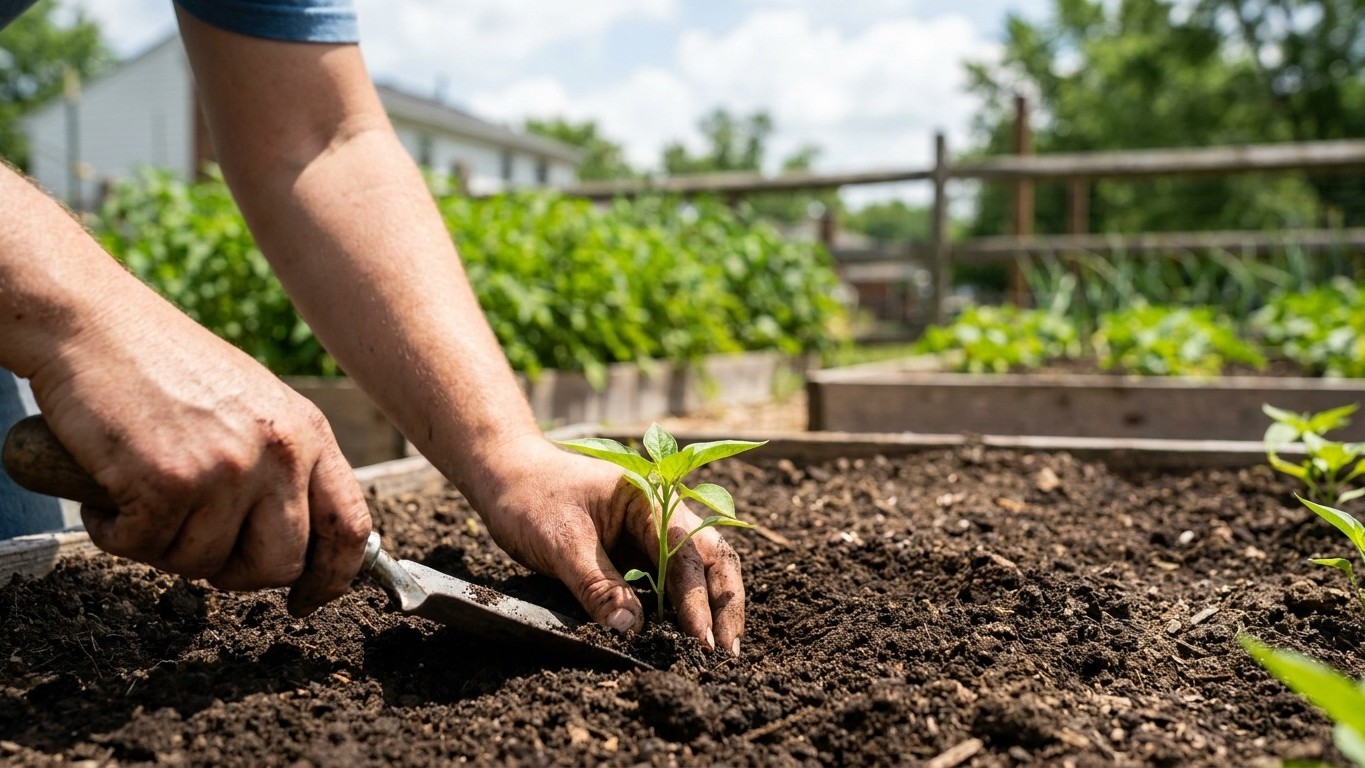

July sits in the open middle of Saskatchewan’s growing season, well past the average last spring frost of May 18 and still about two and a half months from the average first fall frost of September 18 (Saskatoon SRC station, Environment and Climate Change Canada). That gives room for quick-maturing crops sown directly in the ground and for a second wave of transplants, but the window for anything slow is closing fast, not opening.
What goes in the ground in July

The math that matters this month isn’t soil temperature anymore, it’s the calendar running out. Soil across the prairies is warm by July, so germination isn’t the limiting factor the way it was in May. The limiting factor is whether a crop can finish before the average first fall frost of September 18 arrives, and that date is a midpoint, not a guarantee: in roughly half of all years frost comes later, but in the other half it comes sooner. Treat early July as your last comfortable window for direct-sown vegetables, and treat late July as a narrowing one.
Quick crops are the safe bet. Radishes, arugula, spinach, leaf lettuce, green onions, baby beets, and bush beans sown in the first half of July can still mature with room to spare. Peas sown now, aimed at a cooler fall harvest, often taste better than a spring crop because they mature into shorter, cooler days. Kohlrabi and turnips fit the same slot.
Long-season crops are the gamble. Squash, corn, and pumpkins started from seed in July are racing a clock they’re likely to lose in a zone 3a climate (Natural Resources Canada, Canadian system, based on the Saskatoon reference station). If those crops aren’t already growing from May or June plantings, starting them fresh in July is a bet against the odds.
| Crop | Typical days to maturity | July verdict |
|---|---|---|
| Radish | 25-30 | Safe, multiple sowings possible |
| Bush beans | 50-55 | Safe if sown by mid-July |
| Beets (baby) | 45-50 | Safe |
| Fall peas | 55-65 | Safe, sow early July |
| Winter squash | 90-100+ | Gamble unless already transplanted |
Garlic and alliums aren’t a July task here, they belong to fall planting well after this window, so don’t force them in now.
What to start under cover
July’s under-cover work is about counting backward from that average September 18 frost, not forward from a fixed date. A fall cabbage or kale transplant needs roughly four to six weeks in a tray or cell pack before it’s sturdy enough to move outside, and then another 50 to 70 days in the ground to head up or fill out. Add those two numbers and work backward from mid-September, and starting trays in the first half of July lines up almost exactly with an August transplant date.
Cold frames or a sheltered corner of the yard do the job just as well as a heated setup this time of year, since outdoor temperatures are already warm enough to germinate most seeds without extra help. What starting under cover buys you in July isn’t warmth, it’s protection from the drying wind and the flea beetles that can shred a bed of direct-sown brassica seedlings before they get established.
Two ways this goes wrong. Start too early in June instead of July, and the transplants sit too long in small cells, become rootbound, and stall once they finally go in the ground, a plant that stalls rarely catches up. Start too late, into the final days of July, and there isn’t enough runway left before frost, even for a fast crop like kale, which tolerates a light frost but still needs real growing time beforehand. The safe middle is the first two to three weeks of July for anything destined for a fall harvest.
What is ready to pick
July is when the spring’s patience starts paying off. Leaf lettuce, spinach, and radishes sown in May or early June are ready now, and they’re ready fast, sometimes within days of looking “almost there,” so check beds every couple of days rather than once a week. Garlic scapes, if garlic was planted the previous fall, curl and signal it’s time to snap them off, which also redirects the plant’s energy into bulb size.
Peas sown in spring hit their stride in July, and the test is simple: pods that feel full and snap cleanly are ready, pods that bend without snapping need another day or two. Early potatoes planted in May can be dug as “new potatoes” once the plants flower, a smaller, thinner-skinned harvest than the fall crop but worth the trade for fresh flavor. Strawberries from an established bed are usually finishing their main flush by mid-July.
Herbs like dill, cilantro, and chives are cutting-ready continuously through the month, and regular harvest actually keeps them productive longer instead of letting them bolt to seed in the heat.
The jobs that matter this month

Watering rhythm is the single job that decides how the rest of July goes. Prairie summer heat paired with wind pulls moisture out of soil fast, and shallow, frequent watering trains roots to stay near the surface where they dry out fastest. A deep soak two or three times a week, aimed at the root zone rather than the leaves, builds a plant that can ride out a dry stretch instead of wilting through one.
Mulching pays for itself this month more than any other. A few inches of straw or shredded leaves around vegetables locks in the moisture that watering just added and keeps soil temperatures from spiking under direct prairie sun, which matters for shallow-rooted crops like lettuce and peas that bolt or go bitter under heat stress.
Staking and support need to happen before plants sprawl, not after. Peas, indeterminate tomatoes, and anything on a trellis system should already have their structure in place by early July, since trying to lift a heavy, leaning plant into a cage after the fact usually breaks stems.
Succession sowing keeps the harvest window open. Every two to three weeks through July, a fresh short row of radishes, lettuce, or green onions replaces the one just finishing, which is far more useful than one giant sowing all at once back in spring.
Pest scouting matters more in July than any other month, because populations of cutworms, aphids, and cabbage worms build quickly in warm weather. A five-minute check of leaf undersides twice a week catches an infestation while it’s still small enough to hand-pick or manage without reaching for anything stronger.
What not to do in July
The classic mistake is planting long-season, heat-loving crops from seed and expecting a harvest. Squash, melons, and corn started fresh in July are working against roughly two and a half months of frost-free time left on average, and a needed 90 to 100 days just doesn’t fit. If those crops aren’t already growing from earlier transplants, put the seed packet away until next spring instead.
Another common error is feeding nitrogen heavily on crops that should be finishing up, not bulking leaves. A high-nitrogen feed on tomatoes or squash in July pushes green growth at the expense of flowering and fruit set, which is the opposite of what a short prairie season needs. Save nitrogen-heavy feeding for leafy crops like lettuce and switch fruiting plants to a lower-nitrogen, higher-phosphorus and potassium feed instead.
Letting watering lapse during a hot, dry stretch is the third trap. A few days of neglect during a July heat wave can push lettuce and spinach straight to bolting, turning them bitter, and there’s no reversing that once it starts. Consistency, not volume, is what keeps those crops usable.
Finally, don’t skip pest checks just because nothing looks wrong yet. Cabbage worm damage and aphid colonies can go from invisible to serious within a week in prairie summer heat, and by the time damage is obvious the population is already established.
Checking this against your own county
Every date and zone figure here comes from a single reference point, the Saskatoon SRC station, and Saskatchewan is not one climate. Elevation, proximity to lakes, and simply how far north or south a property sits can shift frost windows by two weeks or more in either direction. A garden near the Alberta border or up toward Prince Albert should expect a shorter season than these averages suggest, while a sheltered spot near the US border may run a little ahead.
For local specifics, the Saskatchewan Ministry of Agriculture is the place to check regional guidance before treating any province-wide date as a rule for a specific yard.
Common questions
Is July too late to plant a vegetable garden in Saskatchewan?
Not for quick crops. Radishes, lettuce, spinach, bush beans, and fall peas sown in early to mid-July still have enough time before the average September 18 frost. It’s too late for long-season crops like squash or corn started fresh from seed.
What hardiness zone is Saskatchewan for planting purposes?
Saskatoon falls in Canadian hardiness zone 3a under Natural Resources Canada’s system, which is built on seven climate variables and does not convert directly to the USDA zones.
Can I still start tomatoes or peppers in July?
Starting those from seed in July is a gamble in this climate, since they need long growing periods that don’t fit before the average first fall frost. If transplants are already established from spring, they’ll continue producing through July; starting fresh from seed now is not recommended.
Why does the frost date matter if it’s just an average?
Because it’s a midpoint, not a guarantee, roughly half of all years see frost arrive later than September 18 and half see it arrive earlier. Planning backward from that date, with a buffer, protects a fall harvest from an early cold snap.
Gardeners who plant by the Moon can check the July 2027 moon planting calendar, a tradition rather than a proven method.