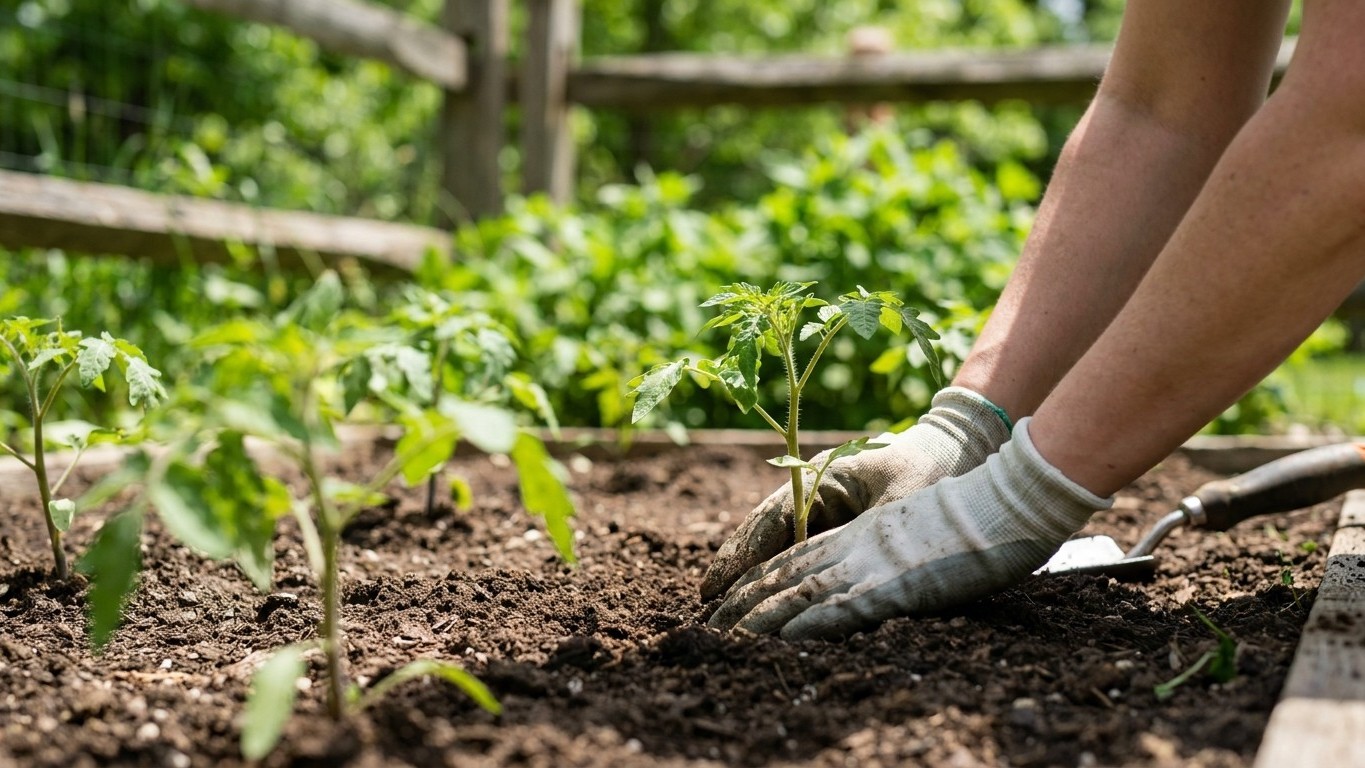

June sits squarely inside Saskatchewan’s growing season, not at its edge. With the average last spring frost falling around May 18, most of the province has already cleared its riskiest stretch by the time June opens, which means direct-sowing and transplanting both become realistic options for nearly everything except the most heat-hungry crops.
What goes in the ground in June

The average last frost date of May 18 is a midpoint, not a promise. In one year out of two, frost arrives after that date, so a grower in a low-lying yard or a northern district should treat early June with a bit of caution even though the calendar says the danger has passed. That caveat aside, June is when Saskatchewan gardens open up. Warm-season crops that would have rotted in cold May soil, like beans, squash, cucumbers, and corn, can go directly into the ground once nighttime lows have settled above the mid-40s for a stretch of days. Tomatoes, peppers, and other tender transplants that were hardened off through late May can move outside now with reasonable confidence.
Cool-season crops that tolerate a light frost, meaning peas, spinach, lettuce, carrots, beets, and the brassica family, can still be sown in early June for a second wave, and many gardeners use this window for succession plantings rather than a single spring push. Alliums such as onion sets and garlic cloves that missed the earliest slot can still be tucked in, though garlic planted this late will produce smaller bulbs than a fall-planted crop. Potatoes going in during the first half of June will still have time to mature before the average first fall frost on September 18, which leaves roughly 123 frost-free days on the calendar in an average year.
| Crop group | Method | Frost tolerance |
|---|---|---|
| Beans, squash, cucumbers, corn | Direct sow | None, wait for settled warmth |
| Tomatoes, peppers | Transplant, hardened off | Low, protect on cold nights |
| Peas, spinach, lettuce, brassicas | Direct sow or transplant | Good, handles light frost |
| Onion sets, garlic | Direct plant | Good, but late planting limits size |
What to start under cover
June is not the month to start tomatoes or peppers indoors for the current season, that window closed weeks earlier if it was going to work at all. What still makes sense under cover is a second round of fast-maturing greens and a first round of fall brassicas. To time a fall broccoli or cabbage crop, work backward from the average first fall frost of September 18: subtract the days to maturity listed for the variety, then subtract another two to three weeks for the seedling to reach transplant size indoors before it ever touches soil. That arithmetic, done on paper for whatever variety a gardener already owns, replaces any fixed date on a calendar and adjusts automatically for a shorter or longer local season.
The two ways this goes wrong are mirror images of each other. Starting seedlings too early under cover in a small tray leaves them rootbound and stressed by the time outdoor conditions are ready, and a leggy, hardened-late transplant rarely catches up to one started on schedule. Starting too late runs the opposite risk: a fall cabbage sown in the last days of June may not reach a useful size before the September 18 average frost shuts the season down, especially in a year when that frost arrives on the early side of its range. A cold frame or unheated tunnel buys a couple of extra weeks on both ends and is worth setting up now if fall crops are the goal.
What is ready to pick
Early June brings the first real harvest window of the season for anything sown in April or early May. Asparagus beds established in prior years should be in full production, and rhubarb stalks thick enough to snap cleanly are ready to pull. Radishes sown in May are usually finished within three to four weeks, so June is prime radish season, and thinnings from spinach and lettuce beds provide the first fresh greens of the year.
Overwintered crops, where a gardener left kale, leeks, or parsnips in the ground through the cold months, may still be producing tender new growth early in the month before the plants bolt in the lengthening daylight. Anyone with stored squash, potatoes, or onions from the previous fall should be checking that stock now, since the warmer air of late spring speeds up sprouting and soft rot in root cellars and basements. Sort through storage bins, pull anything showing soft spots or mold, and use up the last of the stored onions before they push green shoots that signal the end of their storage life.
The jobs that matter this month

Mulching climbs to the top of the June list the moment warm-season transplants go in, since bare soil around young tomatoes and squash dries out fast under strengthening sun and invites weeds that compete for the same water. A two to three inch layer of straw or shredded leaves around the base of new plantings holds moisture and keeps soil temperature more even through the swings between cool nights and hot afternoons that are typical of a Saskatchewan June.
Staking and trellising need to happen before plants sprawl, not after. Tomatoes, peas, and vining squash are still small enough this month to train onto supports without breaking stems, a task that becomes far harder and riskier once growth is established. Watering rhythm matters just as much: a deep soak two or three times a week trains roots to grow downward, while frequent shallow watering keeps roots near the surface and makes plants more vulnerable to the dry spells that show up later in summer.
Succession sowing keeps the harvest window open rather than concentrated into one glut. Sowing another short row of lettuce, spinach, or radishes every couple of weeks through June spreads out the picking season into July. Pest scouting also pays off now, since aphids, flea beetles, and cutworms are active on new transplants and are far easier to control when caught early than after a colony has established itself across a bed. Weeding while roots are shallow, hilling potatoes as they emerge, and checking irrigation lines for leaks before the heat of midsummer round out the list of jobs that cost far less time now than they will in August.
What not to do in June
The most common mistake is trusting a stretch of warm air rather than the soil itself. A few sunny days in early June can push gardeners to plant heat-loving crops like squash or beans while the ground underneath is still cool from spring, and seeds sown into cold, damp soil often rot before they germinate rather than simply growing slowly. Checking that the soil itself has warmed, not just the daytime air, avoids a wasted planting and a second trip to the seed rack.
Because the May 18 average last frost is a midpoint and not a guarantee, a warm early June can also tempt gardeners to remove row covers or cold frame lids permanently. In a year when frost lands on the later side of its normal range, that early removal exposes tender transplants to damage that a few more days of cover would have prevented. It costs nothing to leave protection in place a little longer and simply vent it during the warmest hours.
Nitrogen timing trips up a lot of tomato and pepper growers in June. A heavy dose of high-nitrogen fertilizer right as plants are setting their first flowers pushes lush leafy growth at the expense of fruit set, delaying the harvest rather than improving it. A balanced or lower-nitrogen feed once flowering starts serves the plant better than repeating the nitrogen-heavy formula used to get seedlings established.
Checking this against your own county
A province-wide frost date is a starting point, not an instruction for a specific yard. Saskatchewan’s geography stretches from the grain belt in the south to forested and northern districts where elevation, latitude, and local microclimates can shift the safe planting window by two weeks or more in either direction. A garden near a large lake or a low frost pocket will behave differently from the reference conditions used to calculate the province-wide average.
The most reliable next step is checking conditions against local sources rather than a single number. Saskatchewan’s provincial agriculture and agribusiness resources track regional conditions and can help a gardener adjust the general June guidance above to match their own soil, elevation, and local frost history.
Common questions
Is it safe to plant tomatoes outside in Saskatchewan in June?
By June, most of the province has passed its average last frost of May 18, so hardened-off tomato transplants can generally go outside. Because that date is a midpoint rather than a guarantee, keeping a light cover on hand for a surprise cold night early in the month is a reasonable precaution.
Can garlic still be planted in June in Saskatchewan?
Garlic can go in this late, but bulbs will be noticeably smaller than a properly timed fall planting, since the cloves have far less time to establish roots before the growing season shortens.
What hardiness zone is Saskatchewan for planting purposes?
The reference city used in Natural Resources Canada’s Plant Hardiness data sits in Canadian zone 3a, a system built on seven climate variables rather than the single-variable USDA scale used in the United States. The two systems do not convert directly, so a Canadian 3a should never be treated as equivalent to a same-numbered USDA zone.
How long is the growing season in Saskatchewan?
Based on the average last spring frost of May 18 and the average first fall frost of September 18, the frost-free season runs roughly 123 days in an average year, though this varies by district and by year.
Gardeners who plant by the Moon can check the June 2027 moon planting calendar, a tradition rather than a proven method.