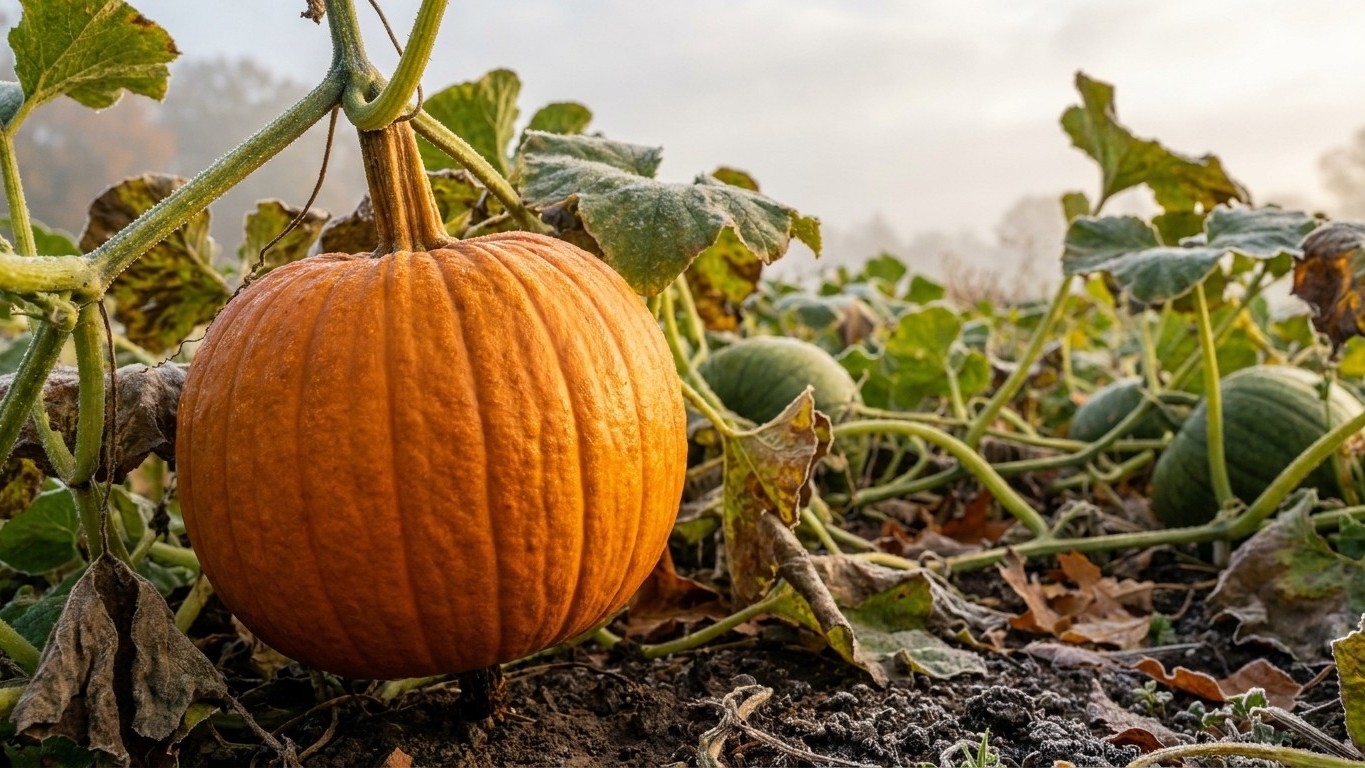

Utah pumpkins can ripen on time, but the margin is thin. Between the state’s short growing season and its unpredictable fall freeze, a flower that opens even a week late can leave you with a green, hard-shelled fruit come Halloween. Will Pumpkins Ripen Before Frost in Utah? The window that matters isn’t when you plant the seed. It’s when the vine actually flowers.
The short answer
Start with the finish line. In Salt Lake City, the average first fall freeze falls somewhere between October 18 and October 29, based on NOAA’s 1991-2020 Climate Normals for station USW00024127. That ten-day spread already tells you something: even within one valley, the calendar isn’t fixed. Some years the freeze arrives closer to the earlier date, some years closer to the later one.
Pumpkins need 45 to 55 days from the moment a flower opens to reach a ripe, hardened fruit, according to Utah State University Extension. Not from the day you drop the seed, not from transplant day. From flowering. So the math runs backward from the freeze date.
Subtract 55 days from the earliest possible freeze, October 18, and you land on August 24. Subtract 45 days from the latest possible freeze, October 29, and you land on September 14. That gives a working window: the latest a flower should reasonably open and still have a shot at finishing is somewhere between late August and mid-September, depending on where in the frost range your particular year falls and how quickly your particular fruit matures.
The tighter, safer number is the one built on the earlier frost date and the longer maturation window: August 24. Treat that as the cutoff if you want a real cushion. September 14 is the loose end, the number that only works if the freeze holds off until the late side of its range and your fruit finishes on the fast end of its own range. Betting on both going your way at once is optimistic.
That whole calculation is anchored to a Salt Lake valley station, and the valley runs mild by Utah standards. Most of the state sits higher and colder, which pushes the first freeze earlier and shrinks this window further. Southern Utah runs the other direction, with frost arriving later and more slack to work with. If you garden outside the Wasatch Front, treat the August 24 to September 14 range as a starting reference, not a local forecast, and check the numbers for your own county before you commit a full patch to pumpkins.
When to sow here
Sowing date and frost date are two different questions, and mixing them up is the most common mistake in a pumpkin patch. When to Sow Pumpkins in Utah depends on working backward from that frost window. Here’s the sequence that actually gets seeds in the ground at the right time.
- Clear the last spring frost first. That date runs from April 12 to April 29 in the Salt Lake valley, per the same NOAA Climate Normals data. This is the point where nighttime air temperatures stop threatening to kill young seedlings outright, but it is not the point where the ground is ready.
- Wait for the soil, not the air. Utah State University Extension calls for soil temperatures of 65 F before sowing pumpkins. Soil warms on its own schedule, lagging weeks behind the air even after nightly lows have cleared the frost window. A calendar that says frost season is over doesn’t mean a thermometer pushed a few inches into the dirt will agree.
- Check the ground directly. A simple soil thermometer, checked mid-morning a few inches deep, tells you more than any date on a chart. Cold, wet spring soil in Utah’s clay-heavy valleys can sit stubbornly below 65 F well after the air has warmed.
- Use row covers to close the gap. Floating row covers trap daytime heat near the soil surface and can advance effective warming by about two weeks. That means ground that would naturally reach 65 F on a given date can be workable roughly two weeks earlier under cover, letting you sow before bare, exposed soil would allow.
- Sow, then count forward. Once seeds are in warm soil, the clock that matters restarts at flowering, not at sowing. Track when the first female flowers open, and measure the 45 to 55 days from there against your local frost window.
The gap between “frost is over” and “soil is ready” is exactly where impatient gardeners lose two or three weeks they can’t get back later in the season, so treat the soil thermometer as the real starting gun.
What goes wrong here
Utah’s growing season is short enough that small delays compound. Most pumpkin failures here trace back to one of three points in the timeline.
- A late flower that never colors. If the first strong female flowers don’t open until deep into September, there may not be 45 to 55 full days left before the freeze. The fruit sets, grows to size, and then stalls green or pale orange. Remedy: push flowering earlier by warming soil sooner with row covers, and prune off very late blossoms that have no realistic path to ripening so the vine’s energy goes to fruit that can still finish.
- A fruit caught by frost before it’s ready. Even fruit that’s mostly colored can be damaged if a hard freeze hits before the rind has fully hardened. Remedy: watch the forecast closely through the second half of October, cover exposed fruit with cloth on cold nights, and if a freeze looks certain, cut the pumpkin with the stem attached and bring it indoors to finish coloring rather than leaving it exposed.
- A vine that dies back before the skin hardens. Sometimes the calendar works fine but the vine itself collapses early, usually from pest pressure or disease rather than weather. Squash bugs and cucumber beetles are common culprits in Utah gardens, and this site covers both in dedicated pages: squash bugs in Utah and cucumber beetles in Utah. Remedy: scout the vine regularly through midsummer, since a healthy vine right up to the ripening window matters as much as hitting the right flowering date.
Checking this against your own county
The frost dates and soil-temperature guidance here come from a single valley station and a statewide extension source, but Utah’s elevation swings are extreme enough that a county thirty miles away can run on a genuinely different clock. Before you lock in a sowing date, check with Utah State University Extension, which maintains county offices across the state with local frost data and planting guidance specific to your elevation and microclimate. A garden at 6,000 feet in a mountain valley faces a shorter season than one in the warmer basins of southern Utah, and no single statewide number captures both.
Common questions
What if my flowers opened after the safe cutoff?
The fruit may still size up but risks staying green or soft-skinned when frost arrives. Watch the forecast closely in October and be ready to cut fruit early with the stem attached if a freeze is imminent, rather than losing it outright.
How should I store pumpkins after harvest?
Utah State University Extension’s guidance stops at “where they will not freeze,” with no specific storage temperature, humidity level, or keeping time published. Plan storage around that single condition rather than assuming a precise number that isn’t in the source material.
Does elevation change these dates a lot?
Yes. The frost window used here reflects the Salt Lake valley, which runs milder than most of the state. Higher elevations typically see frost earlier in fall, which tightens the flowering window described above.
Is southern Utah easier for pumpkins?
Generally, yes, because a later first fall freeze there gives more days between flowering and frost. That said, no statewide figure for southern Utah’s frost date is included in this data, so check with your local extension office for the specific range in your area.