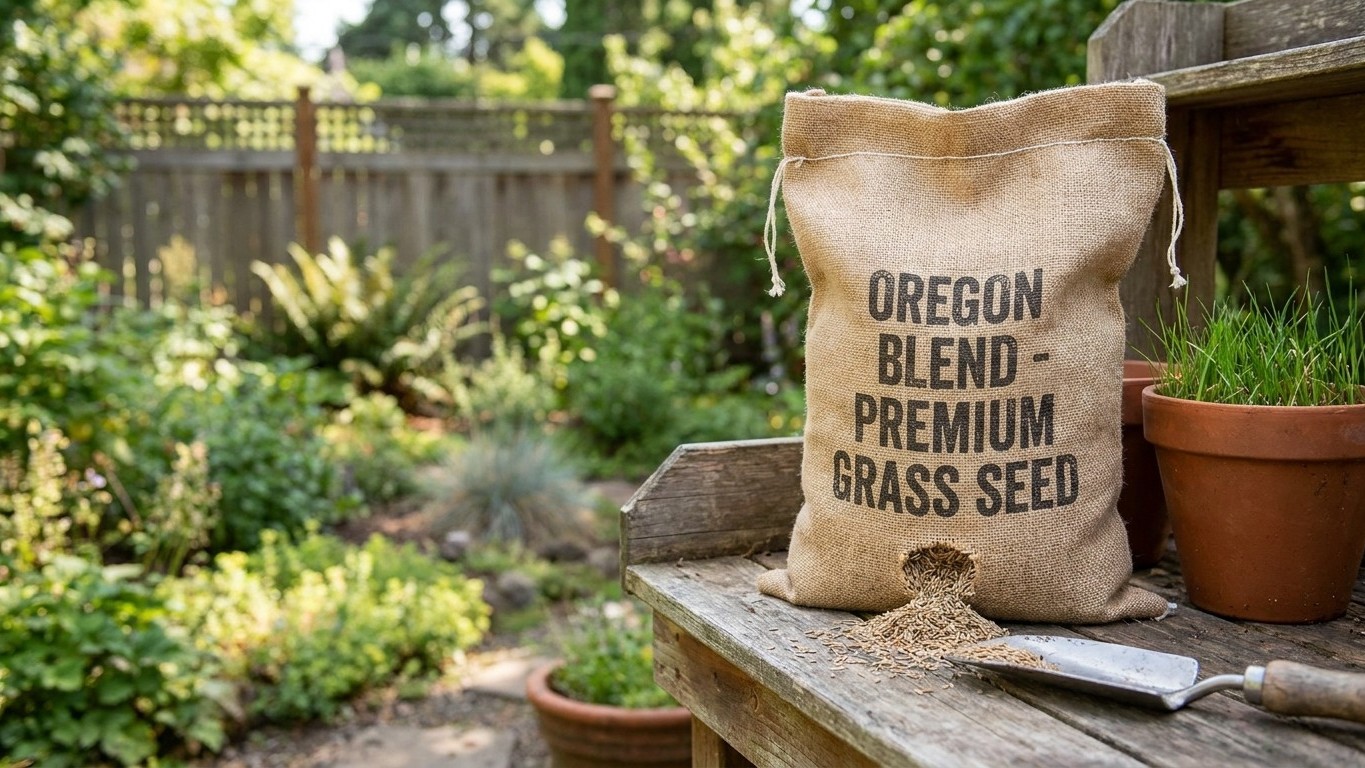

There is no single best grass seed for an Oregon lawn, because most of the state, including Portland, falls into a transition zone where cool-season and warm-season grasses each fail for part of the year. A cool-season lawn (tall fescue, Kentucky bluegrass, perennial ryegrass) stays green through Oregon’s wet winter but stresses in July heat. A warm-season lawn (zoysiagrass, bermudagrass) shrugs off that heat but sits brown from fall frost until spring. Decide first which season you’re willing to lose color in, then pick from that list.
The short answer for Oregon
Oregon doesn’t have one best grass seed, because almost the entire state sits in a transition zone where cool-season and warm-season grasses each fail for part of the year. Tall fescue or a bluegrass-ryegrass blend keeps color through Oregon’s wet winter but sulks in July; zoysiagrass or bermudagrass shrugs off that heat but turns brown from the first fall frost until spring. So the real decision isn’t which seed wins, it’s which season you’re willing to lose color in. Decide that first, then choose from the matching list below.
The trade-off is straightforward once you see it. A cool-season lawn holds its color through Oregon’s mild, rainy winter and looks tired or thin during the driest weeks of summer. A warm-season lawn does the opposite: it thickens up and tolerates heat and drought through summer, then goes dormant and brown once the first fall freeze arrives. Near Portland, NOAA’s 1991-2020 climate normals put that first fall freeze between November 11 and November 27, a two-and-a-half week window, not a single date, and it marks roughly when a warm-season lawn starts to lose its green.
Which answer is “best” for your yard depends on when you actually use the lawn. A household that lives outside from June through September, and doesn’t mind a straw-colored yard the rest of the year, gets more out of zoysiagrass or bermudagrass. A household that wants a green lawn for holiday gatherings and mild winter afternoons, and can tolerate some midsummer stress, does better with tall fescue or a bluegrass-ryegrass blend. Neither choice is a mistake. Picking one and then judging it by the other season’s standard is the actual mistake, and it’s covered further down.
Working through the year

Ranking the five species for a transition-zone lawn means ranking what each one costs you, not which one wins outright. If you’re setting up or renovating a lawn for the first time, Oregon Lawn Care covers the groundwork, from soil prep to initial watering.
Cool-season choices: green through winter, stressed by July
Tall Fescue is the workhorse recommendation across most cool-season and transition-zone territory. It’s a coarse, bunch-type grass that tolerates both heat and drought better than the other two cool-season options, at the cost of a slightly rougher texture underfoot. Kentucky Bluegrass has the finer texture and self-repairing spread that many homeowners picture as an ideal lawn, but it establishes slowly from seed and shows more stress in a hot, dry summer than tall fescue does. Perennial Ryegrass germinates fast, which makes it a common companion seed in blends, but it lacks the deep root system that gets fescue and bluegrass through a dry spell. Clemson’s HGIC 1219 Tall Fescue Maintenance Calendar lays out a full season’s mowing and feeding schedule for this species, though it’s written for South Carolina’s climate, so use it for the pattern of the program rather than its exact dates in Oregon.
Warm-season choices: tough in summer, dormant in winter
Zoysiagrass forms a dense, fine-textured turf that handles foot traffic and heat well, but it’s slow to fill in from seed or plugs and stays brown longer into spring than bermudagrass does. Bermudagrass is the most aggressive spreader of the two, recovering fast from wear and drought, but that same vigor means it invades beds and borders if left unchecked. Clemson publishes separate calendars for each, HGIC 1217 for zoysiagrass and HGIC 1216 for bermudagrass, both built around a much warmer, longer growing season than most of Oregon sees. For an actual month-by-month schedule adjusted to this state’s frost windows and rainfall pattern, The Oregon Lawn Care Calendar, Month by Month is the better reference to work from.
| Grass | Season type | What you gain | What it costs you here |
|---|---|---|---|
| Tall Fescue | Cool-season | Best heat and drought tolerance among cool-season types | Coarser texture, some summer thinning |
| Kentucky Bluegrass | Cool-season | Fine texture, self-repairing sod | Slow establishment, more summer stress |
| Perennial Ryegrass | Cool-season | Fast germination for quick cover | Shallow roots, weak in drought |
| Zoysiagrass | Warm-season | Dense, wear-tolerant summer turf | Slow fill-in, long dormant season |
| Bermudagrass | Warm-season | Fast recovery, strong heat tolerance | Invasive spread, browns at first frost |
What changes across Oregon
The figures above are measured at or near Portland, and the rest of the state doesn’t share them. West of the Cascades, the immediate coast runs cooler and foggier than Portland through summer, which works against warm-season grasses even more than the Willamette Valley does. Zoysiagrass and bermudagrass need sustained heat to thicken up, and a coastal yard often doesn’t get enough of it in a normal season, making a cool-season lawn the more realistic pick right at the shoreline regardless of the general trade-off described above.
Gain elevation heading up into the Cascades and the growing season shortens from both ends: the last spring frost lingers later and the first fall frost, which NOAA’s 1991-2020 normals put at November 11 to November 27 for Portland, likely arrives earlier at higher ground. That compresses the window for establishing new seed of any species and pushes the practical planting dates earlier in fall and later in spring than a Portland calendar would suggest.
East of the Cascades, in the high desert around cities like Bend, the climate isn’t a transition zone at all in the same sense. Winters run colder and drier, summers run hotter with much lower humidity, and the growing season is meaningfully shorter than west of the mountains. NOAA’s Portland freeze window doesn’t apply out there, and a homeowner in that part of the state should treat every date in this article as a starting point for comparison, not a local figure, and check it against their own county’s extension office before planting.
The mistakes this climate punishes
A transition-zone lawn forgives a lot, but a few habits reliably cause damage here, and each one shows up on a predictable delay rather than right away.
- Feeding a warm-season lawn heavily in early fall, which pushes tender new growth just before dormancy and raises the odds of winterkill once frost hits
- Seeding cool-season grass into late spring or early summer, when young seedlings can’t establish roots before the first real heat arrives
- Scalping a cool-season lawn during a summer dry spell, which strips the shade the crown needs and turns a stressed lawn into a dead one
- Treating any brown lawn as a dead lawn, when it’s often just dormant
The fall-feeding mistake is the easiest to miss because the lawn looks fine at the time. The damage doesn’t show until the freeze itself, which near Portland falls somewhere in NOAA’s November 11 to November 27 window, when the newly softened growth is the first tissue to die back hard. The May seeding mistake shows up even later, often not until the first genuinely hot stretch of July, by which point the thin, shallow-rooted seedlings simply give out and the bare patches reappear right where you seeded.
The brown-equals-dead assumption causes the most unnecessary reseeding. A bermudagrass or zoysiagrass lawn that’s straw-colored from the first fall frost through spring green-up is dormant, not dead, and ripping it out to reseed with something else in late winter throws away a lawn that would have recovered on its own. A cool-season lawn that browns in a dry August patch is usually doing the same thing in reverse: it’s protecting its crown, and it will green back up with the next real rain or irrigation cycle rather than needing to be replaced.
Checking this against your county
Every figure in this article is anchored to Portland, and Oregon’s coast, high elevations, and high desert all depart from it in different directions. Before you buy seed or set a planting date, check it against Oregon State University Extension, which runs county-level offices with local frost data, disease pressure, and species guidance specific to your part of the state. A five-minute call or search there is worth more than any statewide figure.
Common questions
Can I grow bermudagrass in Portland?

It will usually survive, but it’s a marginal choice there rather than a good one. Portland’s cooler, wetter climate west of the Cascades gives bermudagrass a shorter effective growing season and a longer dormant, brown period than it gets in the warmest parts of the state, so most Portland-area lawns lean cool-season instead.
When should I overseed my lawn in Oregon?
For a cool-season lawn, overseeding generally happens in early fall, well before the first freeze locks in, so seedlings have time to root before winter. Near Portland that freeze falls somewhere in NOAA’s November 11 to November 27 window, but that date shifts earlier at higher elevation and further east, so treat it as a starting point to check locally rather than a fixed deadline.
Is Kentucky bluegrass or tall fescue better for an Oregon lawn?


Neither is flatly better. Tall fescue tolerates summer heat and drought better and is the more forgiving choice for a lawn that doesn’t get watered much, while Kentucky bluegrass gives a finer texture and repairs itself through its spreading rhizomes but needs more consistent moisture to look good through a dry summer. Many Oregon lawns blend the two along with perennial ryegrass rather than seeding one alone.
Why did my warm-season lawn turn brown all at once?
That’s almost always dormancy from the first fall frost, not disease or death. If the browning happened right after a heavy fall fertilizer application, the new growth that fertilizer pushed was likely the tissue least prepared for the freeze, which is one reason feeding a warm-season lawn late in the year carries more risk than benefit here.