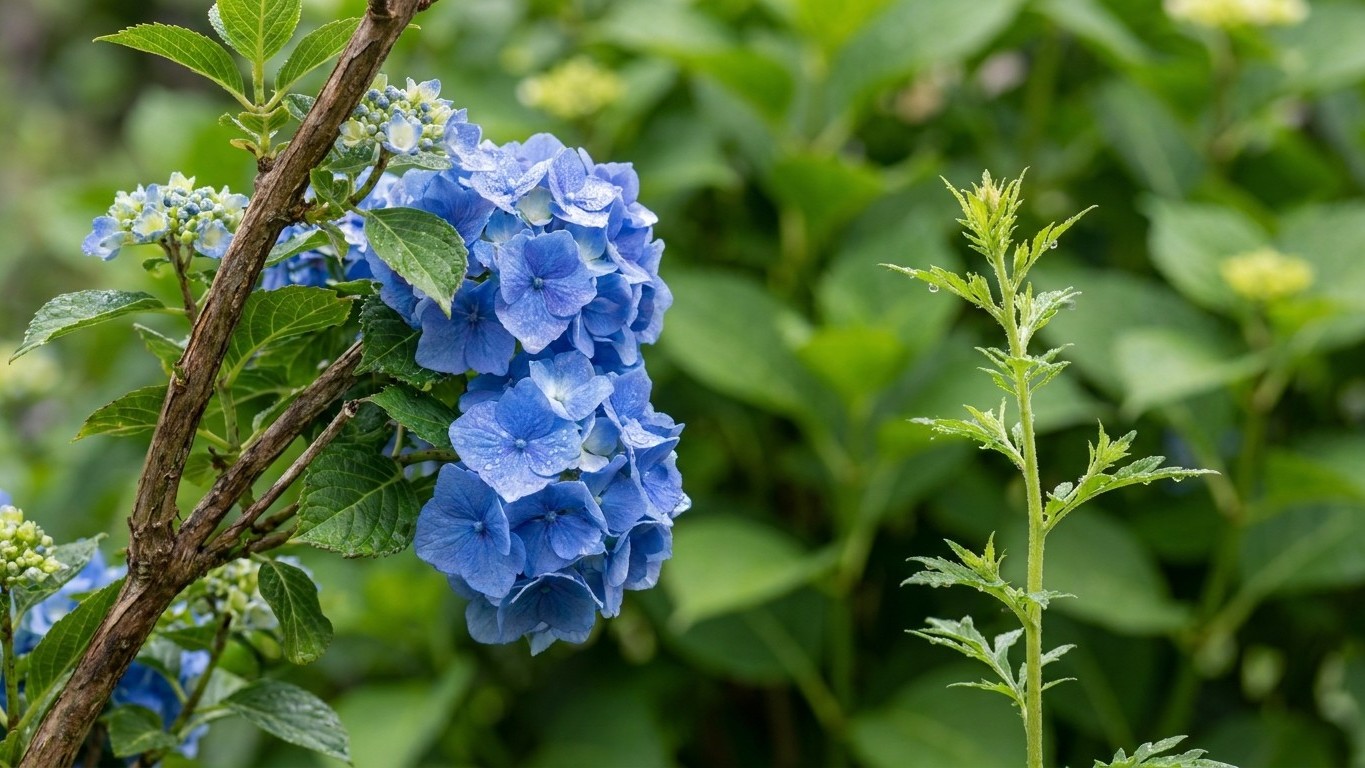

The safest window for planting hydrangeas in most of British Columbia opens once the risk of a hard spring frost has passed, roughly mid-April to late May for coastal areas, later inland. Vancouver’s average last frost falls March 18, but that’s a midpoint, not a guarantee, and interior and northern districts run weeks behind. Site choice, soil pH, and variety matter as much as the calendar once the shrub is in the ground.
When to plant Hydrangeas in British Columbia
Environment and Climate Change Canada’s 1981-2010 normals for VANCOUVER INT’L A put the average last spring frost at March 18 and the average first fall frost at November 10, giving a mean frost-free season of 237 days. That’s a wide window by Canadian standards, and it’s part of why the Lower Mainland and southern Vancouver Island have a reputation as generous hydrangea country. But a mean date is exactly that: in one year out of two, the last frost lands later than March 18. Treat it as the center of a range, not a green light, and hold off putting tender new growth outside until the ten-day forecast backs you up.
Vancouver’s numbers describe one station on the coast. Move into the Fraser Valley, up into the Okanagan, north toward the Cariboo, or up in elevation almost anywhere, and the frost-free window shrinks, sometimes by a month or more on either end. A gardener in Kelowna or Prince George is working with a different climate than a gardener in Victoria, even though both are technically “British Columbia.” There’s no province-wide safe date. Use the Vancouver figures as a reference point for the coast, then push your own planting dates later the further you are from tidewater or the higher you climb.
Starting from cuttings versus buying potted stock
Most home gardeners plant hydrangeas as container-grown nursery stock rather than from seed, since named cultivars don’t come true from seed and cuttings root far more reliably. If you’re rooting your own cuttings indoors from a parent plant, count back from the average last frost: take softwood cuttings in late winter, root them under cover for six to eight weeks, which lands a start date around late January to early February if you’re targeting a mid-March to April move outdoors.
Whether you’re growing rooted cuttings or working with a nursery pot, harden the plant off before it goes into open ground. Set it outside in a sheltered, shaded spot for a couple of hours the first day, and extend the exposure over seven to ten days until it’s handling full sun and outdoor nights without wilting. Skipping this step is the single most common reason a healthy-looking hydrangea sulks or scorches in its first two weeks outside. Once hardened off, transplant after the worst frost risk has passed for your specific district, not simply after the calendar clears March 18 on the coast.
Soil and site preparation
Hydrangeas want morning sun and afternoon shade through most of coastal British Columbia’s warmer months; in cooler interior valleys, more direct sun is tolerated and often needed for full bloom. Panicle hydrangeas handle the most sun of the common types, while bigleaf and oakleaf hydrangeas scorch faster in a hot, exposed spot.
Soil that drains well matters more than soil that’s rich. Hydrangeas dislike sitting in waterlogged ground, which is a real risk on heavy clay sites common around the Fraser Valley and parts of Vancouver Island after a wet winter. Dig a test hole, fill it with water, and check whether it drains within a few hours; if it doesn’t, raise the planting bed six to eight inches with amended soil rather than fighting the native drainage.
Soil pH is the one variable that does double duty for bigleaf hydrangeas (Hydrangea macrophylla): it controls flower color as well as general vigor. A pH below roughly 5.5 tends to push blue tones by making aluminum available to the plant, while a pH above 6.5 tends toward pink. Panicle and smooth hydrangeas aren’t affected by pH in this way; their color is fixed by variety, not soil chemistry.
Work compost or well-rotted manure into the bed two to three weeks before planting, giving it time to settle rather than sitting in a fresh, loose pocket that can leave roots exposed to air gaps as it decomposes. Space plants three to six feet apart depending on the mature spread of the variety, wider for panicle types that can reach eight feet, tighter for compact bigleaf cultivars bred for containers or small borders. Dig the planting hole only as deep as the root ball and twice as wide, and resist the urge to bury the crown, which invites rot in a coastal climate that already delivers plenty of winter moisture.
Varieties that suit British Columbia
The trait that matters most for BC gardeners isn’t days to maturity in the vegetable-garden sense; it’s whether a variety blooms on old wood, new wood, or both, because that determines how exposed the flower buds are to a late spring frost or a hard winter. A shrub that sets its buds the previous summer and holds them through winter is gambling those buds against every cold snap between fall and bloom time.
- Bigleaf hydrangea (Hydrangea macrophylla): the classic mophead and lacecap types. Most bloom on old wood, which makes them the variety most likely to lose a season’s flowers to a hard late frost or an overly aggressive prune. Reblooming cultivars, often sold under series names built around the “Endless Summer” concept, flower on both old and new wood, which buys some insurance in districts where a late frost is a real risk.
- Panicle hydrangea (Hydrangea paniculata): blooms reliably on new wood each season, which makes it the most forgiving choice for interior BC and colder microclimates, since winter damage to old stems doesn’t erase the coming summer’s flowers. It also tolerates more direct sun than bigleaf types.
- Smooth hydrangea (Hydrangea arborescens): also blooms on new wood, tends to be the hardiest of the common garden types, and is a practical choice where winters are less predictable.
- Oakleaf hydrangea (Hydrangea quercifolia): valued for fall foliage color and texture, blooms mostly on old wood, and does best in a sheltered spot given that trade-off.
- Climbing hydrangea (Hydrangea anomala subsp. petiolaris): slow to establish but useful against a north-facing wall or fence where other flowering vines struggle.
No provincial or federal agency publishes a ranked list of recommended cultivars for British Columbia specifically, so treat variety choice as a matter of matching the old-wood/new-wood trait to your own frost risk rather than chasing a name because it’s popular.
What to plant alongside
Hydrangeas share a preference for consistent moisture and light shade with several classic woodland-edge perennials, which is why the pairing shows up so often in coastal BC gardens. Hostas, ferns, and astilbe fill the same shaded, damp niche without competing hard for nutrients, since their root systems sit at different depths and their growing seasons don’t peak at exactly the same time.
For panicle or smooth hydrangeas planted in a sunnier spot, a border of catmint, lavender, or other pollinator-friendly perennials can draw bees and hoverflies to the area generally, which indirectly benefits the hydrangea’s own pollination and can help predators find aphids before populations build. This isn’t a magic pest barrier, just a reasonable case for diverse plantings drawing more beneficial insects overall.
Keep hydrangeas away from shallow-rooted trees and large shrubs that compete aggressively for water and nutrients in the same root zone, birches and mature conifers being common offenders in BC yards. Avoid planting directly beneath wide eaves or in a spot that catches runoff loaded with de-icing salt in winter, since hydrangea roots are sensitive to salt buildup.
One pairing worth being skeptical of: the idea that marigolds or other “pest-repelling” companions meaningfully protect hydrangeas from aphids or spider mites. There’s no solid evidence behind that claim for this genus. If aphid pressure is a real problem in your yard, a targeted approach, insecticidal soap or simply a strong hose spray, does more than relying on a companion plant to do the work.
Watering, feeding and support
Hydrangeas earn their name honestly; they need consistent water, especially through the drier stretch of a Pacific coast summer when British Columbia’s wet winters give way to weeks with little rain. Water deeply once or twice a week rather than lightly every day, aiming to soak the root zone six to eight inches down. A finger test two inches into the soil is a more reliable guide than a fixed schedule, since a hot spell or a sheltered spot can change how fast the bed dries out.
Mulch two to three inches deep around the base, keeping it a few inches clear of the stem, to hold moisture and moderate soil temperature. This matters as much in winter as summer here, since mulch also buffers root zones during the freeze-thaw swings that can heave a shallow-rooted shrub out of loose soil.
Feed with a balanced, slow-release fertilizer in early spring as new growth starts, and hold off on high-nitrogen feeding by mid to late summer. Late feeding pushes soft new growth that hasn’t hardened off by the time cooler fall weather arrives, which leaves it vulnerable to the season’s first frost.
Panicle hydrangeas with large, heavy flower heads sometimes need staking or a simple cage, particularly after rain weighs the blooms down; a loose grow-through support installed early in the season is easier than trying to prop up a flopped shrub later. Pruning timing depends entirely on whether the variety blooms on old or new wood: prune old-wood bloomers right after flowering, before they set next year’s buds, and prune new-wood bloomers in late winter or early spring while dormant. Getting this backwards is the most common reason a healthy hydrangea stops flowering. Hydrangeas don’t sucker the way some shrubs do, but removing weak, crossing, or dead stems each year keeps the plant open and reduces the damp, crowded conditions that invite fungal disease.
Common problems
Powdery mildew and leaf spot are the fungal issues most gardeners run into on the coast, where humid summer air and overhead watering create ideal conditions. Powdery mildew shows up as a grayish-white dusting on leaf surfaces; leaf spot appears as dark, irregular blotches. Both are worsened by crowded plantings and wet foliage, so watering at the base rather than overhead, and giving plants the spacing recommended above, does more to prevent them than any spray applied after symptoms appear.
Aphids and spider mites appear on the pest list published by University of Idaho Extension and WSU Extension, which cover the neighboring US states, not British Columbia; no provincial home-garden pest list exists for direct comparison. That said, both insects are common on hydrangeas generally and cross the border without checking a map. Aphids cluster on new growth and the undersides of leaves, causing curled or distorted foliage and sticky honeydew residue; a strong water spray or insecticidal soap usually handles a light infestation. Spider mites show up as fine stippling on leaves and, in heavier cases, faint webbing, and tend to flare in hot, dry conditions, so a plant kept properly watered is less likely to host a serious outbreak.
Wilting hydrangeas send a confusing signal, since it can mean either too little water or too much. Bigleaf hydrangea leaves often droop in the heat of a sunny afternoon even when soil moisture is adequate, only to recover by evening; check the soil before assuming the plant is thirsty. Wilting that doesn’t recover overnight, paired with yellowing lower leaves, points more often to root rot from poorly drained soil than to drought stress.
Poor or absent flowering, the hydrangea version of poor fruit set, usually traces back to one of three causes: a late spring frost that killed buds already set on old wood, a prune performed at the wrong time of year that removed next season’s buds, or too much shade for a variety that needs more sun to flower well. Working through those three in order solves the great majority of “my hydrangea never blooms” complaints.
Ripening before the frost comes back
Hydrangeas don’t ripen fruit, but they do need enough season for new growth to harden off before the first fall frost, and that’s the real deadline gardeners are working against. Vancouver’s average frost-free stretch runs 237 days, from a last spring frost around March 18 to a first fall frost around November 10. That’s an unusually long window, and it’s a large part of why coastal British Columbia supports such a wide range of hydrangea types without much trouble.
A plant transplanted outdoors in mid-April, once frost risk has genuinely eased, has roughly seven months before that average November frost returns. That’s comfortably enough time for a new-wood bloomer like a panicle or smooth hydrangea to root in, push a full flush of growth, flower, and let the new wood mature and harden before cold weather arrives. Bigleaf hydrangeas blooming on old wood face a different equation: their concern isn’t the growing season length so much as whether the buds set the previous summer survive the winter that follows, which is a cold-hardiness question more than a season-length one.
Interior and northern British Columbia change this arithmetic substantially. A district with a frost-free season a month or two shorter than Vancouver’s leaves less margin for a hydrangea to establish and harden off before winter, particularly in the plant’s first year. Where that’s the case, a few strategies buy real time: starting plants in containers on a porch or under light cover earlier in spring rather than waiting for the ground to fully warm, using a cold frame or simple row cover to protect young plants during an unexpected early fall cold snap, and choosing new-wood bloomers over old-wood types so a rough winter doesn’t erase the coming year’s flowers. Run this same math for your own district using your own frost dates rather than borrowing Vancouver’s, since a province this size is never one climate.
Harvest and end of season
Cutting hydrangea blooms for fresh arrangements is best done in the morning, when stems are fully hydrated, and flowers held in water indoors typically last a week or more. For dried arrangements, wait until the petals (technically sepals) take on a slightly papery, less glossy feel before cutting, since blooms harvested too early tend to wilt rather than dry cleanly.
Deadheading spent blooms through summer tidies the plant and can encourage a second flush on reblooming cultivars, but many gardeners leave the last round of flower heads on the plant into fall and winter, both for visual interest against bare branches and because the dried heads offer the buds beneath a small amount of extra insulation.
As the average November 10 first fall frost approaches, stop fertilizing by late summer so the plant isn’t pushing soft new growth into cold weather. Ease back on watering slightly once temperatures drop, since the plant’s water demand falls with the shorter days, but don’t let the root zone dry out completely heading into winter. A thick layer of mulch, four to six inches for less hardy bigleaf types in a colder district, applied after the ground has started to cool but before a hard freeze sets in, protects the root zone and, for old-wood bloomers, the buds sitting just above it through the coldest stretch of a British Columbia winter.
Local help
Frost dates, soil conditions, and pest pressure all vary within British Columbia, sometimes over a short distance. For local growing information and soil testing options specific to your area, contact the BC Ministry of Agriculture and Food, which can point you toward regional resources beyond what a province-wide guide can cover.
Common questions
Can I plant hydrangeas right after the average last frost date passes?
Not reliably. March 18 is a mean date for Vancouver, and frost falls later than that in roughly half of all years. Watch the actual forecast for your area rather than treating the calendar date as a green light.
Why did my bigleaf hydrangea come back but not bloom?
This usually means the flower buds, which formed on old wood the previous summer, were killed by winter cold or a late spring frost, or were accidentally pruned off. The plant survives and leafs out, but that year’s flowers are already gone.
Are panicle hydrangeas better suited to interior BC than bigleaf types?
Generally yes, since panicle hydrangeas bloom on new wood grown fresh each spring, so winter damage to old stems doesn’t cost you the coming season’s flowers the way it can with old-wood bigleaf types.
What causes brown, curled edges on hydrangea leaves?
It’s often heat and sun stress rather than disease, particularly on bigleaf varieties planted in a spot with too much afternoon sun. Aphid feeding can also cause curling, so check the undersides of affected leaves before assuming it’s purely a watering or light issue.
Does soil pH really change hydrangea flower color?
For bigleaf hydrangeas, yes: more acidic soil tends to produce blue flowers, more alkaline soil tends toward pink, because pH controls how available aluminum is to the roots. This doesn’t apply to panicle or smooth hydrangeas, whose color is set by the variety, not the soil.