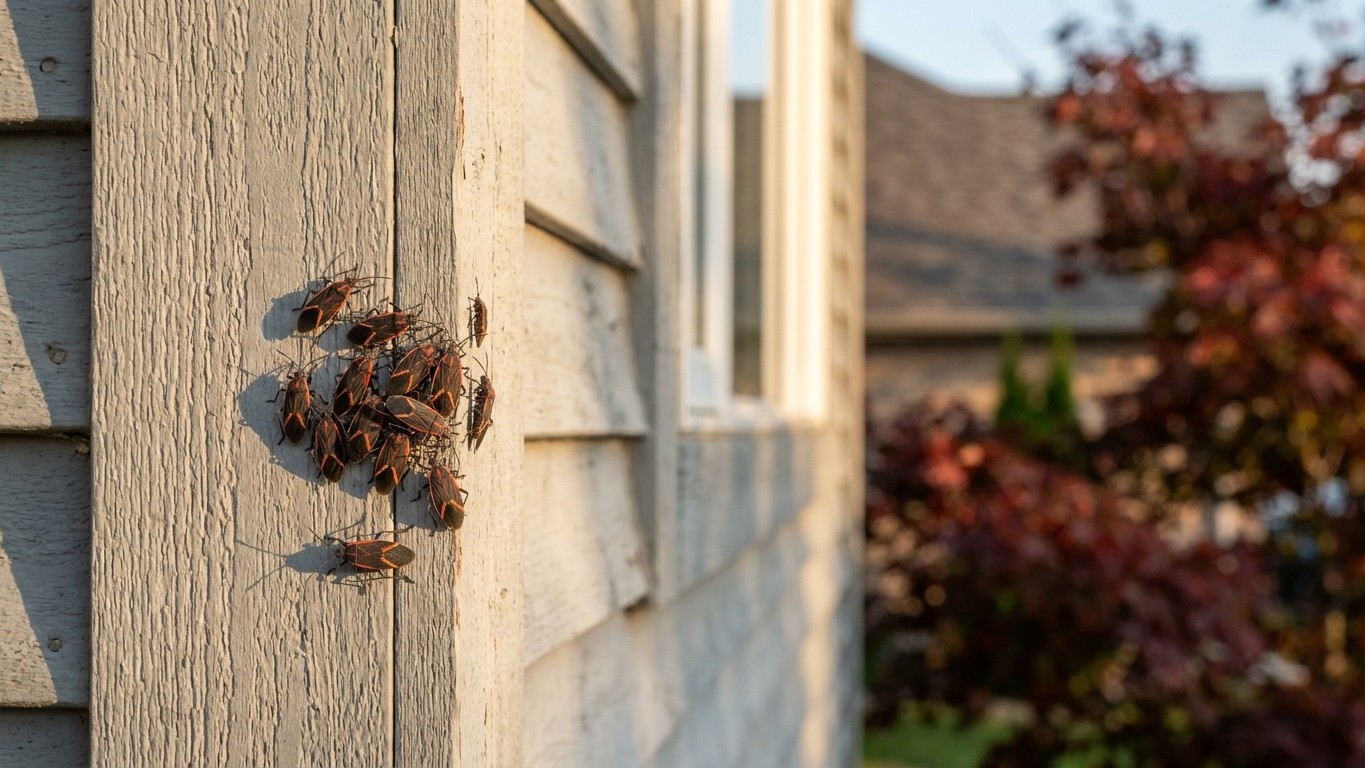

Boxelder bugs show up in Quebec twice a year, and each appearance means something different. In fall, usually mid-September through late October, swarms of these black-and-red insects cluster on sun-warmed walls, windows, and siding looking for a way inside to survive the cold. In spring, typically late April into May, the same bugs that made it through winter in your attic or wall voids wake up and start crawling toward light, often ending up on windowsills or curtains. Neither invasion causes structural damage, but both can turn a pleasant afternoon on the porch into a swatting match.
Quebec’s long, harsh winters make the province particularly attractive to boxelder bugs looking for a heated crevice to wait out the cold. Homes near mature maple trees, especially boxelder maples (Acer negundo), see the heaviest activity. If you’ve noticed clusters of these bugs on the south or west side of your house, that’s not a coincidence, it’s thermal behavior.
When Boxelder Bugs Appear in Quebec

The boxelder bug (Boisea trivittata) follows a predictable seasonal pattern tied directly to temperature. Adults are about half an inch long, dark gray to black, with three reddish-orange stripes running down their backs and red wing edges. They’re easy to mistake for a smaller, flatter beetle at first glance, but the coloring gives them away quickly once you know what to look for.
Fall Invasion
As daytime highs drop into the 50s Fahrenheit and nights get cold, boxelder bugs abandon their host trees and start searching for overwintering sites. This is the phase most Quebec homeowners actually notice, because the bugs gather in visible masses on exterior walls, especially where sunlight hits directly in the afternoon. Cracks around window frames, siding gaps, attic vents, and even loose mortar joints all serve as entry points. A single warm afternoon in early October can trigger hundreds of bugs to converge on one wall within a few hours.
Spring Emergence
Bugs that successfully overwintered indoors, often in wall voids, attic insulation, or unused chimneys, become active again once indoor temperatures rise past roughly 70°F, which can happen even in late winter if a house is well-heated. This is why some Quebec residents report boxelder bugs appearing on interior windowsills in February or March, weeks before anything is blooming outside. Once outdoor temperatures stabilize in the 60s, the survivors head back out to feed on developing maple seeds, and indoor sightings taper off until fall.
Why Your Property Attracts Them
Boxelder bugs feed almost exclusively on the seeds, flowers, and leaves of boxelder maples, though they’ll also use silver maple, ash, and occasionally fruit trees as secondary hosts. Female boxelder maples produce the winged seeds these insects rely on, while male trees produce none. That distinction matters more than most people realize, because it means the tree species on your property, and specifically its sex, drives whether you’ll deal with a minor nuisance or a recurring swarm.
Properties with mature female boxelder maples within about 100 feet of the house see dramatically higher bug pressure than those without. South- and west-facing exteriors compound the problem because they absorb more heat, making them the preferred staging area before bugs push through gaps into the structure. Older homes with original wood siding, gapped soffits, or unsealed utility penetrations (where cables or pipes enter the house) tend to have more entry points than newer construction with tighter building envelopes.
Firewood stacked against the house is another overlooked factor. Boxelder bugs will shelter in bark crevices and stacked wood piles, then migrate the short distance into the house once outdoor temperatures drop. Moving woodpiles at least 20 feet from any exterior wall reduces this pathway significantly.
What Actually Stops Boxelder Bugs
Killing the bugs you see is the least effective part of managing an infestation. The bugs clustered on your siding today are a small fraction of what’s queued up to follow. Real control means closing the gaps they use to get inside and, where practical, addressing the host tree.
Sealing and Exclusion
This is the single highest-return step available to homeowners. Walk the exterior on a mild day and check these common entry points:
- Gaps around window and door frames, especially where caulk has cracked or shrunk
- Openings where utility lines, cable, or dryer vents penetrate the wall
- Loose or missing weatherstripping at door thresholds
- Vents on attics, crawl spaces, and soffits without fine mesh screening
- Cracks in foundation walls or where siding meets the foundation
Silicone or polyurethane caulk holds up better than latex in Quebec’s freeze-thaw cycles, since latex caulk tends to crack after one or two winters. For larger gaps, expanding foam sealant combined with a metal mesh barrier keeps both insects and rodents out. Screen repair on attic and soffit vents is often the missing piece, since bugs that can’t be stopped at the wall exterior frequently find their way in through unscreened ventilation.
Dealing With the Host Tree
Removing a mature female boxelder maple is a drastic step, and not one most homeowners take lightly given the shade and property value a large tree provides. A more moderate approach involves pruning to reduce seed production, though this has to be repeated and doesn’t eliminate the food source entirely. Some Quebec municipalities offer tree removal or replacement permits through their arboriculture bylaws, so checking local regulations before cutting down a mature tree is worth the phone call, both for permit reasons and because some municipalities protect trees above a certain trunk diameter.
If the host tree is on a neighboring property, direct removal isn’t an option, but that doesn’t make exclusion less effective. Sealing your own structure still prevents the vast majority of indoor sightings even when the source tree is 50 or 100 feet away, since boxelder bugs aren’t strong fliers and rely mostly on walking and short glides to reach a wall.
Indoor Bugs: What to Do (and What Not to Do)
Vacuuming is the cleanest way to remove boxelder bugs that have already made it inside. Crushing them isn’t recommended, since their bodies release a compound that can stain light-colored fabric, drywall, and carpet, particularly noticeable on white or cream upholstery. A shop vac with a bit of soapy water in the canister kills bugs on contact and avoids the mess of a dry vacuum bag.
Insecticidal treatments applied to exterior walls in early fall, before the bugs cluster in large numbers, can reduce populations trying to enter, but timing matters more than product choice. Applying a residual insecticide after bugs have already massed on the wall is largely wasted effort, since the goal is preventing the cluster from forming in the first place, not treating it after the fact. Diatomaceous earth applied to cracks and voids works as a physical barrier without chemical residue, though it loses effectiveness once wet, which limits its use outdoors in Quebec’s rainy fall weather.
When Professional Treatment Makes Sense
Most boxelder bug situations resolve with sealing and seasonal vigilance. Professional pest control becomes worth the cost in a few specific scenarios: recurring infestations year after year despite sealing efforts, populations large enough to suggest an interior breeding or overwintering site inside wall voids, or properties where a mature host tree can’t be removed or pruned back. A licensed technician can apply a perimeter treatment timed to the fall migration and, in cases of heavy indoor overwintering, treat wall void access points directly, something that’s difficult to do safely without professional equipment.
One detail that surprises a lot of homeowners: boxelder bugs don’t reproduce indoors under normal household conditions. If you’re seeing bugs inside in January, they got in during the fall migration and are simply waiting for warmth, not breeding in your walls. That distinction changes the fix entirely, since the priority becomes sealing next year’s entry points rather than treating an active indoor infestation.