
If you’re growing cucumbers, squash, or pumpkins in Newfoundland and Labrador, the striped cucumber beetle is not a pest you’re likely to battle every season, but it’s not one you can rule out either. Established, overwintering populations remain rare across the province because winters are long and cold, yet isolated sightings turn up in home gardens on the Avalon Peninsula and in hoop houses where cucurbits get an early, sheltered start. The window of risk runs from late June through August, right when seedlings are tender and flowers are opening.
Does This Beetle Actually Live in Newfoundland and Labrador?

The striped cucumber beetle (Acalymma vittatum) is a warm-season insect. Its stronghold in Canada is southern Ontario, Quebec, and parts of the Maritimes, where longer summers and milder winters let adults survive in leaf litter and soil until spring. Newfoundland and Labrador sits at the cold edge of that range. Harsh winters, a short frost-free season, and thin topsoil in many gardening regions make it hard for the beetle to overwinter successfully year after year.
That doesn’t mean zero risk. Gardeners report occasional beetle activity in St. John’s-area plots, in coastal microclimates around Conception Bay, and in greenhouse or polytunnel operations where soil temperatures stay warmer longer into fall. The most common way the pest arrives isn’t by flying in from the mainland. It’s hitching a ride on transplants, potting soil, or even produce brought in from warmer provinces. A tray of squash seedlings started somewhere else and shipped north can carry eggs or larvae without anyone noticing until damage shows up weeks later.
Commercial cucurbit growers in the province who import transplants should treat every new batch of seedlings as a potential entry point, not just a convenience.
What This Pest Looks Like and How It Feeds
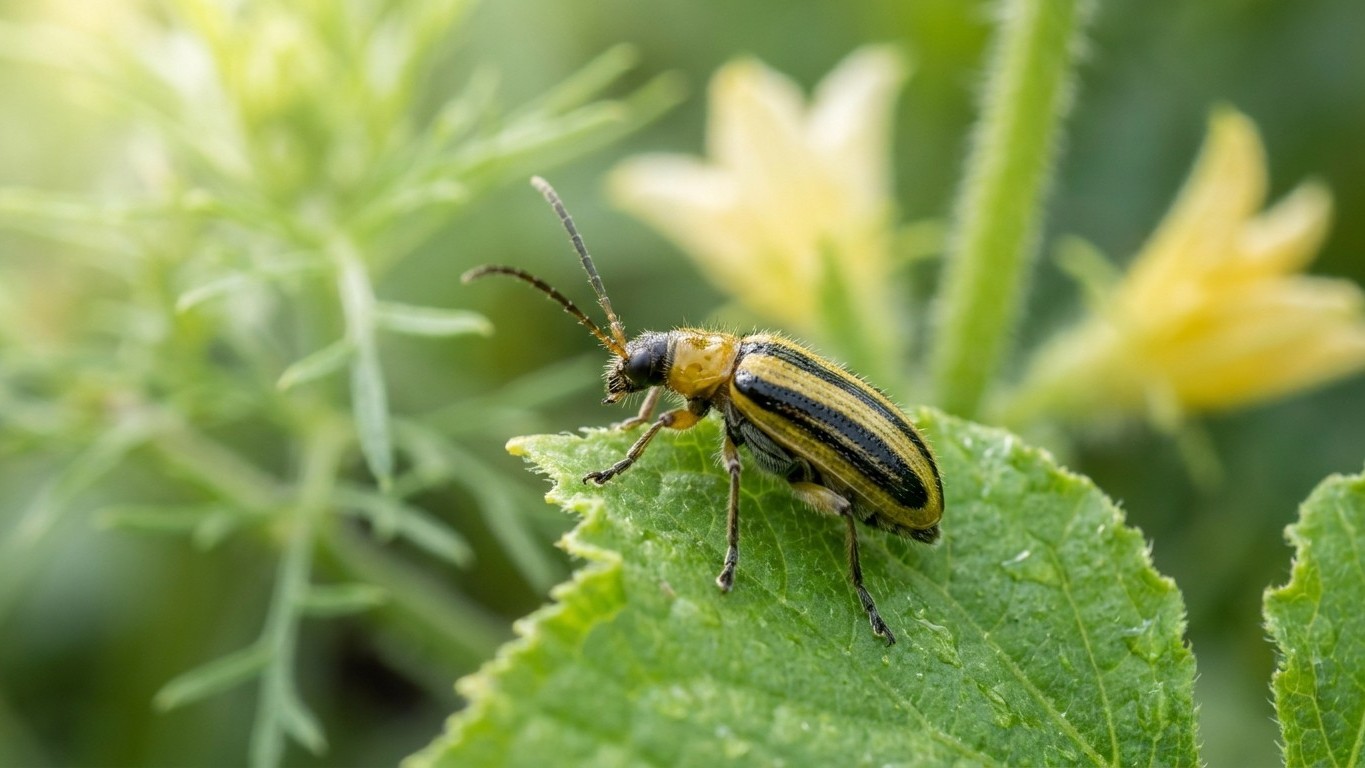
Adult striped cucumber beetles measure about a fifth of an inch, roughly the size of a grain of rice standing on end. The body is yellow to yellow-green with three bold black stripes running lengthwise down the wing covers and a solid black head. That striping is the giveaway that separates it from its cousin, the spotted cucumber beetle, which wears black dots instead of stripes and tends to be less damaging to seedlings.
Adults chew ragged holes in leaves, scar the surface of fruit, and go after flowers and pollen, which can reduce pollination on top of the direct feeding damage. Larvae live underground and feed on roots and the base of stems, something home gardeners rarely see until a plant suddenly wilts for no obvious reason. On young cucumber and squash plants, even a handful of adult beetles can strip enough leaf tissue at the seedling stage to stunt or kill the plant outright, since there isn’t much foliage to spare in the first place.
The Timeline: When It Shows Up in an NL Garden
Because Newfoundland and Labrador’s growing season starts later than almost anywhere else in Canada, the beetle’s activity window compresses into a narrower stretch. In provinces with established populations, adults emerge in May. In NL, if beetles are present at all, expect activity starting closer to late June, once soil warms and cucurbit seedlings are big enough to attract feeding adults.
Peak pressure typically runs through July and into early August, coinciding with flowering and early fruit set on cucumbers, zucchini, and summer squash. A second, smaller wave can appear in late August as any surviving larvae mature into adults, though a full second generation is unusual given how short the province’s warm season is compared to southern Canada. By mid-September, cooling temperatures and the first frosts in most NL zones shut the pest down for the year, regardless of whether adults manage to find shelter to overwinter.
This compressed window is actually useful information for gardeners. Instead of monitoring from spring through fall, the realistic scouting period is a six to eight week stretch centered on midsummer.
Why Bacterial Wilt Makes This Beetle Worse Than It Looks
Leaf damage alone rarely kills a healthy cucurbit plant. The bigger threat is what the beetle carries in its gut: the bacterium Erwinia tracheiphila, which causes bacterial wilt. As the beetle feeds, bacteria-laden frass gets deposited on feeding wounds, and the pathogen enters the plant’s vascular system. Within one to three weeks, infected plants show sudden wilting that starts in a single leaf or vine and spreads until the whole plant collapses, often while fruit is still small and green.
Cucumbers and muskmelons are highly susceptible to this wilt. Squash and pumpkins tend to be more tolerant, though not immune. Once a plant is infected there’s no cure, which shifts the entire management strategy toward prevention rather than treatment. This is the detail that turns a cosmetic pest into one worth taking seriously even at low population densities: a single infected beetle feeding on a seedling can doom that plant regardless of how few beetles show up afterward.
Stopping It: Practical Controls for NL Growers
Control works best when it targets the vulnerable seedling stage, before flowers open and before bacterial wilt has a chance to spread.
Row Covers and Timing
Floating row covers made of lightweight spun fabric are the single most effective tool for a home garden. Installed immediately after planting or transplanting and sealed at the edges with soil or stakes, they physically block adult beetles from reaching seedlings during the most fragile weeks. Covers need to come off once plants start flowering so pollinators can reach the blossoms, but by that point stems and leaves have usually toughened up enough to tolerate some feeding.
Staggering planting dates slightly, or starting seedlings indoors and transplanting larger, sturdier plants outdoors, also reduces the window during which a plant is small enough to be seriously damaged by light beetle pressure.
Traps, Trap Crops, and Resistant Varieties
Yellow sticky traps placed near cucurbit beds help with early detection, letting a gardener catch the first arrivals before damage builds up. Some growers use a trap crop strategy, planting a small block of an attractive squash variety a bit earlier than the main crop to draw beetles away from the plants that matter, then treating or removing that sacrificial planting.
Variety selection matters too. Certain cucumber and squash cultivars show some natural resistance or reduced attractiveness to cucumber beetles, and choosing them can lower pressure without any extra labor. Crop rotation, moving cucurbits to a different bed each year rather than replanting the same spot, also limits how easily any surviving larvae or overwintering adults find next year’s plants.
Direct Control When Populations Build
- Hand-pick beetles in the early morning when they’re sluggish and drop them into soapy water.
- Apply diatomaceous earth around the base of plants and lightly on foliage after dew has dried, reapplying after rain.
- Use kaolin clay sprays as a feeding deterrent on leaves and stems during peak beetle activity.
- Reserve pyrethrin-based products, which are approved for organic use in many programs, for confirmed infestations rather than as a preventive spray, since they also affect beneficial pollinators.
- Clean up and remove cucurbit plant debris at season’s end rather than tilling it under, since decaying vines can shelter overwintering adults.
End-of-season sanitation carries extra weight in a marginal climate like Newfoundland and Labrador’s. Every adult beetle that fails to find shelter over winter is one less potential source of infestation the following July, and in a province where this pest hasn’t fully established itself, that kind of consistent cleanup may be the difference between an occasional nuisance and a recurring problem.
Related guides
- Striped cucumber beetle in Quebec: When It Shows Up and What Stops It
- Striped cucumber beetle in New Hampshire: When It Shows Up and What Stops It
- Striped cucumber beetle in New Jersey: When It Shows Up and What Stops It
- Striped cucumber beetle in Prince Edward Island: When It Shows Up and What Stops It
- Striped cucumber beetle in South Carolina: When It Shows Up and What Stops It