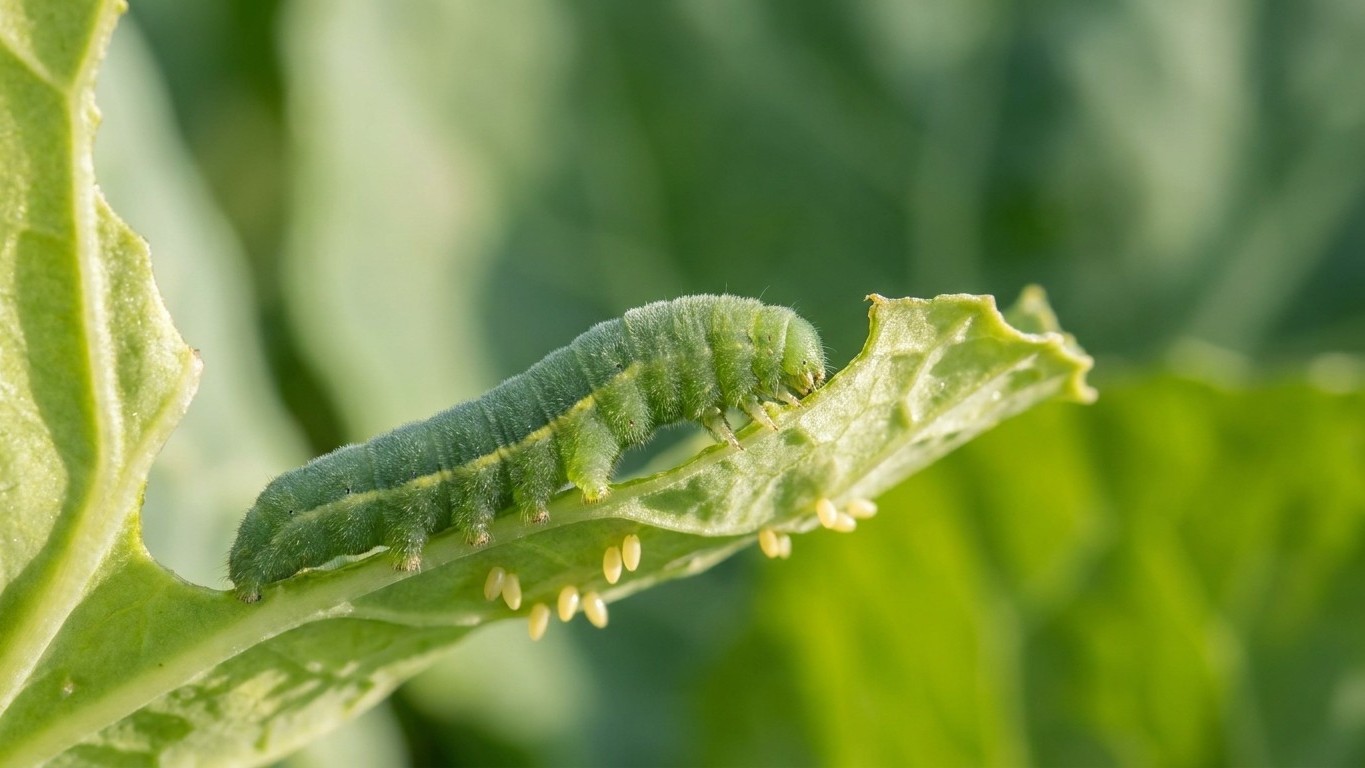

Imported cabbageworm larvae start feeding on Idaho cole crops as soon as spring temperatures hold steady above 50°F, which means the Treasure Valley sees the first damage by mid-April while eastern Idaho’s high desert doesn’t see activity until late May. The pest cycles through two to four generations before fall frost, and the surest ways to slow it down are timed row covers, Bt sprays, and cleaning up garden debris where the pupae spend the winter.
A European Import That Found a Home in Idaho Gardens

The imported cabbageworm (Pieris rapae) isn’t native to North America. It arrived in Quebec around the 1860s, likely in a shipment of cabbage seedlings, and spread across the continent within a few decades. By the early 1900s it had reached the Pacific Northwest, and it’s been a fixture in Idaho vegetable patches ever since. The adult is the small white butterfly with one or two black spots on each wing that you’ll see drifting over broccoli and cabbage rows all summer. That butterfly does no damage on its own. The trouble comes from what it leaves behind.
Each female lays pale yellow, bullet-shaped eggs singly on the undersides of leaves, often dozens over her lifespan. Those eggs hatch into velvety green caterpillars with a faint yellow stripe running down the back, growing to about an inch long before pupating. Idaho gardeners sometimes confuse them with cabbage loopers, a similar green caterpillar that moves in a distinctive looping crawl. Imported cabbageworm larvae, by contrast, crawl in a straight line and tend to bore deeper into the head of the plant rather than skeletonizing leaves from the surface.
When It Shows Up Across Idaho’s Growing Regions
Timing depends heavily on which part of the state you’re gardening in, and Idaho’s climate is anything but uniform. The Treasure Valley, home to Boise, Nampa, and Caldwell, sits in USDA zone 6b to 7a with a growing season that can stretch past 170 days. Overwintering pupae there start emerging as adult butterflies in early to mid-April, and by the time zucchini seedlings go in the ground, the first wave of eggs is already on the undersides of any brassica leaf available.
The Magic Valley, around Twin Falls, runs a similar calendar but a week or two behind the Treasure Valley because of slightly cooler spring soil temperatures. Eastern Idaho tells a different story. Around Idaho Falls and Rexburg, zone 4 to 5 conditions and a shorter frost-free window push the first flight into late May, and growers there typically see only two generations before a hard frost shuts things down by mid-September. The Panhandle, near Coeur d’Alene and Moscow, lands somewhere in between, with lake-moderated temperatures softening the harshest cold but still delaying emergence compared to the south.
What all these regions share is how the insect survives winter. Pupae attach themselves to plant debris, fence posts, garden stakes, even the siding of a shed, and the pupal case is cold-hardy enough to handle an Idaho winter without much trouble. That’s worth knowing because it means the population pressure in your garden next April has a lot to do with how thoroughly you cleaned up brassica debris the previous fall.
Multiple Generations, Compounding Damage
Because each generation takes roughly three to four weeks from egg to adult in warm weather, a Treasure Valley garden can host three full generations by the time fall planting winds down. Each successive wave tends to be larger than the last, since more butterflies survived to lay eggs. This is why a cabbage patch that looked fine in June can be riddled with holes by August if nothing was done early. Eastern Idaho’s shorter, cooler season caps things at two generations most years, which is one of the few upsides of a harsher climate.
What the Damage Actually Looks Like
The telltale sign is ragged, irregular holes chewed through leaves, often concentrated near the center of the plant where larvae prefer to feed. Look closer and you’ll find small dark green pellets of frass, essentially caterpillar droppings, tucked into leaf folds or wedged between the layers of a forming cabbage head. On broccoli and cauliflower, larvae will bore straight into the developing crown, which is a bigger problem than surface feeding because it contaminates the part of the plant you’re trying to eat or sell.
Commercial cole crop growers in the Treasure Valley, where cabbage is still grown at scale alongside Idaho’s dominant potato and onion crops, treat contamination as a market issue as much as a yield issue. A head of cabbage with visible frass or larvae gets rejected by processors even if the actual plant damage is minor. Home gardeners have more tolerance for cosmetic damage, but nobody wants to find a caterpillar cooked into their coleslaw.
What Actually Stops the Imported Cabbageworm
No single tactic works well on its own, but a few methods have a solid track record and are backed by extension research across the Pacific Northwest and northern states with similar growing seasons.
- Floating row covers installed at planting time and sealed at the edges physically block adult butterflies from reaching leaves to lay eggs. This works best when covers go on before the first flight, meaning early April in southern Idaho and early May in the eastern part of the state.
- Bacillus thuringiensis (Bt kurstaki) is a bacterial spray that targets caterpillars specifically and leaves bees and most other beneficial insects unharmed. It works best on young larvae, so timing matters more than the product itself. Apply it within a few days of noticing the first small holes rather than waiting until damage is obvious.
- Handpicking is tedious but effective in a backyard garden. Checking the undersides of leaves twice a week during peak season and crushing eggs or larvae by hand can keep small plantings clean without any spray at all.
- Fall cleanup matters more than most gardeners assume. Pulling and destroying brassica plant debris after harvest, rather than leaving it to overwinter in place, removes a good chunk of the pupae that would otherwise emerge as next spring’s first generation.
Beneficial insects deserve mention too, since they’re doing work in Idaho gardens whether anyone notices or not. The parasitic wasp Cotesia glomerata lays its eggs inside cabbageworm larvae, and a caterpillar covered in small white cocoons is one that’s already been neutralized. Broad-spectrum insecticides kill these wasps right along with the pest they’re supposed to control, which is one reason Bt is preferred over general-purpose pesticides for this particular problem. Planting flowering herbs like dill or cilantro near brassica beds gives these parasitic wasps a nectar source and tends to keep more of them working the garden through the season.
Crop rotation helps at the margins but isn’t a fix on its own, since the adult butterflies are strong fliers and will cross a suburban lot without much trouble. Where rotation actually pays off is at a neighborhood or field scale, when several gardeners or a larger commercial block coordinate on timing and cleanup rather than each managing an isolated bed.
One detail worth knowing before reaching for a spray: a handful of small holes on outer leaves rarely justifies treatment on a home garden scale. Idaho extension guidance on cole crop pests generally treats an infestation as worth acting on once damage shows up on the inner leaves near the developing head, since that’s the point where feeding starts affecting the harvestable part of the plant rather than just the leaves you’d trim off anyway.
Related guides
- Imported cabbageworm in Oregon: When It Shows Up and What Stops It
- Imported cabbageworm in Utah: When It Shows Up and What Stops It
- Imported cabbageworm in Nebraska: When It Shows Up and What Stops It
- Imported cabbageworm in New York: When It Shows Up and What Stops It
- Imported cabbageworm in South Dakota: When It Shows Up and What Stops It