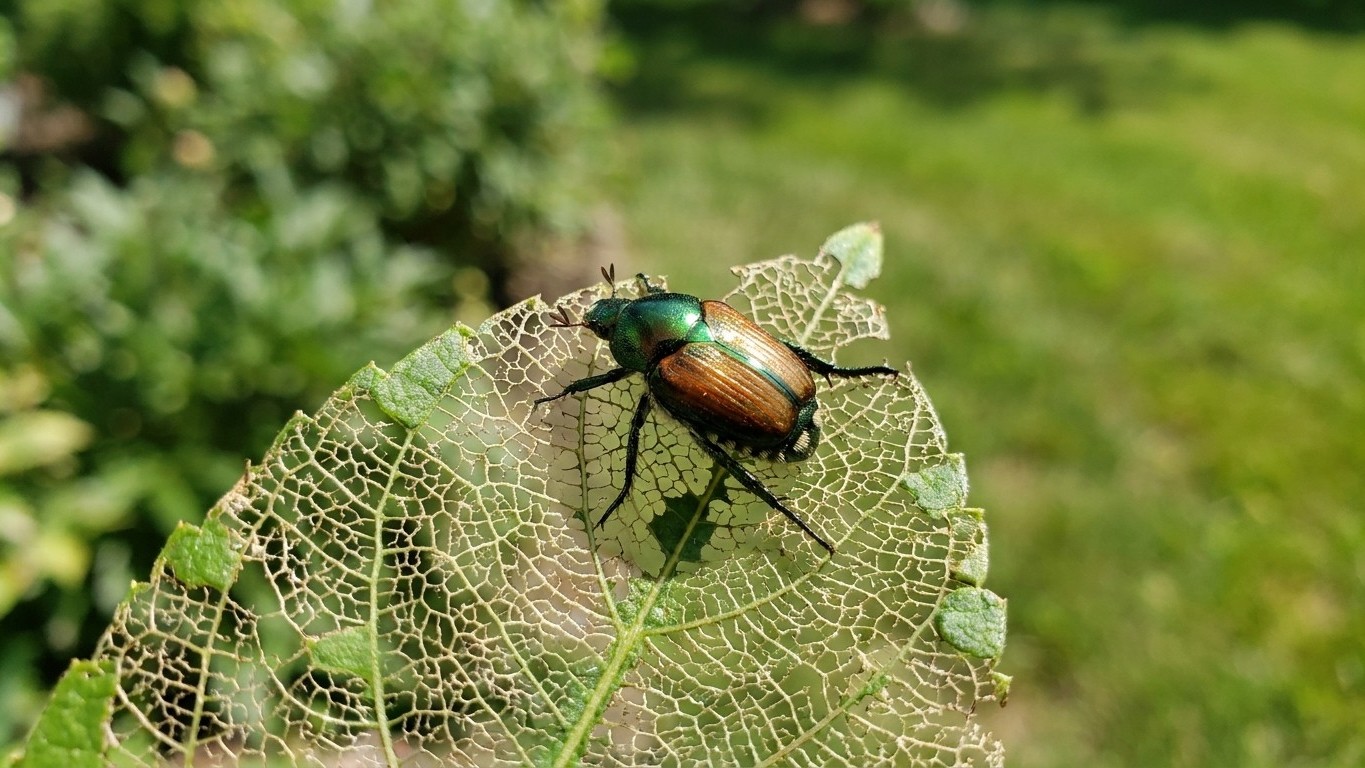

Japanese beetles start showing up in Pennsylvania in mid-to-late June, with populations peaking through July and tapering off by late August. Adults feed on more than 300 plant species, skeletonizing leaves down to a lacy web of veins, while their grubs chew through grass roots underground from late summer through the following spring. Stopping them means fighting on two fronts: killing grubs in the soil before they mature, and managing adults directly on plants during their six-to-eight-week feeding window.
When Japanese Beetles Actually Arrive in Pennsylvania

Soil temperature drives the schedule. Once ground temps hit the low 60s, roughly ten inches down, grubs that overwintered start moving upward to pupate. That shift usually happens in late May across most of the state, with adult beetles breaking through the soil surface two to three weeks later. Southeastern counties around Philadelphia and Lancaster tend to see beetles a week or so earlier than the ridge-and-valley region up near Williamsport or the cooler northern tier near Erie.
The beetle isn’t native to anywhere near here. Popillia japonica hitchhiked into New Jersey around 1916, likely in soil packed around iris bulbs, and spread west and south from there over the following century. Pennsylvania has been fully infested for decades now, with no county left untouched. That long history matters because it means natural predators here still haven’t caught up. Birds and some ground beetles will eat grubs opportunistically, but nothing in the eastern U.S. ecosystem preys on Japanese beetles heavily enough to keep numbers in check on its own.
Adult beetles live only four to six weeks, but a single generation overlaps enough that “beetle season” in Pennsylvania stretches a full two months. Females start laying eggs within days of emerging, burrowing two to four inches into turf to deposit one to five eggs at a time, then climbing back out to feed and mate again. A female can lay 40 to 60 eggs over her short life, which is the reason a light infestation in June can look like a full-blown invasion by mid-July.
What the Damage Actually Looks Like
Skeletonized foliage is the signature sign: beetles eat the tissue between leaf veins and leave behind a brown, lace-like skeleton that’s easy to spot from across the yard. Roses, linden trees, birch, crabapple, grapes, and raspberries rank among their favorite targets in Pennsylvania landscapes, but they’ll also strip corn silk, chew through soybean leaves, and go after hibiscus and hollyhock flowers directly. Beetles are drawn to sunlit foliage first, so damage often starts at the top of a tree or the sunny side of a shrub before spreading.
Grub damage shows up differently and later. Lawns develop irregular brown patches that feel spongy and lift up like loose carpet, because the grubs have chewed through the roots holding the turf in place. Raccoons and skunks digging up patches of lawn at night is often the first clue homeowners get that grubs are underneath, since those animals are hunting the grubs themselves. A section of lawn that pulls away easily by hand, showing white, C-shaped grubs an inch or so long, confirms the diagnosis without any guesswork.
Not every brown patch is a grub problem, though. Drought stress, fungal disease, and dog urine spots can all mimic grub damage, so it’s worth pulling back a section of turf before treating for grubs specifically. Applying a grub insecticide to a lawn that’s actually suffering from a different issue wastes money and does nothing for the real problem.
What Actually Stops Adult Beetles
Hand-picking works better than most people expect, especially early in the season when populations are still low. Beetles are sluggish in the cool morning hours, so knocking them into a bucket of soapy water before 9 a.m. is far more effective than trying to catch them in the afternoon heat when they’re active fliers. This method suits small gardens and prized plants like roses far better than spraying chemicals across an entire yard.
Pheromone traps, the yellow-and-green bag traps sold at most hardware stores, come with a real downside: they attract far more beetles than they actually catch, often drawing in insects from well beyond the yard’s boundaries. Research from land-grant university entomology departments has consistently found these traps can increase feeding damage on nearby plants because beetles land on foliage on their way to or from the trap. Placing a trap at least 30 feet from valued plants, on the downwind edge of a property, limits that spillover effect, but many pest management specialists recommend skipping traps altogether if protecting specific plants is the goal.
Row covers and fine mesh netting physically block beetles from reaching vegetables and small shrubs during peak season. This works especially well on raspberries and grapevines, where fruit needs protection but pollination has already happened or isn’t required. For roses and other flowering plants that need pollinator access, covers aren’t practical, which pushes gardeners back toward hand-picking or targeted insecticide use.
Insecticide Options for Adult Beetles
Pyrethroid-based sprays kill adult beetles on contact but only last a few days before rain or sunlight breaks them down, meaning repeat applications are often necessary through the peak feeding window. Systemic insecticides applied earlier in the season, before beetles arrive, offer longer protection because the plant itself becomes toxic to feeding insects, but timing has to happen weeks in advance to be effective. Neither option distinguishes between pest beetles and beneficial pollinators, so spraying open flowers during daylight hours when bees are active isn’t a good practice regardless of which product gets used.
Grub Control: The Long Game
Killing grubs before they become adults is the more strategic move, because it addresses next year’s beetle population rather than just this year’s damage. Preventive grub treatments, typically containing imidacloprid or chlorantraniliprole, get applied to lawns in June or early July, before eggs hatch, so the product is already present in the soil when young grubs start feeding. Applying these products too late, after grubs have grown large in September, sharply reduces how well they work.
Beneficial nematodes offer a non-chemical alternative for lawns. These microscopic worms, applied as a liquid drench watered into the soil, seek out and infect grub larvae with a lethal bacteria. They need consistently moist soil to survive and move through the ground, so applying them right before a dry spell defeats the purpose. Fall application, when grubs are still small and soil moisture tends to be higher across Pennsylvania, generally produces better results than spring treatments applied to grubs that have already grown large and hardy over winter.
Milky spore, a bacterial soil treatment marketed for grub control, has a mixed track record against Japanese beetle grubs specifically. It works well against some scarab beetle species but takes several years to build up enough bacterial concentration in soil to meaningfully reduce Japanese beetle numbers, and results vary widely by soil type and existing grub density. Homeowners expecting fast results from milky spore alone are usually disappointed within the first season or two.
Lawn Practices That Make a Real Difference
Female beetles prefer laying eggs in moist, well-irrigated turf over dry, stressed lawns, which means cutting back on watering during the peak egg-laying weeks in July can reduce how many eggs get deposited in the first place. This runs counter to typical summer lawn care advice, but a slightly drought-stressed lawn in July is less attractive to egg-laying females than a lush, well-watered one.
Keeping grass cut a bit taller, around 3 to 3.5 inches, also helps roots grow deeper and more resilient, so a lawn can tolerate moderate grub feeding without showing the dead patches that show up in shallow-rooted turf. Overseeding thin spots each fall thickens turf density over time, making it harder for beetles to find bare soil suitable for egg-laying.
Rotating which pest control approach gets used each year, alternating grub treatments with nematode applications rather than relying on the same chemical every season, also helps avoid the kind of resistance buildup seen in other long-established pest populations. Japanese beetles haven’t shown widespread pesticide resistance in Pennsylvania yet, but consistent overuse of a single product class is generally poor pest management practice regardless of the species involved.
Homeowners dealing with beetles on ornamental trees sometimes overlook one detail: younger, recently planted trees suffer more lasting damage from defoliation than mature, established trees, because they have fewer reserves to recover with. A newly planted linden or Japanese maple stripped of leaves in July may struggle to bounce back the following spring, while a 20-year-old specimen of the same species usually shrugs off similar damage within a season.
Related guides
- Japanese beetle in West Virginia: When It Shows Up and What Stops It
- Japanese beetle in Ohio: When It Shows Up and What Stops It
- Japanese beetle in Quebec: When It Shows Up and What Stops It
- Japanese beetle in Virginia: When It Shows Up and What Stops It
- Onion maggot in Pennsylvania
- Spotted lanternfly in Pennsylvania
- Colorado potato beetle in Pennsylvania
- Japanese beetle in Manitoba: When It Shows Up and What Stops It