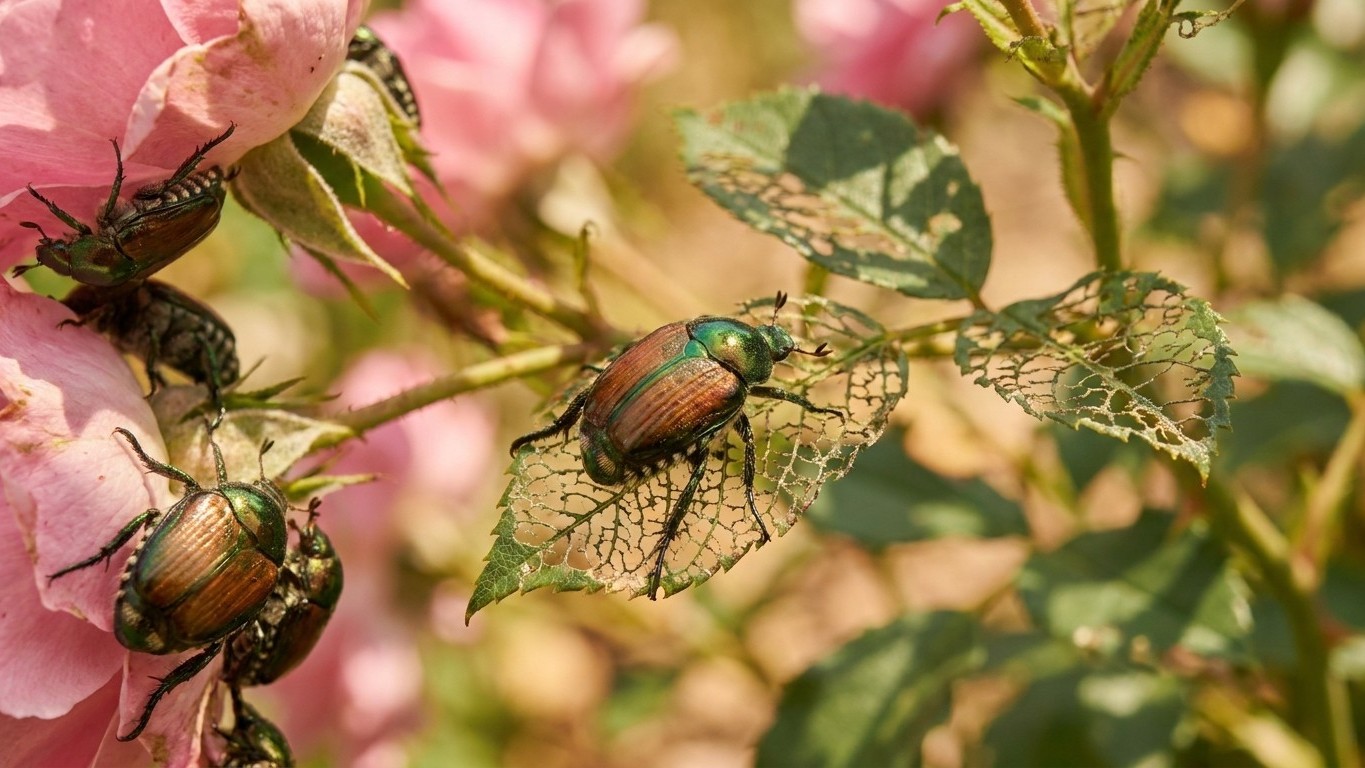

Adult Japanese beetles start showing up in Quebec gardens in late June, hit their peak activity through July, and taper off by mid-August. What actually stops them is a combination approach: handpicking or targeted insecticide for the adults chewing on your roses and linden trees, plus beneficial nematodes or grub-specific products applied to the lawn before eggs hatch. No single trap or treatment handles both life stages, which is the part most homeowners get wrong.
When Japanese Beetles Emerge in Quebec

Timing in Quebec runs a little behind what gardeners in Ohio or Pennsylvania experience, but the pattern is the same. Adults crawl out of the soil once ground temperatures hold steady around 70°F for several days in a row, which in most of southern Quebec means the last week of June or the first week of July. Activity ramps up fast after that first wave. By mid-July, a single infested rosebush can be covered in dozens of beetles at once, feeding in clusters because the insects release aggregation pheromones that pull more of their own kind toward an already-damaged plant.
Feeding damage looks distinctive once you know what to check for: leaves reduced to a lace-like skeleton, with only the tougher veins left behind. Linden, birch, grape vines, and roses tend to take the worst of it. Adults feed for roughly six to eight weeks, mate during that window, and females tunnel into moist lawn soil to lay eggs, favoring irrigated or well-watered turf over dry, stressed grass.
Grubs hatch in late summer and start feeding on grass roots through September and October, which is when lawns develop the spongy, browning patches that pull up loose like a rug. Here’s a detail most pest guides skip: in cooler northern climates, including much of Quebec, some grub populations need two full years to complete their development instead of the single-year cycle typical further south. Cooler soil temperatures slow feeding and growth enough that entomologists tracking the species across Canada have documented this extended cycle repeatedly in the province’s more northern growing zones.
Where They’ve Taken Hold in the Province
Japanese beetle populations in Quebec are concentrated in the warmer, more agricultural pockets of the south. Montérégie, the region stretching south of Montreal toward the U.S. border, has some of the most established infestations, along with the Eastern Townships (Estrie) and parts of the Outaouais near the Ottawa River. Isolated populations have also turned up further northeast, including near Quebec City, though colder average temperatures there have historically slowed the beetle’s spread.
That’s shifting. Warmer summers and milder winters over the past couple of decades have let the species push into areas that used to be too cold for reliable overwintering. For homeowners in border states like Vermont, New York, and Maine, the pattern is familiar: the same beetle that’s been a lawn and garden headache in the Northeast for generations has simply been expanding its northern edge, and southern Quebec sits right in that expansion zone.
Provincial and municipal horticultural programs monitor beetle counts with pheromone traps each summer to track how far the range has moved, and results get folded into the regulated-area maps discussed below. If you garden in one of the affected regions, expect beetle pressure to build year over year rather than stay flat.
What Actually Stops Japanese Beetles
Control only works if it targets the right life stage at the right time. Treating adults in July does nothing for the grubs already tunneling through your lawn, and treating grubs in September won’t save this year’s rosebush. The two problems need separate strategies.
Handling Adults on Plants
Handpicking remains one of the most effective low-cost methods, especially early in the morning when beetles are sluggish from the cool overnight temperatures. Knock them into a bucket of soapy water rather than crushing them on the plant, since crushed beetles release pheromones that draw in more insects.
Pheromone traps sold at garden centers are worth a word of caution. University extension research has shown these traps often attract more beetles into a yard than they actually catch, meaning a trap placed near a prized rosebush can make the damage worse. If you use one, set it well away from plants you care about, ideally at the edge of the property.
For heavier infestations, insecticidal soap or neem oil can knock back adult populations on ornamentals with less risk to pollinators than broader chemical options. Systemic insecticides work too, but they should be applied outside of bloom periods and according to label directions, since Japanese beetles favor many of the same flowering plants that bees rely on.
Tackling Grubs in the Lawn
Grub control happens on a different calendar, mostly in late summer when eggs have hatched but larvae are still small and closer to the soil surface. Beneficial nematodes, particularly Heterorhabditis bacteriophora, are applied to moist soil and actively seek out and infect grubs; timing and soil moisture both matter, since the nematodes dry out and die quickly in parched turf.
Milky spore disease, a bacterium historically marketed for Japanese beetle grub control, has a mixed track record in colder regions. It needs sustained warm soil to establish and spread through a grub population, conditions that are harder to guarantee in a Quebec summer than in, say, Virginia or Maryland. Most extension entomologists in the Northeast now recommend it as a secondary option rather than a primary strategy in cooler climates.
Grub-specific insecticides containing ingredients like chlorantraniliprole, applied preventively in late spring before egg-laying peaks, tend to give more consistent results in northern lawns. A simpler cultural tweak also helps: letting the lawn go slightly drier in mid-July, when females are searching for soil to lay eggs, makes the turf less attractive for egg-laying without sacrificing the lawn’s overall health.
Rules on Moving Plants and Soil
Because Japanese beetle is established in parts of Quebec but hasn’t taken hold everywhere in Canada, regulated zones exist to slow its spread into uninfested provinces and regions. These rules typically restrict moving soil, potted plants with attached soil, and used agricultural or landscaping equipment out of infested areas without inspection or treatment.
For most homeowners this rarely comes up day to day, but it matters if you’re transporting nursery stock, moving house with container gardens, or hauling topsoil across regional lines within the province. Campground operators and garden centers in affected zones are usually the ones who deal with the paperwork directly, but if you’re buying plants from a nursery in an infested region and driving them to a property outside the regulated area, it’s worth asking the seller whether the stock has been inspected or treated before you load it into the car.
The practical takeaway for gardeners near the regulated boundary: shake soil off root balls when transplanting between properties, avoid moving lawn clippings or soil from a known infested yard, and check with a local garden center if you’re unsure whether your municipality falls inside a current regulated zone, since the maps get updated as populations shift.
One more detail worth knowing before next season: female beetles show a strong preference for laying eggs in well-watered lawns over drought-stressed ones, which means a yard that gets babied with daily sprinklers through July can end up hosting a heavier grub population than the neighbor’s patchier, less-watered lawn next door.
Related guides
- Japanese beetle in Ontario: When It Shows Up and What Stops It
- Japanese beetle in Virginia: When It Shows Up and What Stops It
- Japanese beetle in West Virginia: When It Shows Up and What Stops It
- Cabbage maggot in Quebec
- Seedcorn maggot in Quebec
- Onion maggot in Quebec
- Japanese beetle in Minnesota: When It Shows Up and What Stops It