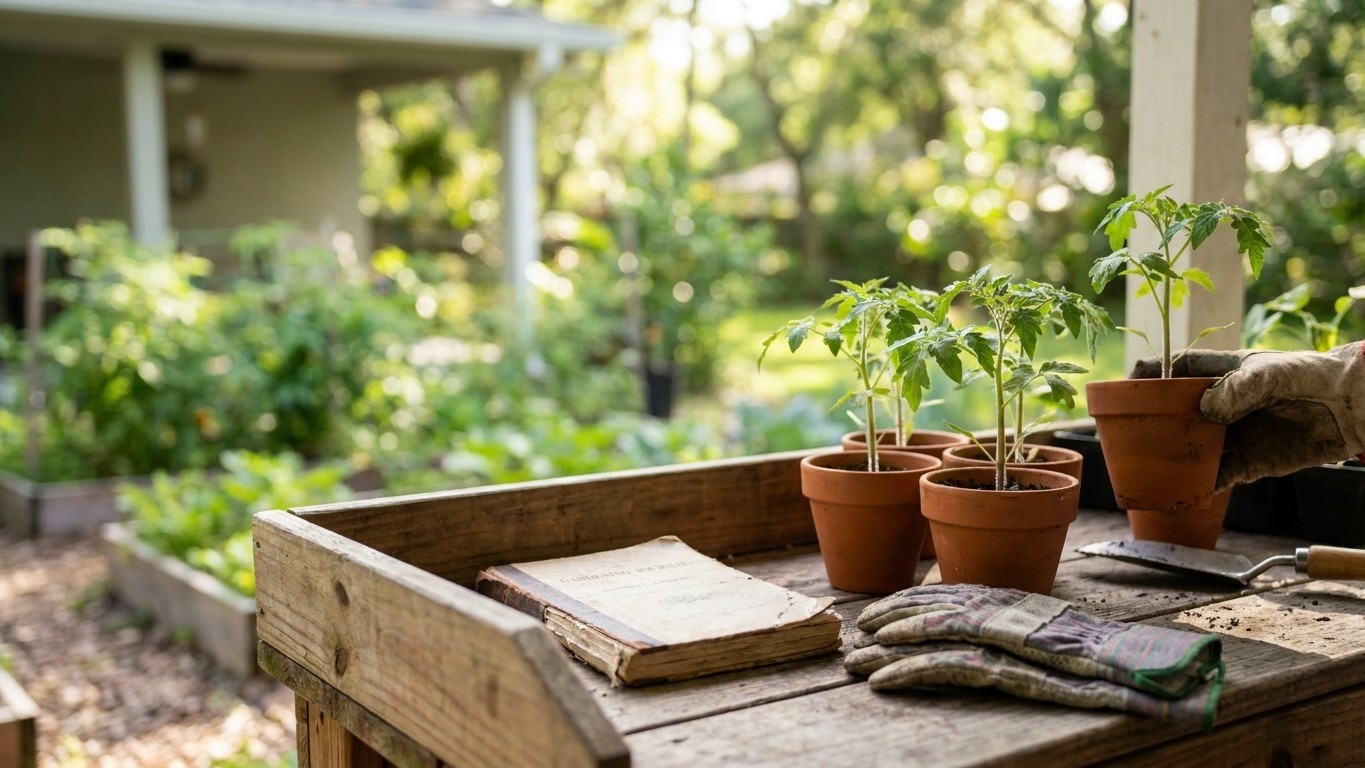

A Valentine’s Day transplant in Jacksonville can look fine for two weeks, then turn to black mush overnight, because the last freeze there doesn’t reliably clear until sometime between February 16 and March 7 — and “sometime” is the trap. Jump the gun and you’re replanting from scratch. Wait too long in fall and a slow-maturing variety gets caught by the first November freeze with green fruit still on the vine. Both mistakes trace back to treating a frost window like a fixed date instead of a range you have to count from.
What this comes down to in Florida

NOAA NCEI’s 1991-2020 climate normals for the Jacksonville station (USW00013889) put the last spring freeze between February 16 and March 7, and the first fall freeze between November 26 and December 13. That leaves a frost-free stretch of roughly eight and a half months in a typical year. The frost window is a range, not a single date, which means the calendar can’t tell you in advance whether this particular year clears early or drags on toward the first week of March.
Counting back from that window runs in two directions. In spring, you count forward: transplants go in once freeze risk has passed, which for Jacksonville lands the practical set-out window in early March to late March once you allow the soil a little time to warm past the last frost date itself. Before you get to that step, Growing Tomatoes in Florida covers the site prep and soil work that should already be done by the time this window opens. In fall, the arithmetic flips: you take the first fall frost window and subtract a variety’s days to maturity to find the latest date a transplant can go in and still ripen fruit before the season ends.
This whole calculation is specific to north Florida. Move south to Orlando or Miami and the frost window that anchors it mostly disappears. Central and south Florida run close to frost-free, and the growing calendar inverts there, with the main tomato season running through the cooler months and summer heat becoming the limiting factor instead of frost. Never apply Jacksonville’s frost window to a garden in Orlando or Miami. The season structure in those regions is built around a completely different problem.
Working it out for your own garden
The method matters more than any single date, because it still works if you move counties or get an unusually cold or warm year. Start from your own last and first frost windows rather than Jacksonville’s if you can get them, then apply the same steps:
- Find your local last-frost and first-frost windows from NOAA or your county extension office
- Note the days-to-maturity figure printed on the seed packet for your chosen variety
- Add that number to both ends of your set-out window to get a first-ripe range
- Compare that first-ripe range against your first fall frost window to see how much cushion is left
A fast cultivar, worked through
Take Sun Gold, an indeterminate cherry tomato at 57 days from transplant. Setting it out in the early March to late March window and adding 57 days lands the first ripe fruit around mid May, which matches the catalogue math. Counting that first-ripe range against Jacksonville’s first fall frost window of November 26 to December 13 leaves about 193 days of cushion before frost becomes a concern again. That is far more margin than a 57-day cultivar needs, which is normal in a region with this long a frost-free season.
A slow cultivar, worked through
Now take Amish Paste, an indeterminate paste tomato at 85 days from transplant, roughly a month longer than Sun Gold. The same early March to late March set-out window plus 85 days pushes first ripe fruit into mid June. Measured against the same fall frost window, that still leaves about 165 days of margin. Even the slowest cultivar on a typical seed rack clears north Florida’s frost-free season with room to spare, which tells you the spring planting decision here is driven by frost risk at the front end, not by whether a long-season variety will finish.
Fall planting is where the count-back math actually bites. Take Sun Gold again, at roughly eight weeks to maturity. Counting back from the first fall frost window of November 26 to December 13 by about eight weeks lands the latest safe fall transplant date in late September to early October, depending on which end of that frost window your year turns out to be. A slower cultivar like Amish Paste, at roughly twelve weeks, needs its fall transplant closer to early to mid September, a stretch when Florida’s lingering summer heat often causes blossom drop even though the frost math says there’s still time on the calendar. If you haven’t settled on which cultivar to grow at all, Tomato Varieties That Ripen in Time in Florida walks through the trade-offs before you lock in either planting date.
What changes across the state
Jacksonville’s frost figures come from an inland airport site, and NOAA’s own record shows the variability even there: three of the thirty years behind the 1991-2020 normals saw no freeze at all at that station. Your own yard can run a week or two milder or colder than the airport reading, depending on how it’s sited relative to open ground, tree cover and low spots where cold air pools overnight.
Distance from the coast and from large bodies of water matters too. Water holds heat longer than dry land, so a garden close to the St. Johns River or the coastline tends to see a shorter, milder frost season than an inland spot at a similar latitude. Elevation plays a smaller role in Florida than in mountainous states, but low-lying areas that trap cold air on still nights can still run noticeably colder than a plot just a short distance away on higher ground.
The biggest shift, though, is the north-south divide already noted above. As you move from Jacksonville toward the central part of the state and further south, the frost window narrows and eventually stops applying at all. That is a different climate regime, not a milder version of the same one, and it changes the entire structure of the tomato-growing calendar rather than just shifting a date by a week or two.
The mistakes this state punishes

The most common mistake is trusting a warm February. A warm week in February is not the same as the last frost, and Jacksonville’s own frost window runs all the way to March 7 in some years. Transplants set out during a mild spell can still get caught by a cold front that arrives weeks later, and young tomato plants have little tolerance for a hard freeze once they’re in the ground.
The second is assuming a long-season variety is automatically risky here. As the worked examples above show, even an 85-day cultivar like Amish Paste clears north Florida’s frost-free season with well over five months to spare. The real risk with long-season varieties isn’t the fall frost, it’s a delayed spring transplant. A wet, cold March that pushes set-out back by two or three weeks eats directly into that margin, and a slow-maturing plant has less room to absorb the delay than a fast one.
Missing the fall pest window
Growers who plant a fall crop using count-back math sometimes forget that pest pressure follows its own calendar, not the frost calendar. A late-September or early-October transplant can walk straight into a pest population that built up over the summer. Tomato Pests in Florida: Which Ones Actually Show Up Here covers what to expect and when, so it’s worth checking before you commit to a fall planting date.
The last mistake is geographic: pulling a frost date from a seed catalog or a national gardening site and applying it statewide. A date built around Jacksonville’s station does not describe Tallahassee, Tampa or Key West, and using it outside north Florida can mean planting months too early or too late for the actual local season.
Checking this against your county
Jacksonville’s frost window is a starting point, not an instruction for every county in the state. Check your own county’s numbers before you commit a whole flat of transplants to a date. The University of Florida’s IFAS Extension network, searchable through its Solutions for Your Life directory, maintains office contacts and local guidance by county, and a call or visit to your county office is the fastest way to confirm how much your local frost window differs from the Jacksonville figures used here.
Common questions
Can I plant tomatoes in January in Florida?
Not in north Florida, where NOAA’s Jacksonville-area frost normals put the last freeze risk between February 16 and March 7. Further south, in central and south Florida, the calendar inverts and January often falls inside the main growing season rather than before it.
What actually happens if I plant before the last frost date?
The plant can be damaged or killed outright if a freeze occurs, since young transplants have very little cold tolerance. Because Jacksonville’s frost window is a range rather than a single date, planting near the early edge of it carries real risk in some years and none in others.
How late can I still start a fall tomato crop in north Florida?
It depends on the cultivar’s days to maturity, counted backward from the first fall frost window of November 26 to December 13. A fast 57 to 60-day cultivar can go in as late as roughly late September to early October, while an 85-day cultivar needs to be in the ground closer to early to mid September.
Why does my neighbor a few miles away seem to get different frost dates than what I read online?
Most published frost dates are tied to a single weather station, and Jacksonville’s is an inland airport site. Coastal proximity, low spots that trap cold air, and even tree cover can shift a particular yard’s frost risk earlier or later than the station reading, which is why a county extension check is worth doing before you rely on any single figure.
If you follow the almanac, here is when to plant tomatoes by the moon. It is a tradition, not a proven method.