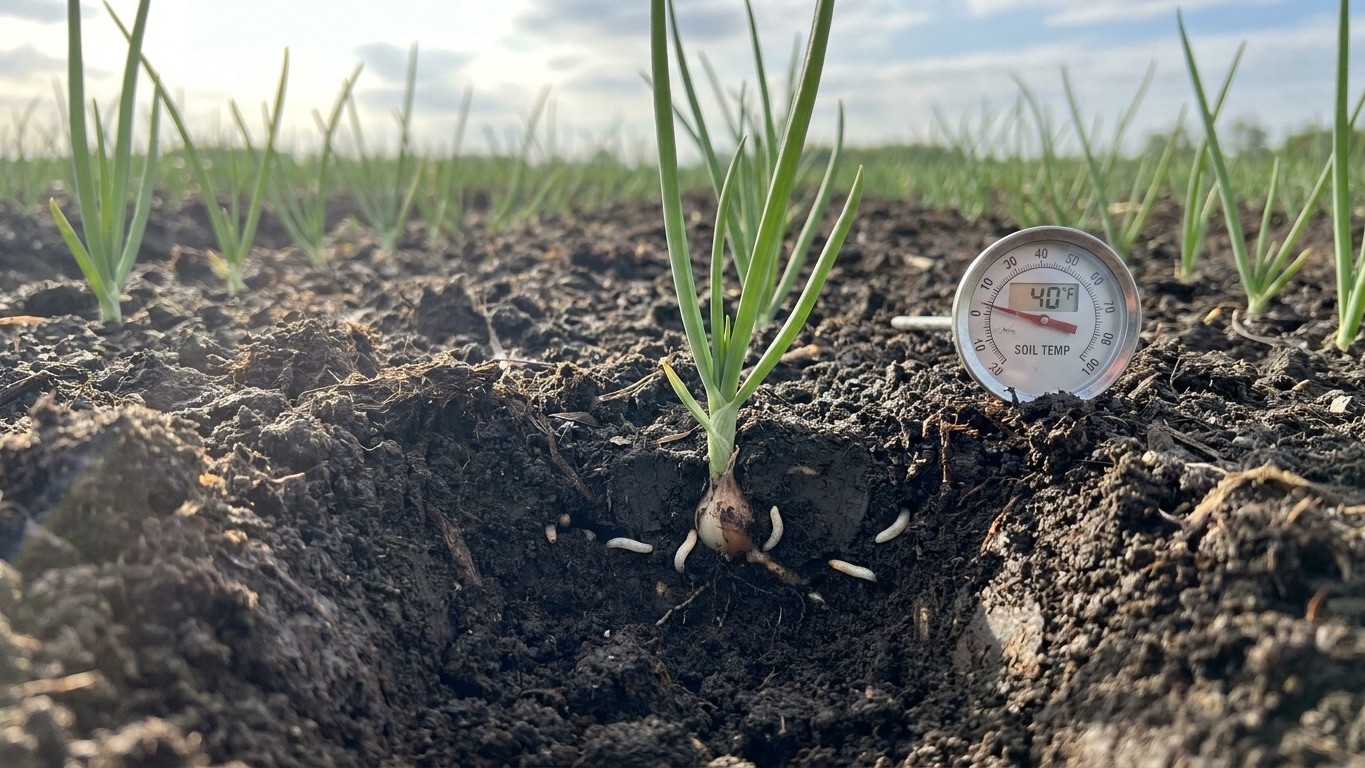

Onion maggot activity in Quebec follows a predictable calendar tied to soil temperature, not the regular date on a wall calendar. The first generation typically emerges in late May when soil hits around 40°F at planting depth, with two more generations following through the growing season into early fall. Stopping this pest means timing your defenses around those emergence windows rather than reacting after seedlings start collapsing.
Quebec’s onion production is concentrated in a narrow band of rich, dark muck soil southwest of Montreal, in the Montérégie region. That black soil holds moisture and organic matter beautifully, which onions love. Unfortunately, the onion maggot (Delia antiqua) loves it too. The fly that produces these maggots is drawn to the smell of decaying onion material and freshly cultivated soil, both of which are abundant in intensive onion-growing zones. For home gardeners farther north or in cooler microclimates across the province, the same biology applies, just shifted by a week or two depending on how fast the soil warms.
The weeks to watch

Three generations a year is the standard pattern in most of southern Quebec. The first flight, and the most damaging one, coincides with spring planting. Adult flies lay eggs at the base of young onion, leek, garlic, or shallot plants, and the maggots that hatch tunnel straight into the developing bulb. Seedlings and transplants are far more vulnerable than mature plants, so damage from this first generation is often the most severe of the season.
The second generation arrives roughly six to eight weeks later, usually mid to late July. By then, onions have bulked up some resistance simply by growing larger, but stressed or wounded plants remain easy targets. A third generation shows up in late August or September, feeding on bulbs that are close to harvest. This late wave rarely destroys a whole crop but can ruin storage quality, since maggot tunnels open the door to bacterial soft rot that turns a good-looking onion into mush a few weeks after it goes into the root cellar.
Degree-Day Tracking, Not Just Guesswork
Quebec agricultural extension programs use degree-day accumulation models to predict onion maggot flight peaks rather than fixed calendar dates. A cool spring pushes emergence back; an early heat wave pulls it forward. Gardeners without access to formal degree-day charts get a decent proxy by watching local dandelion bloom, which tends to track closely with early fly activity in many Northeastern growing regions. It’s not scientific precision, but it beats planting blind.
Recognizing the Damage Before It Spreads
Wilting is the first visible sign, and it’s easy to mistake for drought stress. Young onion plants suddenly yellow and flop over, and when you pull one, the base is soft, discolored, and often hollowed out. Unlike drought-stressed plants, watering doesn’t fix wilted maggot victims. Pulling one infected seedling and slicing it open usually settles the question, since you’ll find small white larvae, up to a third of an inch long, tunneling through the stem base or bulb.
Mature bulbs show different symptoms. Instead of collapsing outright, they develop soft, discolored patches near the root plate, and cutting one open reveals brown tunnels crisscrossing the flesh. Left in storage, these bulbs break down fast. A single infested onion tossed into a mesh storage bag can spread rot spores to its neighbors within days, so sorting out damaged bulbs before storage matters as much as controlling the pest in the field.
Fields with a history of onion, garlic, or leek production carry higher risk year after year, since adult flies overwinter as pupae in the soil right where the previous crop grew. That’s the single biggest reason rotation works so well against this pest, and why skipping it tends to backfire hard by the second or third consecutive season.
What Actually Stops Onion Maggot
Prevention beats rescue with this pest, because once maggots are inside a bulb, there’s no product that reaches them. Everything effective happens before eggs hatch or before adult flies find your plants in the first place.
Rotate and Clean Up
Move alliums (onions, garlic, leeks, shallots) to a different bed each year, ideally one that’s at least 150 feet from last year’s plot if space allows. Pupae overwinter shallowly in soil, so distance genuinely reduces the odds of adult flies finding the new planting. After harvest, remove and destroy culled bulbs and plant debris rather than leaving them at the field edge or in the compost pile, since rotting onion material is exactly what draws egg-laying females.
Physical Barriers
Floating row covers installed at planting and sealed tight at the soil line block adult flies from reaching seedlings during that critical first generation. This single practice is the most reliable tool available to home gardeners, since it sidesteps the pest entirely rather than trying to kill it after the fact. The catch is timing: covers need to go on before the first flight, not after you’ve spotted wilting plants, and they need to come off or get ventilated once pollination-dependent crops nearby need insect access.
Planting Choices That Reduce Risk
Transplants generally fare better than direct-seeded onions, since they’re bigger and tougher by the time flies are actively laying eggs. Delaying planting by a week or two past the earliest safe date, where your growing season allows it, can let seedlings get past the most vulnerable stage before peak first-generation activity hits. Spacing plants a bit wider than usual improves airflow and reduces the moist, crowded conditions that both the flies and secondary rot organisms favor.
Biological and Chemical Options
Beneficial nematodes applied to the soil around transplants target maggot larvae directly and fit well into an integrated approach, particularly for gardeners avoiding synthetic insecticides. Where chemical control is used, products are applied as a soil drench or granular treatment at planting time, aimed at the larval stage before it tunnels into the bulb, since foliar sprays do little once maggots are inside the plant. Always follow label instructions for allium crops specifically, since rates and pre-harvest intervals vary by product and region.
Diatomaceous earth worked into the soil surface around seedling bases offers a low-toxicity option that some gardeners use as a physical deterrent against egg-laying, though its effectiveness is inconsistent compared to row covers and rotation.
A Practical Season Plan
Home gardeners in Quebec’s growing zones get the best results by stacking a few of these tactics rather than relying on one. Rotate the bed, install row covers at transplanting, and clean up any leftover onion debris from the previous season before the ground even thaws. Watch for the first wilted seedlings in early June as your signal that first-generation flies are active, and if row covers weren’t used, that’s the point to consider a nematode application or approved soil treatment rather than waiting for more damage to show up.
By late summer, shift attention to the harvest itself. Cure onions properly, meaning several days in a warm, dry, well-ventilated spot before storage, and inspect every bulb for soft spots or discoloration near the root plate before it goes into long-term storage. One overlooked infested onion in a storage crate can undo a season’s worth of otherwise clean control, which is a frustrating way to lose a crop that survived the field just fine.