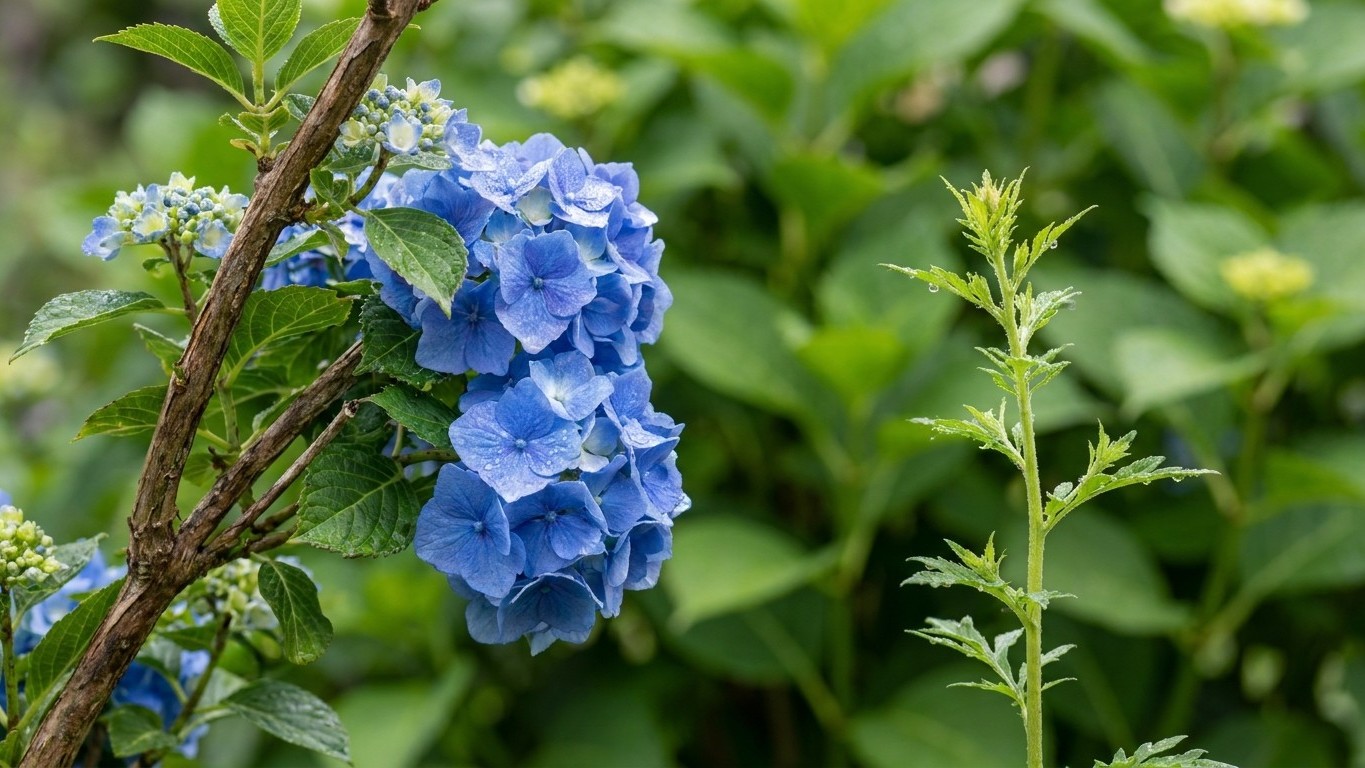

Smooth and panicle hydrangeas are the dependable choice for growing hydrangeas in South Dakota. They bloom on wood grown this season, so a brutal winter or a late freeze cannot erase the flowers. Plant potted shrubs once the last spring freeze has passed. Give them morning sun, shelter from wind and a thick mulch before winter. Bigleaf types can work too, but they need more protection. For the botany basics, see How to Grow Hydrangeas: The Complete Guide.
When to plant Hydrangeas in South Dakota

The reference city here is Sioux Falls. At the airport weather station there, the NOAA NCEI 1991-2020 Climate Normals put the last spring freeze (32°F) between April 29 and May 9. The first fall freeze falls between September 24 and October 4. Both are 30 to 70 percent probability bands, and the underlying data is public through NOAA’s Climate Normals service.
An airport sits in a warm pocket of pavement and open ground. Suburban and rural gardens usually see the last spring frost one to two weeks later and the first fall frost one to two weeks earlier, and more so at elevation. Northern South Dakota and the Black Hills run later in spring and end earlier in fall. Treat the Sioux Falls numbers as a starting point and check your own county.
When can you plant potted hydrangeas outside?
Wait until the spring window above has closed for your location. A potted shrub tolerates cool soil, and cool soil encourages root growth. The risk is the new foliage. Leaves that have just emerged turn black and limp in a freeze. The shrub usually regrows from lower buds, but it loses weeks of growth, and a bigleaf can lose its flower buds for the year. If a freeze is forecast after planting, cover the shrub overnight with a sheet, a bucket or frost cloth, and take the cover off in the morning.
Can you grow hydrangeas from seed?
Technically yes, but it is a poor route. Named cultivars do not come true from seed, and seedlings take years to reach flowering size. Nursery plants or cuttings are the practical routes. If you root your own softwood cuttings in early summer, grow them in pots through their first winter in a protected spot such as an unheated garage or a sheltered corner against the house. Plant them out the following spring, after the frost window has closed.
How do you harden off a nursery hydrangea?
Garden centers often hold shrubs in greenhouses or sheltered yards, and a plant raised under glass is soft. Take a week to ten days to toughen it. Start with an hour or two outdoors in bright shade, out of the wind. Lengthen the time each day and add more light. By the end, the pot can sit in its eventual exposure around the clock. Bring it in or cover it on any night that threatens a freeze. Check the pot daily, because a shrub in a plastic container dries out fast in prairie wind.
Is fall a good time to plant hydrangeas?
It works for smooth and panicle types if you plant early enough. Late August through September gives roots several weeks to settle before the ground freezes, and the first fall freeze at the reference station does not arrive until September 24 to October 4. Water well, mulch deeply, and expect a smaller flush of growth the first year. Spring remains the safer choice for bigleaf hydrangeas, which have the least cold tolerance.
Soil and site preparation
Good results start weeks before the shrub goes in. The site decides how the plant handles wind, drought and the long winter, and the soil decides how much work you will do each summer.
How much sun do hydrangeas need on the Northern Plains?
Morning sun with some afternoon shade suits most of them. Smooth and bigleaf hydrangeas scorch and wilt when exposed to hot western sun in July. Panicle hydrangeas tolerate full sun if the soil stays moist, and they flower best with at least six hours of direct light. Wind is the other factor. Open prairie wind dries leaves and flower heads faster than roots can supply water. Plant on the east or south side of a house, a fence or a row of evergreens, where the structure breaks the wind and snow piles up in winter. Snow is free insulation.
What soil do hydrangeas want?
They want soil that holds moisture and drains. Heavy clay stays soggy in spring and cracks in summer. Sandy ground dries too quickly. Both improve with organic matter, so work two to three inches of compost into the whole bed, not only the planting hole. A hole filled with rich soil in the middle of clay acts like a bathtub and holds water around the roots.
Soils across much of the Plains lean alkaline, which matters for two reasons. High pH can lock up iron and cause yellow leaves with green veins, and it pushes bigleaf flowers toward pink. A soil test before planting costs little and tells you where you stand. Do the test and any amendments in the weeks before planting, so changes have time to take hold. Elemental sulfur works slowly and must be applied well ahead of planting.
How far apart should you plant hydrangeas?
Plan for the mature size on the plant tag. Compact smooth and panicle selections of about 3 feet need roughly 3 to 4 feet between plants. Large panicle types that reach 6 to 8 feet need 6 to 8 feet or more. Crowded shrubs lose airflow, which invites mildew, and they compete for water in a dry summer.
Dig the hole about twice as wide as the root ball and no deeper. Set the top of the root ball level with or slightly above the surrounding soil. Loosen circling roots with your fingers, backfill with the native soil you amended, and water deeply to settle it. Finish with 2 to 3 inches of mulch, pulled back an inch or two from the stems.
Varieties that suit South Dakota
The trait that matters most is whether the shrub blooms on new wood, meaning stems grown this season, or old wood, meaning stems from last year. Winters on the Northern Plains regularly kill bigleaf stems to the ground or damage their buds. A shrub that blooms on new wood can lose every stem and still flower the same summer. The second trait is stem strength, since a heavy flower head on a weak stem flops after rain. The third is sun tolerance, which for panicle hydrangeas is generous.
Panicle and smooth hydrangeas are generally rated for zone 3, and bigleaf and mountain hydrangeas for warmer zones, so the first two groups form the backbone of a South Dakota planting. Gardeners comparing colder and milder regions can also read how these types behave in Growing Hydrangeas in Idaho: Types, Colour and Winter and Growing Hydrangeas in Maine: Types, Colour and Winter.
| Variety | Type | Approximate size | Blooms on | Good for |
|---|---|---|---|---|
| Annabelle | Smooth | 3 to 5 ft | New wood | Reliable white blooms in part shade; stems can flop |
| Incrediball | Smooth | 4 to 5 ft | New wood | Similar white flowers on sturdier stems |
| Invincibelle Spirit II | Smooth | 3 to 4 ft | New wood | Pink flowers in a cold climate |
| Limelight | Panicle | 6 to 8 ft | New wood | Tall specimen or screen; lime-green fading to pink |
| Little Lime | Panicle | 3 to 5 ft | New wood | Smaller yards and foundation beds |
| Bobo | Panicle | About 3 ft | New wood | Containers and front-of-border spots |
| Quick Fire | Panicle | 6 to 8 ft | New wood | Earlier blooms, which helps where fall comes early |
| Endless Summer | Bigleaf | 3 to 5 ft | Old and new wood | Trial plantings in sheltered sites |
What decides hydrangea color?
It depends on the type. Smooth hydrangeas such as Annabelle stay white or pink by variety, and panicle types move through cream, lime, pink and rose as the season advances, driven by variety, light and the cool nights of late summer. Neither group changes with soil chemistry. Only bigleaf hydrangeas swing between pink and blue, based on how much aluminum the roots can take up. Acidic soil frees aluminum and gives blue flowers. Alkaline soil locks it away and gives pink.
Alkaline soils dominate much of the Plains, so a bigleaf here leans pink unless you acidify the soil, and sustaining blue means ongoing work. A container with acidic potting mix is easier to control.
What to plant alongside
Neighbors help hydrangeas in three ways: they shade the roots, cover bare soil and draw pollinators. Hostas are the standard partner for smooth hydrangeas in part shade. Their broad leaves cool the soil, and they tolerate the same moisture. Ferns, astilbe and heuchera do the same job with different textures. Spring bulbs such as daffodils and tulips bloom and fade before the hydrangea leafs out, so the bed has color in April and May, and the shrub’s foliage hides the dying bulb leaves later.
Panicle hydrangeas that sit in full sun pair well with coneflower, daylilies and ornamental grasses, which share the preference for sun and tolerate a bit of dryness. Hydrangea blooms also give pollinators something real, though only some types. Panicle flowers carry small fertile florets that bees visit. Many mophead hydrangeas are mostly sterile showy florets, with little to offer insects.
What competes with hydrangeas or should stay away?
Anything that takes water from the same root zone. Shallow-rooted maples and a turf edge right up to the stems both rob a hydrangea in a dry July. Keep grass at least a couple of feet back from the trunk and plant under trees only if you will water often. Crowding the bed with tall perennials that are prone to powdery mildew, such as bee balm and garden phlox, cuts airflow and leaves every plant damper and more disease-prone.
Watering, feeding and support
How much water do hydrangeas need?
Hydrangea is Greek for “water vessel,” and the plant behaves accordingly. New shrubs need a deep soak once or twice a week through the first summer, more in hot, windy weather, enough to wet the soil 8 to 10 inches down. Check by pushing a finger or trowel 2 inches into the soil near the stem. If it is dry, water. Established shrubs still want roughly an inch of water a week from rain and hoses combined. Deep, infrequent watering sends roots down. Light daily sprinkling keeps them near the surface, where wind and heat reach them first.
Water at the base in the morning. Wet leaves overnight encourage leaf spot and mildew. A 2 to 3 inch layer of shredded bark or compost holds moisture in the soil and keeps roots cooler. Renew it each spring.
When and what should you feed?
Less than most gardeners think. A balanced slow-release fertilizer applied once in spring as growth starts is enough for most shrubs in decent soil. Too much nitrogen gives leafy growth and fewer flowers, and late feeding pushes soft growth that winter kills. Stop fertilizing by midsummer. Compost worked in around the drip line each spring adds nutrients gently. If yellow leaves with green veins appear, the issue is likely iron availability at high pH, not a shortage of fertilizer. A chelated iron product or an acidifying amendment addresses the cause.
Do hydrangeas need staking, pruning and sucker control?
Smooth hydrangeas with large heads often need help. Annabelle can bend to the ground after a rainstorm. Set a peony ring or a few stakes around the clump in spring, before the stems get tall, so growth covers the support. Choosing a sturdier variety saves the trouble.
Pruning follows the bloom habit. Cut smooth and panicle hydrangeas in late winter or early spring, before growth begins. Smooth types can be cut back hard, to about 6 to 12 inches or to a low framework of strong stems. Panicles do best with a trim of about a third of last year’s growth, which keeps the plant tidy and the stems strong. For bigleaf types, remove only dead wood after the leaves emerge, since pruning in spring cuts off flower buds. Smooth hydrangeas also spread by suckers. Dig out the extras in spring, and use the divisions in another bed or give them away.
Common problems

Why won’t my hydrangea bloom?
On bigleaf types, the usual cause is winter kill or a late spring freeze that destroyed buds formed last summer. The plant leafs out normally and never flowers. Switching to a smooth or panicle variety fixes it. On new-wood bloomers, the likely causes are too much shade, heavy nitrogen feeding or pruning at the wrong time. A shrub that gets under four hours of sun usually grows without flowering. Move it or prune the tree that is shading it.
Why are the leaves yellow with green veins?
That pattern points to iron chlorosis, common where soil is alkaline. The leaves turn pale yellow between dark green veins, starting on new growth. Water the plant correctly first, since waterlogged roots cause similar symptoms. Then test the soil. Chelated iron gives a quick green-up, and lowering the pH with sulfur or acidifying mulch addresses the root issue over a season or two.
Why does it wilt in the afternoon?
Large leaves lose water faster in heat than roots can supply it, so some afternoon droop on a hot day is normal. If the leaves perk up by evening, no action is needed. If they stay limp in the morning, the soil is dry or the roots are damaged. Test with a finger. Brown, crispy leaf edges point to scorch from sun, wind or dry soil. Add mulch, water deeper and think about relocating a shrub that bakes in afternoon sun.
What insects and diseases bother hydrangeas?
Hydrangeas are fairly tough. Powdery mildew shows as a white dusting on leaves in humid weather, and leaf spots appear as brown or purplish circles. Both are cosmetic and ease with better airflow, base watering and cleanup of fallen leaves in autumn. Aphids cluster on new shoots and wash off with a hard spray of water. Spider mites build up in hot, dry spells and leave a stippled look on leaves.
Grasshoppers are among the insects SDSU Extension highlights for home gardens, and they chew leaves of many plants, hydrangeas included, in dry years. Hand-pick them, keep weeds down around the bed, and take a sample to your county office if you are unsure what you are seeing. Rabbits and deer browse hydrangeas as well, especially in winter and early spring. Fencing is the dependable fix.
Harvest and end of season
When should you cut hydrangeas for drying?
Wait until the flower heads have aged on the shrub. In late summer, as the petals begin to feel papery and the colors shift to antique rose, green or tan, cut stems long, strip the leaves and hang them upside down in a dry, shaded spot with good airflow. Cutting too early gives limp flowers that shrivel. For fresh bouquets, cut in the cool morning when the heads are fully open, and plunge stems into water right away. Panicle blooms last well, while smooth hydrangea heads wilt faster unless they are cut at peak.
How do you protect hydrangeas for winter?
Preparation begins in fall. Stop fertilizing by midsummer, and let the shrub harden naturally. As the first fall freeze approaches, which at the reference station falls between September 24 and October 4, gardens outside town can expect it a week or two earlier. Water the shrub deeply before the ground freezes, because dry roots and wind kill more shrubs than cold does.
After the ground starts to freeze, add mulch or shredded leaves 4 to 6 inches deep around the base. Smooth and panicle types need nothing more. Leave the dried flower heads on through winter, since they hold snow and add structure. For bigleaf hydrangeas, build a cage of wire or burlap around the plant and fill it with dry leaves or straw, which protects old-wood buds. Remove the protection in spring once the hard freezes are over. Wait for the buds to show green before cutting out dead stems.
Local help
County-level frost dates, soil testing and pest identification are the work of your state’s land-grant extension service. SDSU Extension serves South Dakota through county offices, and staff there can test your soil, identify an insect or disease from a sample and advise on varieties. More state-by-state advice is gathered in the South Dakota guides.
Common questions
Which hydrangea is hardiest for South Dakota?
Smooth hydrangeas such as Annabelle and Incrediball and panicle types such as Limelight and Quick Fire are the most dependable. All bloom on new wood and are generally rated hardy to zone 3. Choose among them by size, stem strength and flower color.
Can I turn a hydrangea from pink to blue?
Only bigleaf hydrangeas respond to soil chemistry. Blue needs acidic soil that frees aluminum, and alkaline Plains soils work against that. Smooth and panicle types keep their own colors whatever the soil.
When should I prune hydrangeas?
Prune smooth and panicle types in late winter or early spring before new growth starts. Prune bigleaf types only to remove dead wood after the leaves have emerged, so you do not cut off the flower buds.
Can I grow hydrangeas in containers?
Yes, with limits. Compact selections such as Bobo and Little Lime do well in large pots, and acidic potting mix suits a bigleaf. Roots in a pot freeze harder than roots in the ground, so move the container to an unheated garage or sink it in the garden for winter, and water it occasionally.
Do deer and rabbits eat hydrangeas?
They do, especially young shrubs and winter stems when other food is scarce. Fence or wrap vulnerable plants in fall, and check them again in early spring before the leaves come out.