
Utah tomato growers deal with a fairly short, predictable list of pests, and most of them show up in the same order every year, tied to how fast the soil warms after the last spring freeze. Get ahead of that sequence and you spend far less time spraying. Walk your plants twice a week starting the week you transplant, and check the undersides of leaves, not just the tops, since that is where most of these insects live.
What this comes down to in Utah

Flea beetles hit new transplants within days, and by the time the leaves look like they’ve been hit with buckshot, most gardeners reach for a spray meant for something else entirely. That’s the wrong move at the wrong moment — broad insecticides at this stage wipe out the lady beetles and lacewings you’ll need three weeks later when aphids show up on the soft new growth. Timing which pest gets which response matters more than knowing the pest exists.
Flea beetles

These show up first, often within days of setting out transplants, while nights are still cool. The shot-hole damage they leave rarely kills an established plant, but on a small seedling it can stunt growth for weeks. Floating row cover over freshly transplanted tomatoes is the most reliable fix; pull it once plants start flowering and beetles have moved on to other hosts.
Aphids

Aphids build up fast in the first warm weeks after transplant, especially on soft new growth pushed by early nitrogen fertilizer. A strong jet of water knocks most colonies down, and insecticidal soap handles the rest. Heavy, unnecessary spraying here backfires, because it also kills the lady beetles and lacewings that would otherwise keep aphid numbers in check on their own.
Beet leafhopper

This is the pest that catches Utah gardeners off guard, because the leafhopper itself does almost no visible damage. What it carries does the harm: curly top virus, which the leafhopper picks up from weeds and rangeland and injects into tomato plants as it feeds. Infected plants show upward-curling, yellowed, thickened leaves and stop setting usable fruit. There is no cure once a plant is infected; pull and discard it. Shade cloth over young plants and keeping nearby weeds down are the practical steps, since the leafhoppers favor open sun and neglected ground.
Colorado potato beetle

This one arrives as soil warms through late spring and hits any nightshade in the garden, tomatoes included, though it prefers potatoes and eggplant. Hand-picking adults and squashing the bright egg clusters on leaf undersides works well in a small planting, since a few beetles can defoliate a plant fast once larvae hatch.
Spider mites

Mites become the dominant problem through the hottest, driest stretch of summer, when low humidity favors their reproduction. Fine webbing on leaf undersides and a dusty, stippled look to the foliage are the giveaway. A forceful daily hosing of the undersides of leaves during a hot spell often keeps populations from exploding; miticides are a last resort since they also wipe out the predatory mites that naturally control them.
Tomato hornworm

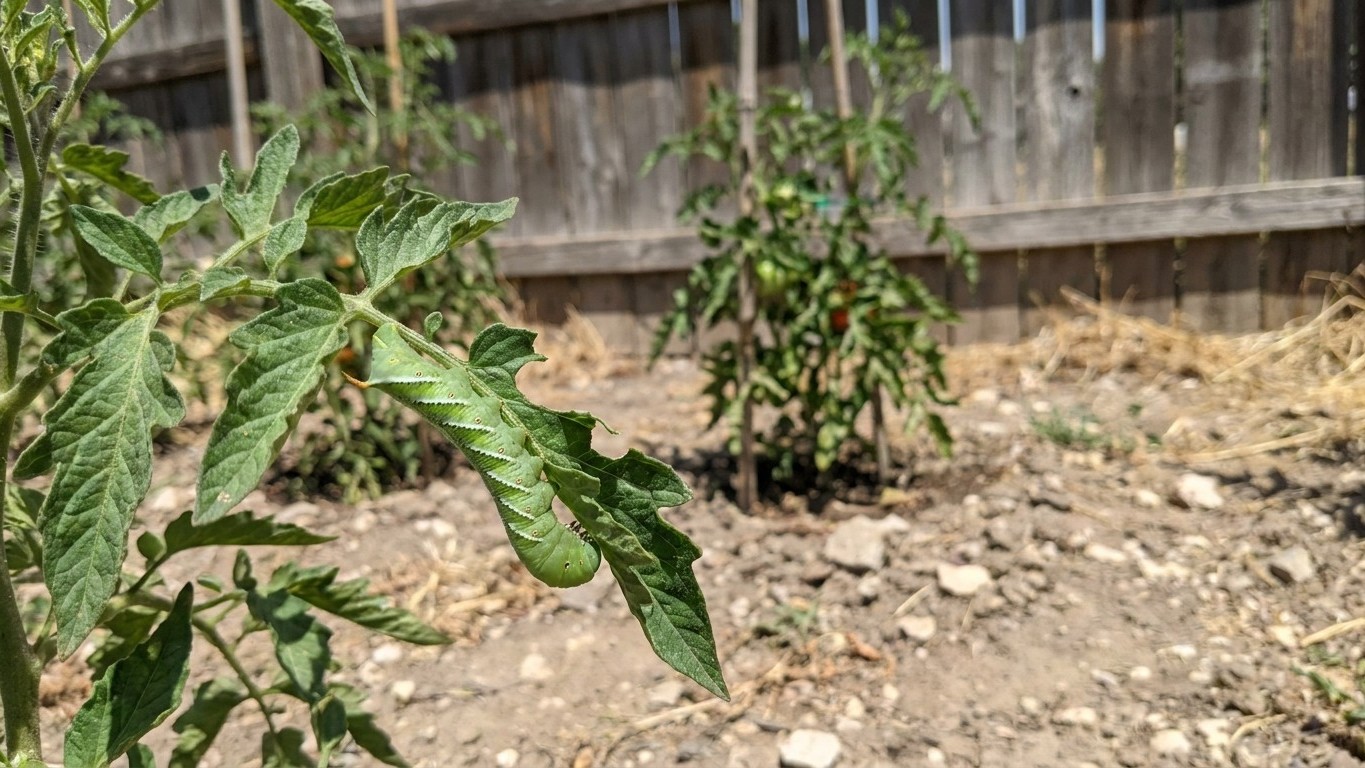
Hornworms show up in mid to late summer and can strip a branch overnight, but they are large enough to hand-pick once you learn to spot the pale diagonal stripes against the green foliage. Check at dusk with a flashlight if daytime searches keep coming up empty, since that is when they feed most actively. Leave any hornworm covered in small white cocoons alone: those are parasitic wasp pupae already killing it from the inside.
Working it out for your own garden
The fastest way to sort out which pest you actually have is to work backward from the damage, not forward from a guess. Ask three questions in order: what part of the plant is affected, what shape is the damage, and what time of season is it. A seedling with round holes in the leaves in the first two weeks after transplant is almost always flea beetles. Curled, yellowing new growth with sticky residue in early summer points to aphids. Curled, thickened, oddly colored leaves on an otherwise healthy-looking plant with no visible insects is the pattern that should make you suspect curly top rather than a nutrient problem.
Match the damage to the pest
| Pest | Typical timing | Plant part hit | Signature sign |
|---|---|---|---|
| Flea beetles | Right after transplant | Young leaves | Small round shot-holes |
| Aphids | Early summer | New growth, stems | Clusters, sticky honeydew, curled tips |
| Beet leafhopper | Early to mid summer | Whole plant (virus) | Upward-curled, thickened, yellow leaves |
| Colorado potato beetle | Late spring into summer | Leaves | Stripped foliage, striped adults, spotted larvae |
| Spider mites | Peak summer heat | Leaf undersides | Fine webbing, stippled yellow leaves |
| Tomato hornworm | Mid to late summer | Leaves and green fruit | Large green caterpillar, missing foliage overnight |
If you are still deciding when to set plants out in the first place, that decision belongs on Tomato Planting Dates in Utah: Counting Back From Your Frost Window, since transplant timing shifts when the first pests arrive relative to how established your plants are.
What changes across the state
Utah spans USDA Hardiness Zones 4a to 9a, and pest pressure shifts with that elevation range about as much as it does with latitude. Higher, cooler gardens in the mountains and high valleys generally see every pest on this list arrive later and build up more slowly, simply because the plants themselves get going later and stay in cooler conditions longer. Southern Utah’s lower, hotter valleys tend to push spider mite pressure harder and for a longer stretch of the season, since the dry heat that favors mites lasts longer down there than it does around Salt Lake City.
Geography and pest pressure
Distance from the Great Salt Lake and other irrigated valley floors matters too. Beet leafhopper populations track the dry rangeland and weedy ground the insect breeds in during spring before it moves into gardens as that vegetation dries out, so gardens near open range or fallow ground tend to see more curly top pressure than gardens tucked into an established, well-watered neighborhood. None of this changes which pests you are dealing with, only how early they show up and how hard they hit. If you are choosing which tomatoes to grow at all, that decision is worth making with your own garden’s pest history in mind, and Tomato Varieties That Ripen in Time in Utah covers the cultivar side of that question in detail.
The mistakes this state punishes

The costliest mistake here is treating curly top like a nutrient deficiency and dosing an infected plant with fertilizer instead of pulling it. There is no fix once a plant shows the upward-curled, yellowed leaves, and letting it sit only gives the beet leafhopper more time to spread the virus to healthy plants nearby.
- Spraying broad-spectrum insecticide at the first aphid sighting, which wipes out the lady beetles that would have handled it in a week
- Skipping row cover on young transplants and losing the crop to flea beetles before flowering even starts
- Ignoring weedy, unwatered ground at the edge of the garden, which is exactly where beet leafhoppers build up before moving onto tomatoes
- Waiting for obvious hornworm damage instead of checking at dusk, by which point a branch or two is already stripped bare
The general pattern across all of these is the same: acting early costs almost nothing, and acting late costs the plant. That is truer here than in milder, wetter climates, because Utah’s dry heat lets some of these pests, mites especially, go from a few individuals to a full infestation in a matter of days once conditions turn hot and dry.
Checking this against your county
Everything above is a statewide starting point built around the Salt Lake City frost record, and pest timing where you garden can run earlier, later, or heavier depending on elevation and what is growing around your yard. USU Extension, Utah’s land-grant university extension service, publishes county-level pest guidance and can confirm what is actually active in your area before you spend money on a treatment. Start at USU Extension and look up your county office for the current word on what is showing up nearby, and lean on the broader growing tomatoes in Utah guide for everything upstream of pest management.
Common questions
Do I need to spray for pests every year even if I don’t see any?
No. Spraying on a schedule instead of in response to actual damage usually does more harm than good, since it kills off the aphid-eating and mite-eating insects that keep populations low on their own. Check plants regularly and treat only what you actually find.
Is curly top the same thing as a nutrient problem or blossom end rot?
No, and this mix-up wastes a lot of time. Curly top causes upward curling, thickening, and yellowing of whole leaves with no visible insect damage, while nutrient issues usually show as even yellowing or spotting and blossom end rot shows as a dark, sunken patch on the fruit itself, not the leaves.
Can I just grow tomatoes in a greenhouse to avoid these pests entirely?
Some, not all. A greenhouse or high tunnel keeps out the beet leafhopper and reduces flea beetle pressure, but aphids and spider mites both do perfectly well in a warm, still, indoor environment and can actually build up faster there without wind and rain to knock them back.
Why do my tomatoes get spider mites every single summer no matter what I do?
Persistent, heavy watering of the surrounding soil and regular overhead misting of the foliage in the evening both make life harder for spider mites, since they thrive in hot, dry, dusty conditions. If mites come back every year despite that, check nearby ornamental plants too, since mites often overwinter and build up on non-tomato hosts nearby before moving in.