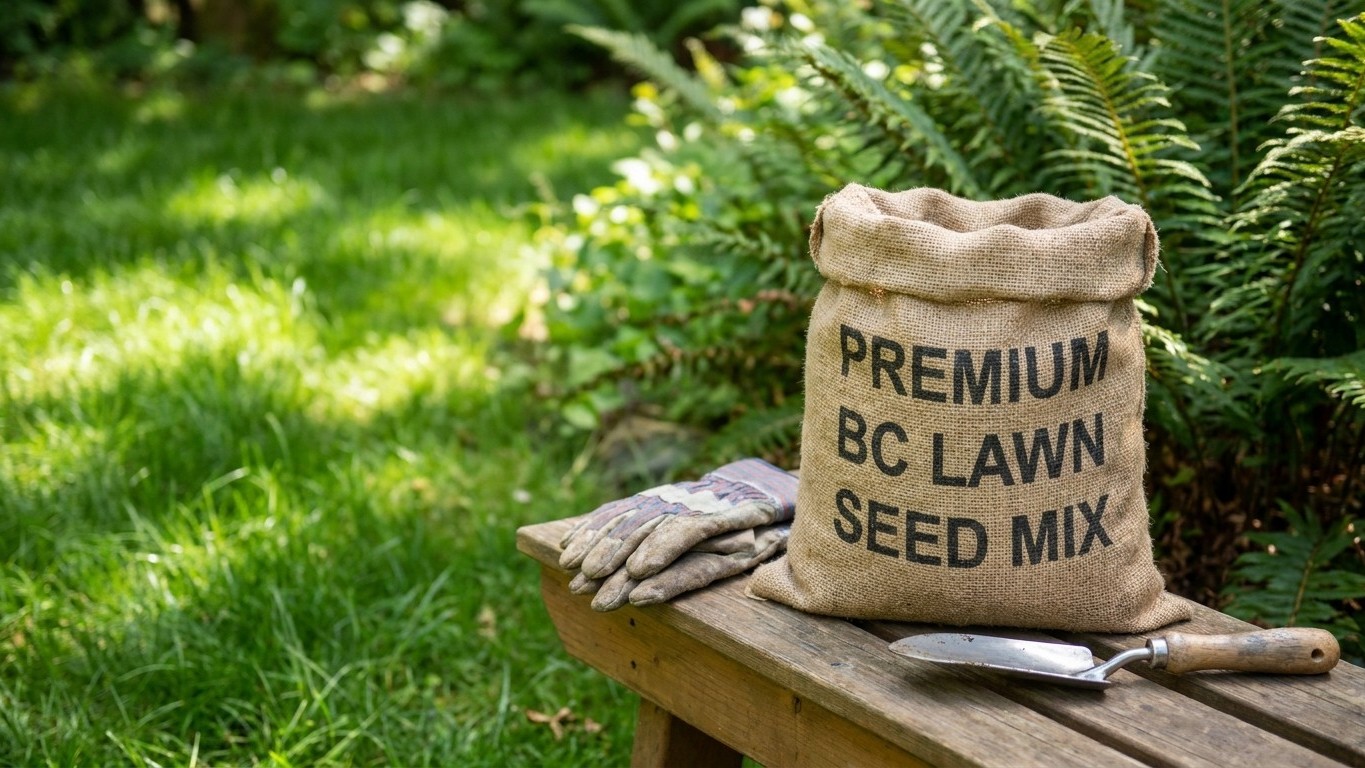

There is no single best grass seed for British Columbia, because the province, measured at Vancouver, sits in what turf researchers call a transition zone. Cool-season grasses like Tall Fescue and Kentucky Bluegrass thin out under July heat, while warm-season grasses like Zoysiagrass and Bermudagrass sit brown through the winter months. Before buying seed, decide which season you’re willing to watch your lawn struggle in, then choose from the list below.
The short answer for British Columbia
British Columbia lawns sit in a transition zone, which is the whole problem: no grass here gets to be great all year. Cool-season types stay green through the wet months and go tired in a hot July stretch, warm-season types shrug off that heat but turn brown the moment the nights cool down. There’s no fix for that, only a choice — so decide first which season you can live with your lawn looking rough, then pick the seed built for the season you actually care about.
The cool-season group, Tall Fescue, Kentucky Bluegrass and Perennial Ryegrass, stays green through the fall, winter and spring and handles a wetter climate well. It can thin or go dormant during a hot, dry stretch in mid to late summer, particularly without irrigation. The warm-season group, Zoysiagrass and Bermudagrass, shrugs off summer heat and heavy foot traffic but turns brown once nights cool, and stays that way through the winter, generally from around October to April. Neither one is wrong. Each one shifts the ugly season to a different part of the calendar.
Which one costs you less depends on how you use the lawn. A yard mainly seen and used in summer, for barbecues, kids, dogs, tolerates a brown winter better than a lawn that has to look presentable for a December visit. A yard on the coast with reliable irrigation can carry cool-season turf through most summers without much drama. Before picking seed, read through British Columbia Lawn Care to see what upkeep each type actually demands once it’s established, because the seed choice and the maintenance commitment are the same decision.
Working through the year

Ranking the five species Clemson Cooperative Extension and Penn State Extension recognize as realistic choices for a transition-zone lawn means weighing what each one takes from you, not just what it gives.
How the five compare
| Species | Season type | Strong season | What it costs you |
|---|---|---|---|
| Tall Fescue | Cool-season | Fall through spring | Thins in a hot, dry summer without water |
| Kentucky Bluegrass | Cool-season | Fall through spring | Shallower roots, needs more irrigation than fescue |
| Perennial Ryegrass | Cool-season | Fast establishment, fall through spring | Less heat and drought tolerant than fescue alone |
| Zoysiagrass | Warm-season | Summer | Slow to fill in from seed, brown October to April |
| Bermudagrass | Warm-season | Summer | Aggressive spreader, brown October to April |
Tall Fescue is the closest thing to a compromise pick in this climate. Sown thick and deep-rooted, it tolerates more summer stress than bluegrass while still holding winter color. Clemson’s HGIC 1219 Tall Fescue Maintenance Calendar lays out mowing height and nitrogen timing by month, and its fall program is built around cooler nights arriving before the season’s first hard frost. At Vancouver, that first fall frost lands on average around November 10, according to Environment and Climate Change Canada’s 1981-2010 climate normals for station Vancouver Int’l A. That is a mean date, not a guarantee, so seeding or overseeding work is safer finished with a margin ahead of it rather than timed right up against it.
Kentucky Bluegrass fills in a denser, finer-textured lawn when blended with fescue, but Penn State Extension notes it carries a shallower root system and needs more frequent water to avoid summer dormancy. Perennial Ryegrass germinates faster than either and is often mixed in as a nurse grass to hold soil while slower species establish, though on its own it gives up more ground in a dry summer.
On the warm-season side, Zoysiagrass builds a dense, wear-tolerant turf but is notoriously slow to fill in from seed, often taking a full season or more before it looks like a finished lawn. Clemson’s HGIC 1217 Zoysiagrass Maintenance Calendar times its spring green-up work and summer feeding around that slow start. Bermudagrass establishes faster and tolerates more heat and drought than any grass on this list, but it spreads aggressively by both stolons and rhizomes, and Clemson’s HGIC 1216 Bermudagrass Maintenance Calendar exists partly to manage that spread, not just to green it up. For a month-by-month view of how these calendars line up against each other over a full year, The British Columbia Lawn Care Calendar, Month by Month walks through both tracks side by side.
What changes across British Columbia
Vancouver’s marine climate, moderated by the Pacific and the Strait of Georgia, is milder and wetter than most of the rest of the province, and every figure in this article is anchored to that reference city. Move inland and the picture shifts fast.
The Okanagan Valley, around Kelowna and Penticton, runs hotter and drier through summer than the coast, which pushes cool-season lawns closer to dormancy without supplemental irrigation, but also gives Bermudagrass and Zoysiagrass a longer, more reliable warm season to work with. Higher elevation districts, including much of the Kootenays and the mountain valleys of the Interior, run cooler and see frost arrive earlier and linger later than the Vancouver date used above, which shortens the establishment window for any grass sown from seed. Northern British Columbia, around Prince George and further north, sits solidly in cool-season territory with little practical use for a warm-season lawn at all, since the growing season there is too short and too cool for Zoysiagrass or Bermudagrass to perform.
Vancouver Island’s coastal strip behaves much like the Lower Mainland, staying mild and wet, while the island’s mountainous interior and its west coast, exposed directly to Pacific storms, see more rainfall and less summer heat stress than either the Lower Mainland or the Okanagan. None of these local patterns changes which five species are realistic for a transition-zone lawn. They change how far toward the cool-season or warm-season end of that list a given yard should lean, and how much of a buffer to build around any frost-based timing.
The mistakes this climate punishes
Feeding a warm-season lawn late in the season is the most common one. Bermudagrass or Zoysiagrass fed nitrogen in early autumn pushes out soft new growth right before dormancy, and that growth is what gets killed hardest by the first frost rather than shutting down cleanly. The damage doesn’t show until the following spring, when green-up is patchier and slower than a lawn that was allowed to harden off on schedule.
Seeding cool-season grass into the heat of summer is the reverse mistake. Tall Fescue, Kentucky Bluegrass and Perennial Ryegrass all germinate and root best in cooler soil, and seed put down in July or August faces heat stress on top of the normal risk of drying out before it roots. The seedlings that do sprout often die back within weeks, and the failure gets blamed on the seed rather than the timing.
Timing and mowing errors
- Overseeding right at the average frost date leaves no cushion, since November 10 at Vancouver is a mean from Environment and Climate Change Canada’s 1981-2010 normals, and frost has arrived earlier than that in plenty of years.
- Cutting a cool-season lawn too short going into a hot, dry summer removes the leaf area the plant needs to shade its own roots, and the lawn thins within a few weeks of the first heat wave.
- Watering a dormant warm-season lawn heavily in winter, mistaking brown for dead, wastes water the lawn doesn’t need and can promote disease in cold, saturated soil.
- Planting Bermudagrass near garden beds without a barrier lets its stolons cross into cultivated soil within a season or two.
The common thread in all of these is timing mismatched to which type of grass is actually in the ground. A cool-season lawn and a warm-season lawn are worked on opposite halves of the calendar, and a mistake that’s harmless for one is a setback for the other.
Checking this against your county
Every figure above is anchored to Vancouver, and this is a large province with real differences in elevation, coastal exposure and growing season length. Before committing to a seed mix, check current guidance through British Columbia’s Ministry of Agriculture and Seafood, which maintains information for growers across the province at gov.bc.ca. A local extension contact or regional office can confirm how far your specific district runs ahead of or behind the coastal figures used here, and whether a cool-season or warm-season lean makes more sense for your elevation and microclimate.
Common questions
Can I mix cool-season and warm-season seed in the same lawn?
Not in the same seeding. The two groups grow, green up and go dormant on opposite schedules, so a blended lawn ends up patchy, with one type thriving while the other sits dormant or dead-looking. Some growers overseed a dormant warm-season lawn with Perennial Ryegrass for winter color, but that’s a deliberate seasonal overseed, not a permanent mix.
Is Bermudagrass a problem to have near flower beds?
It can be. Bermudagrass spreads by both above-ground stolons and below-ground rhizomes, and it will cross into loose garden soil if there’s no barrier, root or otherwise, between the lawn and the bed. A buried edging strip a few inches deep slows it down but doesn’t stop it forever.
How do I tell if my yard leans cool-season or warm-season?
Look at established lawns nearby and how they behave through the year, rather than guessing from the map. A neighborhood where lawns stay green through winter but look tired by late summer is cool-season territory. One where lawns go uniformly brown for months but handle heat and dogs without thinning is already leaning warm-season.
What happens if I seed too late in the fall?
Seed that doesn’t get several weeks of root growth before the ground cools too far often survives winter thin and patchy, if it survives at all. Since the average first frost at Vancouver is a mean date rather than a guaranteed one, finishing seeding well ahead of it, not right up against it, gives the grass a better chance of rooting before growth stops for the season.