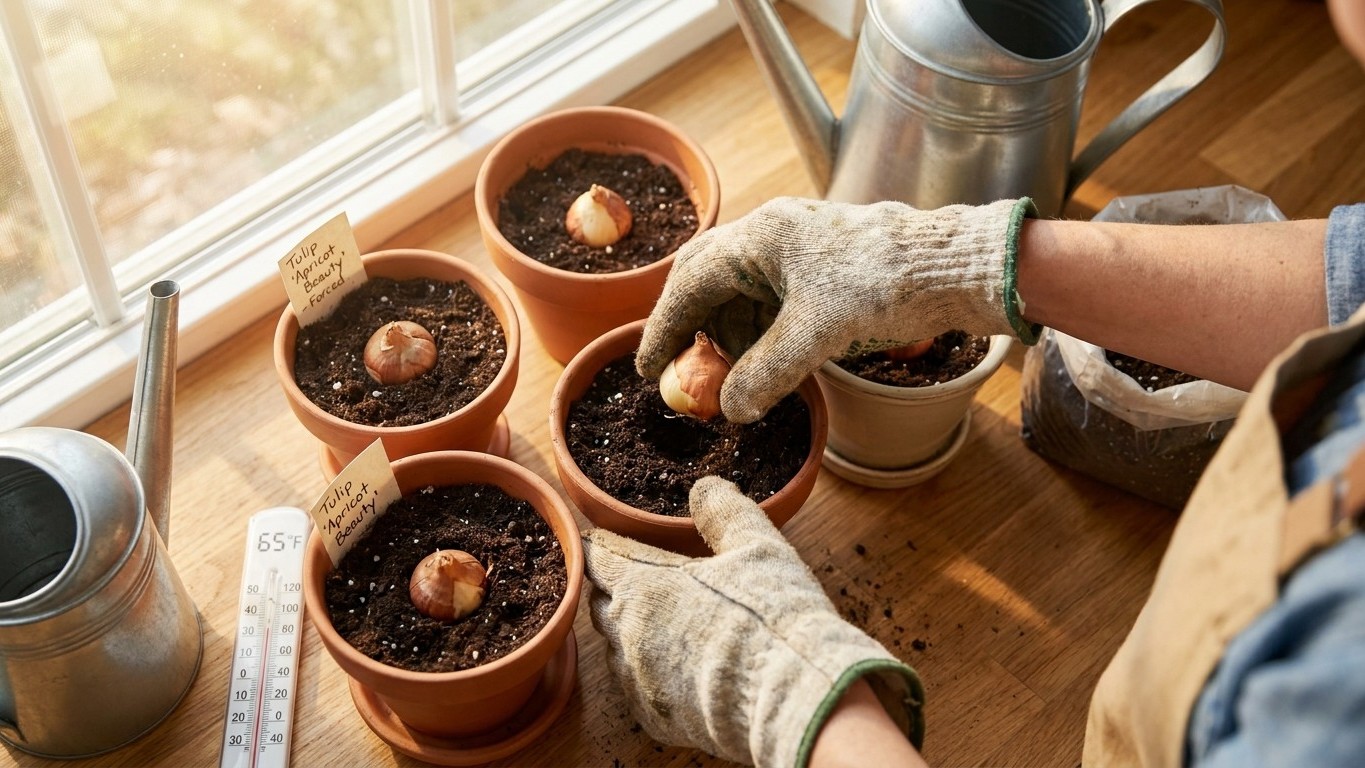

California’s coldest month carries an average daily minimum of 49.1°F at the Los Angeles reference station. That single figure decides whether a gardener here needs to force bulbs at all, and it settles the question fast: most of the state never gets cold enough on its own. Forcing indoors becomes the workaround, not a hobby extra.
Why this matters in California

A tulip, hyacinth, or crocus bulb needs twelve to fourteen weeks below 45°F to complete the internal changes that let it flower. That’s not a suggestion, it’s a biochemical switch inside the bulb that has to flip before stem and bud tissue can even start forming. In Los Angeles, the average minimum of the coldest month sits at 49.1°F, according to NOAA’s Climate Normals for 1991-2020. That’s above the ceiling the bulb needs, not below it. The ground here simply doesn’t deliver the sustained chill a spring bulb evolved to expect, no matter how long you wait or how deep you plant.
That’s one problem. Containers create a completely different one, and it doesn’t apply nearly as often in this territory. A pot exposed to freezing air chills through on every side, roots included, while the same bulb planted in a garden bed is insulated by surrounding soil that freezes only at the surface. The USDA Plant Hardiness Zone Map (2023, based on 1991-2020 data) puts California anywhere from zone 5a to zone 11a, which is one of the widest ranges any state carries. The high-elevation pockets at the cold end of that range do freeze hard enough to threaten an unprotected pot. But those pockets are a small minority of where Californians actually garden.
Which situation applies here
For the reference city and for the large majority of the state’s population living in the milder zones, the issue is a shortage of cold, not an excess of it. The 49.1°F figure makes that concrete: winter here never reaches the temperature spring bulbs are built around, so forcing supplies artificially what the calendar won’t. Gardeners in the small mountain and high-desert bands near zone 5a and 6b face the opposite risk, container freeze-through, and should treat that as a separate, secondary concern rather than the main event covered here.
How to do it here
The method doesn’t change with geography, but where you find the cold does. In a territory whose coldest month sits at 49.1°F on average, an unheated garage often isn’t cold enough either, so the refrigerator becomes the default tool for most readers in this state, with the garage held in reserve for the handful of colder inland and mountain zones.
- Choose bulbs with a known chilling requirement (tulip, hyacinth, crocus, muscari) and buy them in early fall so the full twelve to fourteen weeks fits before you want blooms.
- Pot them in a container with drainage holes, using a loose, well-draining mix, and water once at planting so the soil is moist, not soaked.
- Check whether an unheated garage or shed on your property actually stays below 45°F through the chilling period; use a min/max thermometer for a week before committing, because many California garages never drop that low.
- If the garage doesn’t hold cold enough, move the potted bulbs to a refrigerator crisper drawer instead, set apart from apples, pears, or any ripening fruit, since the ethylene gas they release will kill the flower bud forming inside the bulb.
- Track the weeks on a calendar or phone reminder rather than guessing, and don’t shorten the twelve-to-fourteen-week window even if leaves start to show early.
- If the bulb is potted rather than left in the ground for winter, confirm the container is rated at least two USDA zones hardier than the bulb needs, or plan to move the pot indoors or mulch it heavily once chilling ends and it goes back outside temporarily.
- After the cold period, bring the pot into bright, indirect light at room temperature and let the bulb finish on its own; forcing the light or heat higher just to speed things up is what causes the most common failures.
Which bulbs are worth it
Some bulbs reward the effort of forcing; others waste the freezer space. The difference usually comes down to how short the chilling requirement is and how tall the finished stem gets, since a heavy bloom on a thin stem in a small pot topples before it opens fully.
- Paperwhite narcissus, which needs no cold period at all and blooms within weeks of potting
- Hyacinth, reliable and fragrant, with a stem sturdy enough for indoor pots
- Crocus, short-stemmed and rarely falls over even in shallow bowls
- Grape hyacinth (muscari), compact and forgiving of a slightly shorter chill
- Shorter tulip varieties, bred low enough to stand up in a container
The sulkers tend to be the bulbs that need the longest chill or grow the tallest:
- Tall tulip varieties, which frequently flop once the flower head opens indoors
- Daffodils with long stems, prone to the same top-heavy collapse in a small pot
- Fritillaria, temperamental about chill length and slow to reward the effort
- Large ornamental alliums, expensive for a bulb that was only ever going to bloom once here anyway
Since most Spring Bulbs in California’s mild winters were never going to naturalize and return next year regardless, treating them as a one-season purchase changes the math. Forcing doesn’t cost you a future bloom cycle you’d otherwise have gotten in the ground; that cycle wasn’t coming either way.
What goes wrong, and when you can still fix it
Leaves but no flower
This means the chilling period ran short. The bulb had enough stored energy to push leaves but never completed the internal development a flower bud requires. There’s no fix this season; the bulb needs a full twelve to fourteen weeks below 45°F before it tries again, so the earliest you can correct it is next year’s forcing cycle.
A flower low in the foliage, stem too short to see
The bulb was warmed too early, before the root system had time to lengthen the stem. Once this happens, the bloom is what you get. It can’t be reversed mid-cycle. Note the timing and extend the transition period before the next attempt.
Rot in the pot
Standing water during the chilling weeks is almost always the cause, whether from a container without drainage holes or a saucer left full underneath. Roots sitting in cold, wet soil invite fungus and bacteria that the bulb can’t fight off. This bulb is finished for the season; the fix is entirely preventive, meaning drainage holes and an empty saucer the next time around.