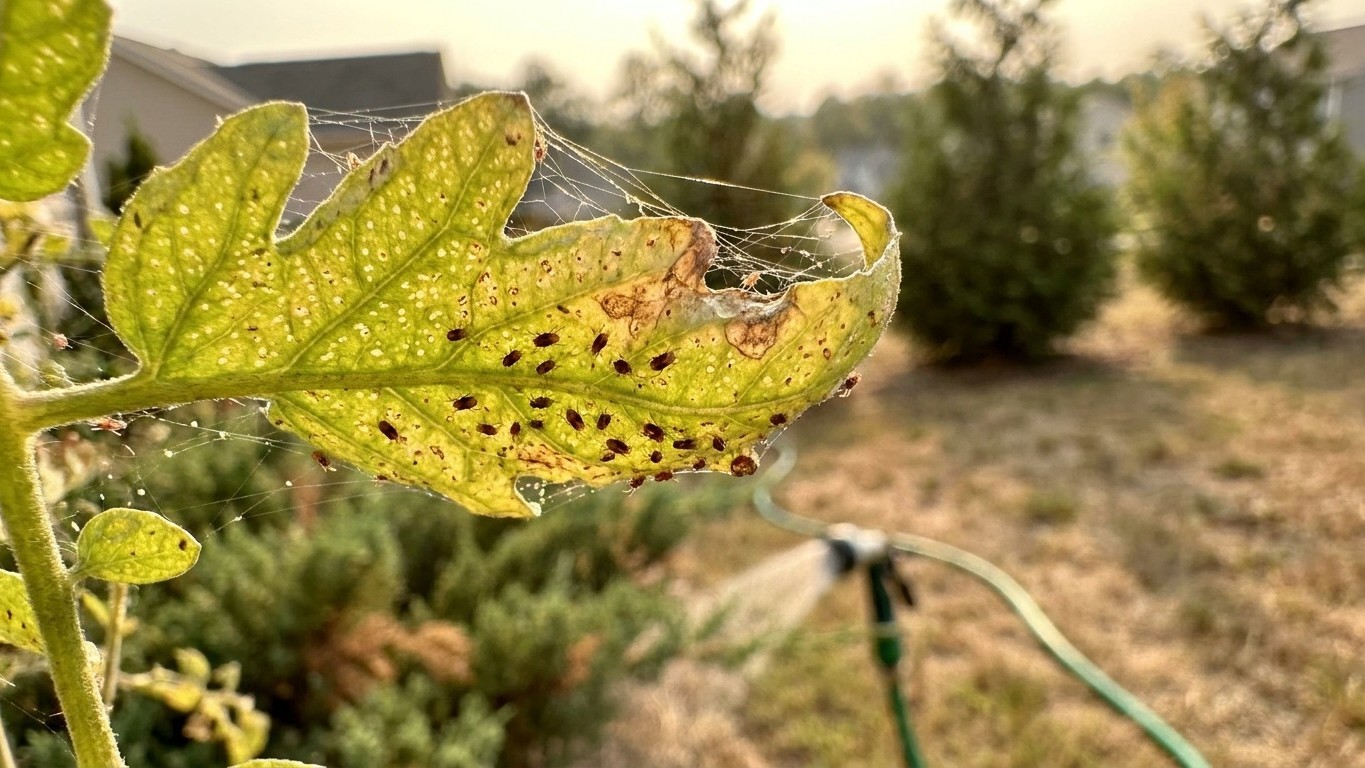

Spider mites show up in Georgia as soon as the weather turns hot and dry, usually starting in late May and peaking through July and August when daytime temperatures sit above 85°F for weeks at a stretch. What actually stops them isn’t a single spray but a combination of forceful water washes, targeted miticides rotated to avoid resistance, and protecting the predatory insects that keep populations in check naturally. Skip any one of those and the mites bounce back within days.
When Spider Mites Actually Appear in Georgia

Georgia’s climate gives spider mites two windows of opportunity, and homeowners often only notice one of them. The two-spotted spider mite, the species responsible for most vegetable garden and ornamental damage, thrives in hot, dry conditions and reproduces fastest between 80°F and 90°F. In Atlanta, Macon, or Savannah, that means late spring through late summer is prime time, with populations sometimes doubling every three to five days when humidity drops below 40 percent during a dry spell.
The spruce spider mite works on the opposite schedule. This species targets junipers, arborvitae, and other conifers so common in Georgia landscaping, and it actually prefers cooler weather. Expect flare-ups in March and April, a lull during peak summer heat, then a second wave in October and November. A homeowner who sprays only in July and calls it done often gets blindsided by a fall infestation on the same Leyland cypress hedge.
Drought years make everything worse. Stressed plants produce less of the natural chemical defenses that discourage mite feeding, and dusty conditions along driveways or gravel paths give mites an easier ride from plant to plant. Georgia’s 2024 drought stretch across the north and central parts of the state coincided with reports of unusually heavy mite pressure on hollies, roses, and tomatoes, according to observations shared through University of Georgia Cooperative Extension county offices.
What Plants Get Hit Hardest Across the State
Not every yard sees the same risk. In the Piedmont region around Atlanta and Athens, roses, tomatoes, beans, and dwarf Alberta spruce tend to show damage first. Along the coast and in the lower Coastal Plain near Savannah and Valdosta, the warmer, more humid baseline shifts pressure toward okra, eggplant, and crape myrtle, though crape myrtle more often deals with a related pest, the crape myrtle bark scale, which gardeners sometimes confuse with mite damage.
North Georgia’s mountain counties, with cooler nights and shorter dry stretches, see a shorter mite season overall, but conifers there remain vulnerable during the spring and fall windows when spruce spider mites are most active. Junipers used as foundation plantings statewide are close to a universal target, in part because they’re planted densely and rarely get the sideways water spray that would otherwise dislodge early colonies.
Houseplants deserve a mention too. Spider mites don’t care that a fern or dracaena lives indoors year-round. Georgia’s home heating season, roughly November through February, dries out indoor air to levels mites find perfectly comfortable, which is why plants that look fine outdoors in summer sometimes struggle indoors in January.
How to Confirm It’s Actually Spider Mites
Yellow stippling on leaves is the first clue, but plenty of things cause stippling. The giveaway is fine webbing near leaf joints and on the undersides of leaves, visible without magnification once populations build. A cheap trick that works: hold a white sheet of paper under a suspect branch and tap it firmly. If tiny specks fall onto the paper and start crawling, or if you smear them and see a reddish streak, that confirms spider mites rather than another leaf pest.
Two-spotted spider mites are pale yellow-green with two dark spots on their backs, visible under a hand lens. Spruce spider mites run darker, almost greenish-black, and their damage shows up as bronze or brown needles rather than the pale stippling seen on broadleaf plants. Getting the species right matters because timing treatment around the wrong season wastes effort.
What Actually Stops Spider Mites in Georgia Conditions
Water Is the First Line of Defense
A strong jet of water aimed at the undersides of leaves, repeated every two to three days for two weeks, knocks mites off the plant and disrupts their webbing before it can protect eggs. This costs nothing and works surprisingly well on light to moderate infestations, particularly on roses, tomatoes, and other broadleaf ornamentals where the foliage can tolerate the spray without bruising. It’s less effective on densely needled conifers like junipers, where water has trouble reaching deep into the canopy.
Dust control matters just as much. Mites that hitch a ride on dust particles from gravel driveways or dry garden beds establish faster on nearby plants. Watering down dusty paths during dry spells, or mulching bare soil, reduces that transfer route more than most people expect.
Predatory Mites Do the Heavy Lifting
Georgia yards already host predatory mites and other beneficial insects that feed on spider mite eggs and adults, including lady beetles and minute pirate bugs. Broad-spectrum insecticides kill these predators along with the mites, which often causes a rebound infestation worse than the original problem within two to three weeks. This is the single most common mistake homeowners make: reaching for a general-purpose bug spray that wipes out the mites’ natural enemies while barely touching the mites themselves, since spider mites aren’t insects and don’t respond the same way to standard insecticides.
Preserving that predator population means avoiding unnecessary spraying on plants that aren’t showing symptoms, and choosing selective products when treatment is genuinely needed.
When a Miticide Is Actually Necessary
For infestations heavy enough that water and patience aren’t cutting it, horticultural oil or insecticidal soap applied directly to infested foliage offers a lower-impact option that spares most beneficial insects. These work by suffocation or disrupting the mite’s outer coating, so thorough coverage of leaf undersides matters more than the product itself.
For serious outbreaks on high-value plants, a miticide labeled specifically for spider mites, applied according to label instructions, gets results faster. Rotating between different chemical classes across a season prevents resistance from building, something Georgia’s long growing season makes more likely than in states with shorter mite windows. Applying the same product three or four times between May and August is a near-guaranteed path to a resistant population by the following year.
Timing applications for early morning or evening, when temperatures sit below 85°F, protects the plant from additional stress and improves how well the product performs. Spraying oil-based treatments during Georgia’s midday summer heat can scorch foliage that’s already dealing with mite damage.
Preventing the Next Wave
Consistent watering during Georgia’s dry summer stretches keeps plants from the drought stress that makes them more attractive to mites in the first place. Drip irrigation or soaker hoses that keep soil evenly moist without wetting foliage constantly work better than sporadic deep watering followed by weeks of neglect.
Spacing plants to allow airflow reduces the still, dusty microclimate mites favor, and avoiding high-nitrogen fertilizer excess helps too, since lush, nitrogen-heavy new growth is exactly what spider mites prefer to colonize. A juniper hedge fertilized aggressively every spring often shows worse mite pressure than one fed at a moderate, balanced rate.
Checking susceptible plants weekly during the peak windows, late May through August for broadleaf plants and March-April plus October-November for conifers, catches populations while a simple water spray still solves the problem, before it escalates into something that needs repeated chemical treatment.
Related guides
- Spider mites in Alabama: When It Shows Up and What Stops It
- Spider mites in Missouri: When It Shows Up and What Stops It
- Spider mites in Oklahoma: When It Shows Up and What Stops It
- Spider mites in Arizona: When It Shows Up and What Stops It
- Spider mites in Washington: When It Shows Up and What Stops It