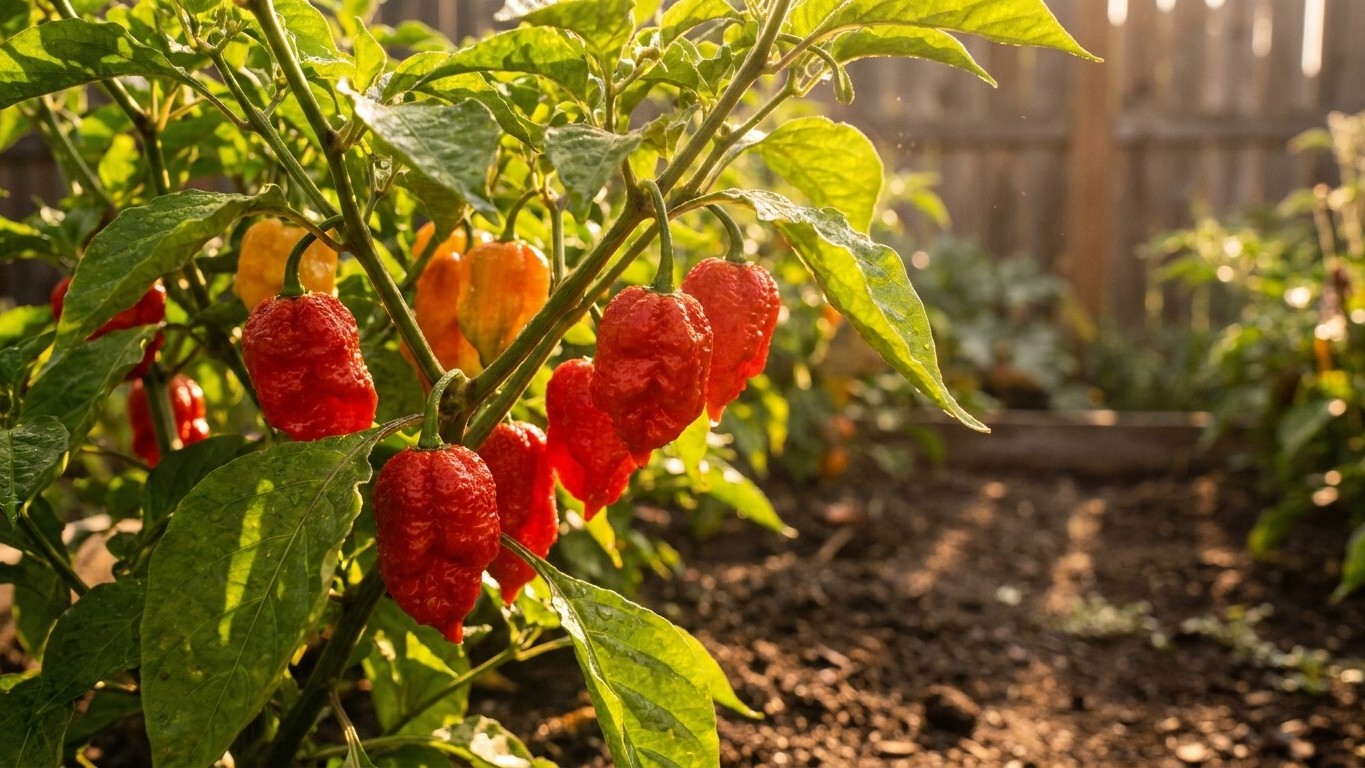

Pick peppers once they reach full size and feel firm, which usually means 70 to 85 days after transplanting, and bring in everything of size before a frost. Then keep them out of the refrigerator. A domestic fridge runs colder than peppers tolerate, and the skin pits and the flesh softens. A cool room at 45 to 50 °F (7 to 10 °C) holds them for as long as two to three weeks.
Keeping them, and for how long
What temperature and humidity do picked peppers need?
Clemson Cooperative Extension’s Home & Garden Information Center states the optimal storage conditions plainly: temperatures of 45 to 50 °F and 80- to 90-percent relative humidity, for two to three weeks. That is about 7 to 10 °C. Peppers are a warm-season fruit, and the lower edge of that range is a hard line. Below about 45 °F they suffer chilling injury. Small sunken pits show up on the skin, the flesh goes soft, and the fruit breaks down quickly once it warms again.
The refrigerator is where nearly everyone goes wrong. A domestic fridge sits below that line, so a pepper that looks perfect on the counter can come out of the crisper drawer pitted and limp. Cold is not the only problem. Humidity matters too, and ordinary house air is much drier than 80 to 90 percent. Unprotected peppers lose water and wrinkle long before they rot.
How long do peppers really last after picking?
Two to three weeks is a ceiling. It describes sound fruit held at the right temperature and humidity, and a kitchen rarely delivers both. A pepper with a nick, a bruise or a sunburned patch will fail first, so sort the harvest and use the damaged ones in the first few days. Pick on a dry day and leave the washing until just before you use them. Water trapped on the skin invites rot.
Check the stored fruit every few days. One soft pepper can spoil its neighbors, and removing it early protects the rest. Peppers you cannot use within the window are better chopped and frozen, or dried, than left to see how long they hold. Counting on the full three weeks usually means throwing some away.
Where in the house that actually is
Four common spots each miss the target in their own way. The fridge is too cold, as covered above. An attached garage swings with the weather. On a sunny afternoon in early fall it can run warm, and on a clear night it can drop low enough to chill or freeze the fruit, which is a real risk in the north. A window sill adds direct sun on top of room heat.
The room that comes closest is usually a cool interior space that stays above freezing: a basement room, a cold pantry against an inside wall, or a root cellar if you have one. In northern homes, basements often hold a steady cool temperature through the fall, but that depends on the house, so it needs checking rather than assuming. Rooms near an uninsulated foundation wall can run cold on the coldest nights.
How do you check a spot with a thermometer?
Before you commit the harvest, leave a min-max thermometer in the spot for two or three days. The low reading matters as much as the daytime one, because one cold night is enough to cause chilling injury. If you can get a small hygrometer, read the humidity too. Without one, a loosely closed, ventilated bag or a lined box helps hold moisture around the fruit without sealing it airtight.
If no spot lands in range, a place slightly above 50 °F only costs shelf life, while a place below 45 °F damages the fruit itself. Choose the warmer error. The refrigerator earns a place only for peppers already cut, which you will use within a few days.
How do you know peppers are ready to pick in Northwest Territories?
Start with the calendar, because the season is short. Utah State University Extension says transplants need 8 to 10 weeks indoors and should go out when the soil reaches 60 °F, after frost. Environment and Climate Change Canada puts the mean last spring frost at Yellowknife A on May 25. That is the midpoint of a window. In one year out of two the last frost falls later, and northern or upland districts run weeks behind that station. A soil thermometer gives a better answer than the date. Clemson then counts 70 to 85 days from transplanting to harvest, and that clock starts on the day the plant goes into the ground, not the day the seed was sown. Packet numbers for days to maturity count the same way for transplants.
Fruit set decides how much there is to pick. Utah State University Extension says it fails at both ends: nights below 55 °F (about 13 °C) and days above 90 °F (about 32 °C). The hot end rarely comes up in the open at Yellowknife A, where Environment and Climate Change Canada counts 0.03 days a year at or above 32 °C and 0.45 days a year above 30 °C. That says nothing against growing peppers there. It means the cool end is the one to watch, and nights vary from one yard to the next, so keep a thermometer where the plants stand and note the lows. For more on this, see Why Peppers Fail to Set Fruit in Northwest Territories. In a short summer, flowers that open late will not have time to ripen before cold weather arrives.
At harvest time, look for full size, a glossy and firm skin, and a fruit that feels heavy for its size. Green peppers can be picked at full size, and waiting for red, yellow or orange adds more time on the plant. Cut the stem with pruners and leave a short piece attached, since pulling can snap whole branches. Fruit left hanging also gives insects and animals more time to find it, a pattern covered in What Eats Pepper in Northwest Territories, and When. If a frost is forecast, pick every pepper of usable size that night or earlier. A pepper that has started to color will often finish at room temperature indoors. The wider growing picture is in Growing Peppers in Northwest Territories.
Common questions
Can peppers go in the refrigerator at all?
For whole peppers you plan to keep for weeks, the fridge is too cold. Below about 45 °F they pit and soften from chilling injury, and the damage shows up after the fruit warms back up.
How long do peppers keep after picking?
Clemson Cooperative Extension gives two to three weeks at 45 to 50 °F and 80- to 90-percent relative humidity. That is the best case for sound fruit. Peppers with bruises or cuts, or held in a warm kitchen, will not last that long.
Should I pick peppers green or wait for color?
Either works. Green fruit at full size can be picked and used. Waiting for color means more days on the plant, and in a short northern season that wait is the part that can run out. A pepper already changing color will usually finish indoors if cold weather comes early.
What should I do if frost is forecast before the peppers ripen?
Pick all fruit of usable size before the frost. Frost damages the plant and the fruit still on it. Sort what you bring in, store the firm, unblemished peppers in the cool spot you checked with a thermometer, and use the marked or soft ones first.