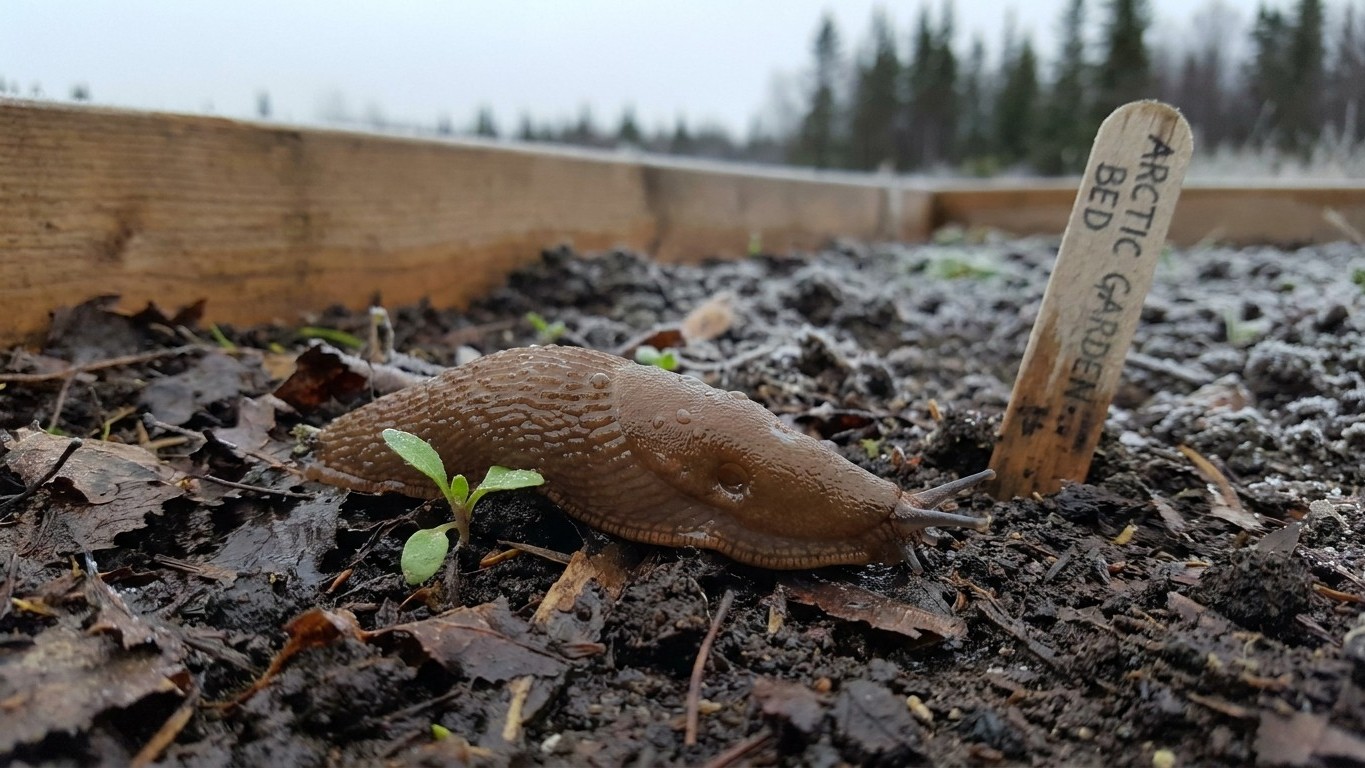

Slugs are rare but not impossible in the Northwest Territories, and when they do show up, it’s almost always tied to a greenhouse, a raised bed with imported soil, or a short, wet stretch of summer. The territory’s brutal winters and short growing season keep populations from ever building the way they do farther south, but that doesn’t mean gardeners in Yellowknife, Hay River, or Fort Smith are completely off the hook. The window for slug activity is narrow, the triggers are specific, and the fixes are simple once you know what you’re dealing with.
Why the Northwest Territories Is a Tough Place for Slugs

Slugs need three things to survive and reproduce: moisture, moderate temperatures, and organic matter to feed on. The NWT offers the first in spades during breakup and midsummer rain, but the temperature piece is where things fall apart for these pests. Soil in much of the territory stays cold well into June, and permafrost sits close to the surface across large swaths of the region, keeping ground temperatures low even when air temperatures climb into the 70s during a warm July stretch.
Slugs are cold-blooded and their metabolism slows dramatically below roughly 50°F. Below freezing, unprotected slugs and their eggs die outright unless they’re insulated by deep leaf litter, compost, or a heated structure. That’s a real problem for a species trying to establish itself somewhere with eight or nine months of subfreezing temperatures. Compare that to coastal British Columbia or the Pacific Northwest, where mild, wet winters let slug populations persist and grow year after year, and it’s clear why the NWT simply doesn’t offer the same long-term foothold.
Native Range Versus Introduced Populations
Most of the slugs causing headaches for northern gardeners aren’t native residents adapted to the tundra. They’re hitchhikers, arriving in potted nursery stock, bagged topsoil, mulch, or compost shipped up from southern Canada or the northern United States. Once introduced into a warm, humid greenhouse or a well-watered raised bed, a slug or a clutch of eggs can survive long enough to become a local nuisance, even if it could never survive the open tundra a few hundred feet away. That is the logic of pest pressure this far north: the problem concentrates where people have built shelter and added water, not across the wild landscape around it. A greenhouse is not a warmer patch of tundra — it is a different place, and the pests that live in it are there because we made it habitable for them.
When Slugs Actually Show Up
If you’re going to see slug damage in the NWT, it happens in a tight window. Late June through August is prime time, when soil temperatures finally climb enough to support activity and rainfall or heavy watering keeps surfaces damp. Slugs are nocturnal and stay hidden during the region’s nearly endless summer daylight, so most gardeners never see the animal itself. What they see is the evidence: ragged holes in lettuce and cabbage leaves, silvery slime trails across a deck or greenhouse floor, and seedlings that vanish overnight.
Community and market gardens tend to report activity earlier in the season than backyard plots, mostly because they irrigate more consistently and often use imported compost or manure that can carry eggs. Greenhouses and hoop houses extend the risk period even further. Because these structures trap heat and humidity, a slug that arrived in a flat of bedding plants in May can keep feeding and laying eggs well past the point when outdoor slugs would have frozen out, sometimes into September or later if the structure stays heated.
Late August through September marks the tail end of typical activity outdoors. Once nighttime temperatures start dropping into the 30s consistently, which happens early in the NWT compared to southern Canada, slug feeding drops off fast. By the time the first hard frost hits, usually in mid to late September across the southern territory and earlier the farther north and higher in elevation you go, outdoor slug activity is essentially over for the year.
Where Slugs Are Most Likely to Turn Up
Not every yard is equally at risk. A few conditions consistently show up in NWT slug reports:
- Greenhouses and hoop houses with warm, humid air and limited airflow
- Raised beds built with imported topsoil, compost, or mulch
- Community gardens that share soil, tools, or plant stock between plots
- Areas with dense mulch, leaf litter, or stacked firewood near garden edges
- Low-lying spots where meltwater or rain pools and drains slowly
Notice what’s missing from that list: undisturbed tundra, boreal forest floor, and native muskeg. Slugs aren’t colonizing wild NWT ecosystems in any meaningful way. This is a garden and greenhouse issue, tied directly to human activity and imported materials rather than a broader ecological shift.
What Actually Stops Slugs in a Northern Climate
The good news is that the same cold that limits slug survival also makes control easier than it would be in a milder climate, because you’re not fighting an entrenched, self-sustaining population. Most of the time, you’re dealing with a handful of individuals that arrived recently and haven’t had time to multiply into a real infestation.
Reduce Moisture and Hiding Spots
Slugs can’t survive dry conditions for long. Watering garden beds in the early morning instead of evening gives soil surfaces time to dry out before nightfall, when slugs are most active. Clearing dense mulch away from stems, pulling back leaf litter near vegetable beds, and keeping firewood stacks away from garden edges removes the damp hiding spots slugs need to get through the heat of the day.
Physical Barriers and Traps
Copper tape around raised bed edges creates a mild electrical deterrent that most slugs won’t cross, and it works particularly well on the wooden-framed raised beds common in northern gardens. Diatomaceous earth, sprinkled in a ring around vulnerable plants, damages a slug’s soft underside on contact, though it needs to be reapplied after rain or heavy watering since it loses effectiveness once wet. Simple beer traps, shallow containers filled with beer and set flush with the soil, still work as well in the NWT as anywhere else; slugs are drawn to the yeast and drown.
Hand-Picking and Early Detection
Because northern slug populations tend to be small and localized rather than sprawling, hand-picking is genuinely effective here in a way it might not be in a region with an established, breeding population. A quick check of greenhouse floors and the undersides of leaves in the evening, when slugs come out to feed, lets gardeners remove the problem before it has a chance to lay eggs. Dropping collected slugs into soapy water is a quick, low-mess way to deal with them.
Managing Imported Soil and Plant Stock
Since so many NWT slug problems trace back to imported materials, inspecting bagged soil, compost, and nursery plants before bringing them into a greenhouse or garden cuts off the problem at the source. Letting new compost sit and cure for a few weeks before use, and checking the base of nursery pots for eggs or juveniles, catches hitchhikers before they get established in a warm structure where they’d otherwise have a much easier time surviving.
What This Means for the Rest of the Growing Season
For most NWT gardeners, slugs are a minor, manageable annoyance rather than a recurring seasonal threat. The climate is doing a lot of the pest control work already; a hard freeze each fall effectively resets the clock, so a bad slug year rarely carries over into the next one the way it might in a temperate region. The exception is anyone running a heated greenhouse year-round, where that natural reset doesn’t happen and a small population can persist through the winter in the warm, humid air.
Watching irrigation habits, staying cautious about where garden soil and mulch come from, and doing a quick evening check during the peak window of late June through August covers most of what’s needed. The territory’s climate is an ally here, not an obstacle, and treating slug control as a short seasonal task rather than an ongoing battle matches what’s actually happening on the ground.
Related guides
- Slugs in Yukon: When It Shows Up and What Stops It
- Slugs in British Columbia: When It Shows Up and What Stops It
- Slugs in Ohio: When It Shows Up and What Stops It
- Slugs in Ontario: When It Shows Up and What Stops It
- Slugs in Alaska: When It Shows Up and What Stops It
- Slugs in West Virginia: When It Shows Up and What Stops It