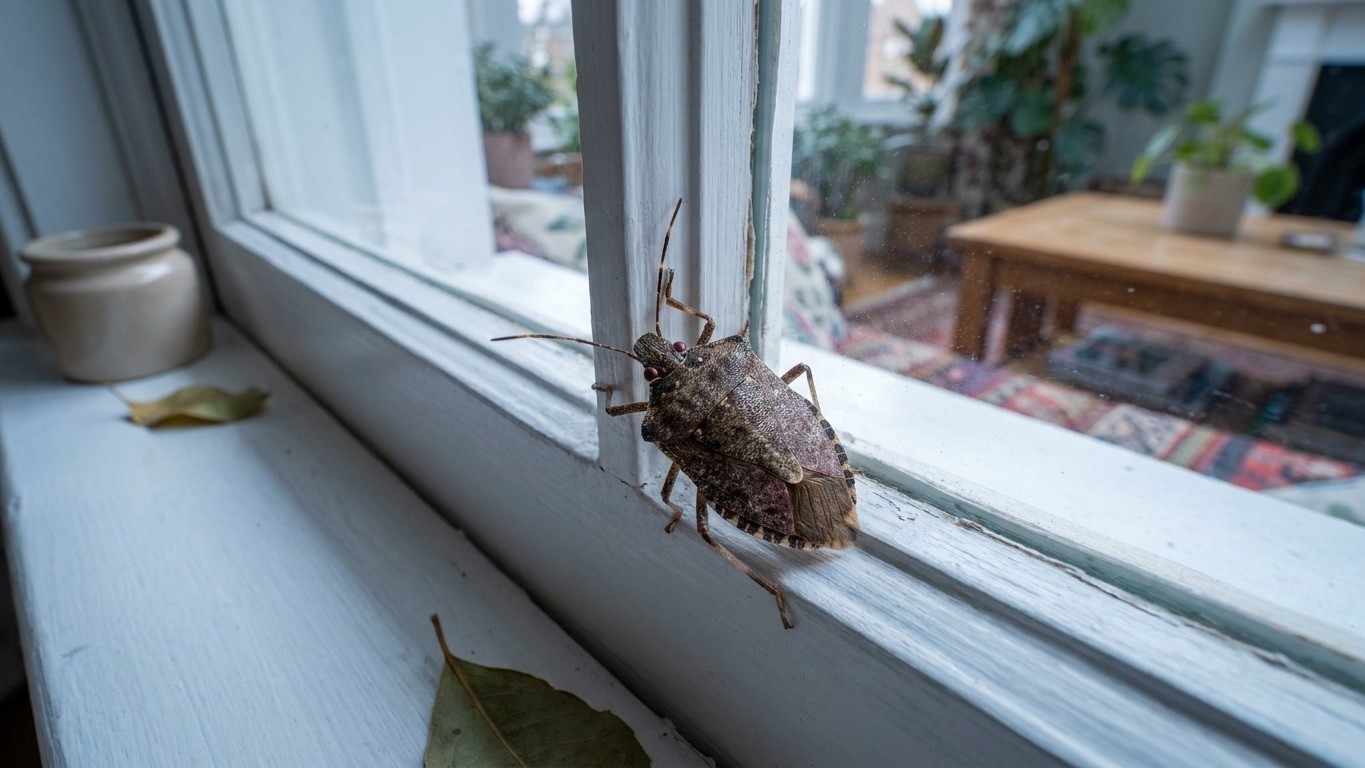

The brown marmorated stink bug reached Quebec around 2015, with confirmed populations settling into the Montreal area and spreading through the Monteregie region since then. Cold winters slow it down but don’t stop it, because these insects survive by sneaking into homes, garages, and sheds before the first hard frost. Sealing gaps around windows, doors, and utility lines remains the single most effective way to keep them out, since insecticides do little once the bugs are already tucked inside your walls.
Where and When It Shows Up in Quebec

The species, scientifically named Halyomorpha halys, was first documented in North America in Pennsylvania back in 1998. It took nearly two decades to cross into Canadian territory, and when it did, Quebec wasn’t the entry point. Ontario recorded the first Canadian detections around Hamilton in 2010, and the bug worked its way east from there, likely hitching rides on shipping containers, moving vans, and even personal vehicles parked near infested areas.
Greater Montreal became the epicenter for Quebec once the insect arrived. Reports have since expanded into Laval, Longueuil, and pockets of the Monteregie, an agricultural belt where orchards and market gardens make the region especially attractive to a pest that feeds on more than 100 plant species. Urban entomologists tracking the spread describe a pattern typical of many invasive insects: slow initial establishment, followed by a sharp jump in sightings once populations reach a tipping point. Quebec appears to be somewhere in that acceleration phase right now.
Timing matters as much as location. Stink bugs are most visible in Quebec homes during two windows: a brief spring emergence in April and May, and a much longer fall surge from September through late October. That autumn spike is what generates the most homeowner complaints, since the insects are actively searching for a warm place to spend the winter and your house looks exactly like what they’re hunting for.
Why Quebec’s Climate Hasn’t Slowed It Down Much
Early assumptions held that harsh Canadian winters would naturally cap the bug’s spread. That hasn’t played out the way researchers expected. Brown marmorated stink bugs don’t need to survive outdoors through a Quebec winter, they just need one warm crawl space or one poorly sealed soffit. Once inside a structure, indoor temperatures stay well above what the insect would face in a hedgerow or woodpile, so the building itself becomes the survival strategy. This is part of why populations near Montreal have grown steadily rather than collapsing after a cold season, contrary to what many residents expected.
How to Identify a Brown Marmorated Stink Bug
Confusing this insect with a native stink bug or a boxelder bug is common, and the mix-up matters because treatment approaches differ. A few features set it apart:
- Shield-shaped body, roughly 5/8 inch long, wider than most native stink bug species found in Quebec gardens
- Mottled brown coloring across the back, with a marbled or speckled texture rather than a solid tone
- Alternating light and dark bands along the antennae, visible at close range
- White markings along the abdomen’s edge, which show as small triangular patches when the wings are folded
- No stinger, no bite, and no venom, despite the intimidating name
The odor is the detail most people remember. When disturbed or crushed, the insect releases a compound that smells sharp and unpleasant, often compared to cilantro gone wrong or a burnt rubber tire. That defensive chemical is harmless to touch but explains why vacuuming a live stink bug often fills a room with an odor that lingers for an hour or more.
What It’s Not: Ruling Out Look-Alikes
Quebec has several native stink bug species, including the spined soldier bug, which is actually a beneficial predator that eats caterpillars and shouldn’t be treated as a pest. Boxelder bugs, another common fall invader in the province, have a narrower body and distinct red-orange markings rather than the brown marmorated bug’s mottled camouflage pattern. If you’re finding large numbers clustering on sun-warmed exterior walls in September, both species do this, so a close look at body shape and antenna banding is the fastest way to tell them apart before deciding on a response.
What Actually Stops the Brown Marmorated Stink Bug
Homeowners often reach for insecticide spray first, and it’s usually the least effective option for this particular pest. Because the insects aren’t feeding indoors, they’re just sheltering, spraying inside a wall cavity or attic rarely reaches enough of the population to matter. What works better falls into three categories: exclusion, targeted outdoor treatment timed to the season, and mechanical removal.
Exclusion means treating your house like the insect does, as a large surface with dozens of tiny entry points. Gaps around window air conditioners, unsealed utility penetrations where cable or gas lines enter the house, torn window screens, and loose weatherstripping on exterior doors are the usual culprits. A tube of exterior-grade caulk and a few hours in early September, before the fall migration ramps up, does more good than most pesticide treatments applied after the bugs are already inside.
For agricultural and garden settings, particularly in the Monteregie orchards where this pest causes the most economic damage, timing insecticide applications to coincide with adult activity in late summer produces better results than reactive spraying once damage appears on fruit. Pheromone-baited traps, developed originally for monitoring populations in the United States, are increasingly used by Quebec growers to track when local populations peak, which then informs when a targeted spray actually makes sense rather than applying chemicals on a fixed calendar.
Dealing With Bugs Already Inside
Once stink bugs have made it indoors for the winter, the most practical approach is physical removal rather than chemical treatment. A vacuum with a disposable bag works well, since it lets you dispose of the insects without direct contact, and doing this outdoors afterward avoids that lingering odor inside your home. Light traps placed near windows can intercept some individuals during their spring emergence, when warming temperatures wake them up and send them searching for a way back outside. Commercial stink bug traps using pheromone lures exist for home use as well, though their effectiveness indoors is more limited than in an orchard setting where population density is much higher.
Natural predators offer a longer-term angle that Quebec researchers are watching closely. In parts of the northeastern United States, a parasitic wasp species that targets stink bug eggs has started showing up on its own, without deliberate introduction, and appears to be providing some natural population control. Whether that same biological check establishes itself in Quebec remains an open question, and it’s the kind of development that tends to unfold over several years rather than overnight.
Why This Pest Matters Beyond the Nuisance Factor
The annoyance of stink bugs clustering on a sunny wall or turning up in a bedroom in October is real, but the bigger concern in Quebec is agricultural. This insect feeds on apples, peaches, sweet corn, soybeans, and a long list of ornamental plants, and its feeding damage shows up as discolored, dimpled fruit that’s difficult to sell at full price. Growers in fruit-producing regions near Montreal have had to add stink bug monitoring to their existing pest management routines, an added cost that eventually factors into what consumers pay at the market.
Research groups tracking the species across North America, including the multi-institution effort documented at stopbmsb.org, have compiled distribution data showing the insect’s steady northward and eastward creep since its US arrival. That kind of tracking helps agricultural extension offices in Quebec anticipate where the next population surge is likely to land, rather than reacting after the damage is already done in a given growing season.
One detail that surprises a lot of residents: a single stink bug found on a windowsill in April rarely means an infestation. It’s often just one individual that survived the winter in a wall void and is now trying to get back outside. The real signal to watch for is clustering, several dozen insects gathering on a south-facing wall in September, which points to a larger population nearby and justifies a more thorough sealing job before the next cold season arrives.
Related guides
- Brown marmorated stink bug in Saskatchewan: When It Shows Up and What Stops It
- Brown marmorated stink bug in Washington: When It Shows Up and What Stops It
- Cabbage maggot in Quebec
- Seedcorn maggot in Quebec
- Onion maggot in Quebec
- Brown marmorated stink bug in Oregon: When It Shows Up and What Stops It
- Brown marmorated stink bug in Indiana: When It Shows Up and What Stops It