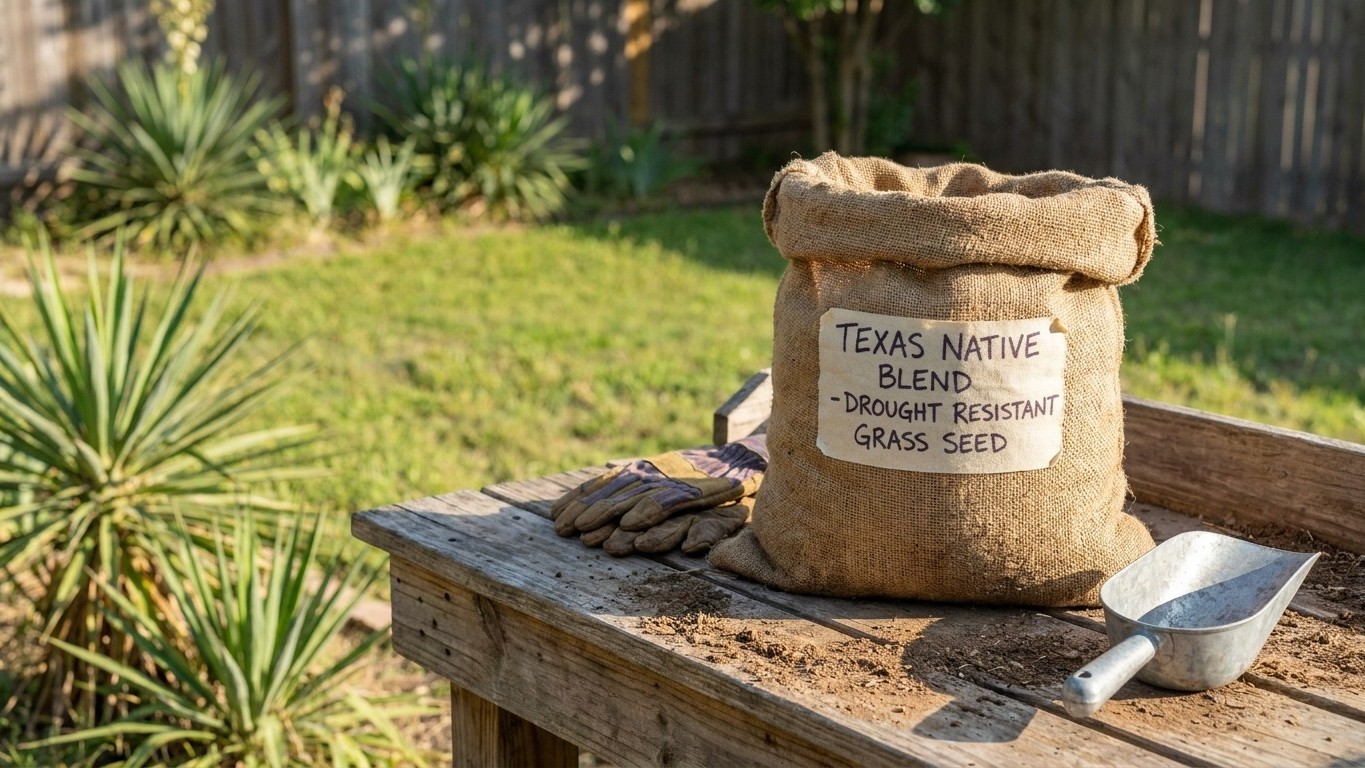

Bermudagrass browns hard the moment Houston’s first freeze lands, somewhere between December 1 and December 19 most years, and that three-week window is the mechanism deciding this whole list. Cool-season seed sold every spring can’t survive it, which is why only warm-season grasses belong here at all. St. Augustinegrass trades Bermuda’s toughness for shade tolerance, at the cost of more water. The right grass for your yard comes down to which trade you’re actually willing to make.
The short answer for Texas
Plant a warm-season grass. That single fact rules out every cool-season lawn seed sold at the big box store come spring. The species that actually survive here are Bermudagrass, St. Augustinegrass, Zoysiagrass, Centipedegrass, Bahiagrass, Carpetgrass and Seashore Paspalum, the seven warm-season turfgrasses Clemson Cooperative Extension lists for this zone.
Which one is right for your yard depends on what it has to survive. St. Augustinegrass tolerates shade better than Bermudagrass but drinks more water to do it. Bermudagrass takes full sun and heavy foot traffic and heals fastest from wear, but it browns hard at the first freeze of the season. NOAA’s 1991-2020 climate normals put that first fall freeze at the Houston airport station (IAH) somewhere between December 1 and December 19, a three-week window, not a single date, and it’s the point where a warm-season lawn’s active growing season ends for the year.
None of this makes one species the automatic winner statewide. A lawn a few hours north or west of Houston freezes earlier and dries out faster, and the right grass for that ground is not automatically the right grass here. Treat this shortlist as a Houston-anchored starting point, and weigh it against your own soil, sun and water situation, and against the site prep covered in Texas Lawn Care, before you buy a single bag of seed.
Working through the year

No single species on the list wins every yard. Rank them by what you’re willing to trade for a lawn that survives a Texas summer.
Ranking the seven by what they demand back
| Species | Sun needs | Drought tolerance | Wear tolerance | What it costs you |
|---|---|---|---|---|
| Bermudagrass | Full sun | High | High, recovers fast | Aggressive, invades beds and needs frequent mowing |
| St. Augustinegrass | Full sun to light shade | Moderate | Moderate | Higher water bill, prone to chinch bugs and gray leaf spot |
| Zoysiagrass | Full sun to moderate shade | Good once established | High | Slow to fill in from seed |
| Centipedegrass | Full sun | Moderate | Low, thins under traffic | Sulks in alkaline soil, needs almost no fertilizer |
| Bahiagrass | Full sun | High | Moderate | Coarse texture, seed heads need frequent mowing |
| Carpetgrass | Full sun to shade | Low, wants damp soil | Low | Only works where drainage is poor and water is plentiful |
| Seashore Paspalum | Full sun | Moderate | Moderate | Salt tolerant, but seed and sod are harder to source |
Bermudagrass, Bahiagrass and Centipedegrass are the three most likely to succeed straight from a bag of seed. St. Augustinegrass and Zoysiagrass are usually laid as sod or plugs instead, because their seed germinates slowly and unevenly if it’s sold as seed at all. Check the label before you buy: a bag marketed for “St. Augustine lawns” is often a blend meant to overseed thin spots in existing sod, not to start a lawn from bare dirt.
Whichever species you seed, prepare the ground the same way. Mow low, dethatch and rake before you cast, since seed that lands on cleared soil germinates far better than seed thrown over standing thatch. That prep step, and the mowing height and nitrogen schedule that follow it through the growing season, are laid out month by month in The Texas Lawn Care Calendar, Month by Month, which is worth reading before you buy seed, not after.
What changes across Texas
The warm-zone call above is anchored to Houston, and Houston is not the state. Texas runs from Gulf beaches to the high plains of the Panhandle, and those places do not share a growing season.
The Panhandle and the northern reaches of the state sit through a longer, colder winter than the Gulf Coast, so lawns there freeze earlier in fall and green up later in spring than any Houston-based figure suggests. Hill Country’s elevation and thinner, rockier soil dry out faster between rains than the heavy clay closer to the coast, which pushes Bermudagrass and Zoysiagrass to root deeper or brown sooner depending on the summer. Coastal counties get salt spray and occasional saltwater flooding that inland lawns never see, and that’s where Seashore Paspalum earns its place on the list.
Even inside the Houston area the numbers move. NOAA’s 1991-2020 climate normals show Hobby Airport running about two weeks milder than the Bush Intercontinental station (IAH) used for the frost window above, and that gap sits inside a single metro area. Scale that kind of variation up across a state the size of Texas and a single planting date or single “best grass” answer stops meaning much.
Farther north and west, some homeowners overseed a warm-season lawn with a cool-season grass like ryegrass just for winter color. That’s a temporary overseed laid on top of a warm-season base, not a switch to a cool-season lawn. The two grow in opposite halves of the year, and a cool-season lawn planted as the permanent turf is fighting the whole zone’s climate, not just one bad season.
The mistakes this climate punishes
Some errors don’t cost a lawn right away. They show up weeks or months later, after the receipt is gone.
Feeding a warm-season lawn as it heads into dormancy
Nitrogen pushes soft new growth, and soft new growth is exactly what an early freeze kills first. Once the days shorten and a Bermudagrass or St. Augustinegrass lawn starts slowing down, a late feeding does not make it greener before winter. It makes freeze damage more likely in the spots that got the most fertilizer. Houston’s first fall freeze, per NOAA’s 1991-2020 normals, lands somewhere between December 1 and December 19, so the safe window to stop feeding closes well before that.
Seeding a cool-season lawn because the bag looked good in a spring photo
Tall fescue and ryegrass germinate fast and look great for a few weeks, but neither survives a Texas summer as a permanent lawn. Houston sits in the warm zone under Clemson’s HGIC 1214 criteria specifically because summer heat runs long enough to burn out cool-season turf, and the failure doesn’t show up until July or August, months after the seed went down.
Cutting it short because the yard “looks shaggy” in July heat
Scalping a warm-season lawn during the hottest stretch of summer strips the shade the soil needs to hold moisture, and the roots respond by staying shallow instead of digging down after water. The damage doesn’t show as brown grass right away. It shows two or three weeks later as thin, weedy patches where the turf couldn’t compete anymore.
Mistaking winter brown for a dead lawn
A warm-season lawn goes dormant and brown at the first hard freeze, and that is not death. It’s the plant shutting down top growth to protect its roots. Ripping out a “dead” lawn in January and reseeding before the freeze cycle has even finished wastes seed and money, since the original grass would likely have greened back up on its own once temperatures climbed again.
Checking this against your county
Every figure above is anchored to one Houston station, and Texas covers county lines with very different soil, rainfall and frost timing. Before you buy seed, run your county’s specifics past Texas A&M AgriLife Extension at agrilifeextension.tamu.edu, the land-grant extension service for the state.
Their county offices can confirm which of the seven warm-season species performs best on your local soil, and flag anything specific to your area, like nematode pressure or unusually alkaline water, that a statewide list can’t account for.
Common questions
Can I overseed my Bermuda lawn with ryegrass for winter green?
Yes, that’s a standard practice for winter color and it doesn’t conflict with keeping Bermudagrass as your permanent base. The ryegrass dies out on its own once summer heat returns, and the Bermudagrass resumes growth underneath it.
Will St. Augustinegrass actually grow from a bag of seed?
Rarely as a full lawn. St. Augustinegrass is propagated almost entirely by sod, plugs or sprigs because commercially viable seed for it isn’t widely sold. If a product is labeled for St. Augustine lawns, read the fine print, since it’s usually a companion grass meant to fill bare patches, not the species itself.
My lawn is half sun and half deep shade. What do I plant?
You may need two zones instead of one grass. St. Augustinegrass handles the shaded half better than Bermudagrass or Bahiagrass, but none of the seven species listed here thrives in deep, all-day shade, so a heavily shaded patch under mature trees may do better with a shade-tolerant groundcover than with any turfgrass.
Is it too late to seed if it’s already June?
Warm-season species can still establish in early summer since they’re actively growing in the heat, but the seedlings will need more frequent watering to survive the hottest weeks than they would earlier in spring. Seeding this late also gives the young grass less time to root deeply before the season’s first freeze arrives.