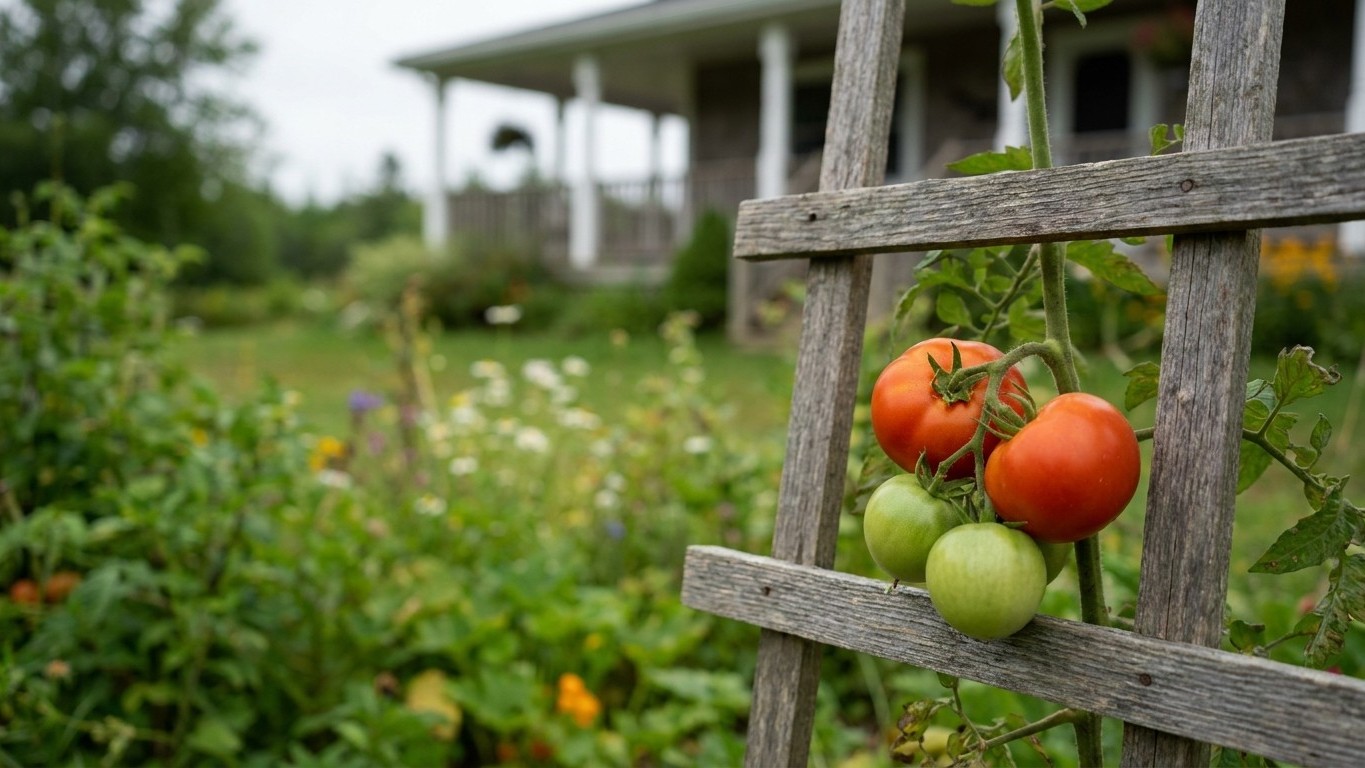

Nova Scotia’s frost-free season, measured at Halifax by Environment and Climate Change Canada’s 1981-2010 climate normals, runs from a mean last spring frost of May 7 to a mean first fall frost of October 18, so most of the province has something close to five months to work with in an average year. That window is a mean, not a guarantee, and it shrinks fast in a cold spring or an early autumn. Pick a variety whose days-to-maturity, counted from transplant, leaves several weeks of slack against October 18, and lean toward the shorter end of the list below if your garden sits inland or at higher elevation.
What this comes down to in Nova Scotia

At Halifax, Environment and Climate Change Canada’s 1981-2010 climate normals put the mean last spring frost at May 7 and the mean first fall frost at October 18, for an average frost-free stretch of about 164 days. That figure comes from one station near the coast, Halifax Stanfield International Airport, and inland valleys or the Cape Breton highlands run their own, usually shorter, season. The real question for a variety is whether its days-to-maturity, counted from a late-May transplant, leaves enough margin before that October frost to matter in a year when the season runs shorter than average.
The cultivars below are ordered from shortest season to longest, using the days-to-maturity printed on the seed packet or catalogue listing, which is always counted from the transplant date rather than from seed. Each one is paired with its ripening window and the margin it leaves against Halifax’s mean fall frost, worked out from the same late-May transplant date used across this list. For the reasoning behind that late-May start itself, see Tomato Planting Dates in Nova Scotia: Counting Back From Your Frost Window.
Sakura

Sakura reaches its first ripe fruit about 55 days after transplant, so a late-May setting out puts the first red cherry tomatoes on the vine by mid July, roughly 95 days ahead of Halifax’s mean October 18 frost. It resists nematodes, tomato mosaic virus, and two races of fusarium wilt, which matters more in a garden that has grown tomatoes in the same soil for years. This is about as safe a season fit as the province offers.
Edox

Edox matures at the same 55 days as Sakura and carries the identical resistance package: nematodes, tomato mosaic virus, and fusarium wilt races 1 and 2. The two are close enough in season and disease profile that the choice between them comes down to fruit preference rather than climate risk.
Valentine

Valentine also finishes at 55 days from transplant, putting its first grape tomatoes in mid July with the same 95-day cushion before frost. Its intermediate resistance to early blight is useful in a wet August, which is when that disease usually shows up on tomato foliage here.
Glacier

Glacier is a determinate 55-day variety, meaning the whole plant sets its fruit over a shorter, more concentrated stretch rather than trickling in all summer. That habit suits a short raised bed or a gardener who wants one big harvest for canning rather than a steady trickle through the fall.
Sun Gold

Sun Gold needs about 57 days from transplant, ripening by mid July with roughly 93 days of margin before the mean fall frost. It resists tobacco mosaic virus and one race of fusarium wilt, and its sweetness makes it one of the more forgiving cherry types if the second half of the season turns cool.
Supersweet 100

Supersweet 100 takes 60 days from transplant, still ripening by mid July with about 90 days in hand before frost. It resists verticillium wilt and fusarium wilt race 1, both soil-borne problems that build up where tomatoes are grown in the same ground year after year.
Juliet
Juliet also matures at 60 days, with the same mid-July start and 90-day cushion. Its resistance to early and late blight is worth having in a coastal garden, where damp air keeps foliage wet longer than it does further inland.
Amalfi
Amalfi is a determinate paste tomato at 68 days from transplant, ripening in late July with about 82 days of margin before Halifax’s mean frost. It carries intermediate resistance to late blight and early blight together, covering both of the fungal diseases most likely to shorten a Nova Scotia tomato season.
Tiren
Tiren takes 75 days, putting first fruit in early August with about 75 days left before frost. Its resistance runs to verticillium wilt, tomato mosaic virus, and fusarium wilt race 1, the same soil-borne trio that troubles a garden with a long tomato-growing history.
Granadero
Granadero matures at the same 75 days as Tiren and ripens on the same early-August schedule, leaving the same margin. It adds nematode resistance to its verticillium wilt and tomato mosaic virus resistance, useful on sandier ground where root-knot nematodes are more likely.
Cherokee Purple
Cherokee Purple needs about 72 days from transplant, ripening in early August with 78 days of margin left before frost. It carries no listed disease resistance, so it depends on the season finishing on schedule and on a gardener staying ahead of blight with good airflow and mulch.
Big Beef Plus
Big Beef Plus also matures at 72 days, on the same early-August schedule as Cherokee Purple, but adds resistance to nematodes, gray leaf spot, and tomato mosaic virus. For a large slicing tomato, that resistance package buys real insurance against a shortened season.
San Marzano II
San Marzano II is the longest-season variety on this list at 78 days from transplant, ripening in early August with 72 days left before the mean frost date, the tightest margin of anything named here. It has no listed disease resistance, which makes it the variety most exposed if a cold spring pushes transplanting past late May.
Celebrity Plus
Celebrity Plus matures at the same 78 days as San Marzano II, with the same early-August start and 72-day margin. It resists nematodes, gray leaf spot, and tomato mosaic virus, which offsets some of the risk that comes with sitting at the long end of the season.
Working it out for your own garden
The method behind every date here is simple arithmetic, and it survives a move to a different county or a colder year better than any single date does. Start from Halifax’s mean frost window, May 7 for the last spring frost and October 18 for the first fall frost, both from Environment and Climate Change Canada’s 1981-2010 normals, and remember that a mean date is beaten by frost in roughly half of all years. Add the transplant delay that pushes setting-out from that mean date into late May, covered in full on the planting calendar page, then add the variety’s own days-to-maturity from the seed packet.
A short-season variety worked through
Take Sakura, listed at 55 days from transplant. Setting it out in late May and counting 55 days forward lands on mid July for the first ripe fruit. From mid July to October 18 is roughly thirteen weeks, which is where the 95-day margin quoted above comes from: that gap is the buffer against a cold August, a slow-ripening year, or the frost simply arriving earlier than the mean date suggests it will.
A longer-season variety worked through
Now take San Marzano II, at 78 days from the same late-May transplant. First ripe fruit lands in early August, and the run to October 18 leaves about 72 days, still comfortably inside the average season but with roughly three fewer weeks of slack than Sakura carries. That narrower margin is where a late spring starts to matter: push the transplant date back by even ten days because the soil is still cold, and a 78-day variety is suddenly finishing closer to the frost than the catalogue figure implied. A 55-day variety absorbs that same ten-day delay without coming near the October frost line at all.
Run the same subtraction for any variety not named here: take its catalogue days-to-maturity, add it to the late-May transplant window, and check the result against October 18 rather than against a single date in between. If the arithmetic leaves less than about ten weeks of margin, treat that variety as a gamble in anything but an average year.
The mistakes this state punishes

The most common mistake is planting into cold soil on the strength of one warm week. A string of mild days in early May can feel like the season starting, but Halifax’s mean last frost of May 7 is only a midpoint. In half of all years frost arrives after it, and tomato roots set into soil that hasn’t warmed properly will stall for a week or two even if no frost actually touches the leaves. That stall eats directly into the margin calculated above, turning a comfortable 78-day variety into a tight one.
The second mistake is choosing a variety for its flavor or size without checking its days-to-maturity against the season at all. A gardener who wants a big slicing tomato and reaches for the longest-season option on the shelf, rather than one of the 72-day beefsteaks named above, is spending margin the season cannot spare.
The third is ignoring where in the province the garden actually sits. The Halifax figures above describe the coast around the airport station. A valley or upland garden further inland or at higher elevation can run its frost dates weeks later in spring and weeks earlier in fall, which shortens the whole season on both ends at once.
- Wait for the soil to warm, not just the air, before setting transplants out.
- Match variety length to the margin your garden actually has, using the arithmetic above rather than the calendar.
- Treat the Halifax dates as a starting point and adjust for local elevation and distance from the coast.
Checking this against your county
Every figure here comes from one station, Halifax Stanfield International Airport, and Environment and Climate Change Canada’s own normals describe that as a single provincial average, not a promise for every county. A garden in the Annapolis Valley, along the South Shore, or up in Cape Breton can run its frost dates meaningfully earlier or later than Halifax does, depending on elevation and distance from open water.
Nova Scotia’s Department of Agriculture keeps a general growing guide at novascotia.ca/agri, and it’s worth checking your own county’s local frost history against the provincial mean before betting a long-season variety on it. Treat everything above as the starting math, not the final answer for your own plot, and cross-reference it with the basics laid out for growing tomatoes in Nova Scotia.
Common questions
Can I grow a 90-day tomato in Nova Scotia?
Not reliably outdoors from a late-May transplant. Ninety days from a late-May start pushes first ripe fruit into late August, and depending on the year that leaves as little as seven or eight weeks before Halifax’s mean October 18 frost, with none of the buffer the varieties named above carry. Starting seed indoors earlier does not fix this on its own, because setting transplants out before the soil has warmed usually stalls growth rather than banking extra days.
Should I direct-sow tomato seed instead of transplanting?
No, not in this climate. Direct-sown tomato seed needs several extra weeks to reach the size a nursery transplant already is, and that time does not exist inside Nova Scotia’s average frost-free window. Every days-to-maturity figure on seed packets and in this article assumes a transplant, not a seed sown straight into the garden bed, a point covered in more depth on the page about growing tomatoes in Nova Scotia.
What’s the fastest tomato I can grow here?
All four ripen by mid July from a late-May transplant, which is as early as a full harvest gets in this province without a greenhouse or high tunnel.
Does determinate or indeterminate matter for a short season?
It matters for how the harvest arrives, not for how fast it starts. A determinate variety like Glacier or Celebrity Plus sets most of its fruit over a shorter, more concentrated stretch, which suits a gardener who wants one big batch for canning before autumn weather turns. An indeterminate variety like Sakura or Cherokee Purple keeps producing until frost or disease stops it, spreading the harvest out without changing the date of the first ripe fruit.