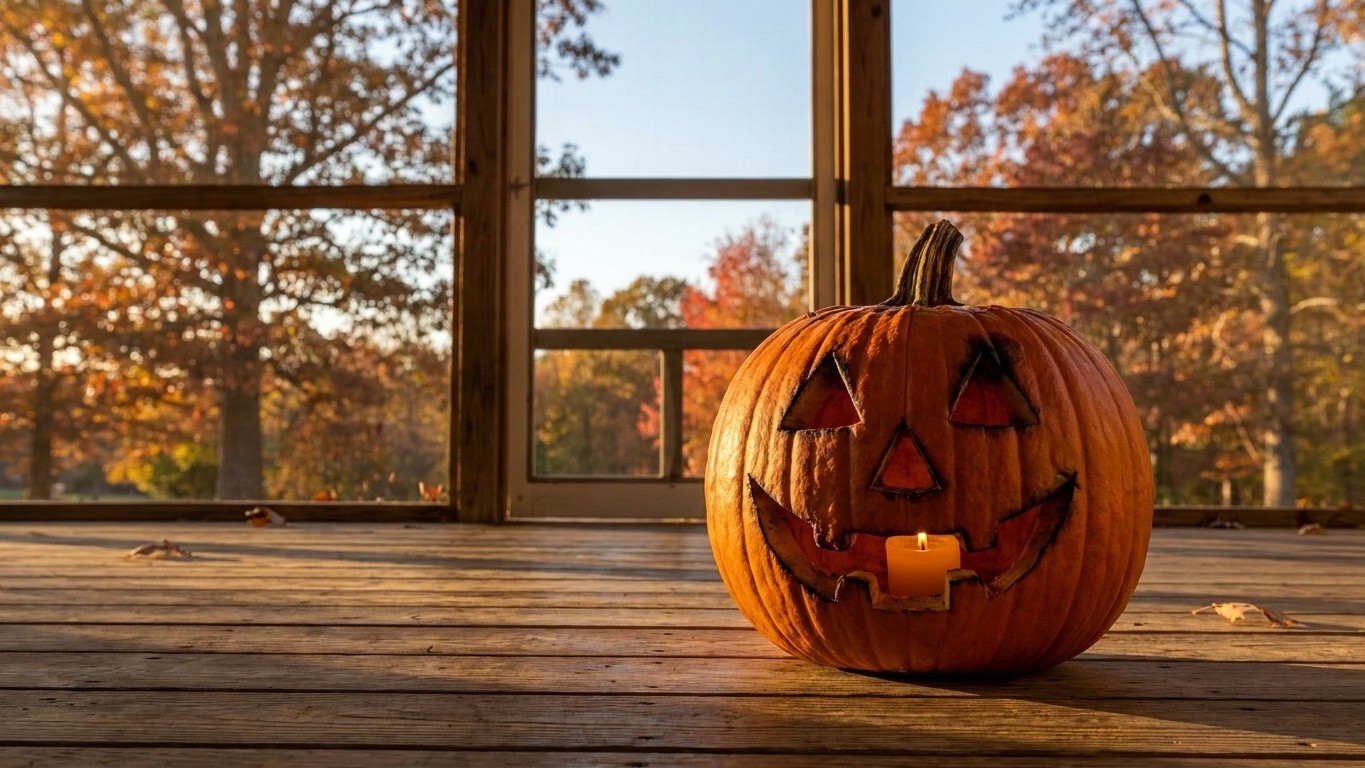

Charlotte’s mean first fall frost lands somewhere between October 30 and November 8, according to NOAA’s 1991-2020 Climate Normals. That puts frost right around Halloween itself, not safely before it. For most of North Carolina’s Piedmont, that means a pumpkin can sit outside through the whole spooky season without freezing, but the real question isn’t cold. It’s heat.
The short answer

If you’re carving for Halloween night, you can wait until close to October 31 and still be fine, weather-wise, in most of North Carolina. The mean first fall frost for the Piedmont region (using Charlotte as the reference point) falls between October 30 and November 8. That’s a range, not a fixed date, and it means frost typically arrives right around Halloween, sometimes a few days before it, sometimes more than a week after. There’s no guarantee either way. A cold snap could show up early some years; other years the mild stretch runs well into November.
What this tells you practically: frost isn’t the thing standing between your pumpkin and a good carve. The bigger issue is that October in the Piedmont, and even more so on the coastal plain, tends to run warmer than the temperature a whole pumpkin actually wants for storage. University of Illinois Extension recommends keeping a whole pumpkin between 45 and 50 degrees Fahrenheit if you want it to last. Plenty of October days in North Carolina, especially early in the month, run warmer than that during daylight hours.
So the window to think about isn’t “days before frost.” It’s “days before the pumpkin gets too warm sitting around.” A reasonable approach: buy your pumpkin two to three weeks before Halloween, store it properly (more on that below), and carve it in the final week before the holiday. That gives the flesh less time exposed to warmth and less time for the cut surface to soften and spoil. If you’re in the mountains, where frost tends to show up earlier than the Piedmont average, you actually have a bit more natural cold working in your favor, but the storage temperature still matters more than whether frost has technically arrived.
The mean frost date is useful background, but it isn’t the deciding factor for pumpkin timing in most of this state. Carve close to the day, keep the pumpkin cool and dark until then, and don’t count on frost to do any of the preservation work for you.
Frost or heat: which one gets it here
The cold end
North Carolina’s coldest month (January, based on Climate Normals for the Charlotte reference station) has a mean daily minimum of 31.8 degrees Fahrenheit. That’s the figure that determines whether plants survive winter here at all, and it’s well below the 45-50 degree range a whole pumpkin wants for storage. But that’s January, not October. By the time late October rolls around, the Piedmont hasn’t reached anything close to that cold yet. Frost is possible around Halloween, but a hard freeze, the kind that would actually damage a pumpkin’s rind, is unlikely to arrive that early in most years. The mountains are the exception: elevation pushes frost dates earlier there by several weeks compared to the Piedmont, so a pumpkin left outside overnight in the high country runs a real risk of frost exposure well before Halloween.
The warm end
For most of North Carolina, the more relevant risk in late October is the opposite problem: too much warmth, not too little. Piedmont afternoons in October regularly climb well above the 50-degree upper limit of the ideal pumpkin storage range, and the coastal plain runs even warmer on average than Charlotte. A pumpkin sitting on a sunny porch or in a warm garage during a mild October stretch is aging faster than it would in a properly cool spot, frost or no frost. That’s the piece worth paying attention to here: North Carolina’s carving-season challenge is heat management, not frost protection, outside of the mountain counties.
Where to keep it until you carve
Getting a whole pumpkin close to that 45-50 degree Fahrenheit range, and keeping it dark, buys you the most time before carving. In most North Carolina homes, a few spots come reasonably close, and a few common choices work against you.
- An unheated garage or carport, out of direct sun. This is usually the closest match to the ideal range in Piedmont and coastal North Carolina during October, especially if the garage door stays mostly shut during the day.
- A basement or crawlspace-adjacent room, if you have one. These stay cooler and darker than living spaces and avoid the temperature swings of an attached porch.
- A shaded, covered back porch, not a sunny front stoop. Direct sun through October in North Carolina can push surface temperatures well past 50 degrees even on a mild day.
- Away from the kitchen counter or any spot near the stove, dishwasher, or a sunny window. Indoor heated rooms run far warmer than 45-50 degrees and speed up softening.
- Away from apples, potatoes, tomatoes, or any ripening produce. Ripening fruit releases ethylene gas, which ages a pumpkin faster. The classic mistake is stacking a pumpkin next to a crate of fall apples on the porch, which is one of the worst spots you could pick.
- Never lifted or carried by the stem. The stem isn’t a handle. It’s a seal, and a pumpkin should have 1 to 2 inches of stem intact when you buy it. Once it breaks off, that spot on the pumpkin is exposed and spoils faster.
No university extension publishes a specific number of days a carved pumpkin will last once cut, and none publishes a preservation protocol involving bleach, petroleum jelly, or similar treatments. Those figures circulate widely online, but they don’t come from research. What the research does support is straightforward: pick a pumpkin with an intact stem and no soft spots, store it whole in a cool dark spot until you’re ready, and carve it as close to the day you’ll display it as you reasonably can.
Checking this against your own county
North Carolina spans three very different climate zones, coastal plain, Piedmont, and mountains, and frost timing shifts noticeably between them. The Charlotte-based figures here represent the Piedmont; coastal counties tend to see frost later, while mountain counties see it markedly earlier. If you want numbers specific to where you live, North Carolina State University’s Cooperative Extension maintains county-level offices across the state with local frost and growing-season data. A quick call or visit to your county center will tell you how your area compares to the Piedmont average used above, which matters most if you’re in the mountains or near the coast rather than the central part of the state.
Common questions
Does frost ruin a pumpkin that’s still on the vine or sitting outside?
A light frost typically affects the surface and stem area more than the flesh underneath, but repeated frost or a hard freeze can soften the rind and speed up decay. Since North Carolina’s Piedmont frost date hovers right around Halloween, this is more of a concern in mountain counties where frost arrives earlier.
Should I carve early to be safe, or wait?
Waiting is generally better in North Carolina. Since heat, not frost, is the bigger risk here, carving closer to Halloween gives the cut pumpkin less time exposed to warm October air.
Can I store a pumpkin in the refrigerator?
A whole pumpkin is usually too large for most refrigerators, and the goal is a cool, dark spot around 45-50 degrees Fahrenheit, which a garage or basement typically provides without needing fridge space.
Is the shape or size of the pumpkin a sign of how well it will keep?
No. University of Illinois Extension notes that shape isn’t important; what matters is a firm, heavy pumpkin free of blemishes and soft spots, with 1 to 2 inches of stem still attached.