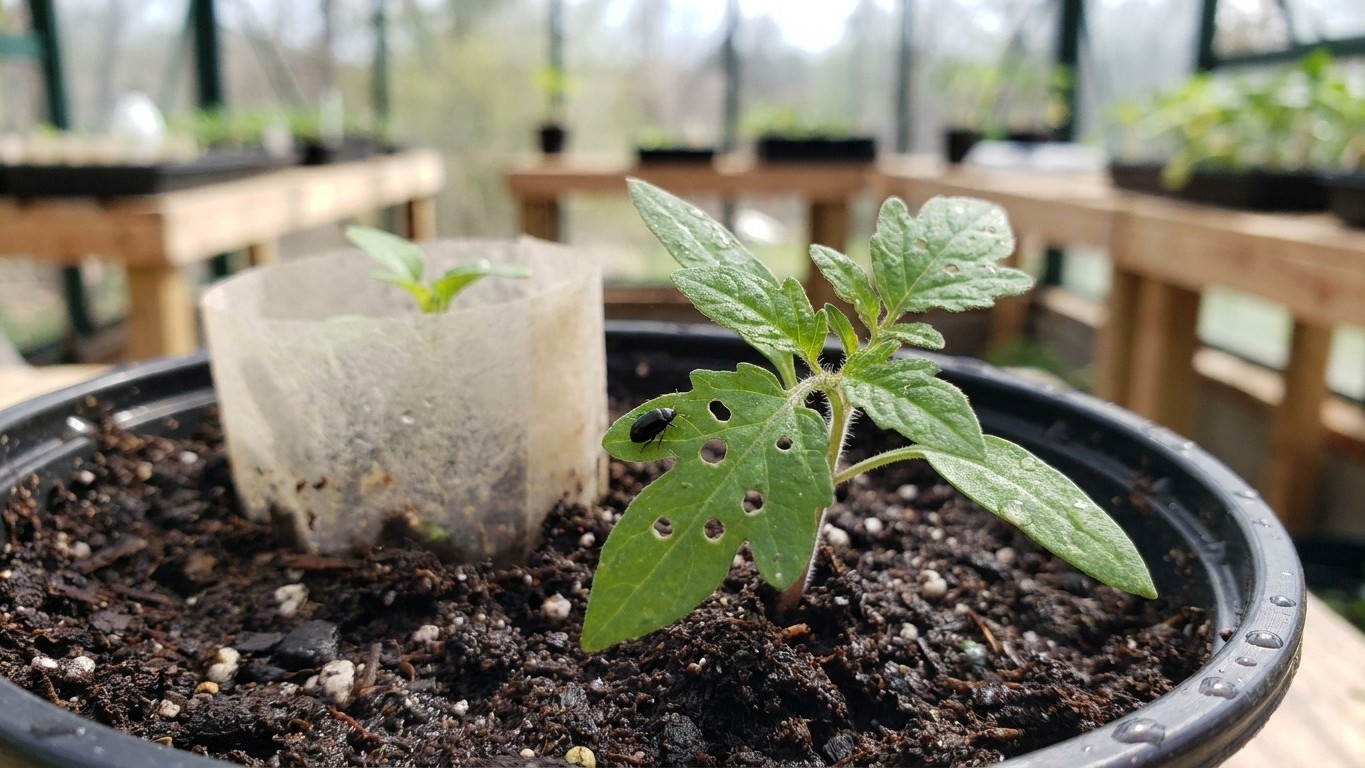

Short growing season, cool soil, and a lot of greenhouse and hoophouse growing change which insects actually bother tomato plants here. Four or five pests turn up with any regularity in the territory, and knowing them by sight, and by the point in the season they show up, saves a lot of guessing when leaves start looking wrong.
What this comes down to in Northwest Territories

Around Yellowknife, the frost-free window runs on average from May 25 to September 18, a stretch of roughly 116 days that barely gives most tomatoes room to ripen even before pests take a bite out of it. Because so much tomato growing in the territory happens under some kind of cover, cold-hardy field pests matter less here than the insects that thrive in warm, still, humid air.
Cutworms
These are the fat, gray-brown caterpillars, often curled into a C-shape when disturbed, that hide in the top inch of soil during the day. The moth stage does no damage; it is the larva that chews through a young transplant’s stem right at soil level, usually within the first two weeks after setting plants out. A paper or foil collar pushed an inch into the soil around each stem stops them cold.
Flea Beetles
Tiny, shiny, black beetles about the size of a pinhead, they jump like fleas when you brush the foliage. They arrive early on transplants and chew small round holes through leaves, giving them a shotgun-blast look. Damage on established plants is mostly cosmetic, but on small seedlings it can slow growth enough to matter in a season this short.
Aphids
Soft-bodied, pear-shaped insects, green or sometimes pink, clustered on the undersides of leaves and along new growth. They arrive mid-season and multiply fast in warm greenhouse air, sucking sap and leaving a sticky honeydew that grows black sooty mold. A strong jet of water or insecticidal soap knocks them back before numbers get out of hand.
Two-Spotted Spider Mites
Barely visible without a hand lens, these pale mites show up when hot, dry greenhouse conditions build in midsummer. Fine webbing on the underside of leaves and a stippled, bronze look to the foliage are the giveaways. Raising humidity and hosing down leaves does more good than most sprays.
Whiteflies
Small white moth-like insects that flutter up in a cloud when a plant is disturbed, most common in greenhouse settings by late summer. Both nymphs and adults feed on sap and excrete honeydew, weakening plants over time. Yellow sticky traps hung near plant height catch adults and give an early warning.
Slugs
Not an insect at all, but a fixture in the territory’s cool, often damp growing conditions. They rasp irregular holes in lower leaves and ripening fruit overnight, leaving a telltale slime trail behind. Beer traps or diatomaceous earth around the base of plants handle them without chemicals.
Working it out for your own garden
The fastest way to figure out which pest you’re actually dealing with is to work backward from three things: where on the plant the damage shows up, what time in the season it appeared, and whether you can find the insect itself. A stem chewed clean through at soil level on a two-week-old transplant points straight at cutworms, because nothing else in this list attacks at that height or that early. Small round holes punched through leaves on the same young plants, with tiny beetles jumping when you touch the foliage, rules cutworms out and points to flea beetles instead.
Once plants are established and growing indoors or under cover, the diagnosis shifts. Sticky leaves with a cluster of small soft-bodied insects on the underside of new growth, showing up any time from midseason on, is aphids, not spider mites, because spider mites don’t cluster in visible groups the way aphids do. If instead the leaves look bronzed and stippled with fine webbing but you can’t see any insect without a magnifier, that’s the signature of two-spotted spider mites, which tend to build up specifically in hot, dry greenhouse air rather than cool outdoor beds.
A cloud of small white insects rising off the plant when you brush past it, paired with sticky residue on the leaves below, is whiteflies rather than aphids, since aphids don’t fly in a visible swarm. And overnight damage on lower leaves or on fruit touching the soil, with slime trails left behind and no insect visible at all in daylight, is slugs, since none of the other pests on this list leave that kind of trail.
Working through those questions in order (location on the plant, timing in the season, and whether the pest itself is visible or hiding) gets you to the right answer faster than guessing from a photo online, and it means the fix you reach for actually matches the problem instead of treating the wrong insect.
What changes across the state
Yellowknife’s frost dates and its Canadian hardiness rating of zone 1b describe conditions at that one reference station, and the territory stretches far beyond it in every direction that matters for pest pressure. Communities closer to Great Slave Lake benefit from some water-moderated warmth in spring and fall, which can nudge the safe planting window slightly later into a warm stretch and slightly earlier into fall cooling, changing when cutworm and flea beetle pressure peaks relative to Yellowknife’s average dates.
Farther north, toward the Arctic coast, the growing season compresses further and outdoor tomato growing becomes rare enough that greenhouse and hoophouse pests (aphids, spider mites, whiteflies) dominate almost entirely, since there’s little exposed soil season for cutworms or slugs to exploit outdoors. Farther south, around Fort Smith or Hay River, a longer and milder season allows more outdoor growing, which brings cutworms and slugs back into the picture as more common early- and late-season problems than they’d be at a purely indoor operation further north.
Elevation plays a smaller role here than in mountainous provinces, but low-lying, poorly drained ground holds cold air and moisture longer into spring, which favors slugs and delays the point at which flea beetle and cutworm activity ramps up.
The mistakes this state punishes
The costliest mistake in a territory this cold is assuming the climate is too harsh for pests to bother showing up at all. It isn’t. Aphids and whiteflies ride in on purchased transplants and thrive once they’re inside a warm greenhouse, regardless of how cold it is outside the door. Inspect the undersides of leaves on any transplant before it goes anywhere near your other plants.
The second mistake is skipping cutworm collars because the season already feels too short to worry about anything but frost. A stem severed in the first two weeks after transplanting wastes a chunk of a season that only runs about 116 days to begin with, and there’s no recovering that lost time once it’s gone.
The third is letting greenhouse humidity swing too far in either direction. Air kept too dry and warm invites spider mites; air kept too still and damp invites slugs and fungal problems on top of them. Ventilating on warm afternoons and watering at soil level rather than overhead keeps both extremes in check, and it costs nothing but attention.
Checking this against your county
Yellowknife’s frost window and hardiness rating are a starting point for the territory, not a guarantee for any one community, garden, or greenhouse setup. Local growing conditions, cover type, and even which pests have established themselves in a given area can shift the picture. For guidance specific to your community, the Government of the Northwest Territories’ agriculture program is the right next stop.
Common questions
Do tomato hornworms occur in the Northwest Territories?
They’re not part of the pest pressure gardeners here typically report, since the territory’s short, cool season doesn’t match the warmer conditions hornworms need to establish outdoors.
Are greenhouse pests worse than outdoor pests in this territory?
For most growers, yes. Because so much tomato growing happens under cover, warm-air pests like aphids, spider mites, and whiteflies tend to cause more sustained damage than outdoor soil pests like cutworms.
Can I skip pest scouting if I’m growing in a greenhouse?
No. Greenhouses actually favor several of the pests on this list, since the warm, still, humid air that helps tomatoes ripen also helps aphids, mites, and whiteflies multiply faster than they would outdoors.
Is it worth spraying preventively before pests show up?
Given the short season, it’s more efficient to scout regularly and treat only once you’ve confirmed which pest you have, rather than spraying broadly and risking harm to the pollinators tomatoes still need indoors or out.