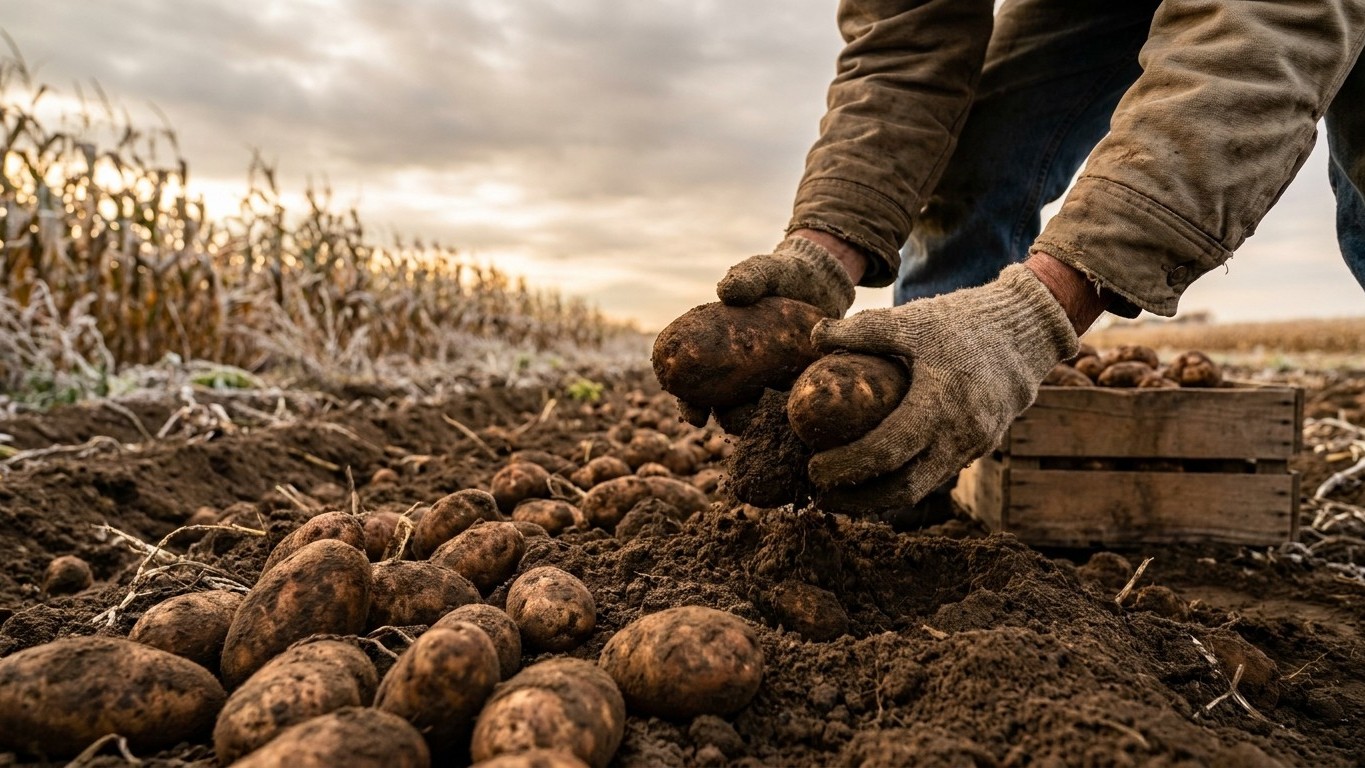

Dig potatoes in Iowa before the first fall frost lands, typically between October 14 and October 25 depending on where you garden in the state, then cure them somewhere warmer than a cold snap allows and store them in an insulated space. An unheated shed or detached garage will not hold the 40-45 F storage range through an Iowa winter: the coldest month here averages a mean minimum of 13.8 F, cold enough to freeze a crop stored anywhere without insulation or heat.
The short answer
Two numbers set the calendar and the storage math for Iowa growers. The first is the fall frost window, October 14 to October 25, drawn from NOAA NCEI’s 1991-2020 Climate Normals for a station in the Des Moines area. The second is the mean minimum temperature of the coldest month, 13.8 F, also from NOAA NCEI’s Climate Normals for the same reference station. That second figure is not a record low or a monthly average; it is the typical overnight floor the coldest month reaches, and it is the number that decides whether a storage space survives winter without freezing its contents.
Those two figures also come with a caveat worth taking seriously. Iowa State University Extension’s county-level frost data, built from a longer record spanning 1950 to 2021, tends to run about 10 days earlier in the fall than the airport station numbers above. That means a gardener outside the immediate Des Moines metro, especially in a low-lying or rural spot, should treat October 14 as closer to the realistic date than October 25. The airport figures represent the optimistic end of the range, not the safe planning date for most of the state.
What that means for digging: get potatoes out of the ground before that frost window closes, not after. Frost kills the foliage above ground and can chill tubers sitting near the surface, so waiting past the local frost date to dig is a gamble most Iowa gardeners lose at least some seasons. Once the vines have died back, whether from frost or natural senescence, the tubers are ready to come out.
What it means for storage: no. An unheated garage, a detached shed, or an uninsulated porch will not hold 40-45 F once the coldest month’s overnight average drops to 13.8 F. Those spaces will track much closer to outdoor air than to the target range, and a hard freeze inside the storage container ruins the crop just as fast as a summer heat wave would sprout it. Anyone storing potatoes past the first cold snap needs an insulated basement, a true root cellar, or a heated space held near the target range on a thermostat.
Curing, and where
Utah State University Extension specifies a cure of 55-60 F with high humidity, held for two to three weeks, before potatoes go into long-term storage. That window matters because Iowa’s outdoor conditions at harvest time, mid-to-late October in most years, rarely sit inside that range on their own. Nighttime lows are already brushing the 30s and 40s by then, well under the 55-60 F floor the cure calls for, so an open porch or unheated shed will not do the job reliably.
- Dig the crop on a dry day and shake off loose soil without washing the tubers; wet skins slow curing and invite rot.
- Move the potatoes indoors immediately to a space that can hold 55-60 F, since outdoor air at Iowa’s typical dig time is already too cool most nights.
- A basement corner near a furnace but not directly beside a heat duct often lands in that range; an insulated garage with a small space heater and thermometer works too.
- Keep humidity high during the cure, spreading tubers in a single layer on newspaper or slatted crates rather than sealed bins, which trap moisture unevenly.
- Check temperature daily with an actual thermometer placed at potato level, not just a household reading, since basements and garages vary by several degrees between floor and ceiling.
- Hold the cure for the full two to three weeks before dropping the temperature toward long-term storage; cutting the cure short leaves skins thin and bruise-prone.
Where that space does not exist, an enclosed and heated mudroom or an interior closet away from exterior walls can substitute, as long as it stays out of direct sun and away from a furnace vent blowing warm, dry air directly on the crop. What will not work in Iowa in October is an open porch, a detached unheated shed, or a garage with no insulation, since all three will dip below the 55 F floor on most nights during the curing window.
Storing through this winter
Once cured, potatoes want a cooler, darker space than the cure itself. Utah State University Extension puts long-term storage at 40-45 F in the dark, while the University of Maine Cooperative Extension gives a slightly tighter figure: 38 F at 95 percent humidity. Both ranges sit well above Iowa’s coldest-month mean minimum of 13.8 F, which is the crux of the storage problem here. A space that tracks anywhere close to outdoor air during January or February will freeze the crop solid, not just chill it.
That rules out most garages and all outbuildings unless they carry real insulation and a heat source on a thermostat. It also rules out the coldest corners of an unheated basement stairwell or an exterior crawlspace, spots that feel cool in October but can drop into the 20s or lower once outdoor lows are consistently sitting near that 13.8 F mean. The safer bet in most Iowa homes is an interior basement room, away from exterior walls and below the frost line the foundation itself sits on, where the surrounding earth moderates temperature swings even in the coldest stretch of winter.
Humidity matters as much as temperature. The University of Maine figure of 95 percent humidity is far wetter than most finished basements run, especially ones with a furnace or dehumidifier drying the air. Potatoes stored in a dry basement room will shrivel over the winter even if the temperature is perfect. A partial fix is storing tubers in bins with a layer of slightly damp sand or in perforated plastic bags that hold moisture near the tubers without trapping condensation, which invites rot instead of preventing shrink.
Darkness is the easier requirement to meet. Any storage bin with a lid, a cardboard box, or a closed cabinet keeps light off the tubers, preventing the green, bitter skin that light exposure causes. The harder balance in Iowa is holding a stable 38-45 F range from October through the coldest stretch of winter without either freezing the crop against an exterior wall or overheating it near a furnace, which is why an insulated, interior, below-grade space beats every other option available in a typical Iowa house.
What goes wrong here
- Digging too late and hitting the frost window unprepared. Waiting past mid-October in much of the state, or past the airport station’s October 25 date even in the Des Moines area, risks a hard freeze reaching tubers still in the ground. Dig on the early side of the window rather than the late side, especially outside the immediate metro.
- Curing in a space that never reaches 55-60 F. An open porch or unheated shed in late October in Iowa sits well under that floor most nights, leaving skins thin and unhealed. Move the crop to a basement or insulated, minimally heated room for the full two to three week cure instead.
- Storing in an unheated garage or shed through winter. Once the coldest month’s mean minimum drops to 13.8 F, an uninsulated outbuilding will freeze stored potatoes outright. Relocate the crop to an interior, insulated space before the first hard cold snap of the season.
- Placing storage bins too close to a furnace or heat duct. A basement that feels merely cool near the stairs can run well above 45 F near mechanical equipment, pushing tubers to sprout early. Keep bins on the far side of the basement, away from ductwork and appliances that generate heat.
- Letting a dry, heated basement rob the crop of humidity. Even at the right temperature, a bone-dry storage room shrivels potatoes over a long Iowa winter. Add a layer of damp sand or use ventilated bags to hold moisture near the tubers without inviting condensation and rot.
Common questions
How early should Iowa gardeners plan to dig potatoes?
Plan around the first fall frost window, October 14 to October 25 for the airport-based normals, but lean toward the earlier end since county-level data from Iowa State University Extension runs roughly 10 days earlier in the fall across much of the state. Digging a few days ahead of a forecast freeze costs little; leaving tubers in frozen ground costs the crop.
Can potatoes cure outdoors in Iowa in the fall?
Rarely for long. Outdoor nights by the typical dig time are already dropping well below the 55-60 F range Utah State University Extension calls for, so an open porch or unheated shed will not sustain the cure. An indoor space such as a basement or a heated garage is the more reliable option.
Will an unheated garage keep potatoes through an Iowa winter?
Not without insulation and supplemental heat. With the coldest month averaging a mean minimum of 13.8 F, an unheated garage will track close to outdoor temperatures and freeze stored potatoes well before spring. An insulated, thermostatically heated space or an interior basement room is the safer choice.
What humidity level should Iowa storage aim for?
The University of Maine Cooperative Extension recommends 38 F at 95 percent humidity for long-term storage, a wetter environment than most finished basements naturally provide. Adding damp sand around stored tubers or using ventilated bags helps close that gap without causing the condensation that leads to rot.