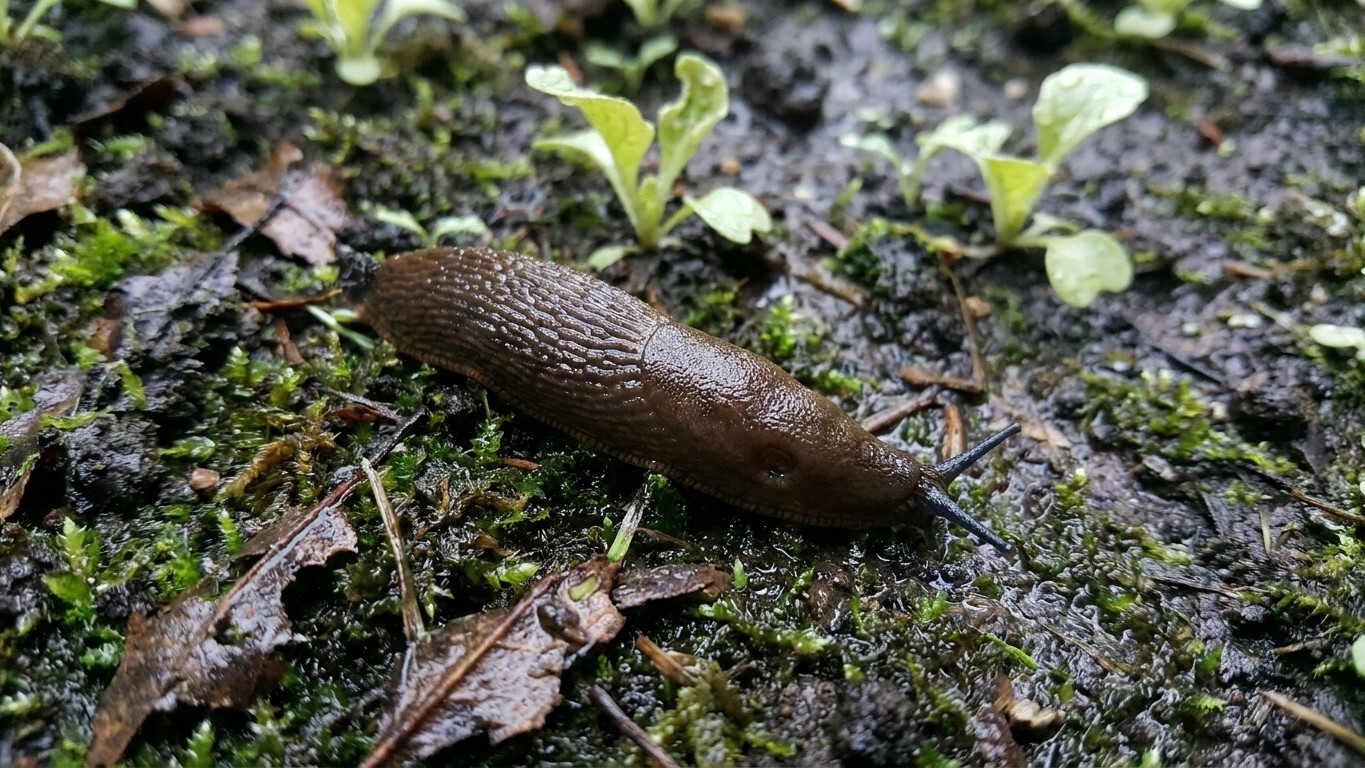

Slugs in British Columbia show up whenever the ground stays damp and temperatures sit between 45°F and 75°F, which in most of the province’s coastal and southern interior areas means a long stretch from late February through November. The wettest regions, Vancouver Island, the Lower Mainland, and the Sunshine Coast, see slug activity almost year-round in mild winters, while the drier interior valleys around Kelowna or Kamloops get a shorter, sharper burst tied to spring rains and fall moisture returning after summer heat.
Stopping them isn’t about a single product. It’s about breaking the conditions that let slugs feed and breed: standing moisture, decaying plant litter, and unguarded seedlings at night. Iron phosphate bait, copper barriers, and simply changing when you water do more collective damage to a slug population than any single trap.
Why British Columbia Is Genuinely Slug Territory

Coastal BC sits inside a temperate rainforest zone. Vancouver gets around 40 inches of rain annually, and parts of Vancouver Island’s west coast see well over 100 inches. That’s not an exaggeration for effect, it’s the kind of rainfall total that keeps soil surfaces wet for days after a storm passes, exactly the environment slugs need since they breathe through skin that has to stay moist to function.
Add mild winters, where lowland areas rarely see extended hard freezes, and you get a pest that doesn’t fully die off in the cold months the way it might in Alberta or the Prairies. Slugs in BC’s coastal zone often just slow down, tucking into leaf litter, under rocks, or a few inches into loose soil, then resume feeding on the first mild, wet week.
The interior tells a different story. Places like the Okanagan Valley are considerably drier, sitting in a rain shadow created by the Coast and Cascade mountains. Slug pressure there is real but more seasonal, concentrated around spring snowmelt and irrigation-heavy gardens rather than a near-constant coastal drizzle.
When Slugs Actually Show Up: The Seasonal Pattern
Two windows matter most for BC gardeners and homeowners.
Spring, from March through May, is when overwintered adults become active and start laying eggs in clusters just below the soil surface or under mulch. This is also when tender seedlings, lettuce starts, and new perennial growth are most vulnerable, since young plant tissue has little resistance to a slug’s rasping feeding style.
Fall, roughly September through November, brings a second surge as autumn rains return after a drier summer stretch (even coastal BC usually has a relatively dry July and August). This second wave often catches people off guard because they’ve stopped watching for slugs after a quiet summer, right as the pests move in to feed before winter and lay another round of eggs.
Nighttime is when almost all of this activity happens. Slugs are negatively phototactic, meaning they actively avoid light, so a garden that looks untouched at 6 p.m. can show chewed leaves and slime trails by sunrise. Cool, overcast, rainy days can also trigger daytime activity, which is why a string of gray coastal days often lines up with the worst visible damage.
Which Slugs Are Actually in BC’s Gardens
Not every slug in British Columbia is a pest, and that distinction matters for how homeowners should react.
The Pacific banana slug (Ariolimax columbianus) is native to BC’s coastal forests and, despite its size, up to about 6 inches long and a bright yellow-green color, it’s mostly a decomposer. It feeds on dead leaves, fungi, and other organic matter far more than living garden plants. Squishing every banana slug you see in a forested backyard on Vancouver Island isn’t necessary and removes a genuinely useful part of the local ecosystem.
The real garden troublemakers are introduced species: the grey garden slug (Deroceras reticulatum) and the European black slug (Arion ater, sometimes called the large black slug). Both arrived with European settlement and thrive in disturbed, cultivated soil, exactly the kind found in vegetable beds and ornamental borders. These are the ones responsible for the ragged holes in hosta leaves, chewed strawberries, and slime trails across a porch.
Homeowners in coastal BC sometimes report slugs that seem unusually large and reddish-brown; this is often the European black slug, which can reach 4 to 6 inches and varies in color from black to orange-brown depending on age and diet.
What Actually Stops Slugs in a BC Yard
Change the Moisture, Change the Population
Slugs need surface moisture to move and feed. Watering gardens in the early morning instead of the evening gives soil surfaces time to dry out before nightfall, when slugs are most active. This one habit shift, switching irrigation timing, removes hours of favorable feeding conditions without spending a dollar.
Clearing dense mulch away from direct contact with plant stems, and thinning overgrown ground cover, also cuts down on the daytime hiding spots slugs use to avoid drying out and predators.
Physical Barriers That Hold Up in Wet Climates
Copper tape or copper mesh around raised beds and pots works because it creates a mild electrical reaction against a slug’s mucus, which the animal reads as an unpleasant deterrent. It stays effective in BC’s rain as long as it isn’t bridged by overhanging leaves or soil buildup, which slugs will use as a workaround.
Diatomaceous earth, a powder made from fossilized algae, damages a slug’s soft underside on contact, but it loses effectiveness once wet, which limits its usefulness during BC’s rainy stretches unless reapplied after rain.
- Copper barriers: effective long-term, works in wet conditions, needs a clean unbroken ring
- Diatomaceous earth: cheap and non-toxic, but rain-sensitive and needs frequent reapplication
- Crushed eggshells or coarse grit: modest deterrent, mostly useful combined with other methods
Bait That Actually Works, and the One Ingredient to Check
Iron phosphate slug bait is the standard recommendation from extension services across the Pacific Northwest because it’s effective against slugs and snails while being far less toxic to pets and wildlife than older metaldehyde-based baits. It works by disrupting the slug’s digestive system after ingestion, causing it to stop feeding and retreat to die over the following days, usually out of sight.
Metaldehyde baits are still sold in some areas but carry real risk for dogs, who can be attracted to the pellets and suffer serious poisoning from even small amounts. Reading the active ingredient on the label before buying, and choosing iron phosphate where pets or wildlife are a concern, is a simple step that avoids an entirely preventable emergency vet visit.
Letting Predators Do Some of the Work
BC gardens with healthy bird populations, garter snakes, and ground beetles see natural suppression of slug numbers over a season. Leaving some undisturbed leaf litter at the edges of a property (away from vegetable beds) gives ground beetles, which feed on slug eggs and small slugs, a place to overwinter. It’s a tradeoff between tidy edges and functional pest control, and in wetter coastal areas, the beetles usually earn their keep.
Hand-picking at night with a flashlight remains one of the most direct methods for vegetable gardens under heavy pressure. Dropping collected slugs into a bucket of soapy water is more reliable than relocating them, since slugs can travel back a surprising distance, sometimes over 30 feet, if simply moved to another part of a yard.
Interior BC Versus the Coast: Different Pressure, Different Timing
Homeowners in drier interior communities often assume slug advice written for Vancouver or Victoria doesn’t apply to them, and there’s some truth to that. Lower ambient humidity in places like the South Okanagan means slug populations are smaller and more concentrated around irrigated lawns, drip-line vegetable beds, and shaded, watered flower borders rather than spread across the whole property.
That concentration actually makes interior control easier in one sense: barriers and bait applied specifically around irrigated zones catch most of the problem, since the surrounding dry landscape naturally limits slug movement between the wet spot and everywhere else.
A backyard vegetable bed on drip irrigation in Kelowna, watered daily through a hot July, can still develop a slug problem despite the region’s low overall rainfall, simply because that one patch of consistently wet soil becomes the only livable habitat for slugs within a much drier landscape.
Related guides
- Slugs in Yukon: When It Shows Up and What Stops It
- Slugs in Northwest Territories: When It Shows Up and What Stops It
- Slugs in Colorado: When It Shows Up and What Stops It
- Slugs in Michigan: When It Shows Up and What Stops It
- Slugs in Washington: When It Shows Up and What Stops It
- Slugs in Oregon: When It Shows Up and What Stops It