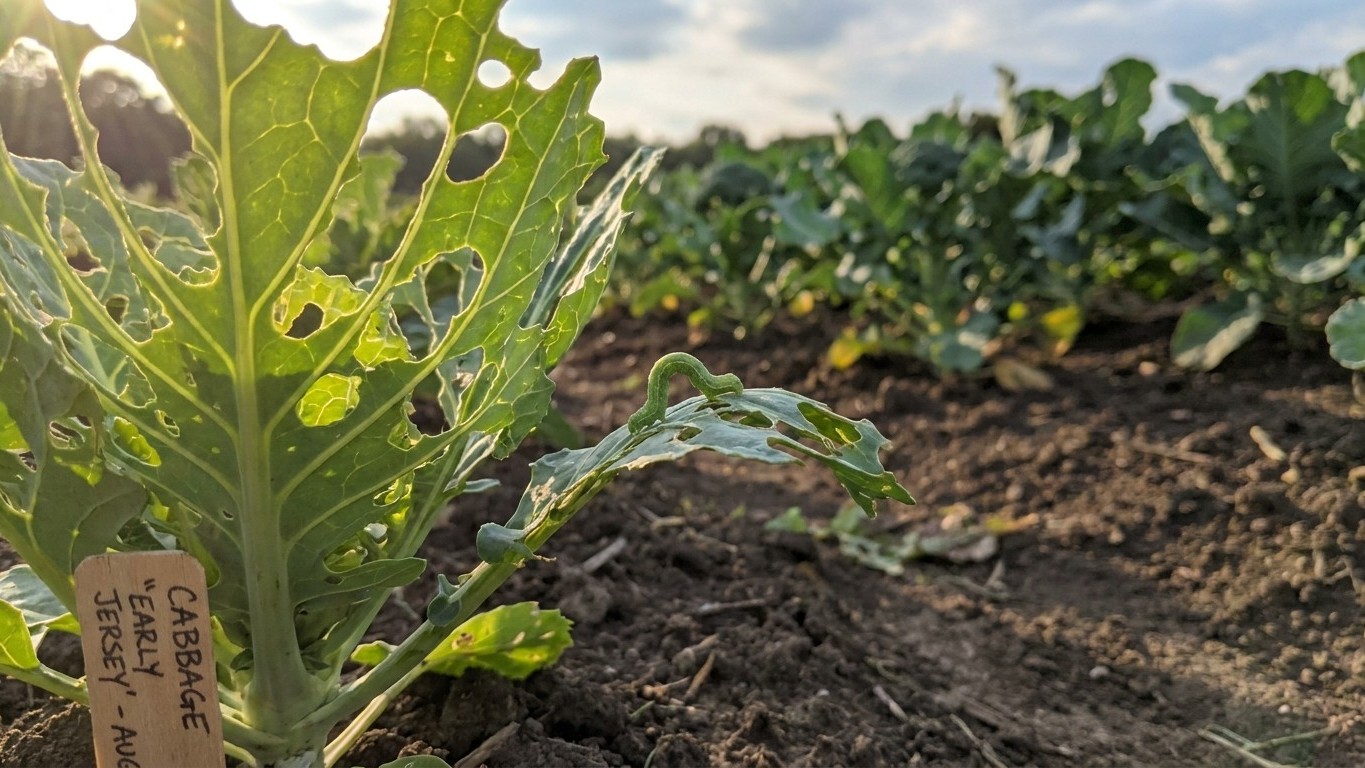

Cabbage loopers show up in North Carolina gardens as early as April in the coastal plain and can keep feeding through October, with the heaviest damage typically hitting fall cabbage, broccoli, and collard crops planted in late summer. The pest doesn’t reliably survive Piedmont or mountain winters, so most of the state’s population each year either migrates in on warm air currents from the Gulf Coast or hatches from pupae that made it through a mild coastal winter. Bt sprays, row covers on young transplants, and cleaning up crop debris after harvest are what actually knock back populations, since the caterpillar has already developed resistance to several older insecticide classes.
When Cabbage Loopers Arrive, Region by Region

North Carolina’s three main growing regions don’t see this pest on the same schedule. Coastal plain counties, think Wilmington, Greenville, and the Outer Banks, stay warm enough that a portion of the looper population can overwinter as pupae tucked into leaf litter or soil clods. That head start means growers there sometimes spot the first moths flying by late March, well ahead of anyone in Raleigh or Charlotte.
Piedmont gardens usually don’t see meaningful looper pressure until May or June, once populations moving up from the south have had a generation or two to build numbers. By the time August rolls around, that pressure peaks right alongside the transplanting window for fall brassicas, which is exactly why so many home gardeners in Wake, Mecklenburg, and Guilford counties report their worst infestations on cabbage and broccoli set out in late summer rather than spring.
Mountain counties around Asheville and Boone get a reprieve most years. Cooler nighttime temperatures slow larval development and shrink the number of generations that can squeeze into a growing season, sometimes to just two or three compared to four to six generations along the coast. That doesn’t mean mountain gardens are immune, it just means the window of real risk is shorter and tends to run July through September.
Why Fall Crops Take the Hardest Hit
Cabbage looper populations build cumulatively through the growing season, so by the time late-summer transplants go into the ground, moth numbers are already at their annual high. A cabbage seedling set out in early August in the Piedmont is walking into a much larger looper population than the same seedling would face in April. That’s the main reason extension recommendations for North Carolina growers lean so heavily on scouting and protective covers specifically for fall brassica plantings.
Telling a Cabbage Looper From Everything Else Eating Your Cabbage
Several caterpillars chew on the same plants in North Carolina gardens, and mixing them up leads to the wrong control choice. The cabbage looper larva is pale green with faint white stripes running down its back and sides, and it tapers slightly toward the head. The giveaway is how it moves: because it only has three pairs of prolegs near the rear instead of the four pairs most caterpillars have, it arches its middle into a loop with each step, the same motion inchworms use.
Imported cabbageworm, the other common brassica pest in the state, is fuzzier, more uniformly green, and crawls in a straight line without looping. Diamondback moth larvae are smaller and thinner, wriggling rapidly when disturbed rather than looping. Adult cabbage loopers are grayish-brown moths with a small silvery or bronze mark shaped like a check mark or figure-eight near the center of each forewing, a detail that’s easy to spot if you catch one resting on a porch light or shed wall at dusk.
What Looper Damage Actually Looks Like
Because loopers feed as exposed chewers rather than tunneling into the plant, the damage is visible fast. Young larvae skeletonize leaves, eating everything but the veins and leaving a lacy, translucent patch. Older larvae chew large, irregular holes clear through the leaf, often concentrated on outer leaves first before moving toward the developing head on cabbage.
Frass, the caterpillar’s dark green droppings, tends to collect in the crevices of cabbage or broccoli heads and is often the first sign a gardener notices before spotting the caterpillar itself. On tomatoes, a less common but real host in North Carolina, loopers will chew ragged holes in foliage and occasionally scar the fruit surface. Cotton, lettuce, spinach, and various herbs round out the host list, though brassicas remain the primary target in home gardens across the state.
What Actually Stops Cabbage Loopers in a North Carolina Garden
Control works best when it starts early and layers a few methods rather than relying on a single spray. Here’s what has staying power against this pest specifically.
Bt Sprays Remain the Most Reliable Tool
Bacillus thuringiensis, sold under various brand names as Bt kurstaki or Bt aizawai, is a bacterial insecticide that only affects caterpillars, leaving pollinators and most beneficial insects unharmed. Because cabbage loopers feed exposed on leaf surfaces rather than boring inward, they ingest a lethal dose quickly when Bt is applied to foliage. It needs reapplication after rain and works best on younger larvae, so catching an infestation early matters more than the specific product used.
Pyrethroid-based insecticides, once a go-to for home gardeners, have lost ground against this pest. Cabbage looper populations in several southern states, including North Carolina, have shown reduced sensitivity to pyrethroids after decades of heavy use in commercial agriculture, which is part of why extension recommendations have shifted toward Bt and other modes of action for this specific caterpillar.
Row Covers Block the Moth Before Eggs Get Laid
Lightweight floating row covers placed over brassica transplants at planting time keep adult moths from landing and laying eggs in the first place. This matters most for that high-risk August transplanting window in the Piedmont and coastal plain, when moth populations are at their seasonal peak. Covers need to come off once plants flower if you’re growing anything that needs pollinators, but for cabbage, broccoli, and collards grown for the head or leaf rather than fruit, they can stay on the entire season.
Cultural Cleanup Interrupts the Overwintering Cycle
Tilling under or removing crop debris after harvest, particularly in coastal plain gardens where pupae have a real shot at surviving winter, reduces the local population available to start the following season. Rotating brassicas to a different bed each year, rather than replanting cabbage family crops in the same spot, also limits how quickly a resident population can build.
Natural Predators Do More Work Than Most Gardeners Realize
Parasitic wasps in the genus Trichogramma lay eggs inside looper eggs, killing them before they hatch, and populations of these wasps build naturally in gardens that avoid broad-spectrum insecticides. Birds, spiders, and predatory beetles all take a toll on looper larvae as well. Spraying a broad insecticide at the first sign of a caterpillar often does more harm than good by wiping out these predators alongside the pest, which is one reason scouting for actual damage before reaching for a spray tends to produce better long-term results than a calendar-based spray schedule.
Handpicking Still Works on a Small Scale
For raised beds or a handful of cabbage plants, checking the undersides of leaves every few days and removing larvae by hand keeps populations from ever reaching damaging levels. Look for the pale green caterpillar tucked along leaf veins, since loopers tend to rest in the shadiest part of the leaf during the day and feed more actively at dawn, dusk, and overnight.
Pheromone traps designed for cabbage looper moths give commercial growers and serious home gardeners a way to track when adult flights spike in their specific location, since even within the same county, a garden near a wooded edge might see moth activity a week or two ahead of an open field nearby. Watching trap counts, rather than assuming every region hits peak pressure on the same date, is often the difference between spraying Bt at the right moment and spraying it after the damage is already done.
Related guides
- Cabbage looper in Tennessee: When It Shows Up and What Stops It
- Cabbage looper in South Carolina: When It Shows Up and What Stops It
- Cabbage looper in South Dakota: When It Shows Up and What Stops It
- Cabbage looper in Utah: When It Shows Up and What Stops It
- Fall webworm in North Carolina
- Hemlock woolly adelgid in North Carolina
- Corn earworm in North Carolina