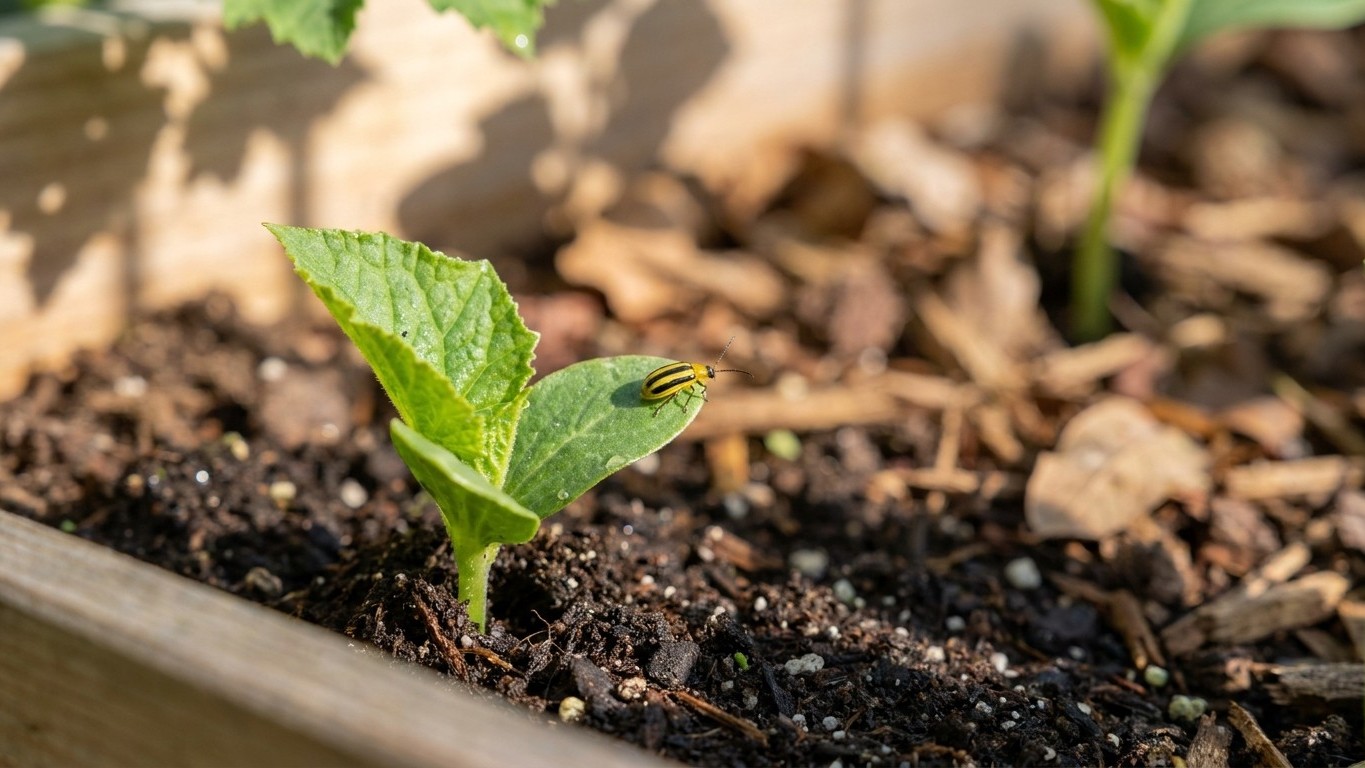

Cucumber beetles show up in Delaware gardens the moment soil temperatures climb into the mid-50s, usually the last week of April in Sussex County and closer to mid-May farther north near Wilmington. That timing lines up almost exactly with when cucurbit seedlings push through the soil, which is no accident. The beetles overwinter as adults just a few inches down, waiting for the smell of a fresh cucumber, squash, or melon seedling to tell them it’s time to move.
Stopping them comes down to three things working together: covering plants before the beetles find them, breaking the habits that let beetles overwinter near your garden, and treating only when pressure actually threatens the crop rather than on a fixed schedule. Spraying without understanding the beetle’s calendar in Delaware wastes money and kills pollinators for no real gain.
When Cucumber Beetles Arrive in Delaware

Delaware sits mostly in USDA hardiness zones 7a and 7b, with a growing season long enough to support two full cucumber beetle generations most years. The Striped cucumber beetle (yellow with three black stripes down its back) tends to dominate in the northern part of the state, while the Spotted cucumber beetle, sometimes called the southern corn rootworm in its larval stage, is more common in southern Delaware’s warmer microclimates.
Both species spend winter as adults tucked into leaf litter, grass clumps, and soil near fence rows or wherever last year’s cucurbit patch stood. They don’t fly far to find food. That’s the first practical clue: a garden planted in the exact same spot as last season’s squash bed will get hit faster and harder than one rotated even 30 feet away.
Emergence in Delaware typically runs from late April through May, tracking closely with soil warming past 55°F. This first wave targets seedlings and transplants at their most fragile stage, before true leaves have formed. A second generation emerges from eggs laid by that spring cohort, usually appearing in late July and through August. That second wave hits later plantings, fall squash, and pumpkins destined for October harvest, which is why growers who think they’ve dodged the problem in June sometimes get surprised at the end of summer.
How to Tell You’ve Got Cucumber Beetles, Not Something Else
Adult cucumber beetles are small, about a quarter inch long, and they move fast when disturbed rather than dropping straight down like a squash bug would. Look for ragged, irregular holes in cotyledons and young leaves, plus chewed stems right at the soil line. On seedlings, that stem damage is the real danger. Beetles can girdle a young cucumber or melon plant before it ever gets a chance to grow its first true leaf.
The bigger threat isn’t the chewing itself. Both striped and spotted cucumber beetles carry the bacterium Erwinia tracheiphila, which causes bacterial wilt. The bacteria live in the beetle’s gut and pass into the plant through feeding wounds, then clog the plant’s water-conducting tissue from the inside. A plant that looked fine on Monday can be visibly wilting by Thursday, and there’s no cure once infection sets in.
Cucumbers and muskmelons are highly vulnerable to bacterial wilt. Squash and pumpkins, despite taking just as much beetle feeding, show a lot more natural resistance to the disease itself, which is one reason some Delaware growers see squash survive a beetle invasion that would have wiped out a cucumber patch nearby. If you see a single wilted vine while everything around it looks healthy, and you’ve spotted beetles on the leaves in the weeks prior, bacterial wilt is the likely diagnosis, not drought stress or root rot.
What Actually Stops Cucumber Beetles in a Delaware Garden
Floating row covers remain the single most reliable tool for home gardeners. Installed right at planting or transplanting and sealed at the edges with soil, they physically block adult beetles from reaching seedlings during the most vulnerable window. The catch is timing the removal. Cucurbits need pollinators to set fruit, so covers have to come off once flowers appear, typically three to five weeks after planting depending on the variety. That handoff period, from cover removal to first flower, is when a garden is most exposed, so it pays to check plants daily during that stretch.
Crop rotation matters more with this pest than with most garden insects, precisely because the adults don’t travel far from where they overwintered. Moving cucurbit beds even a modest distance from last year’s location, ideally to the opposite side of the yard, cuts down on the head start beetles get from emerging right next to a fresh food source. Cleaning up old vines and leaf debris in fall, rather than leaving them to compost in place, removes overwintering shelter too.
Timing Tricks That Work Before You Spray Anything
Trap cropping gives Delaware gardeners a way to concentrate the problem instead of fighting it across the whole plot. Blue Hubbard squash is intensely attractive to cucumber beetles, often pulling them away from cucumbers and melons planted nearby. Setting a small perimeter planting of Blue Hubbard a week or two before the main crop, then treating or removing that trap planting once beetles concentrate on it, keeps the pest problem contained to a small, manageable area.
Kaolin clay, sold under trade names as a fine white particle film, coats leaves and stems in a way that beetles find unappealing to feed on and difficult to lay eggs near. It washes off in heavy rain and needs reapplication, but it’s one of the few options that doesn’t harm bees or other pollinators, which makes it a good fit for the exact window when covers come off and flowers open.
Yellow sticky cards placed at plant height won’t control a beetle population by themselves, but they’re a genuinely useful early warning system. Checking cards twice a week from late April on tells you when the spring emergence has actually started in your specific yard, rather than guessing based on a regional average.
When Treatment Makes Sense
Insecticide applications work best as a targeted response to a confirmed population spike, not a preventive ritual. For home gardens, products containing spinosad or pyrethrin offer control against adult beetles with a shorter residual impact on bees, provided they’re applied in early evening after flowers close for the day and pollinators have left the area. Conventional options like carbaryl or permethrin are more persistent and should be reserved for situations where bacterial wilt risk is high and beetle counts are climbing fast, always following label directions on timing around bloom.
Seedlings and transplants deserve the most protection since a handful of beetles can do disproportionate damage to a two-inch-tall plant. Established, flowering vines can usually tolerate moderate feeding without yield loss, so shifting attention and any treatment toward the seedling stage, and easing off once plants are vigorously growing, matches effort to actual risk instead of treating every beetle sighting as an emergency.
Some summer squash and cucumber varieties bred for reduced beetle attractiveness or improved bacterial wilt tolerance are available through university-tested seed lists, and choosing one of those for a garden with a history of heavy beetle pressure can lower the stakes before the first seed even goes in the ground. Combined with rotation and covers, variety choice rounds out a strategy that relies on prevention rather than repeated rescue sprays once damage is already visible.