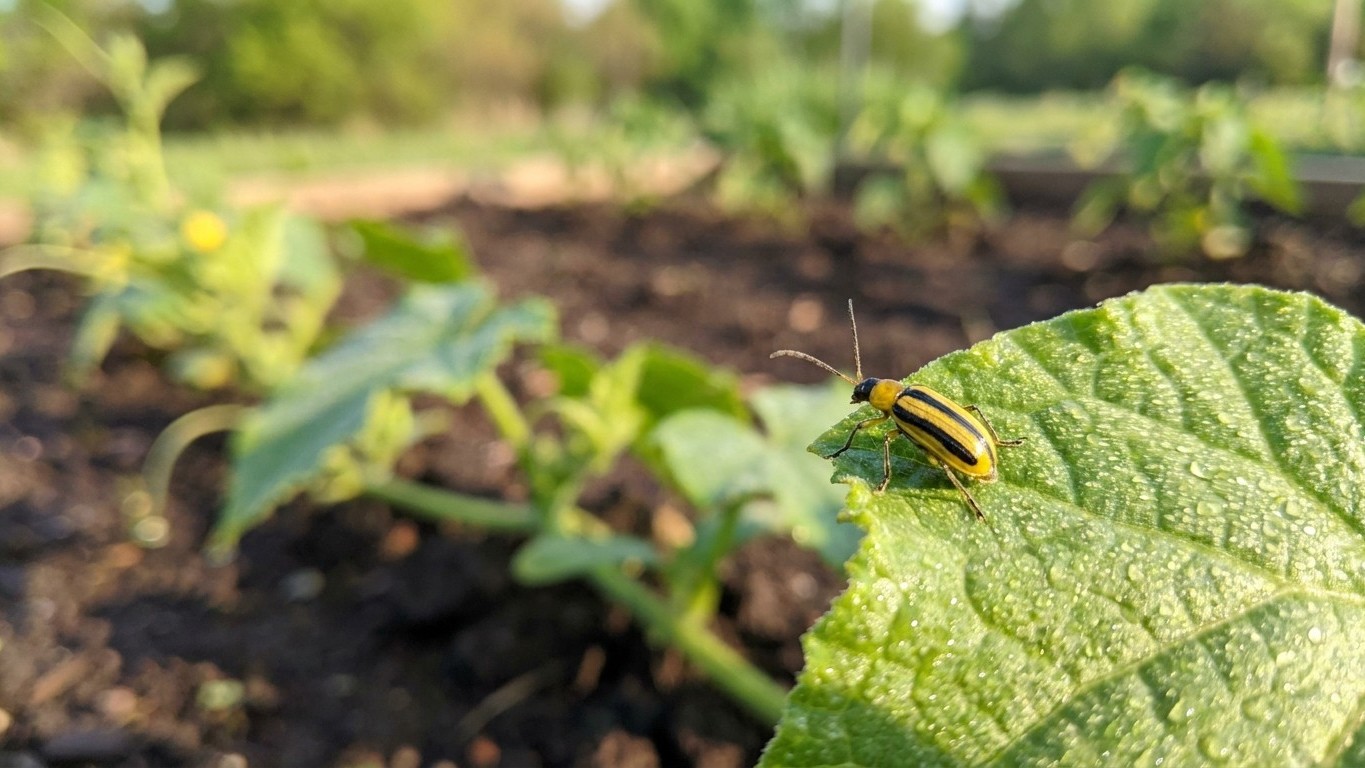

Striped cucumber beetles start showing up in Iowa gardens and fields as soon as soil temperatures climb into the mid-50s, which usually happens sometime between late April and mid-May depending on how far north or south you are in the state. They overwinter as adults tucked into leaf litter, tree lines, and grassy field margins, then fly straight into cucurbit plantings the moment the weather cooperates. Once they arrive, the real threat isn’t just the chewing damage. It’s the bacterial disease they carry, which can wipe out a cucumber patch faster than the beetles themselves ever could.
When Striped Cucumber Beetles Show Up in Iowa

Timing follows soil temperature, not the calendar. Iowa State University Extension and Outreach has tracked emergence patterns for years, and the pattern is consistent: beetles become active once soil hits roughly 55 to 60°F at planting depth. In a normal Iowa spring, that lands somewhere in the last two weeks of April for southern counties and closer to mid-May up near the Minnesota border. A cold, wet April can push emergence back by a week or two, but it rarely stops the beetles from finding cucurbit seedlings once conditions warm up.
Iowa typically sees two generations per growing season. The overwintered adults lay eggs at the base of cucurbit plants in late spring, larvae feed on roots underground for a few weeks, and a fresh crop of adults emerges by mid-to-late summer, often right around the time squash and melon vines are setting fruit. That second wave tends to be smaller in most years, but in a warm, dry summer it can rival the spring population. Growers who only watch for beetles in May and then relax are frequently caught off guard by the July resurgence.
Home gardeners in central Iowa counties like Polk, Story, and Marshall often report the first sightings in the first ten days of May, right as cucumber and squash seedlings push their first true leaves. That timing is no accident. Newly emerged seedlings are exactly what overwintered beetles are hunting for after months without food.
How to Identify Them and the Damage They Cause
The striped cucumber beetle (Acalymma vittatum) is small, about a fifth of an inch long, with a yellow body and three bold black stripes running lengthwise down its back. It’s easy to confuse with the Spotted cucumber beetle, which has yellow-green wings dotted with black spots instead of stripes. Both feed on cucurbits, but the striped species is the more aggressive pest in Iowa and the one responsible for most of the serious early-season damage.
Adult beetles chew through cotyledons, leaves, flowers, and even the surface of young fruit. On a seedling with only two or three leaves, a handful of beetles can strip enough tissue to stunt growth permanently or kill the plant outright within days. Direct-seeded cucumbers and melons are especially vulnerable during this window, since there’s no buffer of extra foliage to absorb the loss. Squash and pumpkin plants, with their larger leaves and faster early growth, tend to tolerate beetle feeding better, but heavy infestations still slow them down.
Underground, the larvae are just as damaging in a quieter way. They tunnel into roots and the base of stems, which weakens the plant’s ability to take up water and nutrients. A plant that survives the adult feeding in spring can still fail later in the season if root damage from larvae goes unnoticed.
Bacterial Wilt: The Bigger Threat
The beetles themselves rarely destroy an entire planting on their own. The disease they spread is what causes the real losses. Striped cucumber beetles carry the bacterium Erwinia tracheiphila in their gut and transmit it through their feeding wounds and frass. Once a plant is infected, individual vines wilt and collapse within one to two weeks, and there’s no cure once symptoms appear.
Cucumbers and muskmelons are highly susceptible to bacterial wilt, and a single infected plant early in the season can lead to total loss of that vine and sometimes neighboring plants if beetle pressure stays high. Squash and pumpkins are far more resistant to the disease itself, even though the beetles still feed on them, which is why Iowa growers often see cucumbers collapse in July while squash in the same garden keeps producing. This distinction matters when deciding where to focus prevention efforts. A gardener with limited time for row covers or scouting should prioritize cucumbers and melons over squash and pumpkins.
There’s no reliable field test for a home gardener to confirm bacterial wilt versus simple heat stress or drought wilting. The giveaway is the speed: wilt from lack of water usually recovers overnight with irrigation, while bacterial wilt does not reverse once it sets in, and the vine typically dies within a week or so of first showing symptoms.
What Actually Stops Striped Cucumber Beetles
Control works best when it targets the narrow window right after transplanting or emergence, since that’s when both beetle damage and disease transmission risk peak. Waiting until a plant already looks chewed up means the bacterial wilt exposure may have already happened.
Row Covers and Timing Tricks
Floating row covers placed over seedlings immediately after planting are one of the most effective tools available, and they don’t involve any chemicals. The covers physically block beetles from reaching the plants during the most vulnerable early weeks. The catch is that cucurbits need pollinators once flowering starts, so covers have to come off before bloom, typically three to four weeks after planting depending on the variety. That timing lines up reasonably well with when the first beetle wave starts to taper off in most Iowa growing seasons.
Delaying planting by a week or two past the earliest safe date can also help, since it shifts the most tender seedling stage slightly later, sometimes missing the peak of the spring emergence. This isn’t a guaranteed fix, but combined with covers it reduces exposure meaningfully. Using transplants instead of direct-seeding accomplishes something similar: a transplant already has three or four true leaves and a sturdier stem by the time it goes in the ground, so it tolerates beetle feeding better than a fragile seedling emerging from a seed.
Straw mulch spread thickly around the base of plants has shown some effect in reducing how many beetles land and settle on cucurbits, likely because the reflective, uneven surface makes it harder for them to locate host plants by sight and scent. It’s not a standalone solution, but it’s a low-cost addition to a broader plan.
Trap Crops and Monitoring
Some growers plant a small block of a highly attractive squash variety, such as Blue Hubbard, a short distance from the main cucumber or melon planting. Striped cucumber beetles show a strong preference for certain cucurbit varieties, and concentrating them on a sacrificial trap crop can reduce pressure on the main crop. This works better on a larger garden or small farm plot than in a tiny backyard bed, simply because there’s more room to separate the trap crop from the target planting.
Yellow sticky traps placed at plant height near seedlings help with early detection, letting a gardener know beetles have arrived before visible damage shows up. Checking plants every two to three days during the first three weeks after planting or transplanting catches the population before numbers build to damaging levels.
When Insecticides Make Sense
For situations where beetle numbers are high enough to threaten seedling survival, targeted insecticide applications aimed specifically at the base of young plants can prevent the kind of feeding that transmits bacterial wilt. Products containing pyrethrins or spinosad are commonly used by home gardeners and tend to have a shorter environmental persistence than some older broad-spectrum options. Applying in the evening, after bees have finished foraging for the day, reduces harm to pollinators once flowering begins.
Kaolin clay sprays, which coat leaf surfaces in a fine white film, have also shown some deterrent effect against cucumber beetles by making plants less recognizable and less palatable. It’s a physical barrier approach rather than a toxic one, which makes it a reasonable option for gardeners trying to limit pesticide use around food crops.
Some newer cucumber varieties have been bred with improved tolerance to bacterial wilt, which doesn’t stop the beetles from feeding but reduces the odds that feeding turns into a dead vine. Checking variety descriptions for wilt tolerance before ordering seed is a small step that pays off if beetle pressure turns out to be heavy in a given year.
Crop rotation, which works well against many soil-dwelling pests, has limited value against striped cucumber beetles specifically. Adults are strong fliers and will locate cucurbit plantings across a considerable distance, so moving the garden bed twenty or thirty feet rarely makes a difference. Rotation still helps with some cucurbit diseases and other pests, but it shouldn’t be relied on as a primary beetle strategy in a typical Iowa backyard or small farm setting.
Related guides
- Striped cucumber beetle in Minnesota: When It Shows Up and What Stops It
- Striped cucumber beetle in Kansas: When It Shows Up and What Stops It
- Striped cucumber beetle in Kentucky: When It Shows Up and What Stops It
- Striped cucumber beetle in Connecticut: When It Shows Up and What Stops It
- Striped cucumber beetle in New Jersey: When It Shows Up and What Stops It