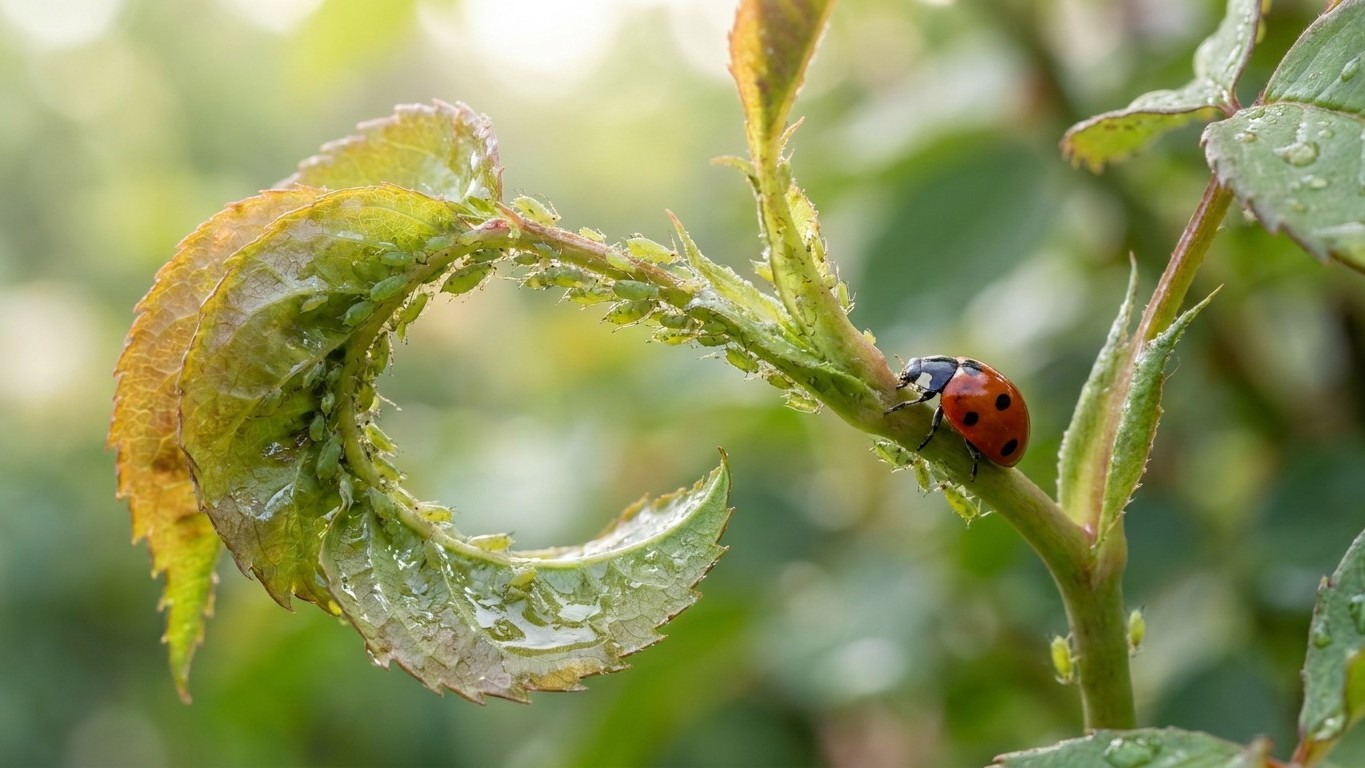

Aphids show up in Oregon as soon as daytime temperatures hold above 50°F for a stretch, which usually means late March in the Willamette Valley, mid-April along the coast, and closer to May in the high desert east of the Cascades. They disappear (or at least stop reproducing at their explosive summer rate) once a hard freeze hits in fall, or when populations of ladybugs, lacewings, and parasitic wasps catch up and knock the colonies down. In between those two points, Oregon’s mild, damp spring weather gives aphids exactly the conditions they need to multiply faster than almost any other pest in the yard.
When Aphids Actually Show Up, Region by Region

Oregon isn’t one climate. It’s several, and aphid timing shifts with each one. In the Willamette Valley, where most of the state’s population lives, soil warms early and rain keeps new plant growth soft and tender well into June, which is prime aphid food. Portland gardeners often spot the first curled, sticky rose leaves by early April. Along the coast, fog delays warming by a few weeks, so infestations tend to lag behind the valley by ten to fourteen days. East of the Cascades, in places like Bend or Pendleton, the high desert’s dry air and bigger day-night temperature swings slow aphids down until late April or May, but once summer heat sets in, populations can spike fast on irrigated lawns and garden beds where humidity is artificially high.
Central and Eastern Oregon also see a second wave in early fall, when cooler nights trigger a generation of winged aphids that fly off to find new host plants before winter. That’s the flight most people notice as a sudden cloud of tiny insects around porch lights or windows in September.
Why Oregon’s Weather Is Basically an Aphid Incubator
Aphids reproduce without mating. Females give birth to live young, already pregnant with the next generation, in a process called parthenogenesis. At the temperatures Western Oregon sees in April and May, roughly 65 to 75°F with regular rain, a single female can start a new generation every seven to ten days. Do the math over a six-week spring and one aphid can theoretically be responsible for thousands of descendants. That reproductive speed, not the number of aphids that arrive in a given year, is what makes infestations in Oregon feel like they went from “a few bugs” to “the whole plant is coated” in under two weeks.
Rain complicates things in both directions. A hard, driving rain physically knocks aphids off leaves and can reduce a colony by half in a single storm, which is part of why Oregon’s famously wet Marches sometimes deliver a break gardeners don’t expect. But Oregon’s more common pattern, light drizzle and overcast skies, does nothing to dislodge aphids and instead keeps new growth soft, wet, and easy to pierce with their needle-like mouthparts.
What Actually Stops Aphids in Oregon
Three things reliably slow aphid populations down in Oregon: cold snaps, natural predators, and a change in the plant’s own growth stage.
Cold and Frost
A hard freeze, meaning temperatures dropping into the mid-20s for several hours, kills most active aphid colonies outright. This happens reliably in Eastern and Central Oregon by late October or November. In the Willamette Valley and along the coast, where winters rarely dip that low for long, some aphid species overwinter as eggs on woody stems (common on roses and fruit trees) and simply resume activity the following spring, which is why valley gardeners often deal with the same infested rose bush year after year without a true reset.
Natural Predators
Oregon has a strong lineup of aphid predators already established in most yards, and giving them room to work often does more than any spray. Convergent lady beetles (the classic red-and-black ladybug) and their larvae, which look nothing like the adult and are often mistaken for pests themselves, can each eat dozens of aphids a day. Green lacewing larvae, sometimes called “aphid lions,” are even more aggressive predators. Syrphid fly larvae, which look like tiny translucent maggots, feed exclusively on aphids and are common in Western Oregon gardens by May. Parasitic wasps in the genus Aphidius lay eggs inside individual aphids, turning them into swollen, papery “aphid mummies,” a visual signal that natural control is already underway. Oregon State University Extension recommends holding off on broad-spectrum insecticides specifically because they wipe out these predators along with the aphids, often making the following generation worse.
Plant Growth Stage
Aphids prefer soft, actively growing tissue. Once a plant’s new growth hardens off, typically by late June in the valley, aphid colonies naturally decline even without predators or cold weather, because the food source itself gets tougher and less nutritious. This is one reason aphid problems on roses and vegetable starts tend to be a spring and early-summer issue rather than a year-round one in Western Oregon.
Which Plants Get Hit Hardest in Oregon
Certain crops and ornamentals are magnets for aphids across the state, and a few are tied directly to Oregon’s agricultural identity.
- Roses are the most common home-garden target, especially new buds and stem tips in April and May.
- Hops, a major Willamette Valley crop given Oregon’s standing as one of the top hop-producing states in the country, face regular pressure from hop aphid (Phorodon humuli), which growers monitor closely because heavy infestations reduce cone quality.
- Brassicas like kale, broccoli, and cabbage attract cabbage aphid, which forms dense gray-green clusters on the undersides of leaves.
- Fruit trees, particularly apple and cherry, deal with woolly aphid and green apple aphid, both of which can distort new leaf growth.
- Maples and birches often host aphids that produce enough honeydew to coat sidewalks and cars parked underneath, which is usually the first sign homeowners notice something’s going on overhead.
That sticky honeydew residue is also what invites sooty mold, a black fungus that grows on the sugary excretion rather than on the plant itself. It looks alarming but is largely cosmetic, and it clears up once the aphid population causing it drops.
Practical Ways to Slow Aphids Without Overdoing It
A strong blast of water from a garden hose, aimed at the undersides of leaves where aphids cluster, remains one of the more effective and lowest-cost options for home gardens, particularly in the Willamette Valley where plants can tolerate the extra moisture. Insecticidal soap and horticultural oil work well as targeted treatments because they kill on contact and break down quickly, leaving less residual impact on the lady beetles and lacewings already doing the work for free. Neem oil offers a similar contact-based approach and also disrupts feeding on some aphid life stages.
Fertilizer habits matter more than most people realize. Excess nitrogen, especially from fast-release lawn or garden fertilizers, pushes plants to produce a flush of soft, sappy new growth, which is precisely what aphids prefer. Switching to slow-release or lower-nitrogen feeding in spring reduces that tender growth spurt without stunting the plant.
Ants are worth watching too. Several ant species farm aphids for their honeydew, actively protecting colonies from ladybugs and lacewings in exchange for the sugary secretion. A line of ants marching up a rose stem is often a sign of an established aphid colony being guarded, and dealing with the ant trail (a sticky barrier band around the trunk, for instance) can let natural predators back in to finish the job.
Timing any treatment matters as much as the treatment itself. Spraying in early morning or evening, when beneficial insects are less active and bees aren’t foraging, limits collateral damage while still hitting aphid colonies during their most vulnerable, exposed feeding periods.
Related guides
- Aphids in Washington: When It Shows Up and What Stops It
- Aphids in Idaho: When It Shows Up and What Stops It
- Aphids in Pennsylvania: When It Shows Up and What Stops It
- Aphids in Tennessee: When It Shows Up and What Stops It
- Aphids in Ontario: When It Shows Up and What Stops It
- Aphids in Arizona: When It Shows Up and What Stops It