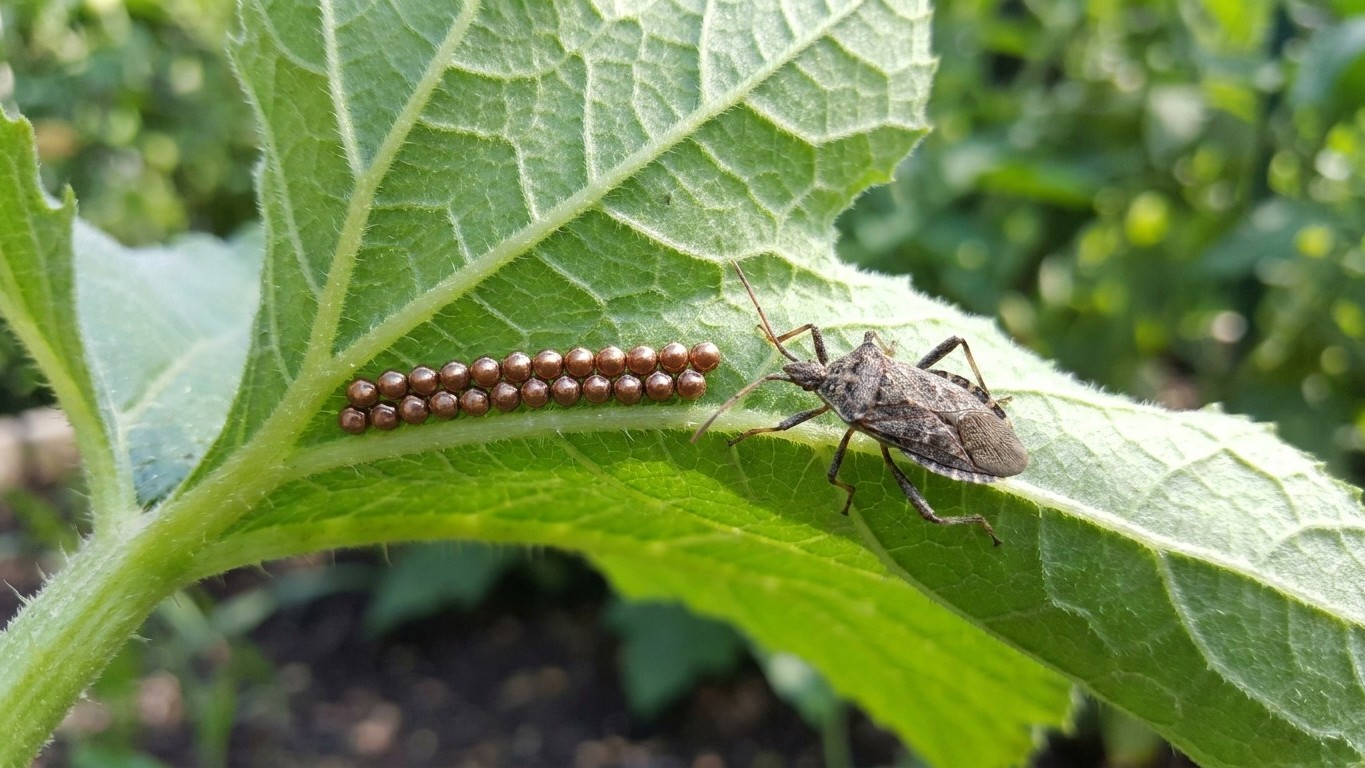

Squash bugs show up in Minnesota gardens in two waves: overwintered adults crawling out of leaf litter and mulch in late May through June, then a fresh generation of nymphs and new adults hatching from mid-July through August. Because Minnesota’s cooler season limits these insects to one generation per year (compared to two or more in warmer states), the window for damage is shorter here, but the pressure on squash, pumpkin, and zucchini plants can still be severe if you miss the early signs.
When Squash Bugs Actually Show Up in Minnesota

Squash bugs (Anasa tristis) survive Minnesota winters as adults, tucked under garden debris, wood piles, or the siding of sheds near where cucurbits grew the previous year. They don’t fly in from somewhere else each spring. They’re already here, waiting for soil temperatures to climb enough to trigger movement. In most of the state that means late May in the Twin Cities metro and southern counties, and closer to mid-June in the Arrowhead region and along the Canadian border where soil warms slower.
Once adults emerge, they head straight for young squash and pumpkin plants to feed and mate. Egg-laying typically peaks in June, with females depositing clusters of copper-colored eggs on the undersides of leaves, often right in the V formed by leaf veins. Those eggs take one to two weeks to hatch depending on temperature, and the nymphs that emerge go through five stages over about a month before becoming reproducing adults themselves. That means the second, more dangerous population wave of the season, the one that does the real damage, typically builds through late July and peaks in August, right when zucchini and pumpkin vines are at their most productive.
Southern Minnesota gardeners, from Rochester down through the Iowa border counties, tend to see squash bugs a week or two earlier than gardeners near Duluth or International Falls. That gap matters for scouting schedules. A gardener in Winona checking plants in late May is doing exactly what a gardener near Bemidji should be doing in early June.
Identifying Squash Bugs Before They Spread
Confusing squash bugs with other garden insects is common, and it costs gardeners valuable response time. Adult squash bugs are roughly five-eighths of an inch long, flat-backed, and grayish-brown with faint orange stripes along the edges of the abdomen. When disturbed, they don’t fly off quickly. Instead they scatter toward the base of the plant or flatten themselves against the soil, and if you crush one, you’ll notice a distinct, unpleasant odor, which is where the “stink bug” confusion often starts. True stink bugs are shield-shaped and rounder; squash bugs have a flatter, more elongated profile.
The eggs are the easiest identification tool. Look on the underside of leaves for tight clusters of oval, bronze-to-reddish eggs, usually somewhere between 15 and 40 in a group. Nothing else in a Minnesota vegetable garden lays eggs quite like this on cucurbit leaves. Nymphs go through color changes as they mature, starting out grayish-white with black legs and darkening to a gray-green as they near adulthood, which is why a single plant can appear to host what looks like several different insects when it’s actually one species at different life stages.
What Squash Bug Damage Looks Like
Squash bugs feed by piercing plant tissue and sucking out sap, which blocks water and nutrient flow to the leaves beyond the feeding site. The telltale sign is a leaf that starts yellowing in speckled patches, then turns brown and crisp, almost like it’s been scorched, while the rest of the plant still looks healthy. Left unchecked, entire vines wilt and collapse, a condition gardeners sometimes call “squash bug wilt” because it mimics bacterial wilt symptoms without an actual bacterial infection. Younger plants and transplants are far more vulnerable than mature, established vines, which is why early-season vigilance matters more than late-season cleanup.
What Actually Stops Squash Bugs in Minnesota Gardens
No single tactic eliminates squash bugs completely, but a layered approach built around timing works better than reaching for a spray bottle after the damage is already visible.
Cultural Controls That Reduce the Population Before It Starts
Fall cleanup is the single most effective long-term step Minnesota gardeners can take. Because adults overwinter in dead vines, mulch, and garden debris, removing squash and pumpkin plant residue right after harvest, rather than leaving it to break down over winter, cuts down significantly on the number of adults available to restart the cycle the following spring. Crop rotation helps too. Moving cucurbits to a different part of the garden each year makes it harder for emerging adults to find host plants immediately, buying time before populations build.
Staggering planting dates can also work in a gardener’s favor. Squash bugs are drawn most aggressively to the first tender plants available in a given area, so a second, slightly delayed planting of zucchini or summer squash sometimes escapes the heaviest early feeding pressure, though it trades that advantage for a shorter growing window before frost.
Physical and Mechanical Control
Row covers placed over young transplants in late May and early June physically block adults from reaching the plants during the critical early window, but they need to come off once flowering starts so pollinators can reach the blossoms. After that, hand removal becomes the most reliable low-effort tool available. Checking the undersides of leaves once or twice a week during June and scraping off egg clusters with a fingernail or piece of tape, then dropping adults and nymphs into a container of soapy water, keeps populations from building past a manageable point. It’s not glamorous work, but a ten-minute check twice a week during peak egg-laying season prevents the kind of infestation that takes a whole afternoon to deal with in August.
Trap cropping is a technique some Minnesota extension educators recommend for larger garden plots: planting a highly attractive variety like blue hubbard squash along the border of a garden draws squash bugs away from the main crop, concentrating them in one area where they’re easier to spot and remove.
Variety Selection
Not every squash reacts to squash bug pressure the same way. Butternut squash and other varieties with thicker, more fibrous stems tend to tolerate feeding damage better than zucchini, yellow summer squash, or pie pumpkins, which have softer tissue and wilt faster under the same level of insect pressure. Gardeners who’ve struggled repeatedly with squash bugs sometimes shift their plantings toward butternut and away from zucchini for a season or two to break the cycle, planting the more vulnerable varieties again once populations have thinned.
When Chemical Control Makes Sense
Insecticidal soap and horticultural oils can knock back small nymphs if applied directly to the undersides of leaves where the insects cluster, but they have little effect on hardened adults, whose tough outer shell resists contact sprays. Broader-spectrum insecticides exist for severe infestations, but they also kill the bees and other pollinators that squash and pumpkin flowers depend on for fruit set, so timing any spray application for early morning or evening, after flowers have closed for the day, reduces collateral damage. For most home gardens in Minnesota, mechanical removal combined with fall cleanup handles the problem without needing to reach for a spray at all.
Regional Timing Differences Worth Planning Around
Minnesota’s growing season stretches from roughly USDA hardiness zone 3a in the far north to zone 4b along the Mississippi River bluffs in the southeast, and that range translates directly into squash bug timing differences. Gardeners in the Twin Cities and points south should start checking for overwintered adults by the last week of May and expect egg clusters through most of June. Gardeners in central Minnesota, around St. Cloud or Brainerd, typically see activity start about a week later. In the northern third of the state, near Bemidji, Grand Rapids, or International Falls, squash bug pressure tends to arrive in mid-June and stays lighter overall, since the single-generation life cycle has less time to build large numbers before fall temperatures slow feeding and reproduction.
One detail that surprises a lot of gardeners: squash bugs don’t just target squash. They’ll feed on cucumbers and melons too, though far less aggressively, and gardeners who rotate all their cucurbit family plants together in one bed each year, rather than spreading them across the garden, sometimes unintentionally create a concentrated target that makes the following season’s infestation worse rather than better.
Related guides
- Squash bug in Wisconsin: When It Shows Up and What Stops It
- Squash bug in Iowa: When It Shows Up and What Stops It
- Squash bug in Missouri: When It Shows Up and What Stops It
- Squash bug in Nebraska: When It Shows Up and What Stops It
- Spotted wing drosophila in Minnesota
- Swede midge in Minnesota
- Squash bug in Ontario: When It Shows Up and What Stops It
- Squash bug in Colorado: When It Shows Up and What Stops It