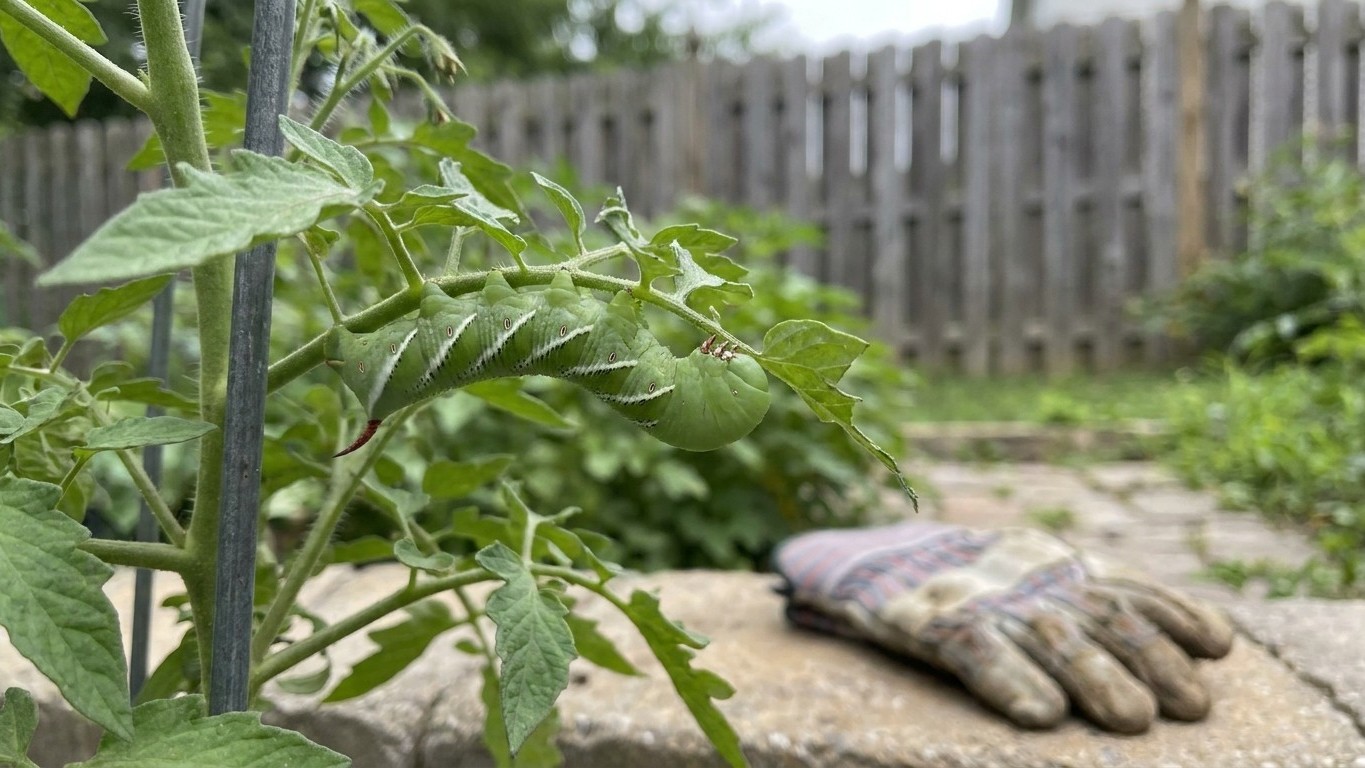

Pennsylvania tomato patches see the same handful of pests year after year, from flea beetles nibbling new transplants to stink bugs puncturing ripening fruit at the end of the season. The lineup runs in a predictable order tied to the growing season that opens with NOAA’s 1991-2020 last-spring-freeze window of March 29 to April 6 at Philadelphia. Start checking the undersides of leaves and the stems of young plants within the first couple of weeks after you set transplants out, before any one problem gets ahead of you.
What this comes down to in Pennsylvania

By the time most people notice something’s wrong, they’ve already lost the window. A gardener sees shot-holes in a leaf and sprays for the wrong bug, or waits a week to “see if it spreads” while Colorado potato beetle larvae strip a plant to bare stems. Guessing costs you transplants, costs you a harvest, costs you the two or three days that actually matter. The pests that hit Pennsylvania tomatoes aren’t a mystery, but they do things in a particular order, on a particular schedule.
Flea beetles

These show up first, often on transplants that have just gone into the ground. They chew tiny round holes that make a leaf look like it was hit with buckshot. Seedlings can be stunted or killed outright if the damage is heavy. Established plants usually shrug it off. Floating row cover during the first few weeks after transplant keeps them off entirely, and spinosad works if damage is already spreading.
Colorado potato beetle

Adults overwinter in the soil and climb onto young tomato and potato plants early in the season. Both the striped adults and the humpbacked red larvae strip leaves down to the veins, and a heavy infestation can defoliate a small plant fast. Hand-picking works if you catch it early; check the undersides of leaves for clusters of bright yellow-orange eggs and crush them before they hatch.
Aphids

Aphids build up through late spring and early summer whenever conditions turn warm and a little dry. They cluster on new growth and the undersides of leaves, sucking sap and leaving behind a sticky residue called honeydew that can grow sooty mold. Small colonies are barely worth treating since lady beetles and lacewings usually clean them up. A strong water spray or insecticidal soap handles the rest.
Tomato hornworm

This is the pest most home gardeners eventually meet face to face, usually in mid to late summer. The caterpillar is easy to miss because it matches the foliage almost exactly, and the first sign is often stripped stems and dark green droppings on the leaves below. Hand-picking is effective and satisfying; Bacillus thuringiensis (Bt) works too if you’d rather not touch them.
Brown marmorated stink bug

This one arrives as fruit starts to set, piercing developing tomatoes to feed and leaving pale, cloudy blotches under the skin that show up when you slice the fruit. It’s a strong flier and moves in from wooded edges and hedgerows, so pressure is often worse on gardens near tree lines. Netting over ripening trusses helps more than spraying, since the adults are hard to kill and quick to return.
Tomato fruitworm

Also called the corn earworm, this caterpillar bores directly into ripening fruit late in the season, often entering near the stem end where the hole is easy to overlook until you cut the tomato open. One caterpillar can ruin several fruits as it moves along a truss. Removing and destroying damaged fruit promptly limits how far it spreads, since the larvae pupate in the soil beneath the plant.
Working it out for your own garden
The fastest way to identify what’s actually damaging your plants is to separate the question into three parts: where on the plant the damage shows up, what shape the damage takes, and what time of the growing season it is. A pest that chews round holes in leaves early in the season is a different animal than one boring into ripe fruit in August, even if you never see the insect itself.
A quick comparison
| Pest | Where you see it | What the damage looks like | When in the season |
|---|---|---|---|
| Flea beetles | Leaves, especially seedlings | Small round shot-holes | Right after transplanting |
| Colorado potato beetle | Leaves and stems | Skeletonized leaves, chewed edges | Early to mid season |
| Aphids | Undersides of leaves, new growth | Curled leaves, sticky honeydew | Late spring through summer |
| Tomato hornworm | Stems and upper foliage | Stripped stems, dark droppings | Mid to late summer |
| Brown marmorated stink bug | Developing fruit | Cloudy blotches under the skin | As fruit sets and ripens |
| Tomato fruitworm | Ripe or ripening fruit | Entry hole near the stem end | Late season |
Once you know roughly where you are in the season, that table narrows the list to one or two suspects before you even find the insect. If you’re still not sure, cut open one damaged fruit or peel back one curled leaf. The shape of the wound almost always settles it. This kind of scouting matters more than any spray schedule, and it’s worth doing on the same visit you’re already checking plants for the staking and pruning that growing tomatoes in Pennsylvania requires through the season.
If pest pressure keeps arriving before your fruit has had time to ripen, the fix may have nothing to do with pests at all. A cultivar with a long days-to-maturity count set out at the tail end of the transplant window described on Tomato Planting Dates in Pennsylvania: Counting Back From Your Frost Window is simply exposed to late-season insects for longer, since the fruit sits ripening on the vine right as stink bugs and fruitworms are most active.
What changes across the state
Pennsylvania spans USDA Hardiness Zones 5a to 7b, and that spread matters for pest timing as much as it does for what will survive winter. A garden at higher elevation in the Alleghenies warms up slower in spring and cools off sooner in fall, which compresses the whole pest sequence into a shorter window and can push the fruit-feeding stage of stink bugs and fruitworm past the point where fruit is still ripening. Elevation and distance from Philadelphia both push these dates later, and the far northern tier can run closer to a full month behind the reference city on both ends of the season.
Lake Erie’s moderating effect on the northwest corner of the state works the opposite way in some respects, keeping fall temperatures milder later into the year than the elevation alone would suggest, which can extend the window that late-season pests like the tomato fruitworm have to work in. Urban and suburban gardens in the southeast, closer to Philadelphia’s warmer microclimate, tend to see flea beetles and aphids earlier simply because the soil warms sooner. None of this changes which pests to expect, only when in the season they show up and how long each one stays active, so treat the sequence above as an order of operations rather than a calendar with fixed dates.
The mistakes this state punishes

The most common mistake is treating every hole in a leaf as the same problem. Spraying broadly for “bugs” in early summer often knocks back the lady beetles and lacewings that would have handled an aphid outbreak on their own, which just clears the way for a worse aphid problem two weeks later. Identify the pest before you treat it, using the damage pattern and the season as your first clues.
The second mistake is ignoring the calendar risk that comes with a long-season cultivar. A tomato that needs many extra weeks to ripen is still hanging on the vine when brown marmorated stink bugs and tomato fruitworm are most active late in the season, which means more fruit exposed to damage for longer. Choosing among the shorter and mid-season options covered on Tomato Varieties That Ripen in Time in Pennsylvania shortens that exposure window along with the season itself.
The third is leaving Colorado potato beetle eggs unchecked because they’re small and easy to miss on the underside of a leaf. A few overlooked egg masses in early summer becomes a full-blown infestation by midsummer, and by then hand-picking barely makes a dent. Ten minutes of leaf-flipping early in the season saves hours of damage control later.
Checking this against your county
Pest pressure in your own yard depends on how close you are to woods or hedgerows, how warm your particular soil runs, what your neighbors grow. For anything specific to your county, including current pest alerts and management options, PSU Extension at extension.psu.edu is the right first call, and your county extension office can tell you what’s actually being reported nearby this season.
Common questions
What’s eating holes in my tomato leaves overnight?
If the holes are small and round, flea beetles are the usual suspect, especially on young transplants. Larger, ragged holes with slime trails point to slugs instead, which are a different problem entirely and need a different fix.
Are the black and orange striped bugs on my tomatoes bad?
Striped beetles on tomato foliage are almost always Colorado potato beetle, and yes, they’re worth dealing with quickly since both the adults and larvae feed on leaves and can defoliate a young plant. Check nearby leaves for clusters of orange eggs and remove them along with any beetles you find.
Is it safe to just pick hornworms off by hand?
Yes, hand-picking is one of the most effective controls there is for tomato hornworm, and they don’t sting or bite. Leave any hornworm covered in small white cocoons alone, since those are parasitic wasps that will keep working on the rest of the population for you.
Why are my tomatoes getting bad spots right before I pick them?
Cloudy blotches just under the skin usually mean stink bug feeding, while a small hole with tunneling inside points to tomato fruitworm. Neither one is the same as blossom end rot, which shows up as a flat, leathery patch at the blossom end of the fruit and is a growing condition rather than a pest.