
Nevada’s climate does most of the work here: Japanese beetle (Popillia japonica) is not established anywhere in the state, and the odds of it becoming a permanent resident are low compared to the Midwest and East Coast, where the insect chews through backyard gardens every summer. That doesn’t mean Nevada is beetle-proof. Isolated adults have turned up in trap surveys and on nursery stock shipped in from infested states, mostly between late June and early August, the window when adults emerge and fly in search of food and mates. The threat here is narrow and specific: irrigated turf, ornamental plants, and imported soil, not the statewide infestations you’d see in Ohio or Pennsylvania.
Nevada Department of Agriculture, working with USDA’s Cooperative Agricultural Pest Survey program, places monitoring traps in urban areas each summer specifically to catch this insect before it gets a foothold. That’s not routine paperwork. It’s the front line of a strategy that has kept the beetle out of most of the western United States for decades.
Why Nevada Is a Tough Place for This Beetle to Settle

Japanese beetle grubs need consistently moist soil to survive their year-long underground development. In states with regular summer rainfall, that’s a given. In Nevada, one of the driest states in the country, natural soil moisture rarely holds up long enough to support a grub population outdoors without help.
The exception is irrigation. Golf courses, city parks, cemeteries, and home lawns watered on a regular schedule create small pockets of soil moisture that mimic the humid-region conditions the beetle needs. Adult females seek out exactly this kind of turf to lay eggs in July and August, favoring sunny, well-watered grass over dry, unmanaged ground. That’s why any Nevada detections tend to cluster around irrigated urban landscapes in the Reno-Sparks area, Carson City, and the Las Vegas valley rather than open desert or rangeland.
Elevation and temperature swings add another layer of resistance. Overwintering grubs need soil that doesn’t freeze too hard or dry out too completely. Nevada’s high desert winters and its intense summer heat in the southern part of the state both work against the multi-stage life cycle the beetle depends on.
Where Nevada Faces Its Actual Exposure
The most realistic path for Japanese beetle to reach Nevada isn’t a wave of beetles flying in from the East. It’s hitchhiking. Adult beetles and grubs can travel in nursery containers, in balled root systems, and in soil clinging to landscaping equipment moved from a state where the insect is already established. Nevada’s nursery and greenhouse industry gets shipments from states with confirmed populations, which is exactly why interstate plant inspections and quarantine rules exist in the first place.
Urban landscapes with a mix of ornamental shrubs, roses, and fruit trees are the highest-risk sites for the small number of detections that have occurred. Adult beetles favor over 300 plant species, but they show a clear preference for certain hosts:
- Roses and rose hips
- Grapevines
- Linden and birch trees
- Crabapple and other flowering fruit trees
- Turfgrass roots in the grub stage
A homeowner in a well-watered Reno subdivision with a rose garden and a fescue lawn is, statistically, in a far more exposed spot than someone with xeriscaping in the high desert outside Elko.
What the Beetle Actually Looks Like (and What It Leaves Behind)
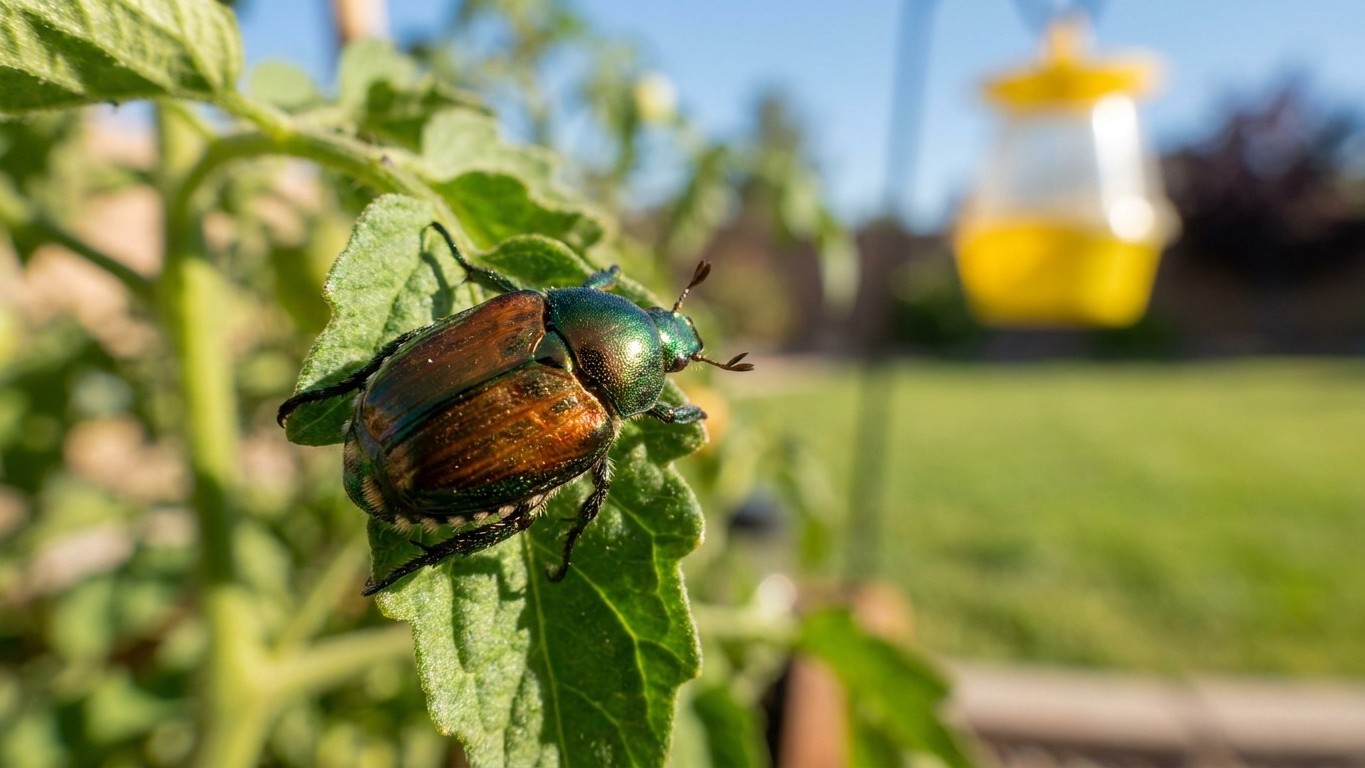
Adult Japanese beetles are about three-eighths of an inch long, with a metallic green head and thorax and coppery-bronze wing covers. Look closely at the sides of the abdomen and you’ll spot five small tufts of white hair on each side, a detail that separates it from several native look-alike beetles found throughout Nevada, including some June beetles and figeater beetles that are larger and duller in color.
Feeding damage shows up as skeletonized leaves, where adults eat the tissue between veins and leave a lace-like pattern behind. Roses often get hit on the flowers themselves, with petals chewed to shreds during peak bloom. In turf, grub feeding on roots produces irregular brown patches that lift up easily, almost like loose carpet, because the root system holding the sod together has been eaten away. That symptom on Nevada lawns is far more often caused by other white grub species or by simple drought stress, so it shouldn’t be treated as automatic proof of Japanese beetle without a confirmed sighting of the adult insect.
What Actually Stops Japanese Beetle in a State Like Nevada
Prevention here leans heavily on interception rather than treatment, because there’s rarely an established population to treat in the first place. Nevada’s agricultural inspection process for incoming nursery stock and soil is the single biggest line of defense, and it works largely out of sight of homeowners.
On the ground, a few practical habits matter for anyone gardening in an irrigated Nevada landscape:
- Inspect new nursery plants and their root balls before planting, especially anything shipped from the Midwest or Northeast
- Avoid moving soil, sod, or potted plants across state lines without checking current agricultural quarantine rules
- Hand-pick any adult beetles found on roses or fruit trees and drop them into soapy water rather than crushing them, since crushed beetles can release a scent that draws more in
- Skip the pheromone-lure traps sold at hardware stores for yard use; research from multiple state extension services has shown these traps often attract more beetles to a property than they actually catch
- Keep an eye on irrigated turf for grub damage, but confirm with a soil sample before assuming Japanese beetle, since Nevada’s more common white grubs need a different management approach
Milky spore disease, a biological control that works well against Japanese beetle grubs in humid eastern soils, has a poor track record in arid western conditions, and Nevada extension guidance generally doesn’t recommend it as a primary tool here. Beneficial nematodes applied to consistently irrigated turf have shown better results in western trials, but they still depend on soil moisture levels that most Nevada landscapes only reach with active watering.
Reporting a Sighting Matters More in Nevada Than in an Infested State
In a state where an established homeowner in Ohio might just treat their lawn every spring, a Nevada resident who finds a beetle matching this description is looking at something closer to a first responder role. Because the state has no confirmed breeding population, every credible sighting feeds directly into the tracking system that keeps interstate shipping and nursery quarantine rules calibrated correctly.
Nevada Department of Agriculture accepts reports from the public, and a photo along with the location is usually enough for their entomology staff to make an initial identification. That single report can matter more than it would in a state where the insect is already everywhere, because it’s one of the few real-time signals officials have that a shipment, a piece of equipment, or a batch of nursery stock carried something it shouldn’t have.
For homeowners, the practical takeaway is straightforward: watch irrigated roses and turf during the peak flight window from late June through early August, know what separates this insect from Nevada’s more common native beetles, and treat a confirmed sighting as worth a phone call rather than a DIY spray program. The USDA’s Animal and Plant Health Inspection Service maintains detailed identification and reporting guidance for exactly this situation, a resource worth bookmarking if you garden anywhere near an irrigated landscape in the Reno, Carson City, or Las Vegas corridors. (USDA APHIS Japanese beetle program)
Related guides
- Japanese beetle in New Hampshire: When It Shows Up and What Stops It
- Japanese beetle in North Carolina: When It Shows Up and What Stops It
- Cabbage moth in Nevada
- Mormon cricket in Nevada
- Japanese beetle in Virginia: When It Shows Up and What Stops It
- Japanese beetle in West Virginia: When It Shows Up and What Stops It