
Oklahoma tomato growers deal with a predictable lineup: cutworms and flea beetles at transplant, aphids and spider mites through the hot months, then tomato hornworms and stink bugs as fruit ripens. NOAA’s 1991-2020 climate normals put the last spring freeze at Oklahoma City between March 28 and April 10, and that window is also when the first two pests start working on newly set transplants. Walk your rows every few days starting the week you transplant, because the earliest damage is also the easiest to stop.
What this comes down to in Oklahoma

Hornworms get most of the blame when Oklahoma gardeners picture tomato damage, but by the time those fat green caterpillars show up, cutworms have often already taken out half your transplants. The real sequence here starts low and early: something severs stems at the soil line in April, weeks before hornworms are even a possibility. Six pests actually cause trouble on Oklahoma tomatoes, and they don’t arrive in the order most people expect.
The six pests below are the ones that reliably turn up on Oklahoma tomatoes, listed in the order they tend to appear. This page assumes you’ve already sorted out growing tomatoes in Oklahoma and are past the basics.
Cutworms

Cutworm larvae are plump, gray to brown caterpillars, about 1 to 2 inches long, that curl into a tight C-shape when you disturb them. They hide in the top inch of soil during the day and feed at night, and the damage is unmistakable: a transplant that was fine yesterday is now severed at the soil line and lying flat, top intact. They hit hardest on newly set transplants in the weeks right after the frost window, while stems are still thin. A cardboard collar pushed an inch into the soil around each stem stops them cold and costs nothing but a few cut-up paper tubes.
Flea beetles

Flea beetles are tiny, shiny black beetles, about the size of a pinhead, that jump like fleas the instant you brush a leaf. Adults chew small round holes through young leaves, giving them a shotgun-blast look; a light dusting rarely kills a plant, but a heavy one can stall seedlings for weeks. They do the most damage on transplants set out right after the frost window, before plants have enough leaf area to outgrow the feeding. Floating row cover from transplant until flowering keeps adults off without spraying anything.
Aphids

Aphids are soft-bodied, pear-shaped insects smaller than a grain of rice, usually green, black, or pink, clustered on the undersides of leaves and around new growth. Both nymphs and adults feed by sucking sap, and heavy infestations curl and yellow leaves and leave a sticky honeydew residue that grows sooty black mold. They build through late spring into early summer as new growth flushes. A strong jet of water knocks most colonies down, and insecticidal soap handles the rest. Ladybugs and lacewings usually keep small populations in check on their own if nothing broad-spectrum has been sprayed.
Two-spotted spider mites

Spider mites are barely visible without a hand lens, pale yellow-green with two dark spots on the back, and they thrive in the hot, dry stretches of an Oklahoma summer. The first sign is a fine, dusty stippling on the upper leaf surface. Turn the leaf over and you’ll find fine webbing and the mites themselves moving across it. Left alone, leaves bronze, dry out, and drop. Spider mites hate a strong water spray as much as they love dry heat, so hosing down the undersides of leaves every few days during a dry spell does more than most miticides.
Tomato hornworms

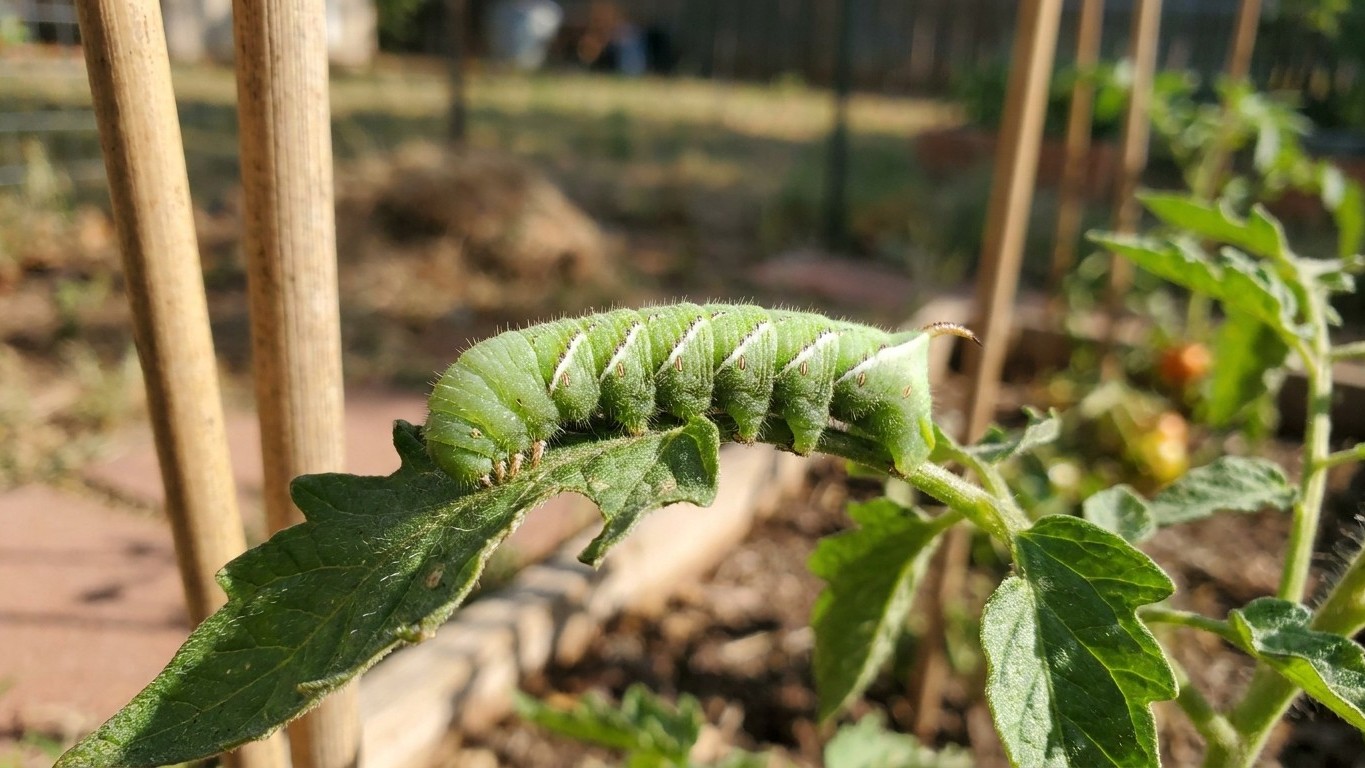
Tomato hornworms are hard to miss once you spot one: a fat green caterpillar up to 4 inches long, with white diagonal stripes down each side and a curved horn on its rear end. They feed on foliage and green fruit through mid to late summer, and a single hornworm can strip a branch bare in a couple of days. Look for dark green to black droppings on leaves below the feeding, which usually give away the caterpillar’s location before you spot the insect itself. Hand-picking works fine at garden scale; if you find one covered in small white cocoons, leave it, those are parasitic wasp larvae already doing the job for you.
Stink bugs and leaffooted bugs

Stink bugs are shield-shaped, green or brown, roughly a half-inch to three-quarters of an inch long; leaffooted bugs are darker brown, more elongated, with a flattened, leaf-shaped section on each hind leg. Both show up as fruit starts to ripen in late summer, piercing the skin to feed and leaving cloudy white or yellow spots on the surface with a corky white patch underneath when you cut the fruit open. They’re hard to control once numbers build, so the practical move is keeping the area around the tomato patch clear of the weedy hosts they build up on earlier in the season, and picking fruit at first blush so less of it sits exposed while they’re active.
Working it out for your own garden
The fastest way to figure out which pest you’re dealing with is to work backward from where you found the damage, not from a guess based on what’s supposedly going around. Location on the plant, time of year, and the damage pattern narrow it down almost every time.
Match the symptom to the pest
| Symptom | Where you’ll find it | Likely pest |
|---|---|---|
| Stem severed at soil line, plant toppled | Newly set transplants | Cutworm |
| Shotgun-hole pattern on young leaves | Seedlings and new transplants | Flea beetle |
| Curled, yellowing leaves with sticky residue | Undersides of leaves, new growth tips | Aphid |
| Fine speckling, bronzing leaves, webbing | Upper and lower leaf surface, hot dry weeks | Two-spotted spider mite |
| Stripped branches, dark droppings on leaves | Mid to late summer foliage and green fruit | Tomato hornworm |
| Cloudy spots on ripening fruit, corky patch inside | Fruit at first blush through ripe | Stink bug or leaffooted bug |
Timing does a lot of the work too. Anything chewing a transplant in the weeks after you set it out is cutworm or flea beetle territory, not hornworm, because hornworm caterpillars aren’t sized up enough to do that kind of damage until later in the season. If you’re still working out when that transplant date actually falls, the planting calendar page walks through Tomato Planting Dates in Oklahoma: Counting Back From Your Frost Window using the same NOAA frost window referenced above, and getting that date right also determines how many weeks of cutworm and flea beetle exposure a transplant sits through before it toughens up.
One more check worth doing before you treat anything: look at the time of day. Cutworms and hornworms feed mostly at night or dusk, so a plant that looked fine at noon and damaged by morning points to one of those two. Aphids, spider mites, and the fruit-piercing bugs feed around the clock, so their damage accumulates steadily rather than overnight. That single distinction, overnight versus gradual, saves a lot of wasted spraying for the wrong culprit.
What changes across the state
Oklahoma runs from the humid, wooded southeast to the dry, treeless panhandle, and that spread changes which of these pests actually gives you trouble. Spider mites are worse the drier and hotter the location, so gardens in the western half of the state, where summer humidity drops off, tend to see heavier and earlier mite pressure than gardens in the southeast.
Elevation and season length
USDA’s Plant Hardiness Zone Map puts Oklahoma across zones 6a to 8a, and that range alone tells you the growing season runs noticeably longer in the south than in the northern tier or at higher elevation in the northwest and panhandle. A longer, hotter season gives spider mites and stink bugs more generations to build up before frost ends things, while a shorter one compresses all six pests into a tighter window and can mean skipping the late-season stink bug wave entirely if fall frost lands on the early side of the range.
Distance from the state’s reservoirs and river corridors matters too, in a smaller way. Ground near larger bodies of water tends to hold a bit more humidity and moderate the hottest spikes, which can blunt spider mite outbreaks slightly compared to open, dry ground a few miles away. None of this changes which pests you might see, only how early they build and how bad a given year gets.
The mistakes this state punishes

The most common mistake is treating every early leaf hole as an emergency and reaching for a broad-spectrum insecticide before confirming what’s actually feeding. Broad-spectrum sprays kill the ladybugs and lacewings that would otherwise keep aphids in check, and a garden sprayed early in the season often ends up with a worse aphid problem by midsummer than one left alone.
Skipping the transplant-stage check
Because cutworms and flea beetles do their damage in the first two or three weeks after transplant, gardeners who don’t walk the rows daily during that stretch often lose plants before they notice anything wrong. A five-minute check each morning while plants are small costs nothing and catches a cutworm problem while a collar can still fix it.
The other timing mistake runs the other direction: choosing a long-season, indoor-favorite cultivar without checking whether it actually finishes before the first fall freeze at your location. That’s a separate calculation from pest pressure, but the two compound each other, because a plant still carrying green fruit into the stink bug and leaffooted bug window in late summer just gives those pests more time to damage what would have ripened cleanly on a shorter-season plant. The Tomato Varieties That Ripen in Time in Oklahoma page works through which cultivars actually finish inside this state’s frost window, and picking one of those shortens the stretch of vulnerable ripening fruit as a side benefit.
Finally, don’t assume a pest you fought last year will show up on the same date this year. A warm spring pulls cutworm and flea beetle activity earlier, and a hot, dry summer accelerates spider mites by weeks compared to a cooler, wetter one. Watch the plant, not the calendar, once you’re inside the general window.
Checking this against your county
Everything above is anchored to Oklahoma City, and NOAA’s 1991-2020 normals for that single station don’t describe the Panhandle, the Ozark foothills, or your particular yard. Pest arrival dates move with local frost timing, and local frost timing moves with elevation and geography in ways a state-wide page can’t capture.
Check with your county office of OKSTATE Extension before building a spray or scouting schedule around anything here; they track pest pressure regionally and can tell you what’s actually active in your area right now, not just what showed up historically at one airport station. The OKSTATE Extension directory will point you to your county office directly.
Common questions
Do I need to spray for tomato hornworms every year?
No. Not every plant gets hornworms, and a light infestation is usually handled faster by hand-picking than by spraying anything. If you find a hornworm covered in small white cocoons, leave it alone. A parasitic wasp has already laid eggs in it and the caterpillar will stop feeding soon on its own.
Are ladybugs enough to control aphids or should I still spray?
In most home gardens, ladybugs and lacewings keep aphid numbers manageable without any spray, as long as you haven’t already knocked out those predators with a broad-spectrum product. If a colony is exploding faster than the predators can keep up, a strong water spray or insecticidal soap is a better first step than a stronger insecticide.
What’s eating my tomato leaves but I never see a bug on the plant?
Check at night with a flashlight before assuming it’s a mystery. Cutworms and tomato hornworms both feed mainly after dark and tuck into soil or foliage cover during the day, so daytime inspections often miss them entirely even while the damage keeps adding up.
Can I use the same cardboard collar trick for flea beetles as for cutworms?
No, a soil collar only stops cutworms, which travel along the ground at the base of the stem. Flea beetles jump and fly onto leaves from above, so the fix for them is different: floating row cover over the whole plant from transplant until flowering.