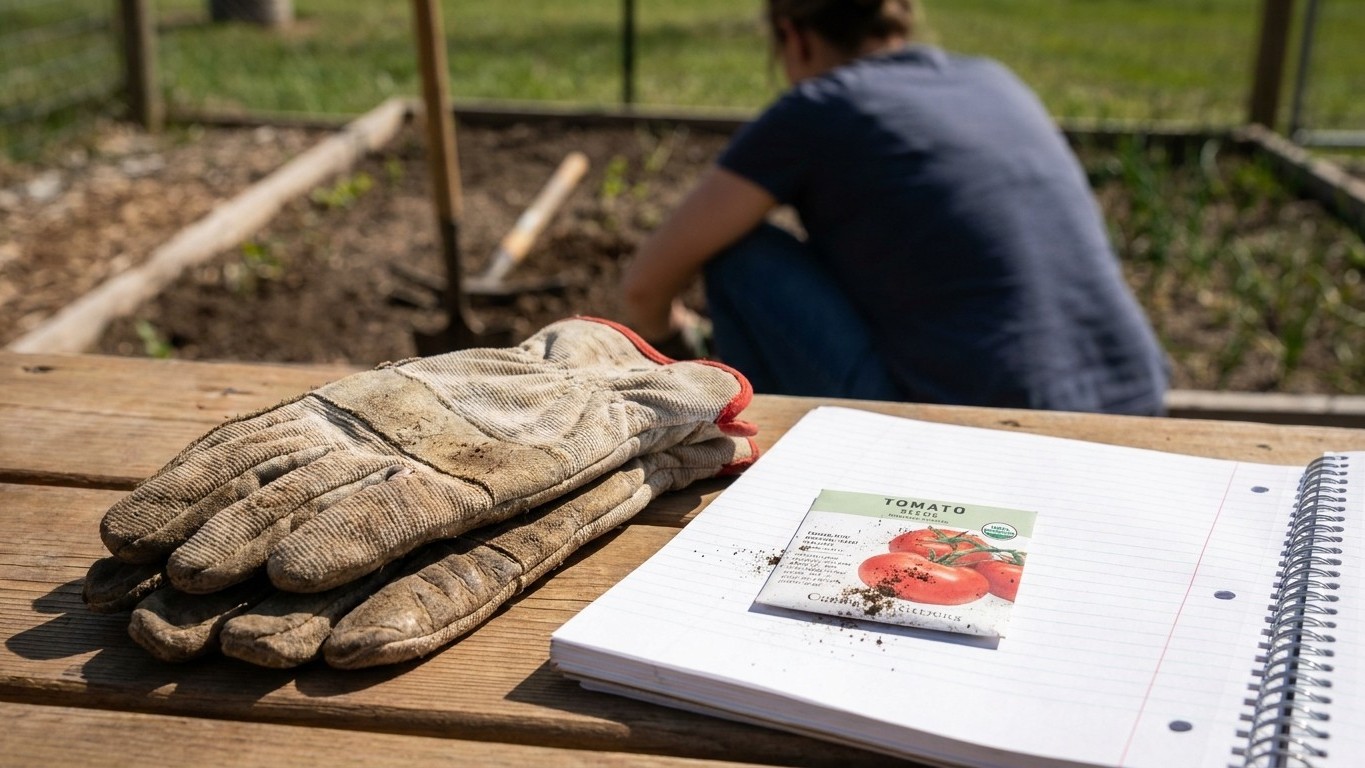

In most of South Dakota, you set tomato transplants outside only after the danger of a spring frost has passed, and near Sioux Falls that window falls between April 29 and May 9, according to NOAA’s 1991-2020 climate normals for that station. Work backward from there to time your indoor seed-starting, and forward to the first fall frost (September 24 to October 4 at the same station) to see how much season you actually have to work with. Before you commit to a date, pull up your own county’s frost data through SDSTATE Extension rather than borrowing Sioux Falls’ numbers outright.
What this comes down to in South Dakota

Sioux Falls’ April 29 to May 9 frost window is the number this whole page hangs on, and it’s a narrower target than the state’s 3b-to-5b zone range would suggest. Count back six to eight weeks for indoor seed-starting and that window becomes early to late March, not one clean date — earlier if your county’s last frost falls sooner than Sioux Falls’, later if it doesn’t. That gap between zones is why a single planting date can’t travel across South Dakota without shifting.
USDA’s Plant Hardiness Zone Map, built on the same 1991-2020 period, places South Dakota across zones 3b to 5b. That’s a wide enough spread that a garden near the state’s southern edge and one near its northern border are working with genuinely different frost calendars, even though both are technically “South Dakota Tomato Planting Dates.” Treat any date for the Sioux Falls area as a starting point, and confirm your own zone and county frost data before you rely on it.
Most tomato seed packets call for starting seed indoors six to eight weeks before the transplant date. Counted back from Sioux Falls’ April 29 to May 9 window, six weeks lands you in the second half of March at the earliest end and the back half of March at the latest end. Eight weeks pushes the earliest sowing into early March. The honest answer is a sowing window somewhere in early to late March, not one date, and if your county’s last frost runs later than Sioux Falls’, shift the whole block later to match. If you haven’t already worked through soil prep and hardening-off, that groundwork is covered in the main guide to growing tomatoes in South Dakota.
Working it out for your own garden
The method has two moving parts: your local frost window, which you get from NOAA or your county extension office, and the cultivar’s days to maturity, which is printed on the seed packet and counted from the transplant date, not from seed. Neither number by itself tells you anything, you have to run them against each other.
How much season Sioux Falls actually gives you
Start with the frost-free season length itself, and remember it’s a range built from two ranges. Pair the earliest possible last frost (April 29) with the latest possible first fall frost (October 4) and you get a season stretching to roughly 158 days. Pair the latest last frost (May 9) with the earliest fall frost (September 24) and the season shrinks to roughly 138 days. Anywhere between those two figures is plausible in a given year, so 138 to 158 days is the range to plan around, not a midpoint.
Here’s what that means against three real cultivars, using the days-to-maturity printed on their seed packets:
| Cultivar | Catalogue days to maturity | Fits Sioux Falls’ 138-158 day window? | Verdict |
|---|---|---|---|
| Early Girl | ~50-59 days | Yes, with well over 80 days to spare | Finishes with a wide margin |
| Celebrity | ~70 days | Yes, with a comfortable cushion | Finishes reliably |
| Brandywine | ~80-100 days | Yes at Sioux Falls, but consumes most of a shortened window | Finishes here, marginal in colder pockets |
Brandywine is the interesting case. At Sioux Falls’ own numbers it fits, even at the tight 138-day end. But NOAA’s data notes that gardens away from the airport station typically see the last spring frost later and the first fall frost earlier, often by one to two weeks each, which can trim as much as four weeks off both ends combined, shrinking the usable season to roughly 110 to 130 days. A cultivar rated at the top of its 80-to-100-day range has almost nothing left in reserve once you account for that, plus the extra week or two that cool September nights tend to add onto catalogue figures. Treat the catalogue number as a floor, not a guarantee, and lean toward the shorter end of any cultivar’s rated range if your garden runs colder than Sioux Falls. For the fuller rundown of which cultivars fit which part of the state, see Tomato Varieties That Ripen in Time in South Dakota.
What changes across the state
South Dakota is not one climate, and the Sioux Falls figures above will not hold everywhere. A few things move the frost window in either direction:
- Elevation: higher ground, including parts of the Black Hills region, tends to hold cold air longer into spring and pick it back up sooner in fall.
- Distance from large water: areas near the Missouri River’s reservoirs often see the water moderate temperature swings slightly, compared with open prairie further from any large body of water.
- North versus south: the northern tier of the state generally sees a shorter frost-free season than the southeastern corner where Sioux Falls sits, simply from latitude.
- Urban versus rural: a paved, built-up area like an airport or downtown tends to hold heat and report a milder frost date than the open farmland a few miles outside town.
USDA’s hardiness map reflects this spread directly, placing the state anywhere from zone 3b to zone 5b depending on location. That’s not a rounding error, it’s the difference between a garden that reliably supports a 90-day tomato and one where even a 60-day tomato is a gamble in a cool year. None of this can be reduced to a second precise date without local station data, so if you garden any real distance from Sioux Falls, the right move is to find the normals for a station closer to you, or ask your county extension office what they’ve observed locally over the years.
The mistakes this state punishes

The most common one is trusting a warm stretch in April or early May and setting transplants out ahead of the frost window closing. South Dakota’s spring weather can swing hard in either direction inside that same week, and a single clear, calm night is enough to kill unprotected transplants even when daytime highs have felt like summer. Wait out the full window, not just the point where it feels safe.
The second is choosing a cultivar whose days-to-maturity eats the whole season with nothing left over, especially in a garden that runs colder than Sioux Falls. As the Brandywine example above shows, a variety that works fine at the reference station can be a near-miss a county or two away. If you’re unsure, favor a shorter-rated cultivar and treat anything over about 80 days as a variety that needs checking against your own local numbers before you commit a whole row to it.
The third is ignoring the calendar for pests that show up on a predictable schedule each season. Missing that early window, whether it’s an insect that arrives right as transplants go in or one that builds up later in summer, often costs more of the crop than a slightly wrong planting date does. Which pests actually turn up here and when is its own subject, covered at Tomato Pests in South Dakota: Which Ones Actually Show Up Here.
Checking this against your county
The Sioux Falls figures are a starting point, not an instruction for your yard. Before you set a planting date, check your own county’s frost history and any local guidance through SDSTATE Extension, which can point you to a station closer to home and to the state’s own tomato-growing recommendations. If your county office publishes its own frost normals, use those over the Sioux Falls figures. A phone call to your local extension office is worth more than any statewide chart, since they’ve usually seen what actually happens in gardens near you, not just what an airport weather station recorded.
Some gardeners also time this by the Moon: when to plant tomatoes by the moon, as almanac tradition rather than fact.
Common questions
Can I plant tomatoes before the last frost date if I cover them?
Row covers, wall-of-water devices and cold frames can let you set transplants out somewhat ahead of the open-air frost window by buffering the cold, but they don’t eliminate the risk, and cold soil will stall root growth even if the top growth survives. Check soil temperature as well as air temperature before deciding, and keep protection on hand for any cold snap that lands inside NOAA’s window.
Is the frost date the same everywhere in South Dakota?
Use your own county’s data from SDSTATE Extension for anything you’re planning to plant on a specific date.
Do I count days to maturity from the seed or from transplanting?
From transplanting, not from the seed packet’s sowing date. Catalogue days-to-maturity figures assume a healthy transplant going into warm soil, so the count starts the day it goes in the ground, and the six to eight weeks spent growing it indoors happens before that clock starts.
How late can I still plant a long-season tomato and expect ripe fruit?
It depends entirely on the cultivar’s rated days to maturity against your local fall frost date, and the margin for a cultivar rated near 90 to 100 days is thin almost everywhere in this state. If you’re pushing it, plan on pulling green fruit before frost and ripening it indoors rather than counting on the plant to finish outdoors, and lean toward the shorter-season cultivars covered on the varieties page if the math doesn’t leave you comfortable.