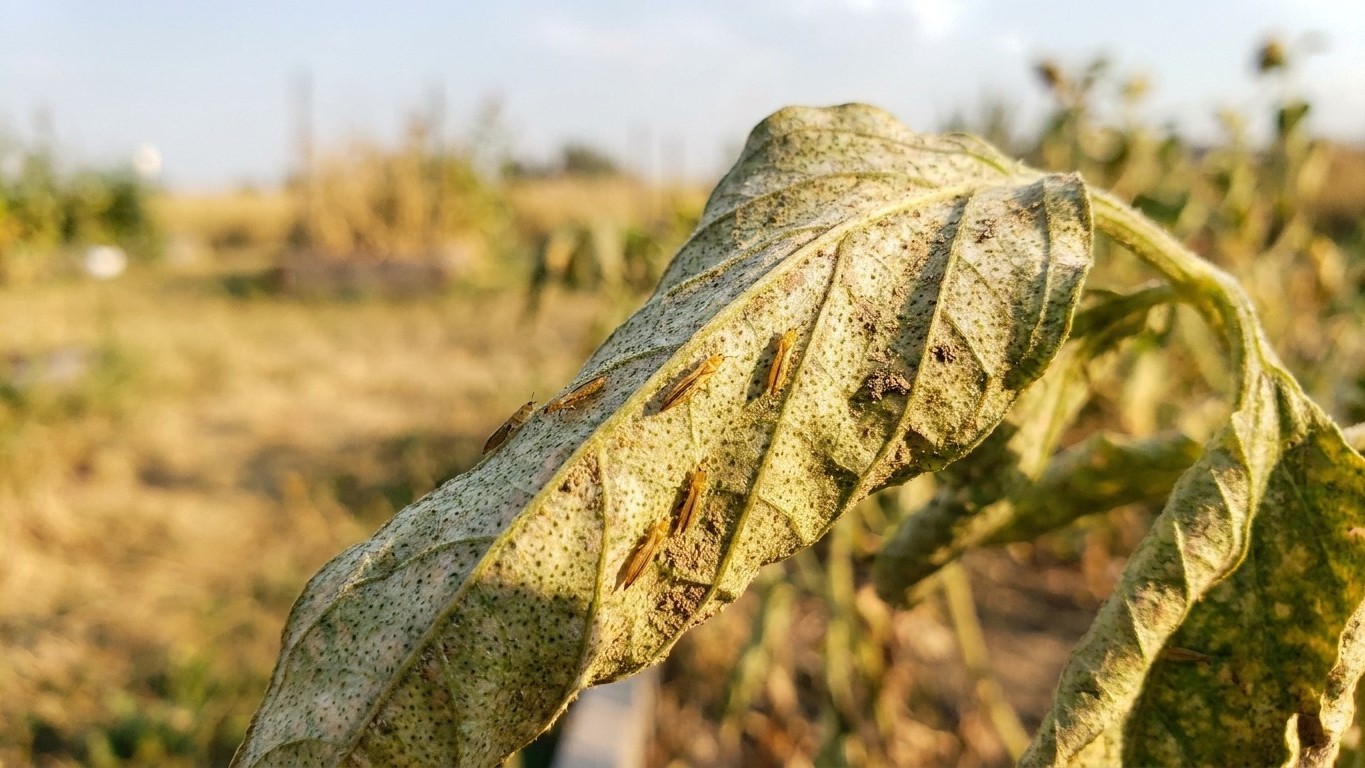

Thrips show up in Wisconsin gardens anywhere from April through September, with numbers climbing fastest during hot, dry stretches of summer when their life cycle speeds up. Wisconsin’s Extension service doesn’t publish a thrips-specific flight calendar, so the best local anchor is the general vegetable-pest pattern the state does track. Row covers timed to your transplant date, plus cleared plant debris each fall, are what actually hold populations down.
The weeks to watch
Thrips are active in Wisconsin gardens anytime between April and September, the same broad window the University of Wisconsin-Madison Division of Extension lists in its home vegetable garden pest guide. That guide, though, doesn’t call out thrips by name. It tracks corn pests, which the guide says don’t become abundant until mid-August, and squash vine borer, which starts wilting plants in late July. Thrips get folded into the general seasonal pattern rather than getting their own species-specific date, which means a gardener has to watch for symptoms instead of circling a day on the calendar.
Early build-up (April into June)
Cool early-season Temperatures keep thrips numbers low. Many species spend the winter as adults or pupae tucked into leaf litter, weeds, or the soil around perennial beds, and the first generation of the year emerges once the ground warms. Early feeding shows up on emerging perennials like iris and on the first tender Transplants set into the garden.
Peak numbers (July through August)
Hot, dry weeks shorten the time it takes thrips to complete a generation, so populations multiply fast through midsummer. By late July and into August, several overlapping generations can be present at once, meaning eggs, nymphs, and adults are all feeding on the same plants simultaneously. Numbers usually taper off once September brings cooler nights and more consistent rainfall.
Reading the calendar from your last frost
Wisconsin’s last spring frost falls somewhere between April 16 and April 29, based on NOAA’s 30-year climate normals for the state. Thrips don’t answer to that date directly. They answer to soil and air temperature, so a frost that lands on the early or late edge of that window shifts Everything downstream by roughly the same number of days.
- Mark your local last frost, somewhere in the April 16 to April 29 range for most of the state.
- Count forward from transplant: the first stippled or silvered leaves typically appear within three to four weeks, sooner if the stretch that follows turns hot and dry.
That arithmetic matters most for row covers. A cover set at transplant, before that three-to-four-week clock even starts, keeps early migrating adults off young plants. It needs to come off once flowering begins on crops that require pollination, or once foliage has filled in enough that thrips drifting in from nearby weeds have a harder time finding a target. The season’s back end varies by region too: inland southern Wisconsin typically sees its first fall freeze in early October, areas right along the Lake Michigan shoreline stay frost-free later than that, and the far north freezes earlier still, which changes how many weeks thrips actually get to build up in any given yard.
What it attacks, and what the damage looks like
Silvery, papery patches on leaves are usually the first sign, long before anyone spots the insect responsible. Look closer and those patches often carry tiny black specks, which is thrips frass left behind after feeding. On flowers, especially gladiolus and iris, petals show streaks or a faded, discolored blotching instead of clean color. New growth can come in curled or distorted, and onion leaves develop a whitish, silvered look that gardeners sometimes mistake for disease. Bean pods can end up scarred with a rough, russeted surface.
Nymphs, the juvenile stage, do most of the actual feeding damage since they stay put on a single plant scraping tissue and sucking up the contents, while adults spend more of their time flying and dispersing to new plants. That distinction matters for treatment timing: once nymphs have worked their way into a curled leaf or a tight flower bud, contact measures applied to the outside of the plant have almost nothing left to reach.
Crops most commonly affected in Wisconsin gardens include:
- Onions and garlic
- Cabbage family crops
- Beans
- Tomatoes
- Gladiolus and iris
- Roses
How Wisconsin sits in this pest’s range
Thrips are among the most widely distributed insect pests in home gardens across the country, found wherever warm-season vegetables and flowers are grown. Wisconsin isn’t sitting at an edge of that range in any meaningful sense. What changes from one state to the next isn’t whether thrips show up, it’s how many generations fit into the growing season before cold weather shuts things down. A shorter Wisconsin summer means fewer generations stacked on top of each other than a gardener in a warmer state would see, even though the insect itself is present in both places.
The state’s own extension material doesn’t rank thrips severity or map out a Wisconsin-specific range for the pest, and it doesn’t point to a neighboring state’s data as the source for what’s published here. The guidance available leans on the general vegetable garden pest calendar rather than a species-by-species breakdown, which is consistent with how minor, sporadic a problem thrips tend to be compared to something like squash vine borer that gets its own dedicated attention in the same document.
What actually works against it
- Time the planting. Getting transplants in early, ahead of the hottest, driest stretch of summer, means the plant has more size and resilience built up before thrips numbers peak in July and August.
- Row covers at transplant. A lightweight cover keeps early-season adults from ever reaching the plant. The mechanism is simple exclusion, a physical barrier, and it works only until the cover comes off or thrips already present in the soil work their way up from underneath. Once nymphs are established inside curled leaves or buds, the cover does nothing for them.
- Reflective mulch. Silver or metallic mulch laid under young plants is a common practice meant to disrupt how flying thrips locate host plants visually. Research trials on this approach show mixed results, so treat it as a low-cost extra step rather than a guaranteed fix.
- Blue sticky cards for monitoring. These don’t control a population on their own, but they catch adults early enough to tell a gardener that numbers are building before damage becomes obvious.
- Clear weeds and plant debris after harvest. Thrips overwinter in leaf litter and weedy edges near the garden. Removing that material in fall cuts down on the population that emerges the following spring.
- Rotate susceptible crops. Moving onions, cabbage-family plants, and beans to a different bed each year has limited effect on its own since adult thrips fly in from elsewhere, but it does reduce the odds of a heavily infested bed reinfecting the same crop the following season.
Hand-picking, effective against many garden pests, isn’t practical here. Thrips run barely a millimeter or two long, and a strong jet of water aimed at the underside of leaves does more to knock down visible numbers than any attempt to pick them off by hand.
Common questions
Do thrips survive Wisconsin winters?
Some life stages overwinter locally in leaf litter, weeds, and soil near perennial beds, while others may be blown in or arrive on transplants and nursery stock each spring rather than surviving the cold in place.
Can thrips spread plant disease in a home garden?
Certain thrips species are known vectors for plant viruses, tomato spotted wilt virus among them, which is one reason controlling early populations matters even when visible feeding damage looks minor.
Is a heavy thrips year linked to drought?
Hot, dry conditions shorten the time it takes thrips to complete a generation, which is why populations tend to build up fastest during the driest stretches of a Wisconsin summer rather than during wet years.