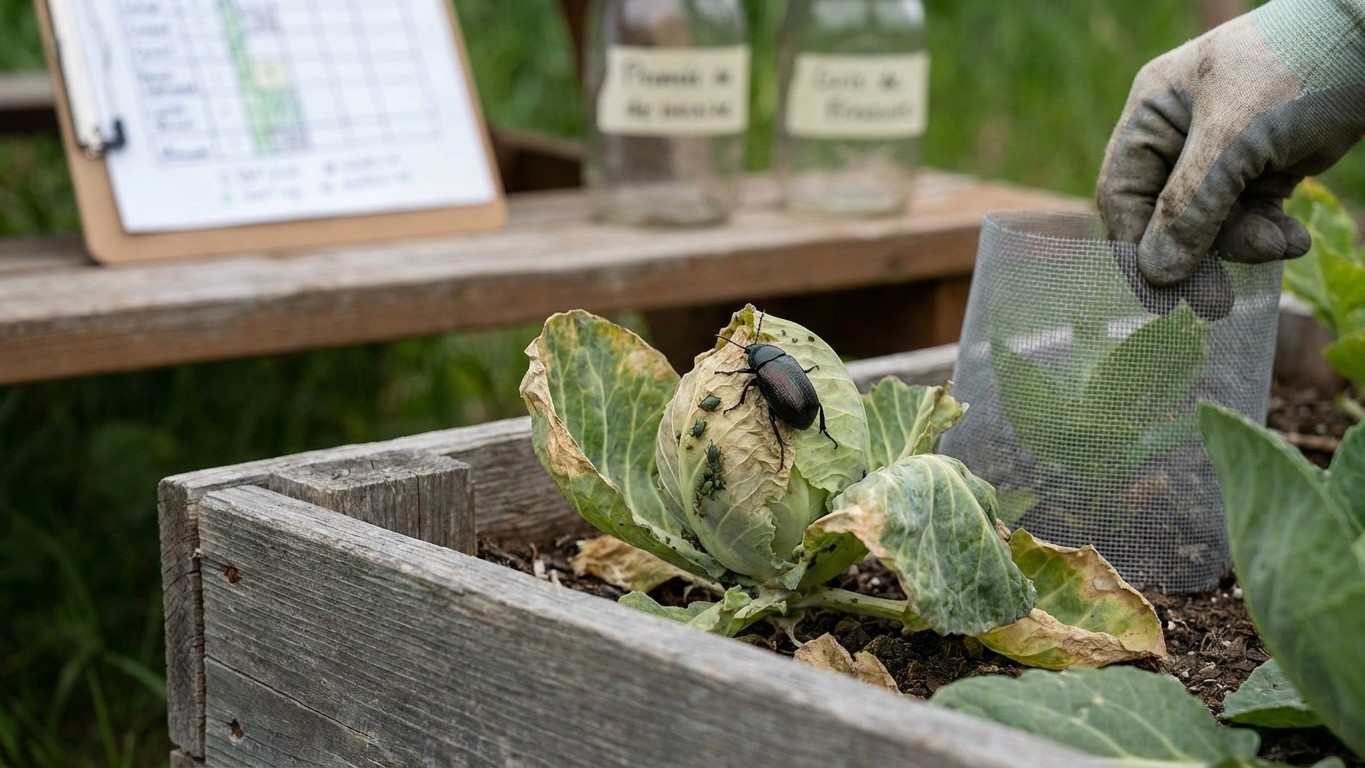

Alaska’s home gardens deal with a short, specific list of repeat offenders: root maggots, cutworms, slugs, aphids and spruce beetle on ornamental spruce, according to UAF Cooperative Extension. UAF names root maggots as the most serious annually recurring insect pest problem in the state’s vegetable production, with adults emerging very early in the growing season. If you grow turnips, radishes, cabbage, cauliflower or broccoli, seal floating row cover over the bed the day you sow, before the flies find it.
What Alaska gardens actually deal with

Something’s chewing, wilting, or tunneling in your garden, and in Alaska it’s almost always one of five culprits: Root maggots in Alaska, cutworms, Slugs in Alaska, Aphids in Alaska, or Spruce beetle in Alaska attacking an ornamental spruce. Root maggots do the most damage of the bunch, working underground in cool soil that would slow down almost anything else, so the roots rot before the tops ever show it. If you’re growing turnips, radishes, cabbage, cauliflower, or broccoli, seal floating row cover over the bed the day you sow, before the flies ever find it.
Root maggots

The adult is a small grayish fly, roughly half the size of a housefly, that lays eggs at the base of young plants. The damage comes from the larva, a tiny white legless maggot about 1/4 inch long, that tunnels into the roots of turnips, radishes, cabbage, cauliflower and broccoli. UAF’s PMC-00330 publication calls root maggots the most serious annually recurring insect pest problem of Alaska vegetable production, noting adults emerge very early in the season and complete just one generation per year. Damage shows up as brown tunnels and scarring inside the root, wilting tops during warm spells, and stunted plants that pull loose with rotted, chewed roots. Row cover sealed at the soil edge before the flies can lay eggs is the single most reliable control, since the larvae can’t reach a stem they never land near.
Cutworms

The larva is a plump, smooth caterpillar, gray-brown to nearly black, that curls tightly into a C shape the moment it’s disturbed. Understanding Cutworms in Alaska is key for gardeners: it feeds at night and hides in soil or garden debris by day, which is why the damage arrives without warning. A seedling standing fine at dusk can be lying flat, severed clean at the soil line, by morning. Older transplants show notched or missing leaves instead. A cardboard or plastic collar pushed an inch into the soil around each stem blocks the larva from reaching it and costs almost nothing to make.
Slugs

Slugs are soft-bodied, with no visible shell, grayish-brown to black, and up to a couple inches long, moving on a visible trail of slime. UAF’s PMC-10070 publication identifies Alaska’s slugs as mostly non-native species and calls them a continuing problem in coastal and Southeast Alaska, where cool, damp summers keep them active for months. The damage is irregular holes chewed into leaves, worst on the lowest leaves and anything touching damp mulch, plus the telltale silvery trail left behind after dark. The same cool, foggy conditions push slug pressure in gardens covered in our Garden Pests in California guide, where coastal fog belts see the same complaint from gardeners.
Aphids

Aphids are tiny, soft-bodied insects, under 1/8 inch long, pear-shaped, and green, gray or black, clustering on the undersides of leaves and along new growth. Damage shows as curled or yellowing leaves, stunted new shoots, and a sticky honeydew residue that can attract sooty mold. A strong jet of water or insecticidal soap knocks populations down fast without wiping out the ladybird beetles and lacewings that often catch up on their own. Warm, humid gardens have their own aphid pressure too, as covered in our Garden Pests in New Jersey guide.
Spruce beetle

The adult is a small, cylindrical beetle, dark reddish-brown to black, about 1/4 inch long, that attacks ornamental spruce rather than vegetable crops. Damage shows as fine reddish boring dust collecting at the base of the trunk, needles fading to reddish-brown, and bark that flakes away to reveal winding galleries carved by larvae underneath. Because the insects work under the bark, the infestation is usually well established by the time needles change color, so healthy watering and avoiding wounds to the trunk do more good than any spray applied after symptoms show.
Telling damage apart

Before treating anything, look closely at what the damage actually looks like. Insects, diseases and watering faults leave different signatures on a leaf or root, and mixing them up means treating the wrong problem while the real one keeps going.
Chewed, holed or severed
Large, ragged bites out of a leaf edge, or a seedling cut clean through at the soil line overnight, point to cutworms. Irregular holes chewed through the middle of a leaf, especially a low leaf with a silvery slime trail nearby, point to slugs. If the top of a plant wilts even though the soil is moist, pull it and slice the root open. Dark tunnels and soft scarring inside a turnip, radish or cabbage root mean root maggots, not a watering problem.
Curled, stippled or wilted
Leaves that curl inward or twist, especially on new growth, combined with a sticky film on the leaf surface below, point to aphids feeding on the underside. There’s rarely a visible hole because aphids pierce and suck rather than chew. Flip the leaf over and look for the small pear-shaped insects clustered along the veins before assuming disease.
Disease or a watering fault
If you can see the insect, its eggs, or its slime trail, it’s a pest problem. If the leaf shows uniform yellowing with no feeding marks anywhere, check the watering can before the pesticide shelf. Fungal disease tends to show as spotting, a powdery coating, or water-soaked lesions with a defined edge, spreading from a point rather than being scattered evenly across the plant. Overwatering shows as soft, mushy stems and yellowing that starts at the bottom of the plant and moves up, with no chewing or tunneling anywhere in sight.
When each one shows up
Timing in Alaska tracks soil temperature and plant stage more than the calendar, and it shifts by region. Near Anchorage, UAF Cooperative Extension puts root maggot activity on turnips, radishes, cabbage, cauliflower and broccoli from late May through July, with adult flies emerging very early in the growing season to lay eggs at the base of just-planted seedlings. That means the highest-risk window is the first two to three weeks after transplanting or thinning, before the young root has a chance to size up.
Cutworm larvae overwinter in the soil and become active as soon as the ground warms enough for seedlings to go in, so the same early weeks after transplanting are the ones to check collars and watch for severed stems. Aphids build more gradually, showing up on tender new growth as plants put on size through the middle of the season, and populations often peak on stressed or overcrowded plants before predators catch up. Slugs, per UAF’s PMC-10070, are a problem specifically in cool, damp coastal and Southeast Alaska gardens, and their activity runs through the summer wherever soil and mulch stay consistently damp rather than tracking a narrow window the way root maggots do.
These figures are measured at or near Anchorage. Interior gardens with colder, later soil warm-up will see root maggot and cutworm activity shift later in the season, and Southeast Alaska’s wetter, milder summers keep slugs active longer than they’d be further north. Check the base of every seedling stem within the first two weeks after transplanting, regardless of exactly which week that falls in your yard.
What actually works
Prevention beats intervention for nearly every pest on this list, because most of the damage in Alaska gardens happens fast, at the larval stage, before a gardener notices anything is wrong.
Rotation, timing and barriers
Rotate turnips, radishes, cabbage, cauliflower and broccoli out of the same bed each year so root maggot flies emerging from last year’s soil don’t land next to a fresh host. Because the flies need bare soil at the base of the stem to lay eggs, floating row cover sealed at the edges before you plant is the prevention that reliably works, and it does double duty against cutworm moths looking for a place to lay eggs. Collars around individual stems handle cutworms in beds too large to cover entirely. Reducing damp mulch and garden debris near slug-prone beds removes the daytime hiding spots slugs need to survive a sunny afternoon.
Encouraging predators and targeted intervention
Ladybird beetles and lacewings feed on aphids and often arrive on their own once a population builds enough to notice. Avoid broad insecticides that kill them along with the aphids, since that removes the free control and leaves the next generation of aphids with nothing keeping it in check. For slugs, beer traps and copper tape work but need regular refreshing and repair. Eggshells and coffee grounds do not reliably stop slugs, despite their popularity online. For root maggots, once larvae are already inside a root, no spray reaches them. Pulling and discarding affected plants before the maggots finish their single generation for the year is the only thing left to do at that point.
What control costs
Cost in an Alaska garden is mostly a question of time versus money, and the cheapest option in dollars isn’t always the cheapest in hours spent.
| Method | Money cost | Time cost | How often repeated |
|---|---|---|---|
| Hand picking (slugs, cutworms) | None | High, best done at dusk or after dark | Nightly during peak activity |
| Row cover and stem collars | Low upfront, reused for years | Low once installed | Check seals after wind or rain, otherwise left in place |
| Encouraging predators (ladybird beetles, lacewings) | None | Low, mostly patience | Builds over weeks, not days |
| Sprays (insecticidal soap, etc.) | Recurring, per application | Moderate | Reapplied after rain or new growth |
Row cover and collars, bought once and reused for several seasons, are the cheapest option overall for a home garden, since the material cost is fixed and the time cost drops to almost nothing after installation. Hand picking costs nothing in dollars but demands consistent evening visits through the worst weeks of slug or cutworm activity, which is real labor most gardeners underestimate until they’ve tried it for a full week straight. Sprays cost the least time per application but add up over a season if rain keeps washing them off, and none of them undo damage already done to a tunneled root.
Local help
UAF Cooperative Extension tracks pest outbreaks around the state and identifies specimens gardeners send in when they’re not sure what they’re looking at. Before spraying anything, a clear photo or a bagged sample sent to your local extension office settles the identification question faster than guessing from a garden forum. Find your nearest office through the UAF Cooperative Extension Service directory.
Common questions
Do I need to cover my whole vegetable garden with row cover every year?
Only the beds growing turnips, radishes, cabbage, cauliflower or broccoli need it, since those are the crops root maggots target. Crops outside that list don’t need the same protection against this particular pest.
I found slugs in my garden in September, is that normal?
Yes, in cool damp coastal gardens slugs stay active through the summer and into fall as long as conditions stay wet, per UAF Cooperative Extension. A sudden hard frost is usually what finally ends activity for the year, not the calendar date.
My spruce tree has boring dust at the base but the needles still look green, do I have a problem?
Possibly. Boring dust often shows up before needle color changes, since the beetles work under the bark first. Get a specimen or clear photo to your local extension office rather than waiting for needles to confirm it, since by then the infestation is usually advanced.
Can I just till the soil to kill root maggot larvae before planting?
Tilling disturbs some larvae but won’t reliably clear a bed, since maggots can be deep enough to survive a light pass and adult flies can still find bare soil to lay new eggs afterward. Row cover installed at planting does more than tillage alone.